XRF Analysis for Mining: Quick and Accurate Mineral Testing

XRF Analysis for Mining: Quick and Accurate Mineral Testing
In the fast-paced world of B2B mining and mineral trading, precision matters. Every shipment of nickel ore, silica sand, or any mineral commodity must meet exact specifications—and buyers demand proof. This is where XRF mining analysis has become indispensable.
XRF (X-Ray Fluorescence) technology delivers real-time elemental composition analysis without destroying samples, making it the gold standard for mineral testing in trading, smelting, and manufacturing operations. Whether you're sourcing minerals from Indonesia's richest deposits in Sulawesi and Kalimantan, or managing quality control across multiple supply chains, understanding portable XRF capabilities can transform your procurement efficiency.
What is XRF and How Does It Work in Mining?
Understanding X-Ray Fluorescence Technology
XRF is a non-destructive analytical technique that uses X-rays to excite atoms in mineral samples, causing them to emit characteristic fluorescent radiation. A detector then measures this radiation, instantly identifying elements and their concentrations—from major components like nickel and silica to trace elements.
Unlike traditional wet chemistry methods requiring hours of lab processing, handheld XRF mining devices deliver results in seconds to minutes, making them perfect for:
- On-site grade verification at mining operations
- Real-time quality control at processing facilities
- Pre-shipment assay confirmation for mineral traders
- Rapid decision-making during procurement negotiations
Key Advantages of Portable XRF Over Traditional Methods
Traditional laboratory analysis—ICP-MS, gravimetric assay, and wet chemistry—requires sample preparation, shipping delays, and 24-72 hours for results. Portable XRF eliminates these bottlenecks:
- Speed: Results in 30-300 seconds depending on detection requirements
- Non-destructive: Analyze samples without consuming material
- Mobility: Test directly at mine sites, warehouses, or ports
- Cost-effective: Reduces lab fees and transportation expenses
- Data integrity: Immediate documentation with built-in reporting software
How Mineral Testing XRF Is Applied in Modern Mining Operations
Quality Control for Nickel and Laterite Ores
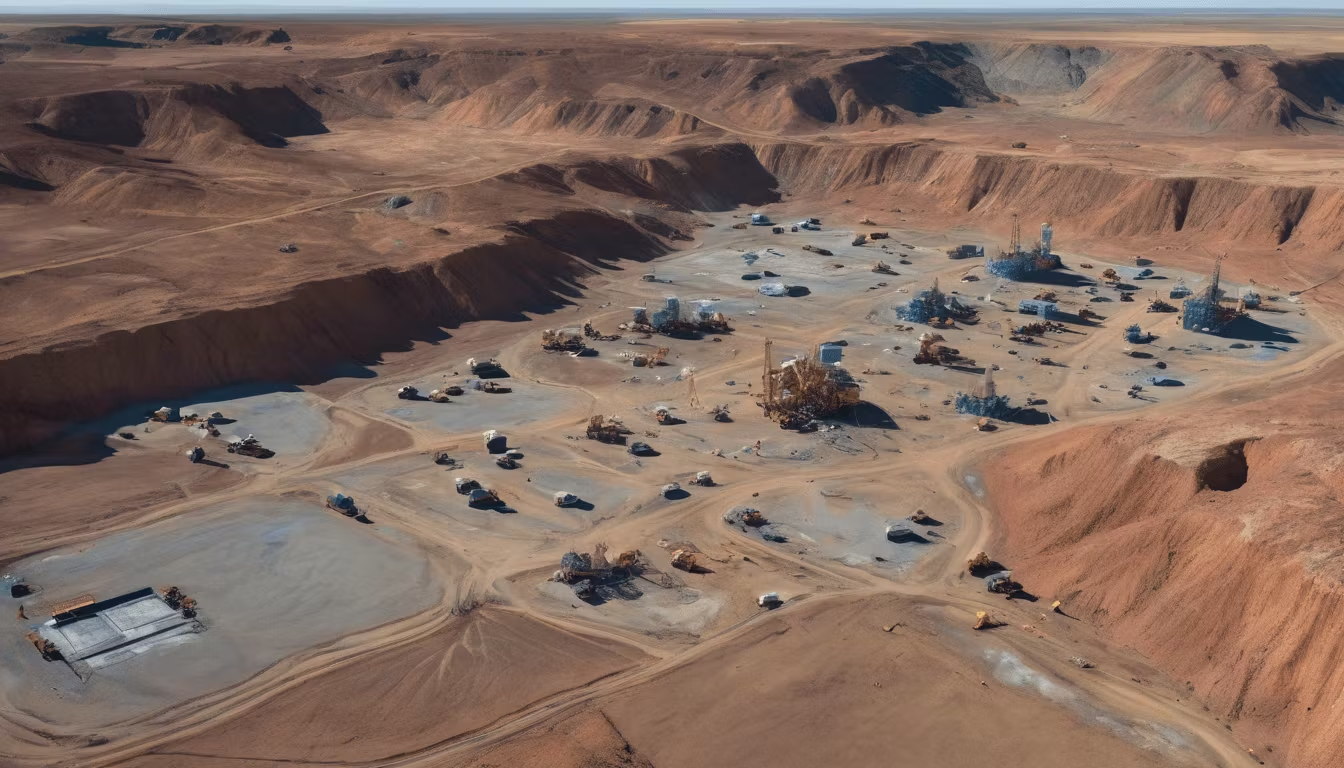
Indonesia's nickel industry relies heavily on XRF analysis. Both saprolite and limonite nickel ores must be tested for nickel content, iron ratios, and moisture levels before entering smelters or HPAL processing facilities. Portable XRF devices can quickly differentiate between high-grade and low-grade ore piles, enabling real-time sorting and blending decisions that maximize processing efficiency.
Major nickel smelters across Sulawesi's Morowali and Konawe regions use handheld XRF mining instruments to verify incoming shipments, ensuring grade consistency before payment and processing commence.
Silica Sand and Quartz Sand Grade Verification
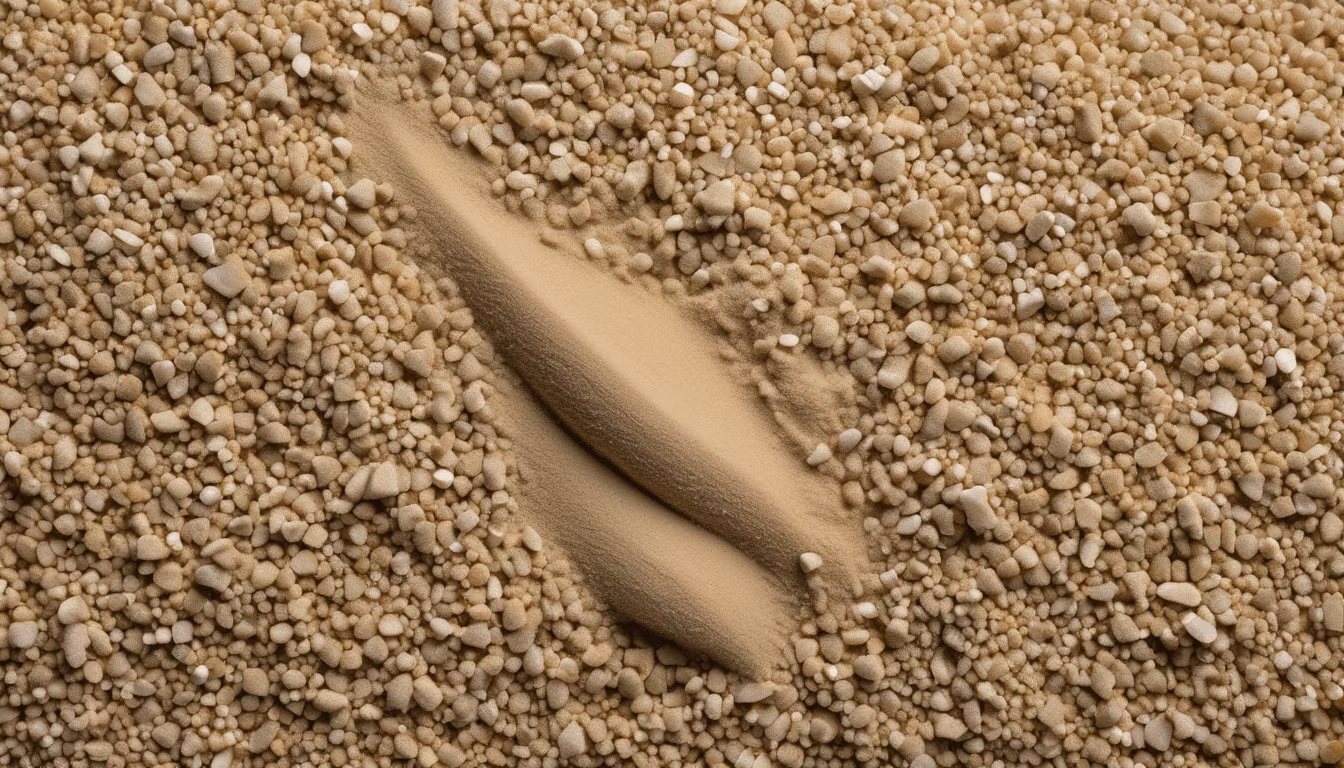
For glass manufacturers, ceramic producers, and foundries requiring silica sand with 99%+ SiO2 purity, XRF analysis confirms iron oxide content, alumina concentrations, and trace contaminants that directly impact product quality. Different mesh grades (8-200) require different analytical approaches, and portable XRF handles this versatility seamlessly.
Float glass producers especially depend on high-purity silica sand specifications—even 0.5% iron oxide variation can affect optical clarity and color consistency. XRF testing provides the certainty needed for premium applications.
Zircon Sand and Industrial Mineral Applications
For zircon sand used in ceramics, refractories, and specialty applications, XRF confirms zirconium oxide (ZrO2) content, silica levels, and harmful contaminants. The technology's ability to detect multiple elements simultaneously makes it ideal for ensuring zircon meets customer specifications while controlling processing costs.
Handheld XRF Mining: Practical Applications in Trading
On-Site Assaying and Due Diligence
Mineral traders sourcing from multiple regions across Indonesia benefit enormously from portable XRF technology. Rather than relying solely on supplier certifications or historical batch data, traders can perform independent verification at mine sites or before shipment. This reduces counterparty risk and ensures contractual compliance.
A trader purchasing 500 metric tons of silica sand can use handheld XRF to test multiple grab samples across the stockpile, creating a statistical representation of actual grade—not just surface samples. This practice protects margins and builds stronger supplier relationships based on verified data.
Blend Management and Optimization
Industrial operations requiring blended materials—such as ferronickel producers mixing different laterite ore grades, or glass manufacturers combining multiple silica sand sources—use portable XRF to optimize blend ratios in real-time. Testing each component stream allows operators to adjust proportions dynamically, reducing waste and improving final product consistency.
Supply Chain Documentation and Traceability
Every XRF analysis generates timestamped, geo-tagged data that serves as immutable documentation. For B2B mineral buyers with strict quality protocols, this creates an auditable record linking each shipment to specific analytical results—critical for ISO certification, customer transparency, and regulatory compliance.
Technical Considerations for XRF Mining Analysis
Sample Preparation Best Practices
While XRF is non-destructive, proper sample preparation maximizes accuracy:
- Particle size: Smaller, more uniform particles provide more representative results
- Surface condition: Clean surfaces free from dust, moisture, and oxidation improve X-ray penetration
- Sample geometry: Consistent sample dimensions across analyses reduce variability
- Multiple replicates: Testing 3-5 samples per lot ensures statistical confidence
Limitations and Complementary Testing
XRF excels at elemental composition but has limitations:
- Light element detection: Elements lighter than sodium (Na) are difficult to measure
- Moisture and LOI: Loss-on-ignition and moisture content require oven analysis
- Chemical speciation: XRF identifies elements but not their mineral forms (though this is often inferred from overall composition)
Best practice involves combining XRF for elemental analysis with complementary methods: ICP-MS for ultra-trace elements, gravimetric assay for moisture/LOI, and X-ray diffraction (XRD) for mineralogical detail when specifications demand it.
Why CV Indoalam Mineral Persada Prioritizes Certified Testing
As a licensed mineral supplier with IUP OPK authorization and SUCOFINDO laboratory certification, CV Indoalam Mineral Persada integrates XRF analysis into every transaction. Our sourcing regions across Sulawesi, Kalimantan, and Maluku benefit from portable XRF devices deployed at production facilities and consolidation points.
Whether you're sourcing aluminium ingot for foundry applications or high-purity silica sand for glass manufacturing, our quality assurance protocols include:
- Initial XRF screening at source locations
- Secondary verification before consolidation and packaging
- Final SUCOFINDO laboratory certification confirming XRF results
- Traceable documentation for every shipment from trial quantities (100 MT) to full contracts (2.5M MT annually)
This multi-layer approach ensures that mineral composition declared in commercial contracts aligns with actual material delivered—building confidence in Indonesian mineral supply chains.
The Future of XRF in Global Mining and Mineral Trading
Technological Advancements
Next-generation XRF instruments are becoming increasingly compact, rapid, and sophisticated. Machine learning algorithms now analyze XRF spectral data to identify mineral phases, not just elemental composition. Some portable devices now achieve near-laboratory accuracy for major elements while remaining field-deployable.
Integration with Blockchain and Digital Commerce
Forward-thinking mineral traders are integrating XRF data with blockchain systems, creating immutable quality certificates that follow commodities through supply chains. This technology directly supports Indonesia's growing role in global nickel, silica, and specialty mineral markets by providing transparent, verifiable product data that commands premium pricing.
Choosing the Right XRF Device for Your Mineral Trading Operations
Key Specifications to Evaluate
When selecting handheld XRF mining equipment, prioritize:
- Detection limits: Can it measure your target elements at required sensitivity levels?
- Analysis time: Does it meet your operational speed requirements?
- Element range: Does it cover magnesium through uranium (or your specific range)?
- Software and reporting: Can results integrate into your quality systems?
- Durability: Will it withstand field conditions in tropical, humid environments like Indonesia?
- Calibration support: Is local calibration and maintenance readily available?
ROI Considerations for B2B Mineral Buyers
A portable XRF system typically costs $30,000-$80,000 depending on capability. For operations processing millions of metric tons annually, this investment pays for itself rapidly through:
- Avoided costs from purchasing off-grade material
- Reduced laboratory fees and turnaround delays
- Improved supply chain decision-making speed
- Premium pricing justification through transparent quality data
Even for smaller trading operations, leasing or sharing access to portable XRF devices through industry partners can deliver similar benefits at lower capital cost.
Conclusion: Integrating XRF Analysis Into Your Mineral Supply Strategy
XRF mining analysis represents the convergence of analytical science and practical commerce. By enabling rapid, non-destructive, reliable mineral composition testing, portable XRF technology has become fundamental to modern mineral trading, smelting operations, and industrial manufacturing.
For B2B buyers sourcing minerals from Indonesia—particularly nickel ore, silica sand, aluminium ingots, and zircon sand—partnering with suppliers who prioritize XRF-backed quality certification reduces risk and accelerates decision-making. CV Indoalam Mineral Persada's commitment to SUCOFINDO-certified testing and transparent documentation ensures that every metric ton delivered meets the analytical standards your operations demand.
Whether you're evaluating suppliers, optimizing blending operations, or building quality protocols, understanding XRF capabilities positions you to make faster, more confident procurement decisions in the competitive global mineral market.
Ready to source high-quality minerals backed by verified XRF analysis? Contact us to discuss your specific mineral requirements and discover how CV Indoalam Mineral Persada's quality-assured supply chains can support your operations.