Coarse vs Fine Silica Sand: Complete Industry Grade Selection Guide
Understanding Silica Sand Grades: A Complete Overview
Silica sand is one of the most versatile industrial minerals, with applications spanning from precision manufacturing to large-scale construction projects. However, not all silica sand is created equal. The particle size—whether coarse or fine—fundamentally determines how it performs in different industrial applications. Understanding the differences between these grades is essential for procurement professionals, plant managers, and engineers selecting materials for their operations.
At CV Indoalam Mineral Persada, we supply premium-grade silica sand with SiO2 content reaching 99.74%, available in multiple mesh grades ranging from 8 to 200. This comprehensive article explores how to choose the right silica sand grade for your specific industrial needs.
What Defines Coarse vs Fine Silica Sand?
Particle Size Classification
Silica sand grades are classified by particle size, measured in mesh numbers or microns. The mesh system represents the number of holes per linear inch in a sieve screen. A higher mesh number indicates finer particles, while lower numbers denote coarser sand.
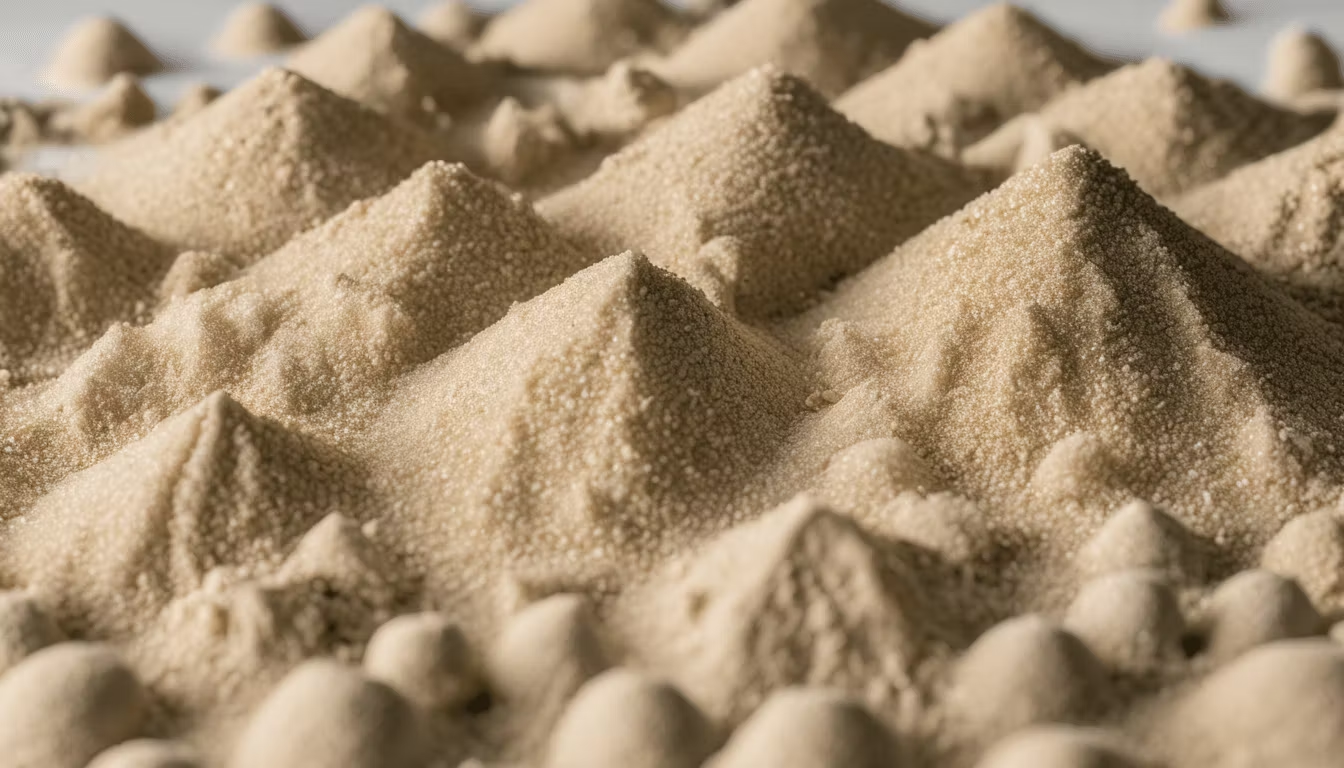
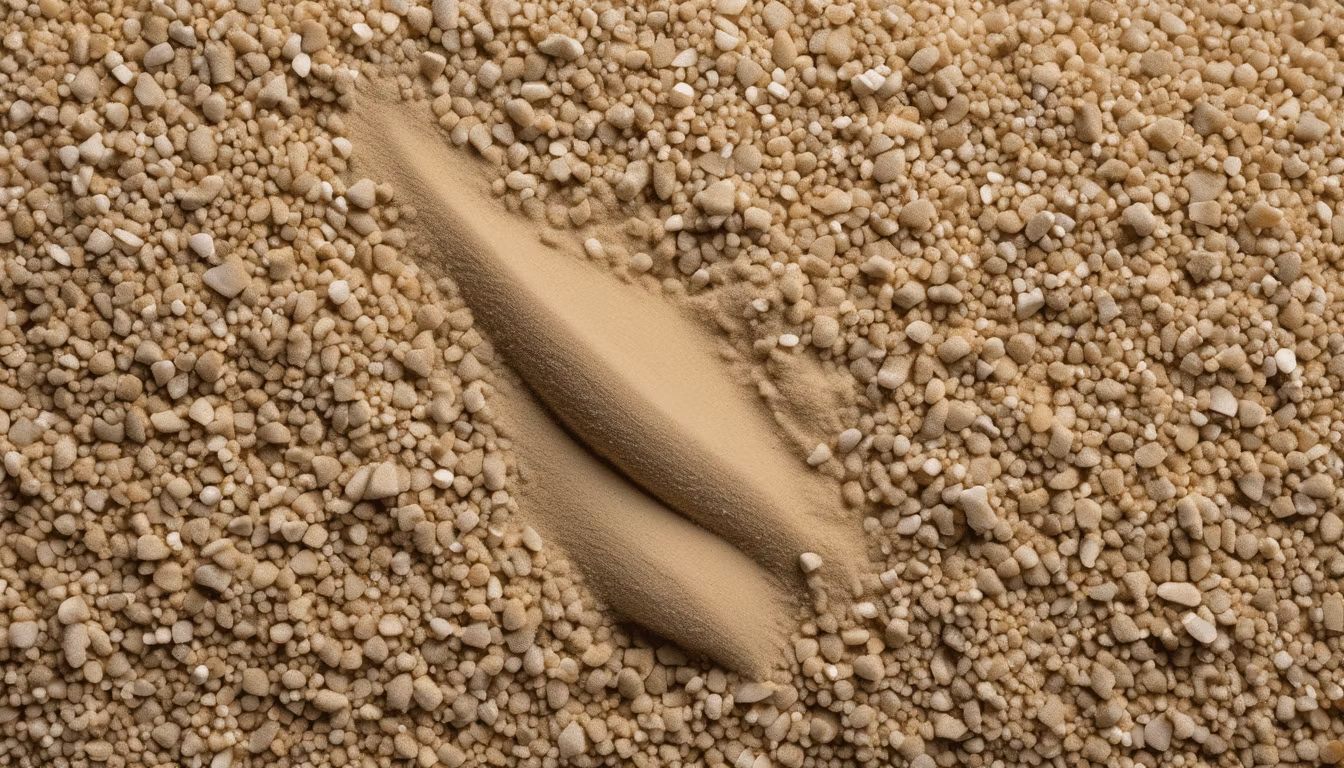
Coarse silica sand typically ranges from 8 to 60 mesh (2,380 to 250 microns), featuring larger, more visible particles. Fine silica sand spans from 100 to 200 mesh (150 to 75 microns), with particles that feel smooth to the touch and pack more densely. Medium grades, falling between 60 and 100 mesh, bridge these categories and serve as transition materials for specialized applications.
The particle size selection process is not arbitrary—it's driven by the specific demands of each industry. Applications requiring permeability and drainage typically favor coarser grades, while those demanding precision, surface finish quality, and uniformity require finer materials.
How Mesh Size Impacts Performance
Particle size directly influences several critical material properties: packing density, surface area, permeability, and binding characteristics. Coarser particles create larger void spaces, allowing fluids and gases to flow more freely. Fine particles pack tightly, providing superior surface coverage and more predictable flow control. For manufacturers, understanding these physical properties is fundamental to maintaining product quality and operational efficiency.
Coarse Silica Sand: Applications and Benefits
Foundry and Metal Casting Operations
The foundry industry remains one of the largest consumers of coarse silica sand. Mesh grades 20-60 are preferred for molding sand in ferrous and non-ferrous metal casting. The larger particle size in coarse sand creates optimal permeability in molds, allowing gases generated during metal pouring to escape efficiently. This prevents defects like blowholes and surface porosity that compromise casting quality.
Coarse sand's angular particle structure provides excellent mechanical bonding when mixed with binders, ensuring molds maintain dimensional integrity throughout the casting cycle. Foundries producing ductile iron, steel castings, and aluminum parts rely on consistent coarse sand supplies to achieve tight tolerances and superior surface finishes.
Water Filtration and Treatment Systems
Water treatment facilities employ coarse silica sand as the primary medium in rapid sand filters and multi-layer filtration systems. Particles in the 12-40 mesh range provide optimal hydraulic properties, allowing adequate flow rates while capturing suspended solids. The larger void spaces facilitate backwashing procedures, which regenerate the filter media and extend service life.
In industrial water recycling systems, coarse sand layers form the foundation of filtration beds, working in conjunction with fine sand and activated carbon. This stratification approach ensures efficient removal of turbidity, organic matter, and particulates while maintaining economical operating costs.
Construction and Concrete Applications
The construction sector utilizes coarse silica sand (typically 16-60 mesh) as a fine aggregate in specialty concrete formulations. Silica sand's angular particle structure and high SiO2 content enhance concrete strength, reduce permeability, and improve durability—particularly valuable in marine environments and chemical-resistant applications.
Terrazzo flooring, self-leveling compounds, and high-performance grouts frequently incorporate coarse silica sand. The particle angularity provides superior mechanical keying to binders, resulting in products with exceptional compressive strength and resistance to abrasion.
Industrial Glass Manufacturing
While fine silica sand dominates glass production, coarser grades serve specific purposes in certain glass types. Decorative glassware, industrial glass liners, and specialty glass products sometimes employ mesh grades between 40-100 to achieve particular aesthetic or functional properties. The slightly larger particles can create textured surfaces or contribute to specific refractive properties depending on the manufacturing process.
Fine Silica Sand: Applications and Advantages
High-Precision Glass Production
Float glass manufacturing, the dominant process for producing flat glass used in windows and architectural applications, demands fine silica sand with consistent particle size distribution. Mesh grades 120-200 ensure uniform melting characteristics, resulting in glass with optimal clarity, thickness uniformity, and minimal defects.
The glass industry's preference for fine silica sand stems from its superior dissolution properties in high-temperature furnaces. Smaller particles dissolve more completely and uniformly, reducing stone formation—undissolved silica particles that compromise glass quality. For solar panel manufacturers requiring ultra-high optical clarity, fine silica sand is non-negotiable.
Ceramic and Tile Manufacturing
Ceramic tile producers utilize fine silica sand (100-200 mesh) as a raw material component in porcelain and stoneware formulations. The fine particle size enables uniform dispersion throughout clay bodies, promoting homogeneous firing characteristics and consistent mechanical properties across finished tiles.
Fine silica sand also serves as a critical ingredient in ceramic glazes and surface coatings. Its high SiO2 content and fine particle distribution create smooth, durable surface finishes that enhance both aesthetic appeal and functional performance. Manufacturers of industrial ceramics, decorative tiles, and specialized refractory products all depend on reliable supplies of premium fine silica sand.
Precision Foundry Cores and Specialty Casting
While coarse sand dominates moldmaking, specialty casting operations producing high-precision components—particularly in aerospace, medical devices, and precision engineering—employ fine silica sand cores. Mesh grades 140-200 create intricate internal passages and complex geometries with exceptional dimensional accuracy and minimal surface roughness.
The investment casting industry particularly values fine silica sand for creating ultra-smooth mold surfaces and precise core dimensions. This application represents a higher-value specialty market where material consistency and purity directly correlate to premium product pricing.
Water Treatment—Fine Filtration Stages
In multi-stage filtration systems, fine silica sand (60-120 mesh) forms the secondary and tertiary filtration layers, providing polishing functions that remove smaller particles and improve water clarity. This layered approach, with coarse sand forming the base and progressively finer materials creating upper layers, represents best-practice water treatment design.
Industrial facilities producing high-purity water for pharmaceutical manufacturing, semiconductor processing, and specialty chemical production rely on fine silica sand as a critical component of their purification infrastructure.
Specialized Industrial Coatings
Fine silica sand functions as a critical additive in specialized coatings, including anti-slip paints, decorative finishes, and industrial protective coatings. The fine particle size enables uniform distribution without settling, creating consistent texture and performance across large surface areas.
How to Select the Right Silica Sand Grade for Your Operation
Evaluate Your Application Requirements
Begin by clearly defining your application's specific demands. Are you prioritizing permeability or surface finish quality? Do you need rapid material throughput or precise dimensional control? Understanding these fundamental requirements narrows the field of suitable grades significantly.
Consult technical literature and industry standards specific to your sector. Glass manufacturers reference ASTM C144 and ISO specifications, foundries follow ASTM C325 guidelines, and water treatment professionals work from NSF/ANSI 61 standards. These documents specify preferred mesh ranges and performance parameters that guide purchasing decisions.
Assess Material Properties Beyond Particle Size
While particle size is primary, SiO2 purity, iron oxide content, and moisture levels significantly impact performance. Premium suppliers like CV Indoalam provide SUCOFINDO laboratory testing documentation confirming SiO2 content (99.74% in our case), iron content below critical thresholds, and moisture levels within specification.
Request sample testing data and, when appropriate, request material samples for trial production runs. A 100-ton trial quantity can reveal how a supplier's material performs in your specific processes before committing to larger volume contracts.
Consider Supply Chain Reliability
Establishing partnerships with direct suppliers offering consistent, certified material proves more economical and reliable than working through multiple middlemen. Suppliers with full IUP OPK licensing, RKAB approval, and established relationships with logistics providers can guarantee timely delivery—critical for just-in-time manufacturing operations.
Evaluate suppliers' annual capacity relative to your needs. CV Indoalam Mineral Persada maintains 2.5 million metric tons annual silica sand capacity, sourced from proven reserves in Sulawesi, Kalimantan, and Maluku, capable of supporting everything from 100-ton trial quantities to multi-million-ton annual contracts.
Establish Clear Specifications and Testing Protocols
Work with suppliers to develop detailed purchase specifications addressing particle size distribution, SiO2 purity, moisture content, bulk density, and trace element limitations. Include provisions for regular third-party laboratory testing—SUCOFINDO-certified testing provides independent verification of material compliance.
Request certificates of analysis for every shipment and establish procedures for immediate testing upon delivery. This proactive approach identifies any quality variations before material enters your manufacturing process, preventing costly production disruptions.
Industry-Specific Grade Recommendations
For Foundries: Mesh 20-60 Coarse Sand
Foundry operations benefit most from coarse to medium-coarse grades that optimize mold permeability and gas escape during casting. Standard ferrous and non-ferrous casting typically employs 40-mesh sand, while larger molds or lower-pressure casting applications use 20-30 mesh.
For Glass Manufacturers: Mesh 120-200 Fine Sand
Glass manufacturers universally specify fine silica sand with tight particle size distribution around 140-200 mesh. The consistency and fineness directly correlate to glass clarity and furnace performance. SiO2 purity of 99.74% or higher is standard practice.
For Water Treatment: Dual-Grade Systems
Optimal water filtration employs stratified beds: coarse sand (12-40 mesh) as the base layer for high flow rate capacity, topped with fine sand (100-140 mesh) for polishing. This combined approach balances throughput with filtration efficiency.
For Ceramics and Tiles: Mesh 100-200 Fine Sand
Ceramic producers standardize on fine silica sand in the 100-200 mesh range. Consistent fine particle size ensures uniform clay body formulation, predictable firing behavior, and superior glaze surface quality.
Quality Assurance: Ensuring Consistent Performance
Reputable suppliers provide documentation confirming compliance with international standards and independent laboratory testing. When sourcing silica sand, prioritize suppliers offering comprehensive quality assurance: particle size analysis confirming mesh grade accuracy, SiO2 purity testing, and measurement of trace elements that could impact your processes.
CV Indoalam Mineral Persada's SUCOFINDO laboratory testing and full regulatory compliance (IUP OPK, RKAB, ET Batubara) ensure that every shipment meets exacting quality standards. This commitment to certified quality protects your operations and eliminates variability that could compromise product quality.
Making Your Grade Selection Decision
Choosing between coarse and fine silica sand ultimately depends on your specific operational requirements. Coarse grades excel in applications demanding permeability, rapid processing, and cost efficiency. Fine grades serve industries requiring precision, superior surface finish, and uniform material characteristics.
The most successful procurement strategies involve working closely with experienced suppliers who understand your industry's unique demands. Transparent communication about your application requirements, willingness to conduct trial runs, and preference for suppliers offering certified quality documentation all contribute to optimal material selection.
If you're sourcing silica sand for industrial applications, establishing partnerships with direct suppliers eliminates middlemen and ensures consistent, certified material. Whether your operation requires coarse grades for foundry molding, fine grades for precision glass manufacturing, or dual-grade systems for multi-stage filtration, selecting the right supplier matters significantly to your bottom line and product quality.
Partner with Indoalam for Your Silica Sand Needs
CV Indoalam Mineral Persada specializes in providing premium silica sand meeting the exact specifications your industry demands. With direct sourcing from proven reserves across Indonesia, SUCOFINDO laboratory certification, and full IUP OPK licensing, we guarantee consistent quality whether you're ordering your first 100-ton trial or establishing a multi-year supply partnership.
Our comprehensive range of mesh grades—from coarse 8-mesh material to ultra-fine 200-mesh silica sand with SiO2 purity reaching 99.74%—addresses the full spectrum of industrial applications. We supply major nickel smelters, glass manufacturers, ceramic tile producers, foundries, and water treatment facilities across Indonesia and internationally.
Ready to evaluate our silica sand for your operations? Contact us today to discuss your requirements, request material samples, or learn more about our certified quality assurance processes. Let our expertise in industrial mineral supply support your operational success.