Aluminium for 3D Printing: Powder Metallurgy & Additive Manufacturing
Introduction: The Rise of Aluminium in Additive Manufacturing
The additive manufacturing (AM) industry has experienced unprecedented growth over the past decade, with aluminium for 3D printing emerging as one of the most sought-after materials across aerospace, automotive, medical, and industrial sectors. Unlike traditional subtractive manufacturing methods that waste up to 90% of raw materials, metal 3D printing enables manufacturers to produce complex geometries with minimal material loss, superior mechanical properties, and rapid prototyping capabilities.
Aluminium's lightweight characteristics, excellent thermal conductivity, and corrosion resistance make it ideal for applications ranging from aircraft components to custom medical implants. However, the success of any additive manufacturing project depends critically on the quality, consistency, and chemical composition of the aluminium powder AM feedstock used in the process.
Understanding Aluminium Powder Metallurgy in Additive Manufacturing
What Makes Aluminium Ideal for Metal 3D Printing?
Aluminium stands apart from other metals in additive manufacturing due to several inherent advantages. With a density of just 2.7 g/cm³—one-third that of steel—aluminium components deliver exceptional strength-to-weight ratios. This characteristic alone has driven adoption across the aerospace industry, where weight reduction directly translates to fuel efficiency and operational cost savings.
Additionally, aluminium exhibits superior thermal conductivity compared to stainless steel and titanium, making it valuable for heat dissipation applications in electronics and automotive industries. The metal's natural oxidation resistance provides built-in corrosion protection without extensive post-processing, reducing manufacturing timelines and costs.
Powder Metallurgy Fundamentals for 3D Printing
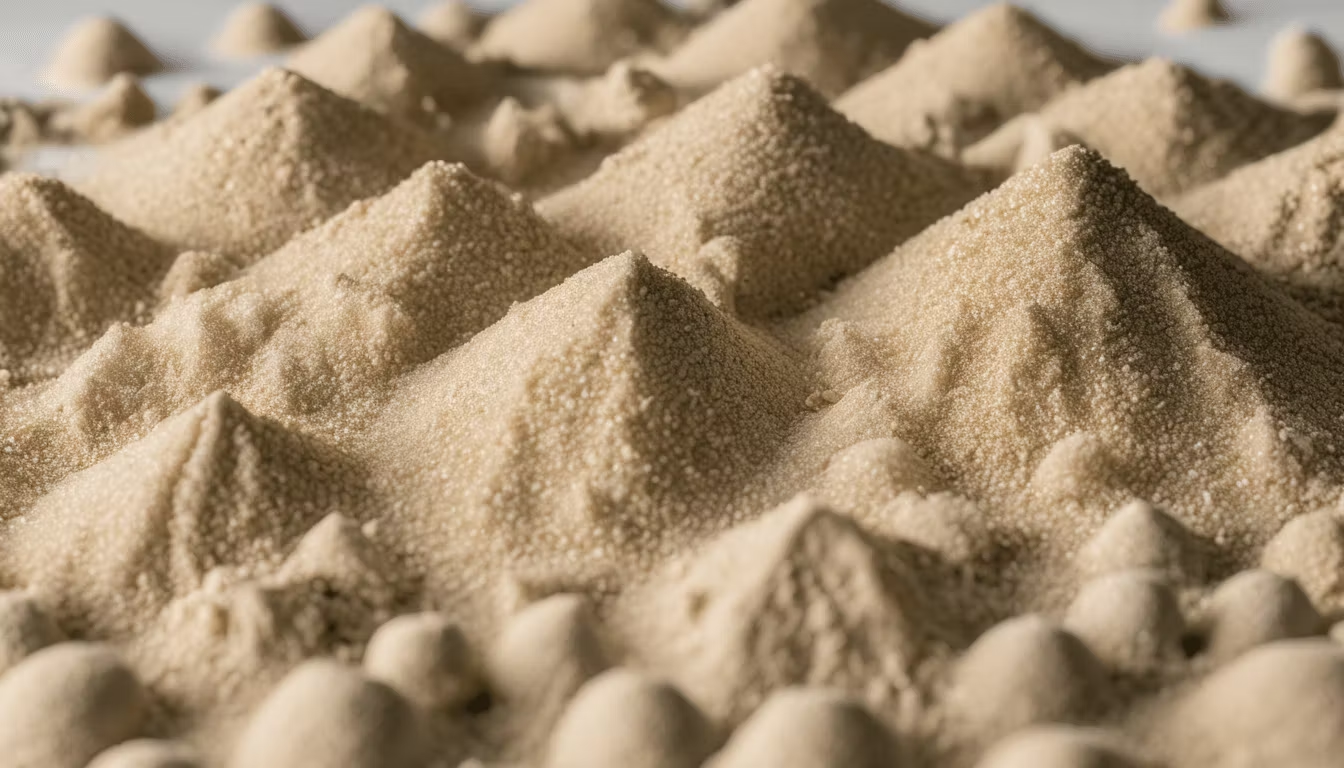
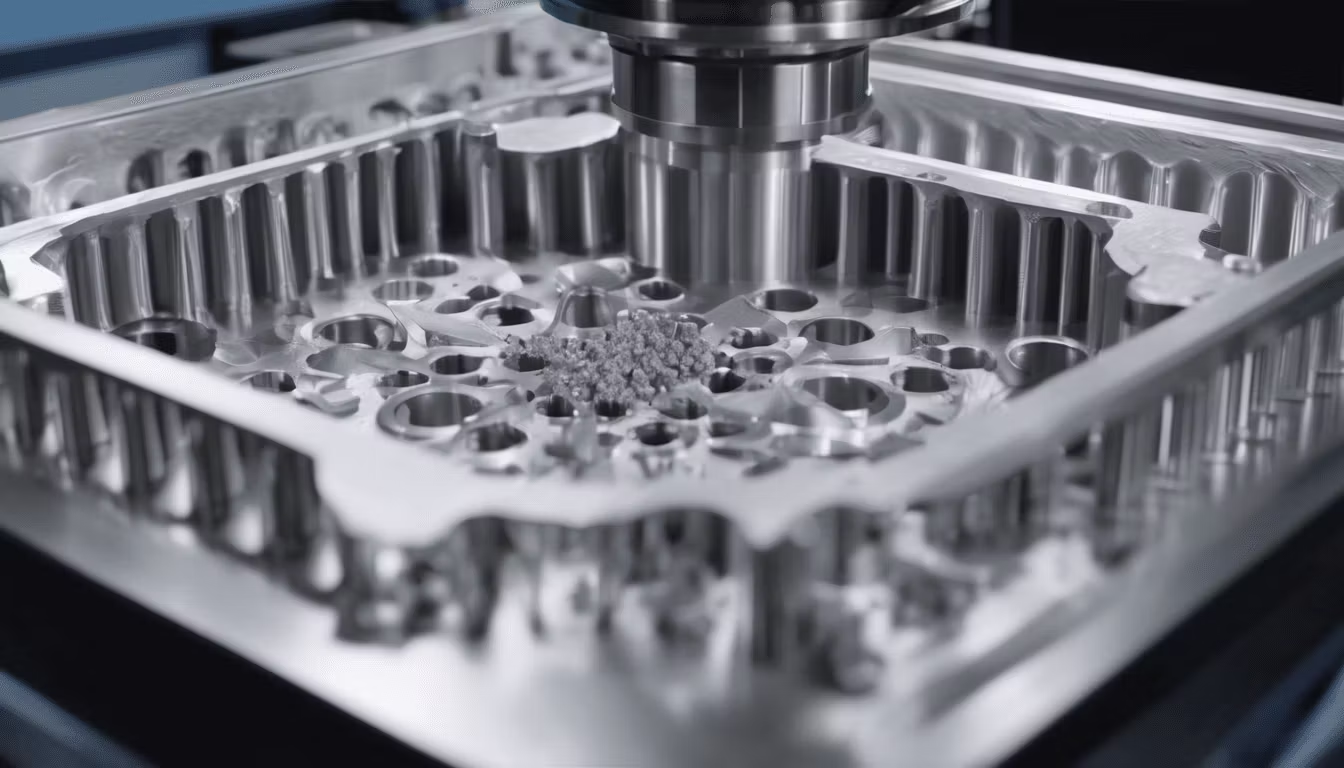
Powder metallurgy in additive manufacturing involves the controlled fusion of micro-scale metal particles using laser or electron beam energy sources. The powder particle size, distribution, sphericity, and chemical purity directly influence the quality of final printed components.
For aluminium powder used in AM applications, typical specifications include:
- Particle Size Range: 15-45 microns for most laser-based systems; 45-150 microns for electron beam systems
- Sphericity: >95% for optimal packing density and surface finish
- Flowability: Critical for consistent powder bed deposition and part density
- Apparent Density: 1.4-1.6 g/cm³ depending on particle distribution
- Oxygen Content: <0.15 wt% to prevent brittleness and mechanical property degradation
These parameters are not arbitrary specifications—they directly impact part porosity, mechanical strength, surface roughness, and post-processing requirements. Suppliers who maintain tight tolerances on these metrics reduce scrap rates, improve first-pass quality, and minimize customer rework costs.
Key Aluminium Alloys for Additive Manufacturing
Al-Si Alloys (Common in Laser Powder Bed Fusion)
Al-Si alloys, particularly AlSi10Mg, represent the most widely used composition in laser-based 3D printing. The silicon content (approximately 10%) reduces the melting temperature, improves flowability, and enhances castability—all critical factors for successful powder bed fusion operations. These alloys demonstrate excellent mechanical properties post-heat treatment, with tensile strengths reaching 400-500 MPa.
Al-Si alloys are particularly favored for automotive components, industrial fixtures, and consumer electronics where moderate strength combined with dimensional accuracy is required. The broader processing window compared to pure aluminium reduces the risk of defects during printing.
Al-Cu Alloys (Aerospace Applications)
Aluminium-copper alloys, such as Al2024 and Al7075 variants optimized for AM, deliver superior strength and fatigue resistance—essential for critical aerospace components. These alloys typically achieve tensile strengths exceeding 500 MPa even in the as-printed condition, though heat treatment can further enhance properties.
The challenge with Al-Cu alloys lies in their narrow processing window and increased susceptibility to hot cracking. Success requires precise laser parameters, controlled cooling rates, and often post-print stress-relief cycles. Despite these complexities, the superior mechanical properties justify the additional process control investment for high-performance applications.
Scandium-Modified Aluminium Alloys (High-Performance Niche)
Scandium-containing aluminium alloys represent the frontier of AM materials, offering grain refinement that dramatically improves mechanical properties and crack resistance. While currently limited to specialized aerospace and defense applications due to higher raw material costs, these alloys demonstrate the trajectory of aluminium powder AM development.
Quality Standards and Testing for Aluminium 3D Printing Powder
International Specifications and Certifications
Leading aerospace and automotive manufacturers require aluminium powder suppliers to comply with rigorous international standards. ASTM B214 specifies powder classification and characterization methods, while ISO 9001 and AS9100 certifications ensure consistent manufacturing processes in aerospace supply chains.
Key testing protocols include:
- Particle Size Distribution (PSD): Typically measured via laser diffraction; specifications define D10, D50, and D90 percentile distributions
- Chemical Composition Analysis: ICP-OES (Inductively Coupled Plasma Optical Emission Spectroscopy) ensures elemental accuracy
- Morphology Assessment: Scanning Electron Microscopy (SEM) confirms sphericity and identifies surface defects
- Flowability Testing: Hall Flow and Carr Flow tests quantify handling characteristics
- Apparent and Tap Density: Critical for predicting powder bed packing efficiency
- Oxygen Content Analysis: Leco oxygen analysis prevents embrittlement issues
In Indonesia, reputable suppliers like those working with SUCOFINDO certification laboratories ensure that powder batches meet these demanding international standards, enabling seamless integration into global supply chains.
Batch-to-Batch Consistency
One often-overlooked challenge in aluminium powder AM is maintaining consistency across production batches. Variations in particle size distribution, sphericity, or oxygen content between batches can cause significant differences in part quality, mechanical properties, and scrap rates.
Leading suppliers implement statistical process control (SPC) methodologies, regular re-testing of powder stocks, and documented traceability systems. This commitment to consistency transforms powder supply from a commodity transaction into a strategic partnership that directly impacts manufacturing efficiency and product quality.
Applications Driving Aluminium 3D Printing Demand
Aerospace and Defense
The aerospace sector represents the largest growth driver for metal 3D printing adoption. Complex brackets, heat exchangers, and structural components that previously required extensive machining now emerge from 3D printers with superior properties and 40-60% weight reductions compared to conventionally manufactured equivalents.
Flight-critical applications demand aerospace-grade certifications, rigorous validation protocols, and often require printed components to undergo X-ray, ultrasonic, or CT scanning inspection. This stringent environment has established quality benchmarks that benefit the entire aluminium powder AM ecosystem.
Automotive Industry Transformation
Automotive manufacturers increasingly employ additive manufacturing to produce custom tooling, low-volume performance components, and integrated assemblies that consolidate multiple conventionally separate parts. Lightweight aluminium components directly support electrification initiatives, extending battery range in electric vehicles.
Custom mounting brackets, heat sinks for battery management systems, and complex manifolds represent high-volume opportunities where aluminium for 3D printing delivers both performance and economic advantages over traditional manufacturing methods.
Medical and Dental Applications
The biocompatible nature of aluminium oxide surface layers makes aluminium suitable for specific medical device applications. Lightweight prosthetic components, dental implant guides, and custom surgical instruments leverage 3D printing's ability to create patient-specific geometries.
Industrial Equipment and Tooling
Beyond aerospace and automotive, general manufacturing increasingly adopts aluminium 3D printing for custom fixtures, dies, and replacement components. The ability to rapidly prototype and iterate designs reduces time-to-market while maintaining cost efficiency.
Sourcing Aluminium Powder: Key Considerations for B2B Buyers
Supplier Selection Beyond Price
While cost remains important, selecting an aluminium powder supplier for additive manufacturing demands rigorous due diligence beyond simple price comparison. Evaluate suppliers on:
- Quality Certifications: ISO 9001, AS9100 for aerospace, NADCAP for critical applications
- Testing Capabilities: In-house laboratories with SEM, ICP-OES, and particle size analysis equipment
- Traceability Documentation: Full batch records, material certs, and test reports for regulatory compliance
- Supply Reliability: Consistent availability, documented inventory management, and emergency response protocols
- Technical Support: Access to process engineering expertise and application troubleshooting
Integration with Your Aluminium Supply Chain
For manufacturers working with various aluminium products, consolidating suppliers can unlock economies of scale. If your operations also require aluminium ingot for conventional casting or machining operations, sourcing both materials from a single supplier simplifies logistics, improves inventory management, and builds stronger commercial relationships.
Regional suppliers with direct mining and processing capabilities offer additional advantages, including reduced lead times, lower transportation costs, and opportunities for customized specifications tailored to specific applications.
Quality Assurance Protocols
Implement incoming inspection procedures for all powder deliveries, including particle size verification and moisture content assessment. Establish maximum shelf-life protocols, as aluminium powder can degrade over time depending on storage conditions.
Document performance data from printed parts, correlating final component properties with powder batch specifications. This data-driven approach identifies optimal supplier specifications and prevents subtle quality drift that could compromise final product performance.
Emerging Trends in Aluminium 3D Printing
Advanced Alloy Development
Materials scientists continue developing novel aluminium alloys optimized specifically for additive manufacturing processes. High-entropy aluminium alloys and nanoparticle-reinforced composites promise dramatic improvements in strength, thermal properties, and crack resistance.
Multi-Material Printing
Emerging multi-material 3D printing systems enable simultaneous deposition of different aluminium alloys or aluminium combined with copper, titanium, or other metals within a single component. This capability allows optimization of different regions for specific functional requirements.
In-Situ Recycling and Sustainability
As additive manufacturing scales, recycling of unused powder and failed parts becomes economically and environmentally critical. Advanced recycling processes now enable closed-loop systems where 95%+ of powder waste returns to the production cycle with minimal property degradation.
This sustainability advantage positions additive manufacturing as a responsible manufacturing paradigm, particularly important for environmentally conscious OEMs and defense contractors subject to lifecycle assessment requirements.
The Intersection of Aluminium Sourcing and Powder Quality
The quality of aluminium powder ultimately traces back to source material purity and production process control. Unlike some regions where aluminium powder production relies on recycled or low-grade feedstock, premium AM-grade powder originates from carefully selected primary aluminium sources with documented chemical composition.
For organizations seeking reliable, quality-assured aluminium ingot as base material for powder production or conventional manufacturing applications, sourcing from established suppliers with rigorous quality management systems provides the foundation for successful additive manufacturing initiatives.
Scaling Production: From Prototyping to Commercial Manufacturing
Prototyping Phase Considerations
Initial 3D printing projects often begin with small-quantity trials using various powder suppliers to evaluate compatibility with specific equipment and applications. Expect to test 10-50 kg quantities from multiple sources before identifying optimal suppliers for production scaling.
During this phase, flexibility in minimum order quantities becomes valuable. Suppliers capable of fulfilling trial orders and providing technical support for process optimization accelerate development timelines and reduce early-stage risks.
Production Scaling Requirements
As additive manufacturing moves from prototyping to commercial production, powder supply must scale proportionally. A facility operating three 3D printers continuously may require 500-1,000 kg of powder monthly, demanding suppliers with consistent production capacity and inventory management capabilities.
Long-term supply agreements establishing volume commitments, pricing stability, and guaranteed delivery schedules become essential. Suppliers should demonstrate capacity to meet peak demand periods without quality compromises.
Conclusion: Building Your Aluminium 3D Printing Supply Strategy
The convergence of additive manufacturing technology advancement and aluminium powder innovation creates unprecedented opportunities for manufacturers seeking weight reduction, design flexibility, and rapid production cycles. Success requires moving beyond commodity powder sourcing toward strategic partnerships with suppliers who combine technical expertise, quality assurance, and reliable supply management.
Whether evaluating specific alloy compositions, establishing quality specifications, or planning long-term supply relationships, the foundation remains consistent: aluminium for 3D printing must meet precise international standards, demonstrate batch-to-batch consistency, and integrate seamlessly with your manufacturing processes.
Organizations committed to excellence in additive manufacturing recognize that powder quality represents the most critical controllable variable in the production equation. By partnering with suppliers who invest in rigorous quality control, advanced testing capabilities, and continuous improvement methodologies, you establish the conditions for consistent, high-quality output that drives competitive advantage.
Ready to develop a robust aluminium powder supply strategy? Contact us to discuss your specific additive manufacturing requirements and explore how strategic partnerships can optimize your 3D printing operations across aerospace, automotive, industrial, and specialty applications.