Silica Sand for Glass Manufacturing: Quality Specs & Standards
Silica Sand for Glass Manufacturing: Quality Specifications and Standards
The glass manufacturing industry relies heavily on high-purity raw materials, and silica sand stands as the cornerstone ingredient in virtually every glass product—from architectural float glass to advanced solar panel coatings. As global demand for premium glass products continues to rise, understanding the precise specifications and quality standards for glass-grade silica sand has become essential for procurement professionals.
This comprehensive guide explores the critical specifications, quality benchmarks, and sourcing considerations that glass manufacturers must evaluate when selecting silica sand suppliers. Whether you're producing architectural glass, borosilicate containers, or solar-grade applications, the purity and consistency of your silica feedstock directly impacts final product quality, manufacturing efficiency, and production costs.
Understanding Silica Sand Composition and SiO2 Purity
What is Glass-Grade Silica Sand?
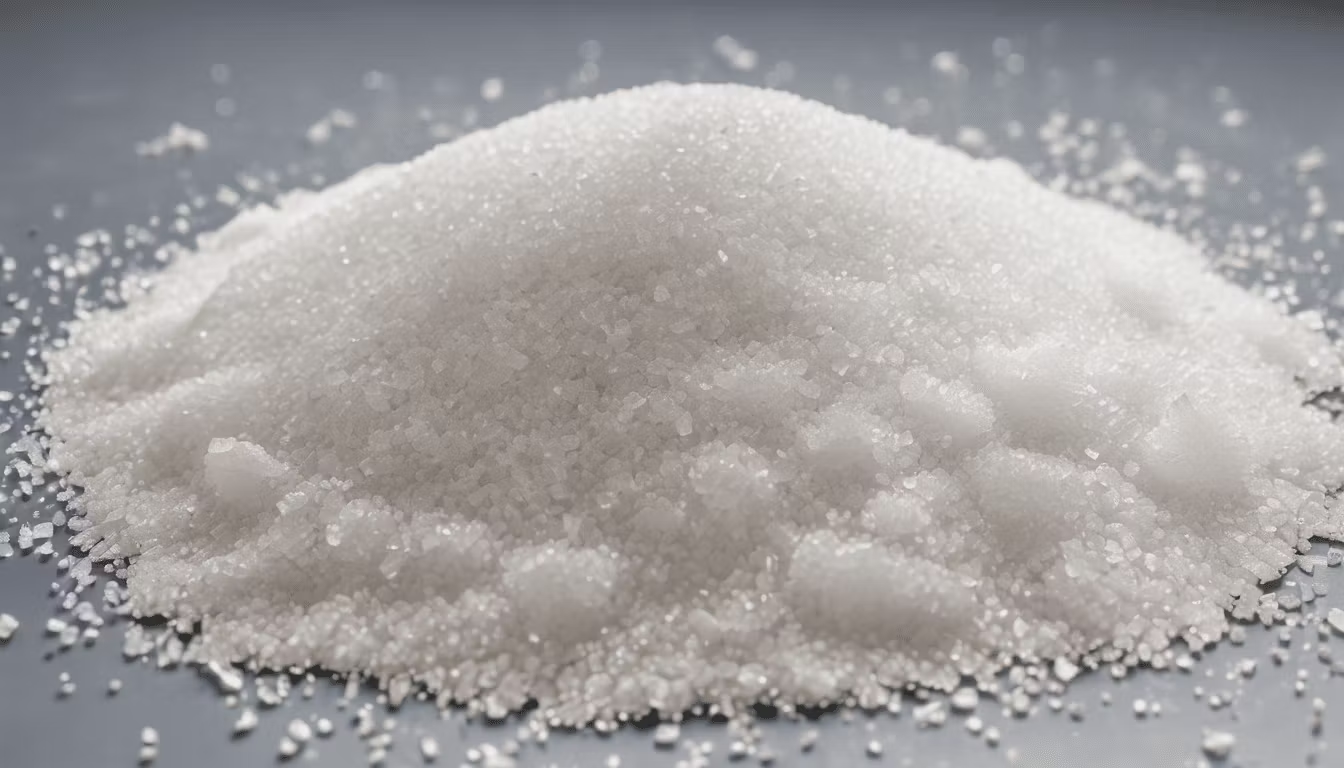
Glass-grade silica sand, also known as quartz sand for optical and transparent applications, is a refined form of silicon dioxide (SiO2) that meets stringent purity and consistency requirements. Unlike industrial-grade silica used in construction or water filtration, glass-grade material demands minimal iron oxide contamination, consistent particle size distribution, and trace element control.
The primary component—silicon dioxide—typically comprises 99.5% to 99.8% of the total composition in premium glass-grade silica. However, the remaining 0.2% to 0.5% becomes critically important, as these trace elements directly influence glass clarity, color, melting behavior, and optical properties.
Critical SiO2 Purity Requirements
Glass manufacturers specify SiO2 content based on their end-product requirements. Here's how purity tiers break down across major glass categories:
Float Glass (Architectural & Automotive): Requires 99.5% to 99.7% SiO2 with iron oxide (Fe2O3) typically limited to 0.03% to 0.06%. Lower iron content prevents unwanted greenish or brownish tints in clear glass.
Borosilicate & Laboratory Glass: Demands 99.7% to 99.8% SiO2 with Fe2O3 below 0.02%, ensuring excellent thermal stability and chemical resistance.
Soda-Lime Glass (Containers & Glassware): Accepts 99.5% to 99.7% SiO2 with slightly higher iron tolerance (0.06% to 0.10%) since darker container glass masks minor impurities.
High-Tech Applications (Optical, Solar, Fiber): Requires 99.8% or higher SiO2 purity with comprehensive trace element control (aluminum, iron, titanium all <0.01%).
Mesh Grades and Particle Size Distribution
Standard Mesh Specifications for Glass Production
Particle size consistency directly affects glass melting temperature, homogeneity, and production speed. The glass industry uses standardized mesh grades following Tyler or ASTM specifications:
Mesh 8 to 30: Coarser grades used in conventional glass furnaces, offering faster melting rates. Typical for large-scale float glass and container production.
Mesh 30 to 100: Medium grades providing balanced melting characteristics and energy efficiency. Widely used across architectural, automotive, and specialty glass manufacturing.
Mesh 100 to 200: Fine grades for applications requiring precise control over melt viscosity and homogeneity. Essential for optical glass, solar applications, and precision casting glasses.
Mesh 200+: Ultra-fine grades for advanced applications including fiber optics, precision optics, and specialty coating applications.
Particle Size Distribution (PSD) Consistency
Beyond target mesh size, glass manufacturers require tight particle size distribution to minimize variability in furnace behavior. A well-controlled PSD ensures:
- Uniform melting rates across furnace batches
- Consistent glass viscosity and workability
- Reduced energy consumption during production
- Improved optical clarity and color consistency
- Lower scrap and rework rates
Professional suppliers provide particle size analysis reports confirming the percentage of material within specified ranges, typically showing less than 5% variation from target mesh grades.
Critical Quality Standards and Testing Protocols
International Quality Benchmarks
Leading glass manufacturers reference several international standards when evaluating silica sand quality:
ISO 12103-1 (Test Dust): Establishes purity and particle size standards for test materials, often referenced as a baseline for glass-grade silica quality.
ASTM C33 (Standard Specification for Concrete Aggregates): While designed for concrete, many glass producers reference iron content and impurity limits from this standard.
EN 12457 (Characterization of Waste - Leaching): European standard ensuring trace element solubility and environmental safety.
DIN 1171 (Glass Sand): German standard providing comprehensive chemical composition and physical property specifications for glass-grade silica.
Essential Lab Testing and Certification
Reputable silica suppliers conduct comprehensive third-party laboratory testing. Key analyses include:
Chemical Composition Analysis (ICP-OES/XRF): Determines precise SiO2 content and quantifies trace elements including iron, aluminum, titanium, and rare earth elements.
Particle Size Distribution (Laser Diffraction/Sieving): Confirms mesh grade accuracy and particle size uniformity.
Loss on Ignition (LOI): Measures moisture and organic impurities, typically limited to 0.5% for quality glass-grade material.
Bulk Density Testing: Ensures material packing consistency for volume-based contracts.
Acid Insoluble Residue: Identifies contaminants resistant to acid digestion.
Iron Oxide and Trace Element Control
Why Iron Content Matters in Glass Production
Iron oxide (Fe2O3) represents the most critical controlled impurity in glass-grade silica sand. Even at concentrations below 0.1%, iron significantly affects glass properties:
Color Impact: Iron causes greenish tints in clear glass at concentrations above 0.05%. For colorless applications (architectural glass, optical components), iron must remain below 0.03%.
Melting Behavior: Iron alters glass viscosity and melting temperature, potentially requiring furnace adjustments and affecting energy costs.
Optical Properties: High iron content increases visible light absorption and reduces light transmission in solar glass applications.
Other Trace Elements Requiring Control
Aluminum Oxide (Al2O3): Typically limited to 0.02-0.15% depending on glass type. Affects melting characteristics and mechanical strength.
Titanium Dioxide (TiO2): Should remain below 0.01% for clear glass. Higher concentrations cause haziness and color shifts.
Calcium and Magnesium: Controlled to 0.01-0.05% combined, as these affect glass hardness and thermal expansion.
Chromium and Cobalt: Must be minimal (typically <0.001%) as they cause color contamination even at trace levels.
Sourcing Considerations for Glass Manufacturers
Direct-from-Mine Advantages
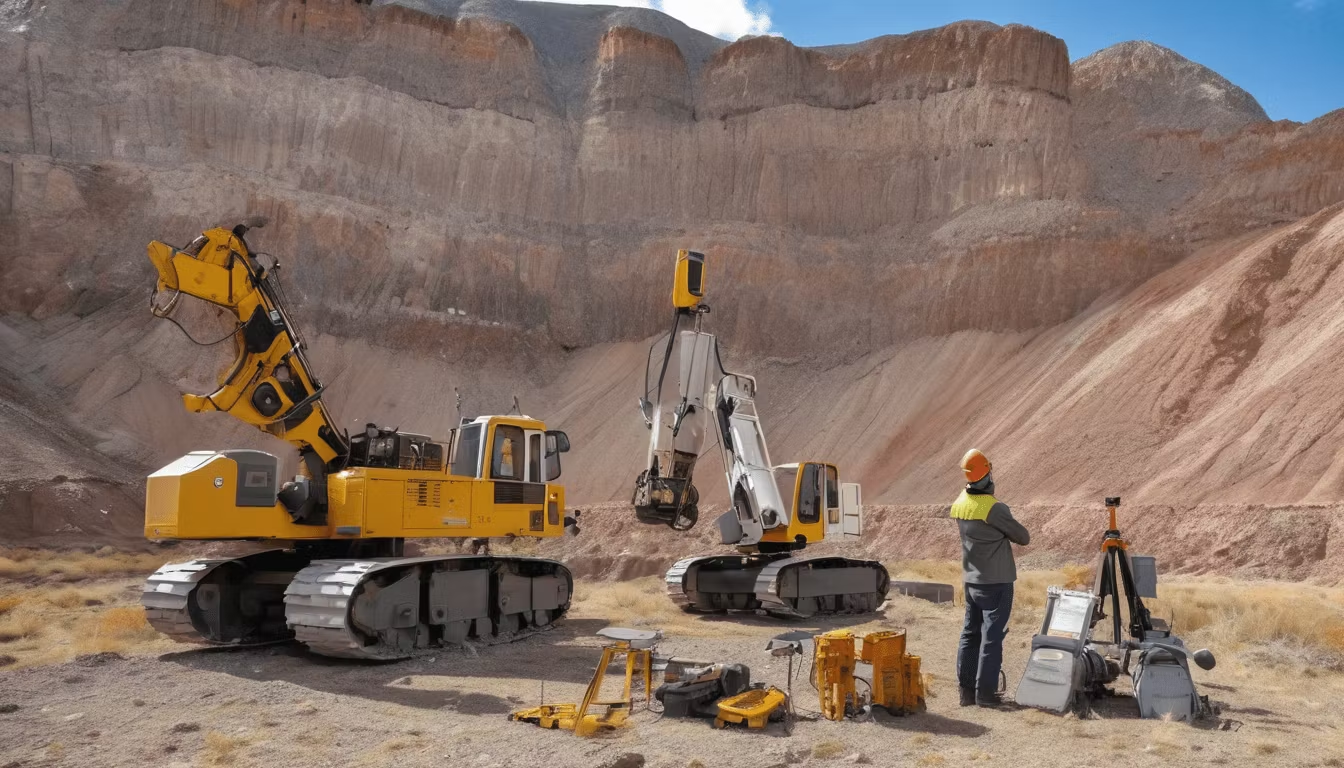
Sourcing silica sand directly from verified mining operations—rather than through multiple trading intermediaries—offers distinct advantages for glass manufacturers. Direct relationships enable:
- Consistent material quality from controlled mining areas
- Better pricing through elimination of trading margins
- Faster supply chain responsiveness and custom specifications
- Transparent quality documentation and chain-of-custody tracking
- Long-term partnership stability and priority allocation
Supplier Certification and Compliance Requirements
Qualified silica suppliers should demonstrate:
- Valid mining permits (IUP/OPK licenses in Indonesia)
- Third-party laboratory testing credentials (ISO 17025 accreditation preferred)
- Environmental compliance and sustainable extraction practices
- Quality management systems (ISO 9001 certification)
- Export licenses for international shipments
- Regulatory approvals from industry authorities
Comparing Silica Sand to Alternative Raw Materials
Silica Sand vs. Recycled Glass Cullet
While recycled glass (cullet) reduces production costs and environmental impact, virgin silica sand remains essential for maintaining color control and chemical purity, especially in architectural and specialty glass production. Most manufacturers blend 20-40% cullet with virgin silica to balance economics and quality.
Silica Sand vs. Engineered Oxides
Synthetic or engineered silicon dioxide offers ultra-high purity but at significantly higher cost, typically 3-5 times more expensive than natural silica sand. These materials suit only specialized applications like precision optics or advanced coatings.
Practical Procurement Guidelines for Glass Manufacturers
Specification Checklist
When evaluating silica sand suppliers, ensure specifications include:
- Guaranteed SiO2 content percentage
- Maximum allowable iron oxide content (Fe2O3)
- Particle size distribution within defined ranges
- Loss on ignition (moisture/organic matter limits)
- Certificate of Analysis from accredited laboratory
- Quantity guarantees and delivery schedules
- Price structure and volume discounts
- Quality assurance procedures and sampling protocols
Volume and Trial Orders
Reputable suppliers offer flexible ordering from small trial quantities (100 metric tons) through large-scale annual contracts (2.5+ million metric tons). This flexibility enables glass manufacturers to:
- Test material compatibility with existing furnaces
- Evaluate impact on production efficiency
- Confirm color and optical consistency
- Secure preferred pricing with volume commitments
Industry Best Practices for Glass-Grade Silica Management
Storage and Handling
Maintain silica sand quality through production by:
- Storing material in covered, moisture-controlled facilities
- Protecting from atmospheric contamination and bird droppings
- Using separate handling equipment dedicated to silica (preventing cross-contamination)
- Regularly inspecting material for visual anomalies before furnace loading
- Implementing quarantine procedures for suspect batches
Quality Verification Upon Receipt
Glass manufacturers should implement incoming quality checks:
- Visual inspection for color, moisture, and foreign materials
- Periodic lab testing (sampling every 10-20 shipments minimum)
- Comparison against supplier's Certificate of Analysis
- Documentation of any discrepancies for supplier accountability
Conclusion: Selecting Your Silica Sand Partner
High-quality silica sand remains the foundation of superior glass manufacturing. Success requires partnering with suppliers who understand the exacting specifications, maintain rigorous quality controls, and provide transparent documentation backed by accredited laboratory testing.
If you're a glass manufacturer seeking reliable silica sand specifications and consistent quality, consider evaluating suppliers with verified mining operations, direct-from-source advantages, and comprehensive quality assurance. The right partnership delivers not just raw material, but production reliability, cost efficiency, and the confidence that your glass products meet the highest quality standards.
CV Indoalam Mineral Persada specializes in high-purity quartz sand specifications for glass manufacturing, with SiO2 purity reaching 99.74% and multiple mesh grades (8-200) available for both domestic and international markets. Our materials are SUCOFINDO lab-tested, IUP OPK licensed, and sourced directly from carefully managed operations in Sulawesi, Kalimantan, and Maluku. Whether you require trial quantities for specification confirmation or multi-million-ton annual contracts, we offer the flexibility, quality assurance, and competitive pricing that modern glass manufacturers demand. Contact us today to discuss your silica sand requirements and discover why leading glass producers throughout Indonesia trust Indoalam as their preferred mineral supplier.