Silica Sand Beneficiation: Complete Guide to Washing, Screening & Separation
Understanding Silica Sand Beneficiation: A Comprehensive Overview
Silica sand beneficiation is a critical process in modern mineral processing that transforms raw quartz deposits into high-quality industrial sand suitable for demanding applications. Whether you're sourcing material for glass manufacturing, ceramics production, foundries, or water treatment systems, understanding the beneficiation process directly impacts your product quality and operational efficiency.
Silica sand in its natural state contains various impurities and minerals that must be removed to meet strict industrial specifications. The beneficiation process—which includes washing, screening, and magnetic separation—ensures consistent quality, optimal particle size distribution, and minimal contamination. For B2B buyers working with mining suppliers like Indoalam, comprehending these processes helps in quality verification and procurement decisions.
What Is Silica Sand Beneficiation?
Silica sand beneficiation refers to a series of physical processing techniques designed to improve the grade and purity of raw silica sand. The goal is to increase the silicon dioxide (SiO2) content while removing undesirable minerals, organic matter, and iron oxides that could compromise the final product's performance.
Raw silica sand extracted from mines in regions like Sulawesi and Kalimantan typically contains naturally occurring iron minerals, feldspar, mica, and other impurities. Industrial buyers—especially those in glass manufacturing and high-precision ceramics—require sand with SiO2 content exceeding 99%, which is only achievable through systematic beneficiation.
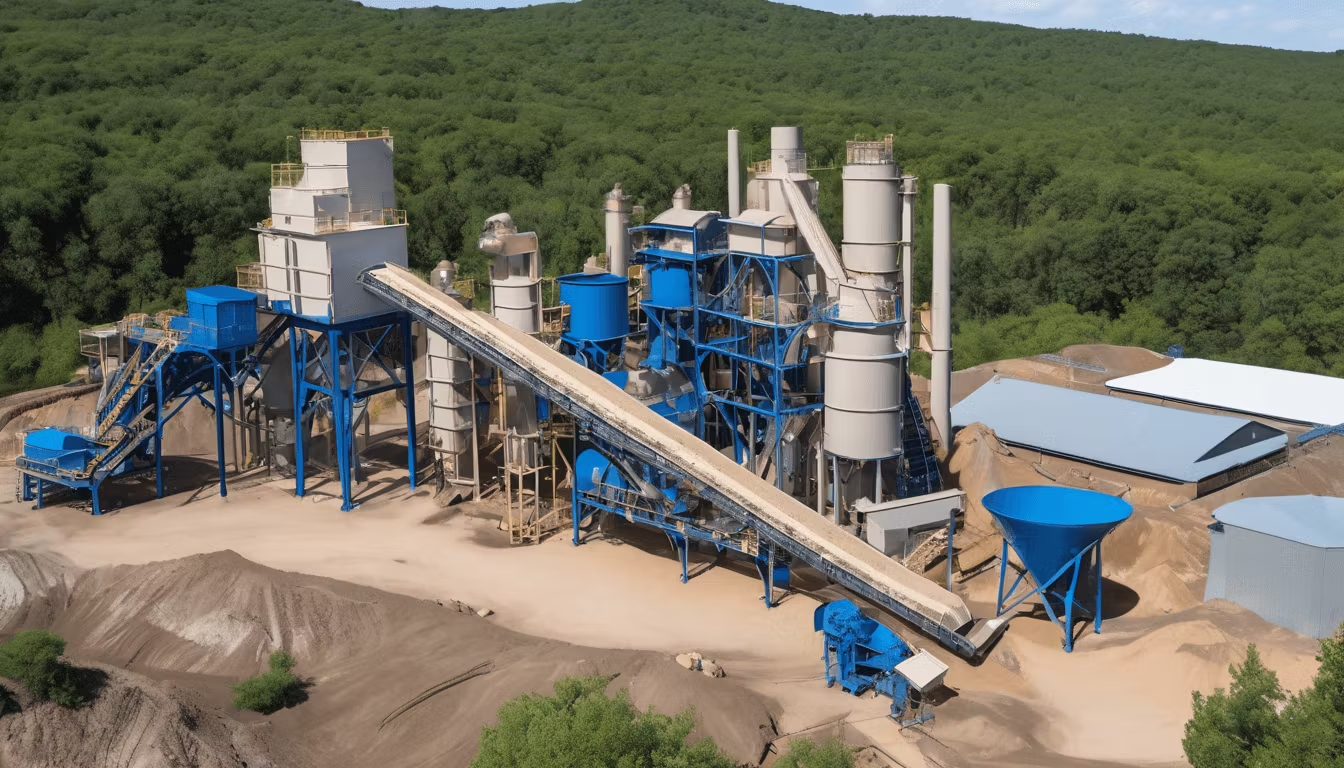
The typical beneficiation workflow follows three primary stages: wet processing (washing), size classification (screening), and contaminant removal (magnetic separation). Each stage serves a distinct purpose while contributing to the overall quality enhancement.
The Sand Washing Process: Removing Surface Contaminants
Why Sand Washing Matters
A sand washing plant is the first and often most critical step in silica sand beneficiation. Water washing removes clay minerals, silt, organic matter, and weathered surface coatings that accumulate during mining and transportation. This initial cleaning dramatically improves the sand's chemical and physical properties.
Most industrial-grade silica sand beneficiation begins with primary washing using high-volume water jets and mechanical attrition. The friction between sand grains in the washing vessel breaks down clay particles and coatings, which are then discharged with the wash water into settling tanks.
Washing Equipment and Methods
Modern sand washing plants employ several equipment types optimized for different mineral characteristics:
Spiral Classifiers: These use rotating spirals in inclined tanks to separate sand from clay slurry. Heavier sand particles settle while lighter contaminants overflow into discharge systems.
Hydrocyclones: Centrifugal separation devices that use water pressure to classify particles by density and size. Hydrocyclones are particularly effective for fine sand (<100 mesh) because they handle higher throughput with minimal water consumption.
Attrition Scrubbers: Mechanical devices that create particle-on-particle friction, essential for breaking clay coatings from sand grains. These work in conjunction with water jets for maximum contaminant removal.
Quality sand washing plants operate in multiple stages. First-stage washing removes bulk clay and heavy organics. Secondary washing further reduces impurities, often followed by rinse cycles using clean water to prevent salt accumulation.
Screening and Classification: Achieving Precise Size Distribution
Understanding Mesh Grades
After washing, sand processing enters the classification phase where particles are sorted by size. Silica sand is graded using mesh numbers—ranging from 8 mesh (coarse, ~2.4mm) to 200 mesh (fine, ~75μm) or finer. Different industries demand specific mesh grades: float glass producers prefer -100/+200 mesh, while foundries may require -40/+100 mesh.
Vibrating Screens and Classifiers
Industrial sand processing relies on multiple-deck vibrating screens to separate material into precise size fractions. Modern screening equipment uses polyurethane or stainless steel mesh to withstand abrasive sand and maintain accuracy across production runs.
The screening process serves two critical functions: (1) ensuring particles meet target size specifications, and (2) removing oversized contaminants that escape earlier processing stages. Screen efficiency directly impacts the final product's uniformity and performance in end-use applications.
Product Classification
Industrial customers typically receive sand in specific size fractions, often as blends. For example, a glass manufacturer might require a 90% -120/+200 mesh and 10% -200 mesh composition to optimize melting characteristics and glass quality. Precise classification ensures each product batch maintains consistency that customers depend on.
Magnetic Separation: Eliminating Iron Impurities
The Critical Role of Iron Removal
Magnetic separation sand processing represents one of the most important quality control steps in modern beneficiation. Iron minerals—including magnetite, hematite, and other iron oxides—must be removed because even trace amounts (often as little as 0.1% Fe2O3) can compromise product performance.
Iron impurities cause several problems in downstream applications: in glass manufacturing, iron creates unwanted coloration; in ceramics, it weakens structural integrity; in foundries, it interferes with metal casting quality. This is why glass manufacturers and precision ceramic producers specifically require sand with iron content below 0.05%.
Magnetic Separation Technology
The most effective magnetic separation sand systems use rare-earth magnetic separators, which generate magnetic fields exceeding 15,000 gauss. These separators can capture ferromagnetic particles (magnetite) and paramagnetic particles (hematite, limonite) that would be missed by conventional electromagnets.
Dry Magnetic Separation: Applied after screening, dry separation uses permanent magnets or electromagnets to extract iron minerals from sand streams. This method is rapid, requires no additional water, and works efficiently for coarser fractions (>100 mesh).
Wet Magnetic Separation: Used for finer fractions, wet separators handle sand suspended in water slurries. High-intensity wet magnetic separators can achieve lower residual iron levels, typically reducing Fe2O3 to 0.02-0.05%, meeting stringent glass industry requirements.
Multi-Stage Magnetic Processing
Premium sand processing facilities employ multiple magnetic separation stages. First-stage separation removes coarse magnetic particles, while secondary stages progressively refine the product. Some advanced plants use both dry and wet magnetic separation in sequence, achieving iron content below 0.01%.
Quality Assurance in Silica Sand Beneficiation
Laboratory Testing and Certification
Reliable suppliers implement comprehensive testing protocols throughout the beneficiation process. Independent laboratories—such as SUCOFINDO in Indonesia—verify key quality parameters including:
- SiO2 content (typically 99.5-99.8% for industrial grade)
- Iron oxide (Fe2O3) content
- Aluminum oxide (Al2O3) and other oxide impurities
- Particle size distribution
- Moisture content
- Bulk density
Certificates of Analysis should accompany each shipment, documenting test results for chemical composition and physical properties. This documentation is essential for B2B buyers requiring traceability and quality consistency.
Process Control Monitoring
Modern sand processing facilities maintain strict operational controls at each beneficiation stage. Real-time monitoring of wash water clarity, screen throughput, and magnetic field strength ensures the process remains within specification throughout production runs.
Industrial Applications Requiring High-Quality Beneficiated Sand
The investment in comprehensive silica sand beneficiation reflects the demanding requirements of major industrial consumers:
Float Glass Manufacturing: Requires ultra-pure sand with minimal iron and precise size distribution. The beneficiation process ensures consistent melting characteristics and prevents color defects.
Foundry Operations: Benefits from sand processing that produces consistent permeability and strength. Clean sand improves casting surface finish and reduces defect rates.
Ceramic and Tile Production: Demands low iron content and specific mesh grades. Zircon sand and silica blends require careful beneficiation to achieve the desired firing characteristics.
Water Treatment Systems: Filtration-grade sand must be thoroughly washed and classified. Proper beneficiation ensures consistent flow rates and filtration efficiency across treatment columns.
Construction Materials: Concrete and mortar producers rely on beneficiated sand for strength and durability. Contaminant-free sand improves binding characteristics and long-term performance.
Choosing a Beneficiation-Focused Silica Sand Supplier
What to Verify When Sourcing
When evaluating silica sand suppliers, understanding their beneficiation capabilities is crucial. Leading suppliers maintain state-of-the-art sand washing plants, multiple-stage screening systems, and magnetic separation equipment. They should demonstrate:
- In-house beneficiation facilities with documented equipment specifications
- Regular third-party laboratory testing and published certificates
- Consistent quality metrics across multiple shipments
- Flexible supply capability from trial quantities to large volume contracts
- Transparent documentation of sourcing regions and processing methods
The Indoalam Advantage
CV Indoalam Mineral Persada operates integrated mining and beneficiation operations across premium silica deposits in Sulawesi, Kalimantan, and Maluku. Our facilities process raw sand through comprehensive washing, screening, and magnetic separation systems, delivering material that consistently meets international industrial standards.
With IUP OPK licensing and SUCOFINDO certification, we provide verified quality assurance on every shipment. Whether you require specialty mesh grades, ultra-low iron content for glass manufacturing, or bulk quantities for construction applications, our beneficiation infrastructure supports flexible sourcing from 100 metric ton trials to 2.5 million metric ton annual contracts.
Beyond silica sand, Indoalam supplies complementary industrial minerals including nickel ore, aluminium ingot, and zircon sand—all subject to the same rigorous beneficiation and quality control standards.
Conclusion: Strategic Sourcing of Beneficiated Silica Sand
Silica sand beneficiation—encompassing washing, screening, and magnetic separation—is not an optional process but a fundamental requirement for meeting modern industrial specifications. Understanding these processes empowers B2B buyers to evaluate supplier capabilities, negotiate informed specifications, and ensure consistent quality in their operations.
The evolution toward higher-purity, consistently-graded materials reflects the sophistication of contemporary manufacturing. Glass plants, foundries, ceramics producers, and infrastructure projects worldwide depend on beneficiated sand that has been systematically processed to remove contaminants and achieve precise size distributions.
For organizations sourcing industrial silica sand, the investment in understanding beneficiation processes pays dividends through improved product performance, reduced defect rates, and operational reliability. Partner with suppliers who prioritize comprehensive beneficiation and transparent quality documentation—your downstream operations depend on it.
Ready to source premium beneficiated silica sand? Contact us to discuss your specific requirements and discover how Indoalam's processing capabilities can support your operations with consistent, certified-quality material.