Nickel Alloys for Industrial Applications: A Complete Guide

Introduction to Nickel Alloys in Modern Industry
Nickel alloys have become indispensable in modern manufacturing, powering everything from aerospace engines to chemical processing plants. As an element, nickel provides exceptional durability, corrosion resistance, and high-temperature stability—properties that manufacturers cannot achieve with conventional steels alone. For B2B buyers sourcing materials for demanding industrial applications, understanding nickel alloys industrial performance characteristics is essential to making informed procurement decisions.
The global nickel alloys market continues to expand as industries demand materials capable of withstanding extreme conditions. Whether you're operating a smelter, foundry, or manufacturing facility, the right nickel alloy selection can dramatically improve equipment longevity, reduce maintenance costs, and enhance operational safety. This guide explores the key types, applications, and selection criteria for nickel alloys industrial use, helping you identify the best material for your specific requirements.
Understanding High-Temperature Nickel Alloy Properties
Why Nickel Excels at High Temperatures
High-temperature nickel alloys maintain their structural integrity and strength at temperatures where conventional steel would fail. The exceptional heat resistance of these materials stems from their crystalline structure and alloying elements. When nickel is combined with elements like chromium, cobalt, aluminum, and titanium, the resulting high-temperature nickel materials can operate reliably at 1000°C and beyond.
The thermal stability of nickel-based superalloys comes from their face-centered cubic (FCC) crystal structure, which remains stable even under extreme heat. This crystalline arrangement prevents the material from becoming brittle or losing strength, making high-temperature nickel the preferred choice for aerospace turbines, furnace components, and industrial reactors. For manufacturers requiring materials that perform consistently in hot environments, these alloys represent a non-negotiable investment in reliability.
Strength Retention and Creep Resistance
One critical advantage of high-temperature nickel materials is their exceptional creep resistance—the material's ability to resist gradual deformation under sustained heat and stress. This property is particularly valuable in applications like gas turbine blades, where even microscopic dimensional changes can compromise performance. Inconel and Monel alloys, two leading superalloy families, deliver superior creep resistance compared to iron-based alternatives, making them essential for aerospace and power generation industries.
Inconel and Monel Alloys: Industry Standards
Inconel Alloys Industrial Applications
Inconel Monel alloys represent the gold standard in high-performance materials for industrial professionals. Inconel, a nickel-chromium superalloy, is engineered for extreme environmental stressors. Common variants include Inconel 625 and Inconel 718, each formulated for specific industrial demands. Inconel 625 excels in corrosive marine and chemical environments, while Inconel 718 is preferred for aerospace applications requiring exceptional fatigue strength. Industries from oil and gas to chemical manufacturing rely on Inconel Monel alloys for mission-critical components.
The versatility of Inconel materials extends across numerous sectors. Turbine engines, exhaust systems, and high-pressure vessels all benefit from the superior strength-to-weight ratio that Inconel Monel alloys provide. When manufacturers specify these alloys, they're investing in materials that deliver decades of service life even in the most corrosive and thermally demanding environments.
Monel Alloys for Corrosion-Critical Applications
Monel alloys, copper-nickel based superalloys, dominate industries requiring exceptional resistance to seawater, acids, and alkaline solutions. With nickel content typically ranging from 63-70%, Monel offers unmatched performance in marine applications, desalination plants, and chemical processing. A corrosion resistant alloy like Monel 400 can withstand decades of exposure to aggressive saltwater environments without significant material loss, making it the economic choice for long-term marine infrastructure projects.
What distinguishes Monel from other corrosion resistant alloy options is its resistance to both general corrosion and localized attack mechanisms like pitting and crevice corrosion. This dual protection makes Monel particularly valuable in unpredictable industrial environments where environmental conditions fluctuate. Engineers and procurement professionals consistently specify Monel when conventional stainless steels demonstrate inadequate performance in high-chloride or acidic conditions.
Industrial Applications of Nickel Alloys
Aerospace and Jet Engine Components
Jet engines represent perhaps the most demanding application environment for nickel alloys industrial materials. Turbine blades, casings, and combustor liners operate at temperatures exceeding 1100°C while enduring extreme mechanical stress and vibration. High-temperature nickel superalloys like Inconel enable engines to achieve better fuel efficiency, higher power output, and extended service intervals. Every modern commercial aircraft relies on nickel alloys to safely deliver passengers across continents.
Chemical Processing and Petrochemical Industries
Chemical manufacturers depend on corrosion resistant alloys to safely handle aggressive process fluids. Whether processing strong acids, alkaline solutions, or complex hydrocarbon streams, nickel alloys industrial equipment prevents equipment failure and product contamination. A monel alloy heat exchanger or reactor vessel can maintain integrity for 20+ years in environments that would destroy carbon steel equipment in months. For chemical producers managing thin profit margins, material selection directly impacts operational economics and safety compliance.
Power Generation and Heavy Industrial Manufacturing
Coal-fired and gas-fired power plants utilize high-temperature nickel materials in furnace tubes, superheater components, and steam generator applications. The ability of nickel alloys industrial-grade variants to maintain mechanical properties at elevated temperatures directly translates to improved thermal efficiency and reduced maintenance costs. Similarly, foundries, metal casters, and heavy equipment manufacturers specify nickel-containing alloys for crucibles, casting dies, and specialized tooling that endures thermal cycling.
Marine and Offshore Applications
The marine environment presents one of the most corrosive service conditions available. A corrosion resistant alloy must withstand the combined assault of dissolved salts, oxygen, and microbiological activity. Monel alloys and specialized nickel-copper variants have become the standard material for offshore drilling equipment, desalination plants, and coastal infrastructure. The higher material cost of these alloys is quickly recovered through extended service life and reduced replacement frequency.
Material Selection Guide for Nickel Alloys
Assessing Your Operating Environment
Effective material selection begins with accurately characterizing your operating environment. Consider the following critical factors: maximum service temperature, chemical composition of process fluids, mechanical stress levels, corrosive attack mechanisms, and required service life. For high-temperature applications exceeding 800°C, nickel superalloys become essential. For corrosive environments, a corrosion resistant alloy specifically formulated for your chemical exposure delivers superior performance compared to general-purpose materials.
Cost-Benefit Analysis and Total Cost of Ownership
While nickel alloys command premium prices compared to conventional steels, lifecycle cost analysis frequently justifies the investment. A high-temperature nickel component lasting 10 years costs less per year of service than a cheaper alternative requiring replacement every 3 years. When factoring in maintenance labor, production downtime from equipment failures, and product losses from contamination, the total cost of ownership strongly favors premium material selection. Forward-thinking manufacturers understand that superior materials reduce hidden costs throughout the production lifecycle.
Inconel vs. Monel: Choosing the Right Alloy Family
Inconel Monel alloys serve different primary markets. Select Inconel for demanding high-temperature applications where strength and thermal stability dominate. Choose Monel when corrosion resistance and marine environments represent the primary challenge. Some applications benefit from hybrid approaches, using Inconel for hot zones and Monel for corrosive exposure areas. Consulting with material specialists helps ensure your selection optimizes performance against your specific challenge.
Quality Raw Materials: The Foundation of Premium Alloys
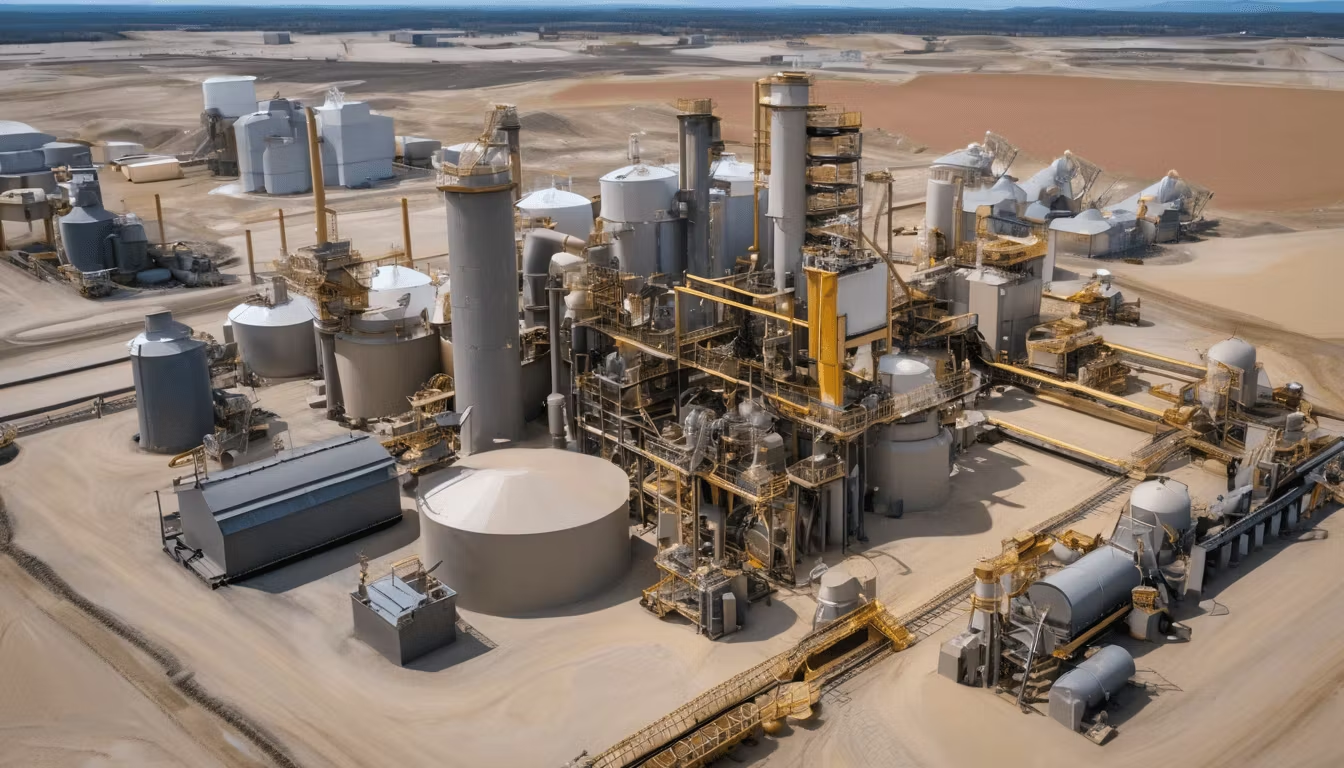
The performance characteristics of finished nickel alloys depend directly on the purity and consistency of raw materials entering the production process. Nickel smelters and alloy manufacturers require high-quality nickel ore with verified nickel content and minimal impurities. Contaminants like sulfur, iron, or silica can compromise the final alloy's properties, leading to premature failures in critical applications. This is why leading alloy producers source from established, quality-certified suppliers capable of delivering consistent material specifications.
For organizations involved in nickel production or alloy manufacturing, partnering with reliable mineral suppliers ensures stable access to premium feedstock. Consistent quality raw materials enable manufacturers to maintain predictable alloy properties and meet demanding customer specifications. This supply chain reliability becomes a competitive advantage in industries where material consistency directly impacts end-product reliability.
Emerging Trends in Nickel Alloys Technology
Single-Crystal and Directionally-Solidified Superalloys
Advanced manufacturing techniques now enable production of single-crystal nickel superalloys with grain boundaries eliminated. These materials deliver even superior creep resistance and thermal fatigue resistance compared to conventional polycrystalline alloys. Aerospace manufacturers increasingly specify single-crystal Inconel components for next-generation turbines, pushing the boundaries of what high-temperature nickel materials can achieve.
Additive Manufacturing and Nickel Alloy Powders
3D printing technologies have opened new applications for nickel alloys industrial materials. Metal powder production for additive manufacturing creates opportunities for complex geometries impossible to achieve through traditional casting or machining. This technology enables lighter components with optimized internal structures, particularly valuable for aerospace and medical applications where weight reduction and performance both matter critically.
Partnering with Trusted Nickel Suppliers
Your success in deploying nickel alloys depends not just on material selection, but on establishing reliable partnerships with quality-focused suppliers. When sourcing nickel ore, silica sand, or other industrial minerals, verify that your supplier maintains proper certifications, conducts rigorous quality testing, and can deliver consistent specifications. Leading suppliers like Indoalam combine SUCOFINDO-certified testing protocols with IUP OPK licensing to guarantee material quality and regulatory compliance.
Flexible supply arrangements—from trial quantities to multi-million ton annual contracts—enable your operations to optimize procurement strategies. Direct sourcing from established mining companies eliminates middlemen and ensures material traceability throughout the supply chain. When you need reliable access to premium industrial materials, contact us to discuss your specific requirements and explore how we can support your operational objectives.
Conclusion: Making Informed Decisions About Nickel Alloys
Nickel alloys industrial applications continue expanding as manufacturers face increasingly demanding operational environments. Whether your challenge involves extreme temperatures, aggressive chemical exposure, or both, nickel-based superalloys like Inconel and Monel deliver proven performance. A corrosion resistant alloy correctly specified for your application represents an investment in equipment longevity, operational reliability, and ultimately, profitability.
The key to successful material selection lies in thoroughly understanding your operating environment, consulting with material experts, and partnering with reliable suppliers committed to quality. As you evaluate nickel alloys industrial options for your next project, remember that the lowest-cost material rarely represents the best value. Premium materials combined with consistent supply chain quality deliver measurable returns through extended equipment life, reduced downtime, and improved operational performance.