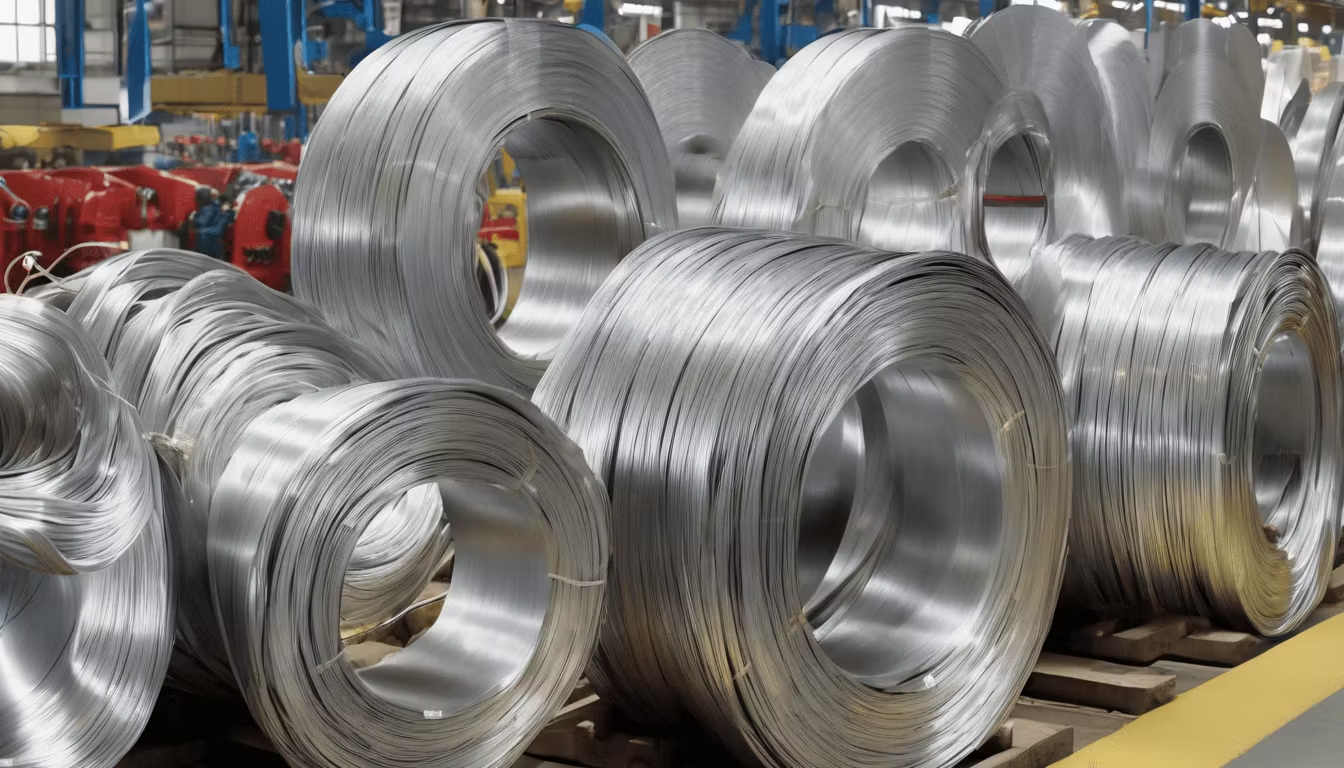
Aluminium Extrusion Process: How Ingots Become Profiles
Introduction to Aluminium Extrusion
The aluminium extrusion process stands as one of the most efficient and versatile manufacturing methods in the modern metalworking industry. From architectural frameworks to industrial components, extruded aluminium profiles form the backbone of countless applications across construction, automotive, aerospace, and manufacturing sectors. Understanding this transformative process—from raw aluminium ingot to finished profile—provides critical insight for B2B procurement professionals and industrial decision-makers.
Aluminium extrusion represents a cold-forming technique that forces heated metal through a precision die, creating profiles with consistent cross-sections and exceptional dimensional accuracy. This process has become the industry standard for producing complex geometries that would be difficult, expensive, or impossible to achieve through traditional casting or machining methods.
Understanding Aluminium Ingots: The Starting Material
What Are Aluminium Ingots?
Before extrusion begins, the process starts with high-quality aluminium ingots—the raw material foundation for the entire production chain. These ingots serve as the feedstock for extrusion presses, where they undergo transformation into the desired profiles. The quality of the ingot directly impacts the final product's mechanical properties, surface finish, and dimensional consistency.
Aluminium ingots are typically produced in two primary forms: rolling ingots for flat-rolled applications and extrusion ingots specifically designed for the extrusion press. Extrusion-grade ingots must meet strict chemical composition requirements, density specifications, and grain structure standards to ensure successful processing through the extrusion die.
Critical Ingot Specifications for Extrusion
Professional buyers in the metalworking industry recognize that ingot selection directly affects extrusion efficiency and output quality. Key specifications include:
Chemical Composition: Common extrusion alloys like ADC12 and A7 grade contain precisely balanced percentages of copper, silicon, magnesium, and other elements. These alloy additions provide specific mechanical properties—strength, corrosion resistance, heat treatability, and workability—essential for downstream applications.
Ingot Dimensions: Extrusion ingots typically range from 150mm to 254mm in diameter and vary in length based on the extrusion press specifications. Proper ingot sizing ensures optimal metal flow through the die and minimizes waste.
Grain Structure: The internal crystalline structure of ingots significantly influences extrusion success. Fine, uniform grain structures facilitate smoother metal flow and produce profiles with superior mechanical properties compared to coarser grain structures.
The Aluminium Extrusion Process: Step-by-Step
1. Ingot Preparation and Homogenization
The extrusion process begins with meticulous preparation of the aluminium ingot. Ingots are inspected for surface defects, cracks, or contamination that could compromise the final product. Any surface irregularities are removed through specialized scalping or surface preparation equipment.
Following inspection, ingots undergo homogenization—a critical heat treatment process where the ingot is heated to 450-500°C in specialized furnaces. This thermal cycle allows alloying elements to diffuse uniformly throughout the metal, eliminating segregation that naturally occurs during ingot casting. Homogenization typically requires 12-24 hours depending on ingot size and alloy composition, ensuring uniform internal structure before extrusion begins.
2. Preheating for Optimal Extrusion
Before entering the extrusion press, ingots must reach the precise temperature required for their specific alloy. Typically, extrusion temperatures range from 400°C to 500°C, depending on the aluminium alloy being processed. Optimal preheating achieves several critical objectives: reducing extrusion pressure requirements, improving metal flow characteristics, enabling higher extrusion speeds, and creating favorable metallurgical conditions for profile development.
Preheating furnaces maintain strict temperature control to within ±5°C of target specifications. Inadequate preheating results in incomplete metal flow and profile defects, while excessive heating causes grain growth and mechanical property degradation.
3. The Extrusion Press Operation
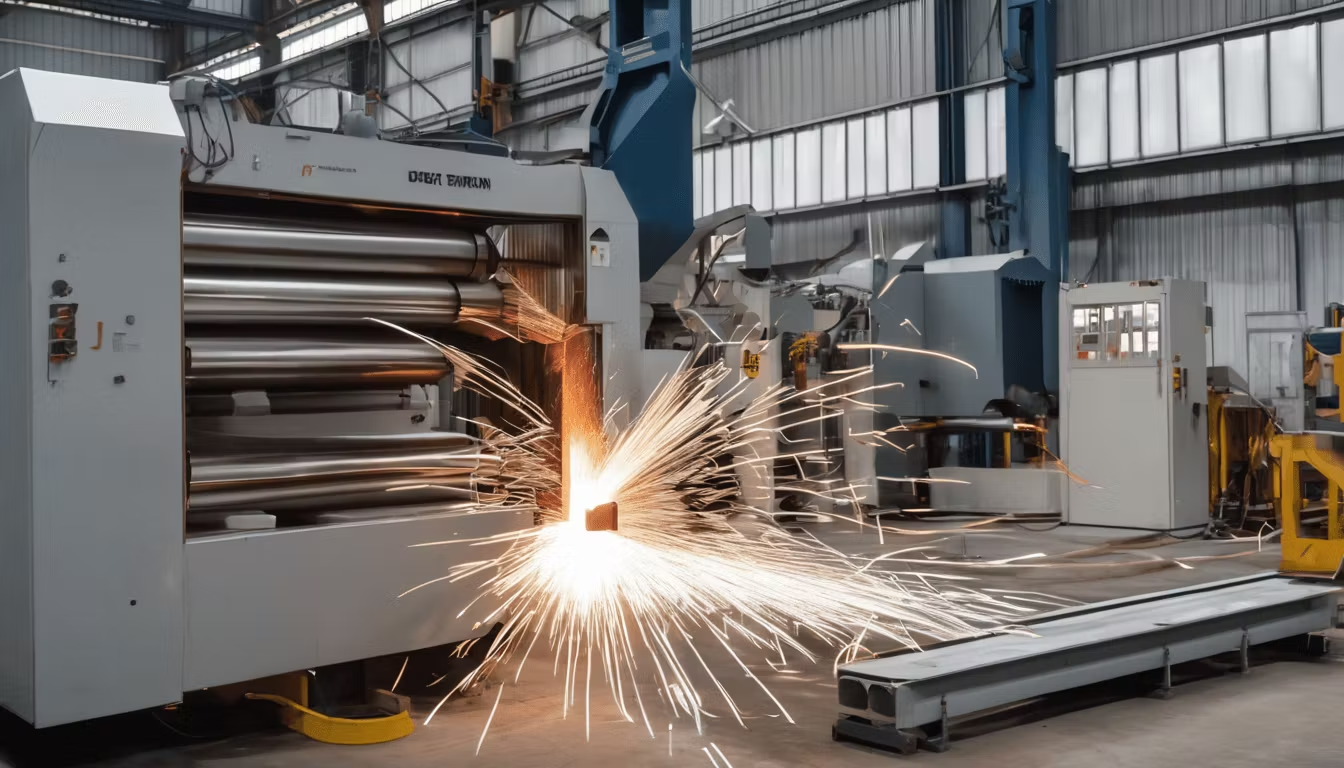
The extrusion press represents the heart of the process. Modern extrusion equipment operates with enormous hydraulic pressure—typically 500 to 6,000 bar—forcing heated aluminium ingots through precision-engineered dies. As the metal flows through the die cavity, it takes on the precise cross-sectional shape defined by the die geometry.
The preheated ingot is placed in the extrusion chamber, and a ram applies pressure, forcing the metal to flow through the die. This process continues as long as sufficient metal remains in the chamber—typically 20-40 seconds for standard extrusion runs. The extrusion ratio (the ratio of ingot cross-sectional area to profile cross-sectional area) directly influences extrusion speed and press pressure requirements.
4. Cooling and Quenching
Immediately after exiting the die, freshly extruded aluminium profiles are extremely hot—often exceeding 300°C. Rapid cooling through quenching halts precipitation hardening processes and locks in the desired metallurgical structure. Modern extrusion lines employ sophisticated water-cooling systems that spray cooling water onto the profile surface at precisely controlled rates.
The cooling strategy depends on the specific alloy and desired mechanical properties. Age-hardenable alloys like ADC12 require rapid quenching to maintain the solution-treated condition, while other alloys may utilize slower air cooling. Improper cooling can result in residual stress, dimensional distortion, or unwanted precipitation reactions.
5. Stretching and Straightening
Following cooling, profiles undergo stretching to relieve residual stress and improve dimensional straightness. Specialized stretching equipment applies controlled tension longitudinally through the profile, typically for 2-4 seconds. This process enhances flatness, straightness, and twist characteristics while improving mechanical property uniformity.
6. Heat Treatment (For Age-Hardenable Alloys)
Certain aluminium alloys, including ADC12 grade commonly used in applications requiring high strength, undergo precipitation hardening heat treatments. These multi-stage thermal cycles typically include solution heat treatment (480-510°C for 20-40 minutes) followed by artificial aging (150-180°C for 8-20 hours) to develop peak mechanical properties. This controlled heat treatment transforms the metallurgical structure, increasing strength while maintaining adequate ductility.
7. Profile Cutting and Finishing
After heat treatment and cooling, profiles are cut to specified lengths using automated flying saws or stationary cutting equipment. Precise dimensional control ensures profiles meet customer specifications. Following cutting, edges are deburred, surfaces may be cleaned or treated, and profiles are inspected for compliance with dimensional and quality standards.
Types of Aluminium Profiles and Applications
Understanding Billet Extrusion and Profile Varieties
The term "billet extrusion" refers to the direct extrusion process using solid ingots, distinguishing it from indirect extrusion or impact extrusion techniques. In billet extrusion, the ingot remains stationary while the die moves toward it—the most common industrial method for producing standard profiles.
Extruded aluminium profiles encompass diverse cross-sectional geometries optimized for specific applications. Structural profiles provide framework for industrial construction and architectural elements. Enclosure profiles create protective casings for electronics and control systems. Heat sink profiles feature specialized fin geometries that maximize thermal transfer for electronics cooling. Decorative profiles combine aesthetic appeal with functional requirements in architectural applications.
Industry-Specific Applications
Building and construction industries utilize extruded aluminium extensively for window frames, door systems, curtain walls, and structural beams. The automotive sector employs extrusions for frame components, heat management systems, and interior trim. Electronics manufacturers use aluminium profiles for heat sinks, equipment enclosures, and cable management systems. Industrial equipment builders incorporate extrusions in machinery frames, conveyors, and assembly systems.
Quality Standards and Testing in Aluminium Extrusion
B2B buyers rightfully demand rigorous quality assurance in aluminium profiles. Professional extrusion operations maintain comprehensive testing protocols including dimensional verification, tensile testing, hardness measurement, and microstructural analysis. ASTM, EN, and ISO standards provide internationally recognized specifications for aluminium alloys and profiles.
Reputable suppliers implement statistical process control systems that continuously monitor critical parameters. Surface quality inspection, conducted both visually and through electronic scanning, ensures profiles meet aesthetic and functional requirements. Material composition verification through X-ray fluorescence (XRF) confirms alloy specifications and prevents contamination.
Why Ingot Quality Matters for Extrusion Success
The relationship between aluminium ingot quality and extrusion output cannot be overstated. Premium ingots with consistent chemical composition, optimal grain structure, and minimal defects produce superior profiles with fewer rejects and faster extrusion cycles. Conversely, substandard ingots create numerous operational challenges: surface defects requiring rework, dimensional variations exceeding tolerances, inconsistent mechanical properties, and reduced extrusion press productivity.
Professional purchasing departments specify ingot suppliers based on documented quality systems, testing certifications, and consistent delivery performance. The slightly higher cost of premium ingots is rapidly offset by reduced scrap rates, improved press efficiency, and enhanced final product quality.
Optimizing Extrusion Operations Through Ingot Selection
Direct Sourcing vs. Distributor Networks
Forward-thinking industrial manufacturers increasingly recognize the strategic advantage of sourcing aluminium ingots directly from producers rather than through intermediate distributors. Direct relationships enable custom ingot specifications tailored to specific extrusion profiles, priority allocation during high-demand periods, volume flexibility accommodating production fluctuations, and transparent quality documentation supporting traceability.
Technical Partnerships for Extrusion Excellence
Leading aluminium ingot suppliers function as technical partners rather than commodity vendors. They provide metallurgical consultation optimizing alloy selection for specific applications, process advisory services improving extrusion efficiency, quality certification supporting customer compliance requirements, and flexible supply arrangements accommodating variable demand patterns.
Choosing the Right Aluminium Ingot Supplier
Selecting an aluminium ingot supplier represents a strategic decision impacting operational efficiency and product quality. Key evaluation criteria include: documented quality management systems (ISO 9001 certification or equivalent), chemical composition certification and testing protocols, supply consistency and reliability, technical support capabilities, flexibility in order sizing and delivery scheduling, pricing transparency and competitive positioning, and documented experience with your specific alloy requirements.
Reputable suppliers maintain comprehensive traceability systems enabling precise identification of ingot chemistry, production batch, heat treatment parameters, and testing results. This documentation proves invaluable for quality investigations, customer inquiries, and regulatory compliance.
The Future of Aluminium Extrusion Technology
The extrusion industry continues evolving with advances in die design, precision control systems, and metallurgical understanding. Modern presses incorporate automated ingot handling, real-time temperature monitoring, and sophisticated cooling management systems that optimize profile properties while reducing energy consumption. Emerging alloys expand capability boundaries, enabling profiles to serve increasingly demanding applications in aerospace, automotive, and renewable energy sectors.
Conclusion: Investing in Quality from Raw Material to Finished Profile
Understanding the aluminium extrusion process—from ingot preparation through final profile delivery—empowers B2B procurement decisions that drive competitive advantage. Quality begins with superior raw materials; premium aluminium ingots ensure optimal extrusion performance, superior profile properties, and reduced operational challenges.
CV Indoalam Mineral Persada has established itself as a trusted supplier of high-quality aluminium ingots meeting international specifications and domestic industrial requirements. With SUCOFINDO laboratory testing, comprehensive quality documentation, and flexible supply arrangements, Indoalam partners with extrusion operations throughout Indonesia, supporting their production excellence and operational efficiency.
For extrusion facilities seeking reliable ingot suppliers committed to quality, consistency, and technical partnership, contact us to discuss your specific requirements. Our technical team provides detailed consultation, comprehensive documentation, and customized supply solutions ensuring your extrusion operations maintain peak performance and product quality standards.