Silica Sand for Sandblasting: Complete Guide to Grades, Safety & Best Practices
Introduction: Why Silica Sand Remains the Industry Standard for Sandblasting
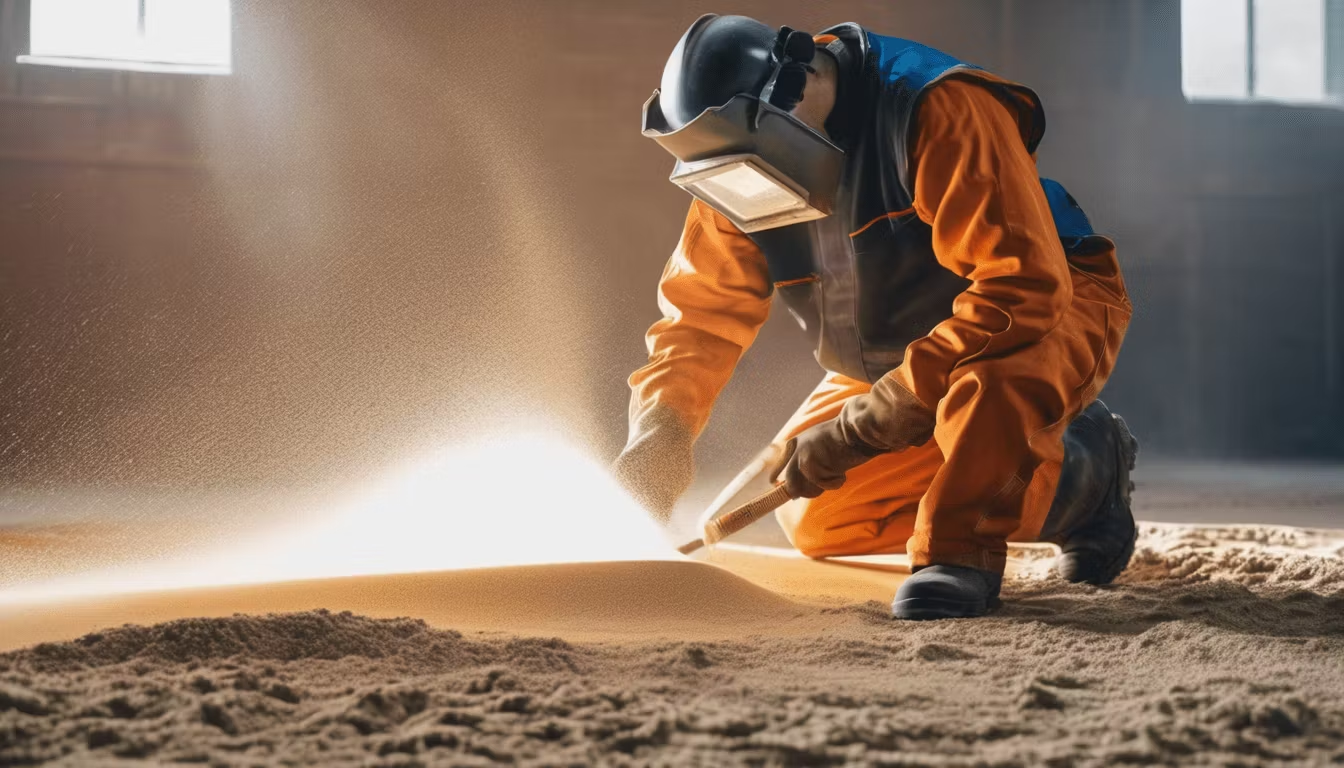
Sandblasting has been a cornerstone of surface preparation for over a century, and silica sand remains the most widely used abrasive media across manufacturing, construction, and industrial maintenance sectors. With its superior hardness (7.0 on the Mohs scale), angular particle geometry, and cost-effectiveness, silica sand continues to dominate applications requiring aggressive surface cleaning and preparation.
However, selecting the right abrasive blasting sand grade and implementing proper safety measures is critical for achieving optimal results while protecting workers and the environment. This comprehensive guide explores everything B2B buyers need to know about using silica sand for sandblasting operations.
Understanding Silica Sand Grades for Sandblasting Applications
Mesh Classification and Particle Size Standards
Silica sand for sandblasting is classified by mesh size, which directly impacts blasting efficiency, surface finish quality, and equipment wear rates. The mesh classification system measures particles per linear inch, with higher mesh numbers indicating finer particles.
Common sandblasting grades include:
- 8-12 Mesh: Coarse grade for heavy-duty removal of rust, paint, and mill scale. Best for structural steel preparation and foundry applications.
- 20-40 Mesh: Medium grade offering balanced cutting action and surface finish. Ideal for general manufacturing and maintenance work.
- 60-120 Mesh: Fine grade producing smoother finishes with minimal substrate damage. Preferred for precision metalwork and finishing operations.
- 120-200 Mesh: Ultra-fine grade for delicate surfaces and final aesthetic finishing. Used in aerospace, precision engineering, and restoration work.
CV Indoalam Mineral Persada supplies premium silica sand with SiO2 content of 99.74%, available in all these mesh grades to meet diverse industrial requirements across Indonesia and international markets.
Quality Specifications and Testing Standards
Professional-grade abrasive blasting sand must meet strict quality parameters to ensure consistent performance and worker safety. Key specifications include:
- SiO2 Content: Minimum 99% for high-efficiency blasting media
- Moisture Content: Typically less than 0.5% to prevent caking and bridging in storage
- Iron Oxide Content: Low levels (under 0.5%) to prevent surface contamination
- Hardness: Consistent Mohs hardness of 7.0 for uniform cutting action
- Particle Shape: Angular particles for superior cutting efficiency
All Indoalam silica sand products are tested and certified by SUCOFINDO, Indonesia's leading independent testing and certification body, ensuring compliance with international quality standards and customer specifications.
Health and Safety Considerations for Silica Sand Sandblasting
Crystalline Silica Dust: Understanding the Risks
The primary occupational health concern associated with silica sand sandblasting is exposure to crystalline silica dust, which can cause serious respiratory conditions including silicosis, chronic obstructive pulmonary disease (COPD), and lung cancer with prolonged exposure.
Regulatory agencies worldwide, including OSHA (United States), HSE (United Kingdom), and equivalent Indonesian authorities, have established strict exposure limits for respirable crystalline silica:
- OSHA Permissible Exposure Limit (PEL): 50 micrograms per cubic meter (8-hour TWA)
- ACGIH Threshold Limit Value (TLV): 25 micrograms per cubic meter
- EU Occupational Exposure Limit: 0.05 mg/m³ (respirable fraction)
These stringent standards reflect the serious health risks associated with uncontrolled silica dust exposure, making comprehensive safety protocols essential.
Engineering Controls and Equipment Requirements
Effective dust control is the foundation of safe sandblasting operations. Engineering controls should be prioritized over personal protective equipment (PPE) in the hazard control hierarchy:
Enclosed Blasting Cabinets: Fully enclosed systems with integral dust collection provide maximum protection and efficiency. These are ideal for smaller components and precision work.
Abrasive Blasting Rooms: Purpose-built facilities with local exhaust ventilation (LEV) systems capture dust at the source. Essential for large-scale operations and structural steel preparation.
Dust Collection Systems: High-efficiency particulate air (HEPA) filters and baghouse systems prevent dust escape into the workplace environment. Regular maintenance and filter replacement are critical.
Supplied Air Respirators: When engineering controls cannot eliminate exposure completely, supplied air respirators (not simple dust masks) must be provided and properly fitted to all workers.
Regulatory Compliance and Worker Health Monitoring
Organizations conducting sandblasting operations must establish comprehensive health and safety programs including:
- Regular workplace air quality monitoring and dust exposure assessment
- Medical surveillance programs with baseline and periodic lung function testing
- Proper equipment maintenance and calibration
- Comprehensive worker training on hazard recognition and control measures
- Documented standard operating procedures (SOPs) for all blasting activities
- Incident reporting and investigation protocols
Best Practices for Sandblasting Operations
Pre-Blasting Planning and Preparation
Success in sandblasting begins long before the equipment starts operating. Proper planning ensures efficiency, safety, and quality outcomes:
Surface Assessment: Evaluate the target surface condition, coating type, substrate material, and cleanliness requirements. Different surfaces may require different mesh grades and blasting intensities.
Grade Selection: Choose the appropriate mesh grade based on your specific application. Coarser grades remove heavy contamination faster but may damage sensitive substrates. Finer grades provide better finishes but require longer processing times.
Equipment Inspection: Verify all blasting equipment, air compressors, hoses, nozzles, and dust collection systems are in proper working condition. Worn nozzles reduce efficiency and increase media consumption.
Environmental Conditions: Monitor temperature, humidity, and wind conditions. High humidity can cause media caking; extreme temperatures affect material performance.
Operational Excellence During Blasting
Proper technique during blasting operations maximizes efficiency while minimizing waste and safety risks:
Blast Pattern and Coverage: Maintain consistent nozzle distance (typically 8-12 inches for most applications) and angle (usually 45-90 degrees) to ensure uniform surface preparation. Overlapping passes prevent streaking and incomplete cleaning.
Media Consumption Optimization: Monitor media consumption rates. Excessive consumption indicates worn equipment, incorrect technique, or unsuitable media grade. Regular equipment maintenance reduces consumption and operating costs.
Air Pressure Control: Operate equipment at manufacturer-recommended pressures. Excessive pressure causes unnecessary media fragmentation, increases dust generation, and accelerates equipment wear.
Continuous Monitoring: Observe the blasting progress and make adjustments as needed. Document parameters including media grade, air pressure, duration, and surface cleanliness results for future reference.
Post-Blasting Surface Care and Quality Assurance
The period immediately following sandblasting is critical for achieving desired coating adhesion and longevity:
Surface Cleanliness Standards: Measure final surface cleanliness using recognized standards such as SSPC-PA2 (visual/tactile) or ASTM B692 (particle counting). Document results for quality assurance and customer acceptance.
Flash Rust Prevention: Bare steel surfaces oxidize rapidly after blasting, particularly in humid conditions. Apply protective coatings within 24 hours (ideally 4-6 hours) to prevent flash rusting.
Media Recycling and Disposal: Modern abrasive recovery systems capture and recycle used media, reducing waste and material costs. Spent media containing environmental contaminants must be disposed of according to local regulations.
Comparing Silica Sand with Alternative Abrasive Media
When to Use Silica Sand vs. Alternative Media
While silica sand remains the most economical choice for many applications, alternative abrasive media offer specific advantages for specialized uses:
Silica Sand Advantages: Cost-effective, widely available, excellent cutting efficiency, suitable for heavy-duty applications, good for ferrous metals.
Garnet: Higher hardness allows faster cutting on tough surfaces and minimal substrate damage. Ideal for precision work but more expensive than silica.
Steel Shot/Grit: Reusable media reducing lifecycle costs. Excellent for shot peening and work hardening applications on steel.
Aluminum Oxide: Extremely hard and durable for abrasive blasting of hardened surfaces. Premium cost limits use to specialized applications.
Slag-based Media: Recycled materials offering environmental benefits and lower costs. Performance varies with source material consistency.
For most industrial applications in Indonesia and across Asia, silica sand remains the preferred choice due to its proven performance, availability, and cost-effectiveness.
Sourcing Quality Abrasive Blasting Sand
Key Supplier Selection Criteria
Choosing the right supplier significantly impacts your blasting program's success, safety, and profitability. Evaluate potential suppliers on these critical factors:
- Quality Certifications: Independent testing and certification (SUCOFINDO, ISO standards) ensures consistent product specifications
- Regulatory Compliance: Verified licenses for mineral extraction and trading (IUP OPK), environmental approvals (RKAB), and safety certifications
- Supply Reliability: Capacity to meet your volume requirements, from trial quantities to large annual contracts
- Direct Sourcing: Suppliers with direct mine operations eliminate middlemen and ensure quality control
- Technical Support: Expert guidance on grade selection, application optimization, and troubleshooting
- Geographic Proximity: Local suppliers reduce logistics costs and delivery times
Indoalam's Advantages as Your Sandblasting Media Partner
CV Indoalam Mineral Persada operates as a direct supplier of premium quartz sand with the infrastructure and expertise to support your sandblasting operations:
- Direct Mine Sourcing: Operations in Sulawesi (Morowali, Konawe), Kalimantan, and Maluku eliminate middlemen and ensure direct quality control
- Exceptional Purity: SiO2 content of 99.74% ensures superior blasting efficiency and minimal contamination
- Complete Mesh Range: Availability of all mesh grades from 8-200 allows optimization for any application
- Certified Quality: SUCOFINDO testing and certification confirms consistent compliance with international standards
- Full Regulatory Compliance: IUP OPK mining license, RKAB environmental approval, and ET Batubara certification demonstrate commitment to legal and sustainable operations
- Flexible Supply Options: Scalability from 100-metric-ton trial quantities to 2.5-million-metric-ton annual contracts accommodates businesses of all sizes
- Competitive Pricing: Direct supply model and production capacity enable competitive pricing without compromising quality
Conclusion: Optimizing Your Sandblasting Operations
Silica sand remains the backbone of professional surface preparation worldwide, proven across countless industrial applications. Success requires understanding your specific requirements, selecting appropriate grades, implementing rigorous safety protocols, and maintaining operational excellence throughout your blasting program.
The investment in proper equipment, worker training, and dust control yields returns through improved coating adhesion, extended asset life, reduced rework, and most importantly, protected worker health.
Whether you're preparing structural steel for painting, cleaning industrial equipment, or finishing precision components, the quality of your abrasive media directly impacts your results. Learn more about Indoalam's sourcing and quality standards, and discover how our premium silica sand can optimize your sandblasting operations while maintaining the highest safety and quality standards.
Ready to upgrade your abrasive blasting media? Contact Indoalam today for samples, specifications, and competitive quotes on silica sand tailored to your exact requirements. Our technical team stands ready to help you achieve superior surface preparation results while maximizing efficiency and safety across your operations.