Zircon Sand Quality Testing: Complete Guide to ZrO2, HfO2 & TiO2
Understanding Zircon Sand Quality Testing: A Comprehensive Guide
Zircon sand (ZrSiO₄) is one of the most versatile and valuable industrial minerals, commanding premium prices in global commodity markets. For industrial buyers—whether you're a ceramic manufacturer, foundry operator, or refractory producer—understanding zircon sand quality parameters is critical to ensuring product performance, cost efficiency, and compliance with international standards.
At CV Indoalam Mineral Persada, we recognize that quality assurance isn't negotiable. Our zircon sand products undergo rigorous laboratory testing through SUCOFINDO, Indonesia's leading independent testing and certification authority. This article breaks down the essential quality parameters you need to know: ZrO₂ content, HfO₂ analysis, and TiO₂ specifications.
What is Zircon Sand and Why Quality Matters
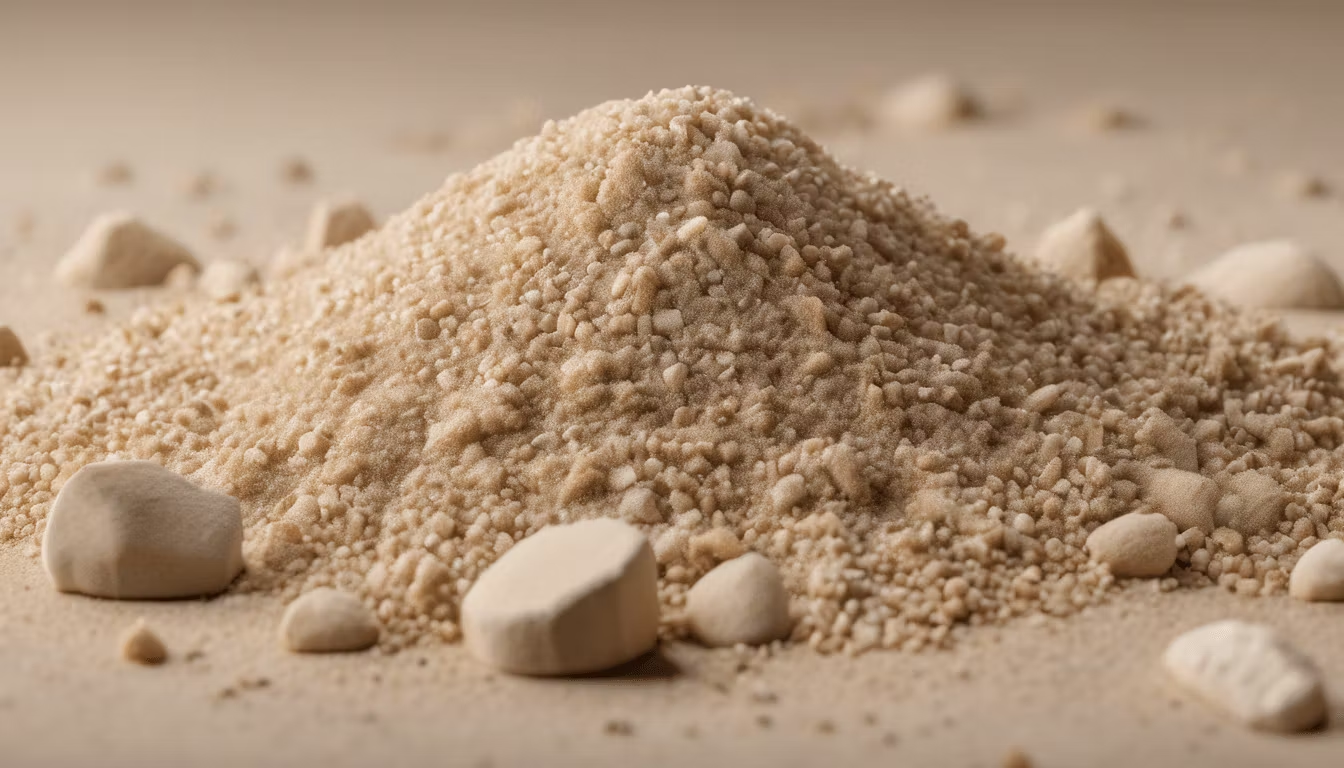
Zircon sand is a naturally occurring mineral containing zirconium silicate. It's prized for its high refractive index, excellent heat resistance, and superior dimensional stability. Industries relying on zircon sand include:
- Foundries and metal casting: Zircon flour and grain for investment casting molds and cores
- Ceramics and tile production: Opacifier and colorant applications
- Refractory manufacturing: High-temperature crucibles and furnace linings
- Glass and glazing: Float glass production and decorative coatings
- Aerospace and defense: High-performance aerospace components
Given these demanding applications, even minor deviations in mineral composition can result in product defects, batch rejections, or catastrophic equipment failures. This is why comprehensive quality testing protocols are non-negotiable in the zircon industry.
Core Quality Parameters: ZrO₂, HfO₂, and TiO₂ Explained
1. ZrO₂ (Zirconium Oxide) Content: The Primary Quality Indicator
ZrO₂ is the dominant oxide in zircon sand and the primary determinant of product quality. Our zircon sand specifications guarantee ZrO₂ content of 65% or higher, placing us among Indonesia's premium suppliers.
Why ZrO₂ Matters:
- Performance correlation: Higher ZrO₂ content directly correlates with superior refractory properties, heat resistance, and dimensional stability
- Cost optimization: Higher ZrO₂ means you require less material per unit weight, reducing consumption rates
- Product consistency: Stable ZrO₂ levels ensure batch-to-batch consistency, critical for quality control in downstream manufacturing
- International marketability: Products meeting 65%+ ZrO₂ standards are accepted globally without additional processing
Testing Method: ZrO₂ is quantified using X-ray fluorescence (XRF) spectroscopy, a non-destructive analytical technique that measures elemental composition with precision to ±0.1%. Our SUCOFINDO-certified laboratory performs this analysis on every shipment, with results documented in official test certificates provided to buyers.
Industry Benchmarks:
- Standard grade: 63-65% ZrO₂
- Premium grade: 65-68% ZrO₂
- Ultra-premium grade: 68%+ ZrO₂ (command 15-25% price premiums)
2. HfO₂ (Hafnium Oxide) Content: Understanding the Impurity Profile
Hafnium is a rare earth element chemically similar to zirconium. In zircon sand, HfO₂ typically comprises 1-3% of total mineral composition and is naturally occurring—not an impurity in the traditional sense, but rather a co-element that affects material properties.
Why HfO₂ Concentration Matters:
- Nuclear applications: Hafnium is valued for its exceptional neutron absorption properties. Products destined for nuclear reactor applications require precise HfO₂ documentation
- Refractory performance: Hafnium oxide contributes to thermal conductivity and creep resistance at extreme temperatures (2000°C+)
- Regulatory compliance: Aerospace and defense applications require certified HfO₂ levels for component traceability
- Separation economics: In some applications, high HfO₂ content can reduce separation costs if hafnium recovery is economically viable
Testing Method: HfO₂ is measured via inductively coupled plasma mass spectrometry (ICP-MS) or wavelength-dispersive X-ray fluorescence (WD-XRF). These techniques detect hafnium concentrations with sensitivity to ±0.01%. Our testing protocols identify HfO₂ content across the full mineralogical profile.
Industry Standards:
- Typical natural range: 1.5-2.5% HfO₂
- Nuclear-grade specification: ≤100 ppm (0.01%) HfO₂ for enriched zirconium applications
- General industrial applications: No strict upper limit; 1-3% is standard
3. TiO₂ (Titanium Oxide) Content: Controlling Secondary Oxides
Titanium oxide typically comprises 3-5% of zircon sand's mineral composition. Unlike ZrO₂ and HfO₂, TiO₂ is generally considered a minor constituent that requires careful monitoring.
Why TiO₂ Concentration Impacts Quality:
- Thermal properties: Elevated TiO₂ levels can alter thermal expansion coefficients, potentially causing dimensional variation during firing or casting
- Optical properties: TiO₂ affects refractive index and light scattering, which is critical in optical and decorative glazing applications
- Chemical stability: High TiO₂ can influence chemical reactivity in kiln environments, affecting batch behavior
- Coloration: Titanium oxide can impart slight color variations, important for cosmetic applications in ceramics
Testing Method: TiO₂ is quantified through the same XRF or ICP-MS techniques used for ZrO₂ and HfO₂. SUCOFINDO reports provide detailed elemental breakdowns including titanium oxide concentrations.
Quality Ranges:
- Specification range: 2.5-5.5% TiO₂
- Foundry-grade: 3-4% TiO₂ (optimal for dimensional stability)
- Ceramic-grade: 4-5% TiO₂ (acceptable for coloration control)
Complete Elemental Analysis: Beyond the Three Core Parameters
While ZrO₂, HfO₂, and TiO₂ are the primary quality indicators, comprehensive zircon sand testing includes analysis of secondary elements:
- SiO₂ (Silica): Typically 30-32%; forms the silicate matrix
- Al₂O₃ (Alumina): Usually 0.5-2%; affects refractory properties
- Fe₂O₃ (Iron Oxide): Typically <0.3%; higher concentrations can cause discoloration
- CaO, MgO, K₂O, Na₂O: Trace elements monitored for their fluxing effects at high temperatures
Our SUCOFINDO certificates include full elemental profiles, enabling buyers to verify compliance with application-specific requirements.
Laboratory Testing Standards and Certification
CV Indoalam Mineral Persada maintains rigorous quality assurance protocols aligned with international standards:
- SUCOFINDO Certification: Third-party independent testing ensures unbiased results
- IUP OPK License: Regulatory compliance for mineral extraction and trading
- RKAB Approval: Environmental and operational standards certification
- Test Methods: XRF for rapid elemental analysis; ICP-MS for trace element detection
- Sample Documentation: Every shipment is sampled, tested, and certified with traceable lot numbers
How to Interpret Your Zircon Sand Quality Certificate
When you receive zircon sand from Indoalam, your shipment includes a detailed SUCOFINDO quality certificate. Here's how to read it:
- Lot/Batch Number: Unique identifier linking the certificate to your specific shipment
- Test Date: Date when samples were analyzed (typically within 7 days of shipment)
- Elemental Composition: Complete oxide breakdown (ZrO₂, HfO₂, TiO₂, etc.) expressed as weight percentage
- Mesh Size Distribution: Particle size analysis (if relevant to your application)
- Moisture Content: Water content percentage; lower is better for storage stability
- Test Methods Used: Documentation of analytical techniques employed
- Analyst Signature: Certification by licensed SUCOFINDO technician
Practical Applications: How Quality Parameters Affect Your Operations
Foundry and Investment Casting
In foundry applications, zircon flour and grain must provide sharp surface detail reproduction and dimensional accuracy. Higher ZrO₂ content (66-68%) ensures:
- Superior heat resistance preventing shell degradation
- Minimal metal penetration into mold walls
- Reduced casting surface defects and rework costs
Ceramic and Tile Manufacturing
Tile producers require consistent ZrO₂ (64-66%) with controlled TiO₂ (4-5%) for opacifying properties without color shifts. Hafnium content is generally not critical for this application, but quality control on TiO₂ prevents batch-to-batch aesthetic variations.
Refractory Lining Production
High-temperature refractory manufacturers demand premium-grade zircon (67%+ ZrO₂) to ensure:
- Thermal stability above 1800°C
- Resistance to thermal shock cycling
- Long service life in blast furnaces and kilns
Why Choose Indoalam for Zircon Sand Supply
CV Indoalam Mineral Persada differentiates itself through direct-from-mine sourcing, eliminating middlemen and ensuring price competitiveness without compromising quality. Our advantages include:
- Consistent supply: Access to premium deposits in Sulawesi, Kalimantan, and Maluku regions
- Flexible ordering: From 100 MT trial shipments to 2.5M MT annual contracts
- SUCOFINDO testing: Every batch independently certified for ZrO₂, HfO₂, and TiO₂ content
- Regulatory compliance: Full IUP OPK licensing and RKAB approval
- Transparent pricing: No hidden fees; prices reflect current commodity benchmarks plus transparent margin
Whether you're a ceramic manufacturer optimizing production costs, a foundry improving casting quality, or an industrial trader seeking reliable supply, our zircon sand products meet international standards while offering competitive pricing that benefits your bottom line.
Beyond zircon, we also supply premium-grade silica sand for glass manufacturing and other applications, as well as aluminium ingot for foundry and die-casting operations. Our diversified product portfolio allows integrated procurement solutions for multi-material supply chains.
Getting Started: Next Steps for Buyers
If you're evaluating zircon sand suppliers or planning to transition to direct-from-mine sourcing, we're here to help. Our technical team can:
- Provide sample zircon sand with complete SUCOFINDO test certificates
- Discuss application-specific quality parameters and customized specifications
- Develop supply agreements matching your volume and timeline requirements
- Support technical troubleshooting if quality variations affect your process
Contact us today to discuss your zircon sand requirements. We'll provide competitive quotes, arrange samples, and answer any technical questions about ZrO₂, HfO₂, TiO₂ specifications, or our quality assurance processes.
Conclusion
Zircon sand quality testing goes far beyond simple commodity purchasing. Understanding ZrO₂ content, HfO₂ analysis, and TiO₂ specifications enables informed sourcing decisions that directly impact product quality, cost efficiency, and operational reliability. By partnering with CV Indoalam Mineral Persada—a fully licensed, SUCOFINDO-certified supplier with direct mine access—you gain a competitive advantage backed by transparent testing, consistent quality, and supply reliability that industrial manufacturers demand.
Quality isn't an afterthought in the zircon industry. It's the foundation of successful operations. Make it central to your sourcing strategy.