Silica Sand Deposit Geology: How Indonesian Deposits Formed

Understanding Silica Sand Geology: The Foundation of a Critical Industrial Mineral
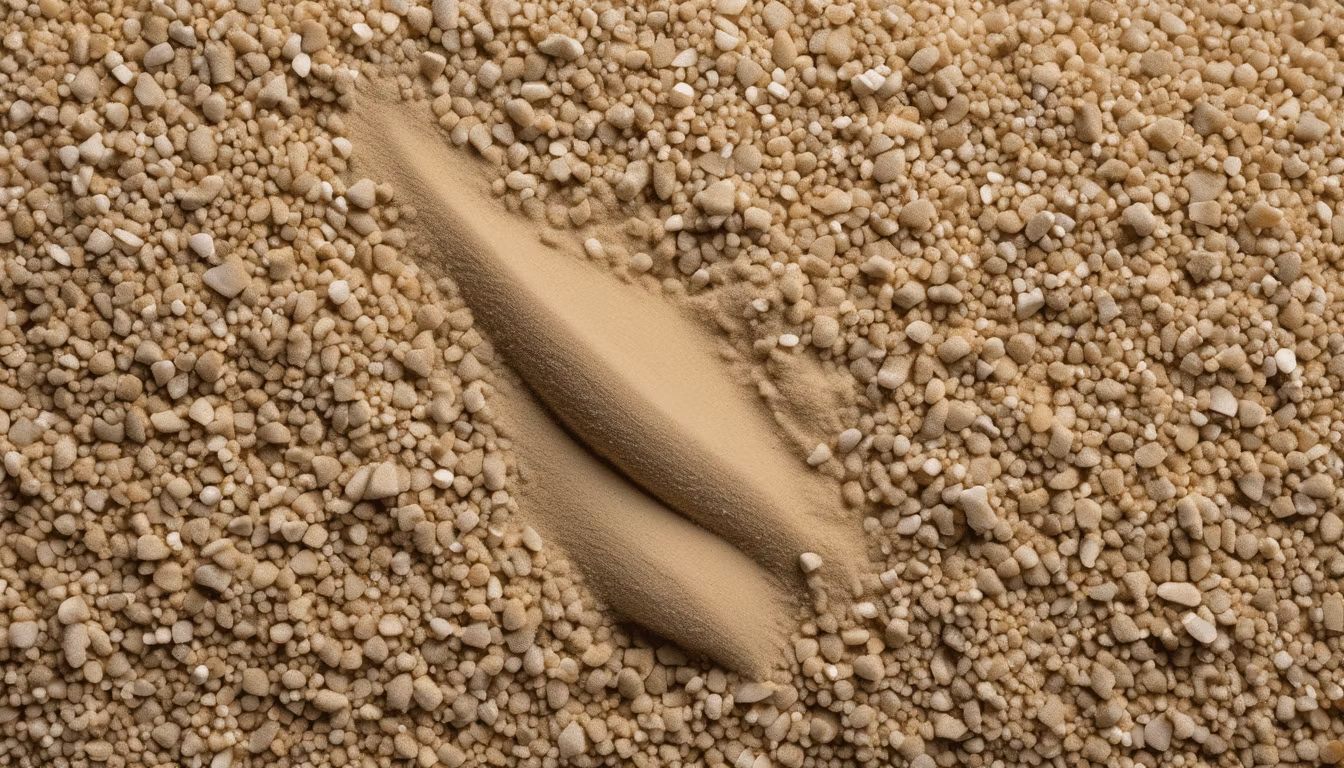
Silica sand, chemically composed of silicon dioxide (SiO₂), is one of the most abundant and economically important minerals in the world. Indonesia's vast reserves of high-purity silica sand represent a geological treasure shaped over millions of years by complex processes involving weathering, erosion, transportation, and deposition. Understanding the geology behind these deposits provides crucial insights for mining professionals, industrial buyers, and supply chain managers seeking reliable sources of premium-grade quartz sand.
As a leading B2B mineral trading company, CV Indoalam Mineral Persada sources silica sand from geologically rich regions across Indonesia, delivering material with SiO₂ purity levels reaching 99.74% and multiple mesh grades to meet diverse industrial specifications. This comprehensive guide explores the geological processes that created Indonesia's economically viable silica sand deposits and why they matter to your industrial operations.
The Geological Origins of Silica Sand Deposits
Primary Source: Granite and Quartz-Rich Parent Rock
The foundation of all silica sand deposits begins with the parent rock from which quartz grains originate. In Indonesia, the primary sources are granitic intrusions and quartz-rich metamorphic rocks that formed deep within the Earth's crust millions of years ago. These granites contain significant quantities of quartz minerals, which serve as the precursor material for commercial silica sand.
Indonesia's geological setting, positioned along the active tectonic boundaries of the Pacific Ring of Fire and the convergence zone between the Asian and Australian continental plates, created ideal conditions for granite formation. Throughout the Cretaceous and Tertiary periods (roughly 145 to 2.6 million years ago), extensive magmatic activity resulted in large granitic batholiths embedded throughout the Indonesian archipelago. These intrusive igneous rocks cooled slowly beneath the Earth's surface, allowing quartz crystals to develop in well-defined mineral assemblages alongside feldspars and micas.
Weathering and Chemical Decomposition Processes
The transformation from solid granite to exploitable silica sand deposits required intensive weathering processes. Indonesia's equatorial climate accelerates chemical weathering through high precipitation, consistent temperatures, and abundant biological activity. These conditions break down feldspars and other silicate minerals through hydrolysis, while quartz—being highly resistant to chemical weathering—remains stable and accumulates as a residual mineral.
Tropical weathering in Indonesia's humid environment produces deep lateritic profiles where surface waters percolate through rock formations, dissolving soluble minerals while leaving quartz grains behind. This selective dissolution concentrates silica sand deposits near ancient land surfaces and creates secondary enrichment zones that mining operations target today. The intense tropical weathering characteristic of Indonesia's climate has been particularly effective at concentrating high-purity silica sand over geological timescales.
Depositional Environments and Transportation Mechanisms
Alluvial and Fluvial Sand Transport Systems
Once weathered into individual grains, quartz sand particles were transported through Indonesia's river systems by fluvial processes. Rivers flowing from elevated granite highlands toward coastal plains carried enormous volumes of sediment, with silica sand grains being transported as bedload and suspended load. The physical properties of quartz—its hardness, density, and resistance to abrasion—made it ideal for long-distance transport without substantial degradation.
Indonesia's major river systems, particularly those draining from the highlands of Sulawesi and Kalimantan, created extensive alluvial plains where silica sand accumulated in thick, laterally continuous deposits. These fluvial systems sorted sediments by size and density, with heavier minerals settling in proximal environments while finer quartz sand fractions traveled farther downstream. Over millions of years, this sorting process created deposits of remarkably uniform grain size and composition—exactly the characteristics required for industrial applications.
Coastal and Marine Depositional Environments
Many of Indonesia's most economically important silica sand deposits formed in coastal and shallow marine environments. As rivers delivered silica sand to the coast, ocean currents and wave action further refined and concentrated these materials. Beach deposits along Indonesia's extensive coastlines accumulated thick sequences of nearly pure silica sand, with wave energy segregating minerals by density and wave-sorting creating natural grade stratification.
The equatorial location of Indonesia provided consistent trade winds and ocean current patterns that effectively transported and concentrated silica sand along shorelines. Coastal dune systems and barrier islands created ideal depositional geometries, with silica sand accumulating in thick, laterally extensive sheets. Today, many of Indonesia's actively mined silica sand deposits occupy these ancient coastal and nearshore marine paleoenvironments preserved as elevated terraces and geological formations.
Indonesian Deposit Characteristics and Regional Geology
Sulawesi Region: The Morowali and Konawe Systems
The Sulawesi region, particularly the areas around Morowali and Konawe in Central and Southeast Sulawesi, represents one of Indonesia's premier silica sand deposit zones. This region benefits from geologically young granitic complexes that have undergone intense tropical weathering, creating exceptionally pure quartz sand deposits. The Banggai-Sula microcontinent's collision with the Sulawesi mainland during the Miocene epoch created structural settings favorable for mineral concentration and preservation.
Deposits in this region display variable thicknesses ranging from tens to hundreds of meters, with silica sand interbedded with laterite horizons and clay layers. The structural geometry of these deposits, controlled by ancient river paleochannels and coastal barriers, creates economic mining targets with favorable strip ratios. CV Indoalam Mineral Persada sources premium material from these proven geological systems, ensuring consistent quality and supply reliability.
Kalimantan: Alluvial and Coastal Plain Deposits
Kalimantan's vast alluvial plains host extensive silica sand deposits formed through fluvial transport and coastal sedimentation. The region's major river systems—including the Kapuas, Mahakam, and Barito—have been transporting silica sand for millions of years, creating thick accumulations of remarkably pure material. The gentle topography of Kalimantan's plains allowed extensive lateral transport of silica sand, creating deposits with exceptional purity due to prolonged mechanical sorting and chemical weathering.
These deposits typically occur in Quaternary sedimentary sequences, making them relatively young geologically and often in near-surface positions accessible to mining operations. The combination of favorable topography, active river systems, and suitable paleoenvironmental conditions has made Kalimantan a major silica sand production region.
Maluku Region: Halmahera's Volcanic and Granitic Settings
Halmahera in Maluku province presents a different geological setting featuring both granitic intrusions and volcanic-derived silica sand. The island's complex geology includes areas where granitic rocks weather to produce high-purity quartz sand, alongside volcanic deposits where silica from volcanic minerals concentrates through weathering and sedimentation. This geological diversity creates opportunities for sourcing silica sand with varying characteristics suited to different industrial applications.
Purity and Grade Development Through Geological Processes
Chemical Weathering as a Concentration Mechanism
The exceptional purity of Indonesian quartz sand deposits—often exceeding 99% SiO₂—results from millions of years of selective chemical weathering. Feldspar, mica, and other minerals in granite are chemically unstable in tropical weathering environments and decompose to clay minerals and soluble ions. Quartz, conversely, is extremely resistant to chemical attack and accumulates as the residual mineral phase. This natural beneficiation process means that Indonesian silica sand deposits arrive at mining operations already significantly enriched compared to their parent granite.
Mechanical Sorting and Grain Size Uniformity
Prolonged fluvial and coastal transport subjected silica sand grains to mechanical sorting processes that enhanced product uniformity. River currents and ocean waves naturally segregate sediments by size, with transport distance and energy conditions controlling which grain sizes accumulate in specific depositional zones. Industrial processors benefit from this natural pre-sorting because deposits often display remarkably consistent grain size distributions within discrete stratigraphic units.
The multiple mesh grades available from Indonesian deposits—from 8 mesh to 200 mesh and finer—reflect the natural stratigraphic variations in depositional environments. Coarser silica sand typically accumulated in higher-energy fluvial and nearshore environments, while finer grades settled in lower-energy offshore or estuarine settings. Mining operations exploit these natural variations to produce material meeting specific customer specifications without excessive processing.
Structural and Stratigraphic Controls on Ore Geometry
Paleochannel and Paleogeographic Influences
The spatial distribution of high-grade silica sand deposits within mining districts reflects ancient river channels, coastal barriers, and paleoenvironmental boundaries. Silica sand commonly accumulates to greatest thicknesses in paleochannel settings where concentrated fluvial flow transported the highest sand volumes. Understanding these paleoenvironmental controls allows mining companies to predict ore body geometry and optimize extraction operations.
Ancient shoreline positions, preserved in the geological record through stratigraphic markers and fossil assemblages, delineate coastal and nearshore deposits that often contain exceptionally pure material. The recognition of these paleoenvironmental boundaries enables efficient resource delineation and supports sustainable mining practices by clearly defining economic ore versus barren rock.
Tectonic Subsidence and Sediment Accommodation
Regional tectonic subsidence influenced the accumulation thickness of silica sand deposits. Areas experiencing tectonic downwarping created accommodation space for thick sediment packages, allowing silica sand to accumulate to economically significant thicknesses. Indonesia's active tectonic setting, while creating hazards, simultaneously generated the subsidence patterns that created thick, laterally extensive silica sand deposits.
Quality Assurance: How Geology Ensures Superior Material
The geological foundation of Indonesian silica sand deposits provides inherent quality advantages that industrial buyers value. CV Indoalam Mineral Persada supplies material that reflects these geological strengths, with SUCOFINDO laboratory testing confirming purity, grain size distribution, and absence of deleterious minerals. Our sourcing from geologically proven deposits in Sulawesi, Kalimantan, and Maluku ensures consistent quality that meets stringent industrial specifications.
The natural beneficiation that occurred during deposit formation means that minimal processing is required to achieve product specifications suitable for glass manufacturing, ceramics and tile production, foundry applications, and water treatment systems. This geological advantage translates directly to supply chain efficiency and cost-effectiveness for our B2B customers.
Implications for Mining and Industrial Applications
Supply Chain Reliability and Resource Longevity
Understanding the geological origins and distribution of Indonesian silica sand deposits provides confidence in long-term supply reliability. The vast reserves accumulated over millions of years, combined with the effectiveness of natural beneficiation processes, ensure that high-quality material will remain available for decades to come. Industrial buyers selecting silica sand suppliers can rely on the geological foundation underlying Indonesia's deposits as a stability indicator.
Processing Economics and Efficiency
The inherent purity of deposits resulting from tropical weathering means that industrial users often require minimal additional beneficiation. This geological advantage reduces processing costs and environmental impacts compared to silica sand from deposits in different climatic regimes or geological settings. Buyers sourcing from Indonesian deposits benefit from materials that arrive at high specifications due to millions of years of natural concentration processes.
Application-Specific Grade Selection
The natural stratigraphic variation in grain size distribution allows Indonesian producers to supply material specifically suited to application requirements. Glass manufacturers, ceramics producers, and foundries can source grades optimized for their specific processes, with geological controls on grain size providing inherent product consistency that supports quality control in downstream industries.
Conclusion: Geological Excellence Supporting Industrial Performance
Indonesian silica sand deposits represent geological systems of remarkable quality shaped by millions of years of granitic weathering, fluvial and coastal sedimentation, and tropical chemical beneficiation. From the granitic highlands of Sulawesi to the alluvial plains of Kalimantan and the complex geology of Halmahera in Maluku, these deposits provide industrial buyers with consistently high-purity material suited to demanding applications.
The geological foundation of these deposits—combining abundant parent material, favorable climate, appropriate depositional settings, and natural concentration mechanisms—creates a competitive advantage that distinguishes Indonesian silica sand in global markets. For B2B buyers seeking reliable suppliers of premium-grade material, understanding this geological context provides confidence in supply chain decisions.
CV Indoalam Mineral Persada sources silica sand directly from these geologically proven deposits, delivering material with documented purity, consistent grain size, and verified quality through SUCOFINDO laboratory testing. Whether you require material for float glass production, industrial ceramics, foundry applications, or water treatment systems, our geological sourcing expertise ensures you receive products reflecting the exceptional quality inherent in Indonesian deposits.
Beyond silica sand, Indoalam also supplies complementary industrial minerals. We provide zircon sand for foundry and ceramic applications, and maintain relationships with major nickel and aluminium producers. Our comprehensive mineral sourcing capabilities support integrated supply chains across multiple industrial sectors.
Contact CV Indoalam Mineral Persada today to discuss your silica sand requirements and experience the reliability of sourcing directly from geologically proven deposits. Our team understands both the geological foundations of premium deposits and the industrial specifications your applications require. Whether you need trial quantities of 100 metric tons or annual contracts for 2.5 million metric tons, Indoalam delivers consistent quality backed by IUP OPK licensing, RKAB approval, and SUCOFINDO laboratory verification. Reach out to our team to explore partnership opportunities with Indonesia's trusted mineral supplier.