Complete Guide to Indonesian Nickel Ore: Saprolite and Limonite

Introduction: Understanding Indonesian Nickel Ore
Indonesia stands as the world's leading nickel ore producer, accounting for over 30% of global nickel reserves. The country's mineral-rich regions, particularly in Sulawesi, Kalimantan, and Maluku, have positioned it as a critical supplier for the global stainless steel and battery industries. However, understanding the nuances between different nickel ore types is essential for smelters, traders, and industrial buyers seeking to optimize their procurement strategies.
The two primary ore types extracted from Indonesian mines—saprolite and limonite—present distinct chemical compositions, processing requirements, and end-use applications. This comprehensive guide explores both ore types in detail, helping you make informed purchasing decisions for your operations.
What is Nickel Ore? An Industry Overview
Nickel ore refers to mineral deposits containing nickel compounds in economically viable concentrations. Unlike precious metals, nickel is extracted primarily from laterite deposits—a weathered surface layer of rock rich in iron and nickel oxides. These deposits form through millions of years of tropical weathering in equatorial and tropical regions, making Indonesia's climate ideal for nickel extraction.
The global nickel industry hinges on three primary production pathways: Nickel Pig Iron (NPI) smelting, High-Pressure Acid Leaching (HPAL), and ferronickel production. Each method requires specific ore characteristics and grade specifications, which directly influence purchasing decisions and supply contracts.
Saprolite Nickel Ore: Premium Grade Specifications
Composition and Chemical Properties
Saprolite represents the upper weathering layer of laterite deposits, characterized by higher nickel concentrations and lower iron oxide content. Indonesian saprolite typically grades between 1.5% to 2.0% nickel (Ni) content, making it premium feedstock for smelters.
Key chemical specifications for saprolite include:
- Nickel (Ni): 1.5-2.0% average
- Iron (Fe): 25-35% (lower than limonite)
- Magnesium Oxide (MgO): 8-12%
- Silica (SiO2): 40-50%
- Moisture Content: 15-25% in-situ
- Cobalt (Co): 0.08-0.12% (valuable byproduct)
The relatively lower iron-to-nickel ratio makes saprolite particularly valuable for HPAL operations and direct nickel pig iron production. Processing saprolite generates fewer waste byproducts and requires lower acid consumption compared to limonite processing.
Mining and Extraction
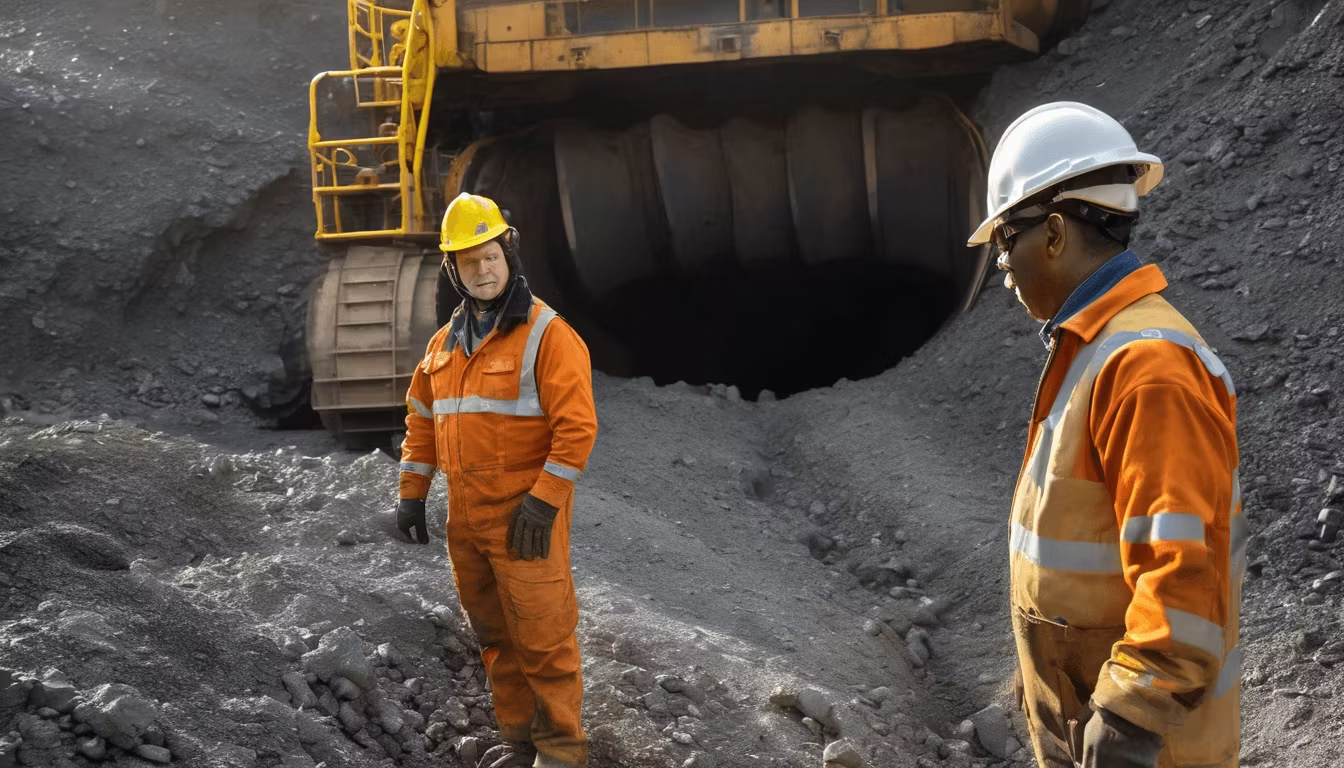
Saprolite mining utilizes open-pit extraction methods with minimal infrastructure complexity. The soft, weathered nature of saprolite allows for efficient excavation using standard mining equipment. Indonesian mining regions in Morowali and Konawe (Sulawesi) primarily supply saprolite-grade ore.
The extraction process involves:
- Overburden removal and stockpiling
- Open-pit excavation using hydraulic shovels and dozers
- Grade control sampling and quality verification
- Loading onto haul trucks for transport to stockpiles or ports
- Moisture management through drainage and natural weathering
Smelter Applications and Market Demand
Saprolite serves as premium feedstock for nickel smelters producing nickel pig iron (NPI) and ferronickel alloys. The higher nickel grade enables smelters to:
- Reduce ore volume requirements for target metal output
- Decrease overall production costs per ton of finished nickel
- Minimize slag generation and waste management expenses
- Improve furnace thermal efficiency and energy utilization
Stainless steel manufacturers and battery producers increasingly demand saprolite ore due to its lower impurity levels and faster smelting cycles. The ore is particularly suited for producing 200-series and 300-series stainless steel grades essential for architectural applications, kitchen equipment, and industrial piping.
Limonite Nickel Ore: High-Volume Processing
Composition and Grade Specifications
Limonite comprises the lower weathering layer of laterite deposits, sitting above the unweathered bedrock. Characterized by higher iron oxide content and lower nickel concentrations, limonite grades between 0.8% to 1.2% nickel. While chemically lower-grade than saprolite, limonite represents the largest portion of Indonesia's laterite reserves.
Typical limonite chemical composition:
- Nickel (Ni): 0.8-1.2% average
- Iron (Fe): 35-50% (significantly higher than saprolite)
- Magnesium Oxide (MgO): 6-10%
- Silica (SiO2): 35-45%
- Moisture Content: 25-40% in-situ
- Aluminum Oxide (Al2O3): 5-8%
The elevated iron content necessitates specialized processing techniques and higher acid consumption, making limonite processing more capital-intensive than saprolite operations.
Processing Technologies for Limonite
High-Pressure Acid Leaching (HPAL) emerged as the dominant processing method for limonite ore. This hydrometallurgical process converts iron and nickel oxides into soluble compounds through acid dissolution at elevated temperature and pressure.
The HPAL process includes:
- Ore Preparation: Crushing, screening, and moisture conditioning
- Acid Leaching: Reactor treatment at 250-280°C under pressure with sulfuric acid
- Solid-Liquid Separation: Filtering leached ore slurry to remove residual solids
- Iron Removal: Precipitation and filtration to separate iron compounds
- Nickel Recovery: Solvent extraction or precipitation to concentrate nickel
- Crystallization and Refining: Producing high-purity nickel sulfate or intermediate products
HPAL technology requires significant capital investment in pressure vessels, acid recycling systems, and environmental controls, but enables efficient recovery of nickel from lower-grade limonite deposits.
Market Applications and Economic Considerations
Limonite's higher volume availability and lower mining costs make it economically attractive despite lower nickel grades. Producers operating HPAL facilities prefer limonite for sustained, high-volume operations. Recent battery market expansion has driven demand for limonite-derived nickel sulfate, particularly for lithium-ion battery cathode production.
The energy transition toward electric vehicles has fundamentally reshaped nickel demand patterns. EV battery manufacturers require nickel with specific purity levels and controlled impurity profiles, often favoring HPAL-processed nickel from limonite ore over NPI-derived alternatives.
Indonesian Nickel Mining Regions and Supply Dynamics
Sulawesi: The Epicenter of Nickel Production
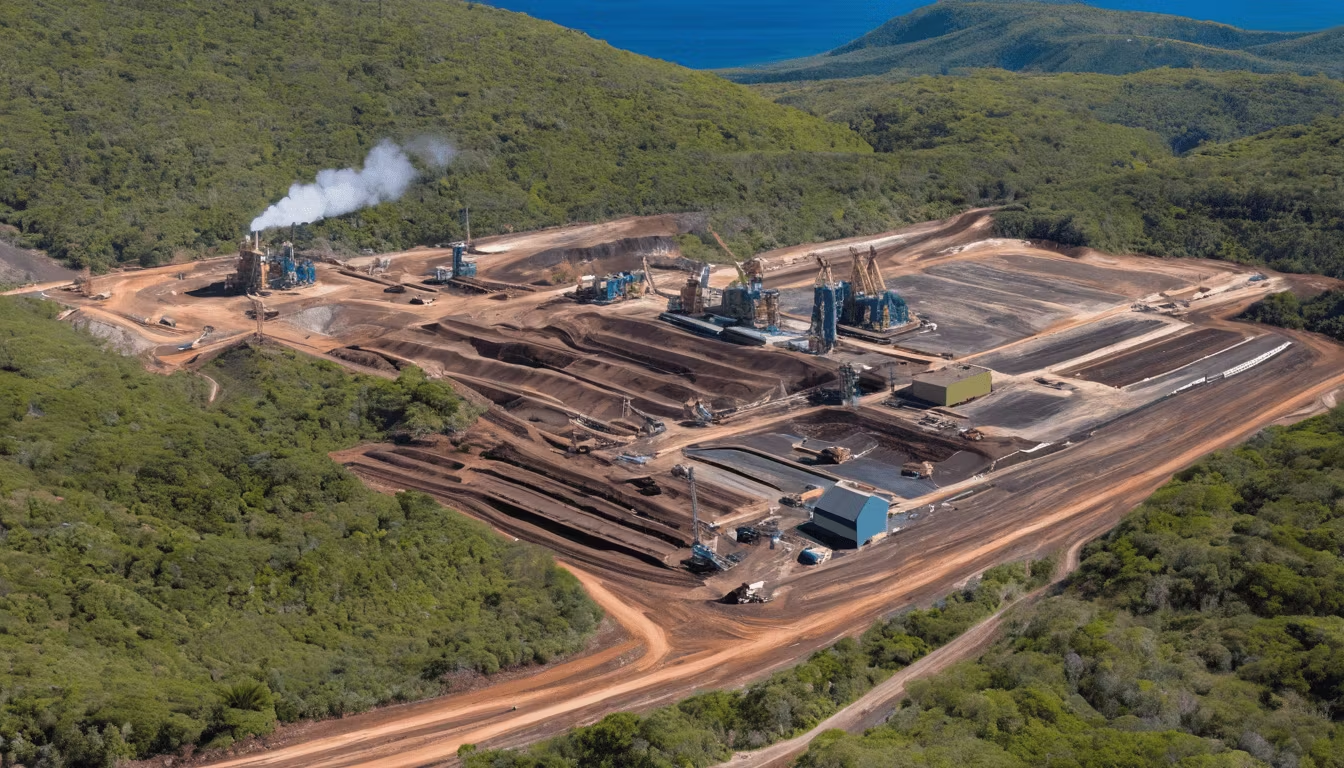
Sulawesi, particularly the provinces of South and Southeast Sulawesi, dominates Indonesian nickel production. The Morowali region in Central Sulawesi hosts some of the world's largest integrated nickel complexes, with multiple smelting facilities processing saprolite and limonite ore from surrounding mining operations.
Konawe district in Southeast Sulawesi represents another critical nickel mining hub, with numerous IUP-licensed mining companies extracting both ore types. The region's developed infrastructure, skilled workforce, and proximity to smelting facilities make it strategically important for consistent ore supply.
Kalimantan and Emerging Supply Sources
Kalimantan's laterite deposits are increasingly developed as nickel reserves in Sulawesi face depletion concerns. The island's vast mineral resources and relatively lower development costs attract investment from both domestic and international mining companies. Transport logistics from Kalimantan to coastal loading facilities remain more challenging than Sulawesi operations, impacting delivery costs and timelines.
Maluku Region Potential
Halmahera in Maluku province contains substantial nickel reserves with untapped potential. Strategic mining development in this region aims to diversify Indonesia's nickel supply base and reduce geographic concentration risks for overseas buyers.
Quality Assurance and Regulatory Compliance
Testing and Certification Standards
Professional nickel ore trading demands rigorous quality verification at multiple supply chain stages. SUCOFINDO (Superintending Company of Indonesia) testing represents the industry standard for third-party assurance, providing independent laboratory analysis and certification for both saprolite and limonite ore shipments.
Standard test parameters include:
- Nickel content analysis (wet chemical assay)
- Iron oxide determination
- Moisture measurement and loss-on-ignition
- Trace element analysis (cobalt, chromium, manganese)
- Particle size distribution and mesh grading
- Physical density and bulk weight assessment
Indonesian Mining Regulations and Licensing
Indonesia's mineral extraction operates under comprehensive regulatory frameworks administered by the Ministry of Energy and Mineral Resources. Mining operations require IUP OPK (Operation Production License) certification, demonstrating compliance with environmental, safety, and production standards.
Key regulatory requirements include:
- Environmental Impact Assessment (AMDAL) approval
- Reclamation and Restoration Plan (RKAB) compliance
- ET Batubara (Excavation Permit) for licensed mining areas
- Annual production reporting and reserve updates
- Royalty payments and fiscal compliance
Licensed producers like CV Indoalam Mineral Persada maintain full regulatory compliance, ensuring buyers receive ore from verified, legitimate sources meeting international trade standards.
Nickel Ore Trading: Pricing, Contracts, and Supply Logistics
Pricing Mechanisms and Market Factors
Nickel ore pricing reflects multiple variables including nickel commodity prices on international exchanges (particularly the London Metal Exchange), ore grade specifications, and transport costs from mine to port.
Pricing typically incorporates:
- Nickel Content Premium: Direct correlation with Ni% content (saprolite commands 15-25% price premium over limonite)
- Iron Penalty: Reduced pricing for elevated Fe content due to processing costs
- Moisture Adjustment: Pricing adjustments for in-situ moisture variations
- Logistics Cost: Transport, handling, and port fees
- Market Spot Price: Real-time LME nickel pricing applied to contained metal value
Contract Structures and Flexible Supply Options
Professional nickel ore suppliers offer flexible contract structures accommodating various buyer requirements. Options range from small trial shipments (100 metric tons) for quality verification to multi-year supply agreements supporting annual production needs.
Typical contract models include:
- Spot Contracts: One-time purchases with immediate delivery and payment
- Term Agreements: Fixed monthly or quarterly shipments over 12-36 month periods
- Provisional Pricing: Price finalization based on assay results at loading port
- Long-Term Offtake: Strategic supply relationships supporting smelter feedstock security
Logistics and Delivery Infrastructure
Indonesian nickel ore reaches global markets through established port infrastructure. Major loading facilities in Sulawesi (Bitung, Makassar) and Kalimantan (Balikpapan, Samarinda) provide direct vessel access to international shipping routes.
Typical logistics procedures include:
- Ore stockpile preparation at mining site
- Loading onto trucks and transport to port facility
- Port receiving and stacking operations
- Sampling and third-party lab testing (SUCOFINDO certification)
- Final quality approval and commercial invoice issuance
- Vessel loading and shipping documentation
- International transport to buyer's destination port
Applications Across Industries
Stainless Steel Production
The stainless steel industry consumes approximately 65% of global nickel production. Both saprolite and limonite ore, through various processing routes, ultimately supply nickel content for austenitic (300-series), ferritic, and duplex stainless steel production.
Battery and Electric Vehicle Market
The explosive growth in lithium-ion battery manufacturing has created unprecedented demand for high-purity nickel. HPAL processing of limonite ore produces nickel sulfate meeting strict battery industry specifications, supporting the global transition toward electric mobility.
Alloy Manufacturing and Casting
Specialty alloys, superalloys, and precision casting applications require nickel with controlled impurity profiles. Saprolite-derived nickel products often prove superior for these demanding applications due to lower trace element concentrations.
Comparing Saprolite and Limonite: Key Differences Summary
| Parameter | Saprolite | Limonite |
|---|---|---|
| Nickel Grade | 1.5-2.0% | 0.8-1.2% |
| Iron Content | 25-35% | 35-50% |
| Processing Method | Direct smelting (NPI) | HPAL hydrometallurgy |
| Mining Complexity | Lower (soft ore) | Higher (deeper extraction) |
| Price Premium | 15-25% vs. limonite | Baseline pricing |
| Reserve Availability | Limited, depleting | Abundant, high-volume |
| Processing Cost | Lower acid consumption | Higher HPAL capital needs |
| End Products | NPI, ferronickel, alloys | Nickel sulfate, intermediates |
Future Outlook: Indonesian Nickel Industry Trends
Indonesia's nickel sector faces transformative changes driven by global energy transition priorities and domestic processing ambitions. Government policies increasingly favor value-added processing over raw ore exports, with export bans on unprocessed nickel ore (below 1.7% Ni grade) implemented to incentivize downstream smelting development.
This regulatory shift positions Indonesia as not merely a ore supplier but an integrated nickel producer, controlling value chains from extraction through refined metal production. For international buyers, this environment emphasizes the importance of establishing long-term relationships with reliable, fully-licensed suppliers capable of navigating complex regulatory landscapes.
The convergence of battery industry growth and stainless steel demand ensures sustained nickel consumption for decades. However, nickel supply security increasingly depends on procurement relationships with professionally managed, compliant mining operations rather than opportunistic spot market purchases.
Conclusion: Selecting Your Nickel Ore Supplier
Understanding the technical and commercial distinctions between saprolite and limonite ore is fundamental to optimizing your nickel procurement strategy. Saprolite's superior grade commands premium pricing but offers processing advantages; limonite's abundance and lower cost support high-volume, long-term supply security through HPAL processing.
Your supplier selection should prioritize regulatory compliance, quality assurance infrastructure, and supply reliability. CV Indoalam Mineral Persada combines full IUP OPK licensing, SUCOFINDO-tested quality verification, and direct mine-to-buyer sourcing to deliver consistent nickel ore meeting your specific technical and commercial requirements.
Whether you require small trial quantities for evaluation or multi-year supply agreements supporting integrated smelting operations, Indoalam's flexible supply model accommodates operations ranging from 100 metric tons to 2.5 million metric tons annually. Our sourcing network across Sulawesi, Kalimantan, and Maluku ensures consistent access to both saprolite and limonite ore with verified grade specifications.
Explore our nickel ore product specifications, review our compliance certifications, and contact us to discuss your specific supply requirements. Let our expertise in Indonesian nickel sourcing support your operational success and supply chain security.
For comprehensive information about our mining operations and other premium mineral products including silica sand, aluminium ingots, and zircon sand, visit our about us page to learn why leading smelters and industrial producers trust Indoalam as their preferred Indonesian mineral partner.