Complete Guide to Indonesian Nickel Ore: Saprolite & Limonite
Introduction: Understanding Indonesian Nickel Ore
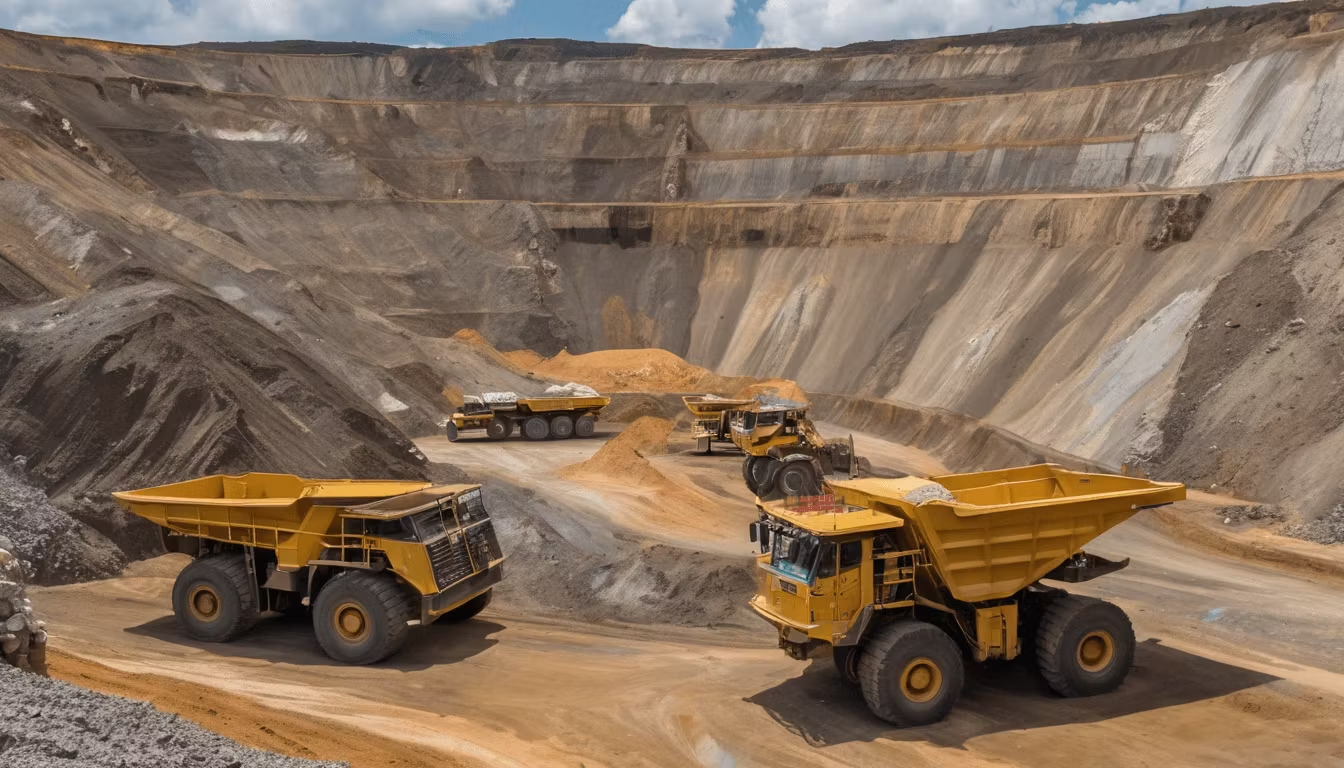
Indonesia is the world's largest nickel producer, accounting for approximately 35% of global nickel reserves. The country's rich mineral deposits, particularly in Sulawesi and Kalimantan, have positioned it as a critical supplier for the global nickel market. Understanding the different types of nickel ore available in Indonesia is essential for buyers looking to source high-quality feedstock for smelting operations, battery production, and stainless steel manufacturing.
This comprehensive guide explores the two primary forms of Indonesian nickel ore—saprolite and limonite—their characteristics, applications, and how to select the right grade for your industrial needs.
What is Nickel Ore? A Fundamental Overview
Nickel ore refers to natural rock and mineral deposits containing nickel compounds in sufficient concentrations to be economically viable for extraction. In Indonesia, nickel primarily occurs in laterite deposits, which form through the weathering of ultramafic igneous rocks in tropical climates.
The laterite ore deposit is divided into two distinct layers based on mineral composition, oxidation state, and nickel concentration. These two types—saprolite and limonite—differ significantly in their chemical properties, processing requirements, and end-use applications.
The Formation of Indonesian Laterite Nickel Deposits
Indonesian nickel deposits developed over millions of years through intensive tropical weathering. As parent rocks containing olivine and pyroxene minerals underwent oxidation and leaching, nickel concentrated in the upper soil layers. The depth, climate, and geological history of each region produce variations in ore quality and composition, which is why sourcing from established mining regions is crucial for consistent material specifications.
Saprolite Nickel Ore: Characteristics and Applications
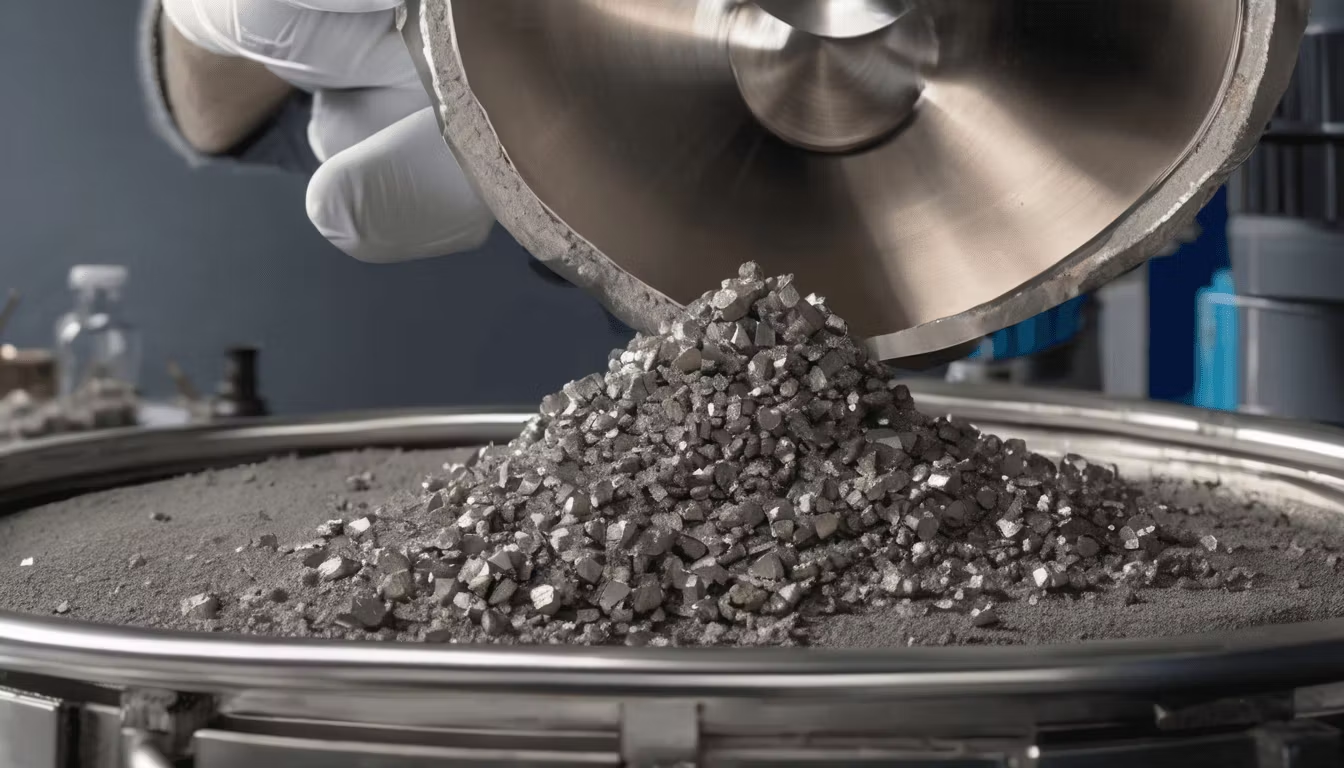
Saprolite represents the lower, fresher weathering layer of laterite nickel deposits. It forms beneath the limonite layer and contains higher concentrations of nickel oxide compounds, making it the premium grade for nickel smelting operations.
Chemical Composition and Grade Specifications
Saprolite nickel ore from Indonesian sources typically contains nickel concentrations between 1.5% and 2.0% (Ni). The ore also contains iron (Fe), magnesium (Mg), silica (SiO2), and aluminum (Al2O3) compounds. A representative composition includes:
- Nickel (Ni): 1.5–2.0%
- Iron (Fe): 8–12%
- Magnesium (Mg): 8–15%
- Silica (SiO2): 35–45%
- Aluminum (Al2O3): 4–8%
- Moisture: 25–35%
This composition makes saprolite particularly suited for nickel pig iron (NPI) production and ferronickel smelting, where higher nickel recovery rates are required.
Processing Advantages for NPI and Ferronickel Production
Saprolite ore requires rotary kiln electric furnace (RKEF) or blast furnace processing. The higher nickel content means smelters achieve better metal recovery with reduced processing costs per unit of nickel produced. The ore's mineralogy—dominated by hydrous silicates rather than iron hydroxides—results in more predictable smelting behavior.
Major Indonesian nickel smelters processing saprolite ore have reported nickel recovery rates exceeding 85%, making this ore type the preferred feedstock for premium ferronickel and NPI production. The ore's lower iron content relative to limonite also reduces slag volume and improves furnace efficiency.
Mining Regions Producing Premium Saprolite
The richest saprolite deposits in Indonesia are concentrated in:
- Morowali, Sulawesi: Known for consistent high-grade saprolite with stable Ni 1.8–2.0% concentrations
- Konawe, Southeast Sulawesi: Major production zone supplying industrial smelters
- East Kalimantan: Secondary source with variable but generally good ore grades
Sourcing from these established regions ensures mineral quality consistency and compliance with Indonesian export regulations.
Limonite Nickel Ore: Lower-Grade, High-Volume Supply
Limonite constitutes the upper, heavily oxidized layer of laterite nickel deposits. It contains lower nickel concentrations but is extracted in significantly larger volumes, making it economically important for large-scale production operations.
Chemical Composition and Grade Specifications
Indonesian limonite ore typically contains nickel concentrations between 0.8% and 1.2% (Ni). The ore is iron-rich and moisture-laden, with a representative composition including:
- Nickel (Ni): 0.8–1.2%
- Iron (Fe): 35–45%
- Magnesium (Mg): 3–6%
- Silica (SiO2): 10–20%
- Aluminum (Al2O3): 5–12%
- Moisture: 30–40%
The high iron content and oxidized nature of limonite ore make it particularly suitable for high-pressure acid leaching (HPAL) operations, where chemical dissolution processes can effectively extract nickel from iron-rich ore.
HPAL Processing: The Limonite Advantage
While saprolite suits pyrometallurgical smelting, limonite is optimized for HPAL technology. This hydrometallurgical process involves:
- Crushing ore to fine particle sizes
- Mixing crushed ore with sulfuric acid under high temperature and pressure
- Separating dissolved nickel from solid residues through filtration
- Recovering nickel as intermediate nickel sulfate or mixed hydroxide precipitate
HPAL processors prefer limonite because the ore's iron oxide content creates favorable leaching conditions and manageable residue characteristics. Modern HPAL operations can achieve nickel extraction rates of 75–85% from limonite ore, making it economically competitive despite its lower inherent nickel grade.
Cost Considerations: Why Limonite Dominates High-Volume Supply
Limonite is more abundant than saprolite in most Indonesian mining districts. The ore is easier to extract (it sits in the upper deposit layer), requires simpler processing infrastructure for initial beneficiation, and commands lower market prices. For manufacturers processing high volumes—such as battery cathode precursor producers or stainless steel mills—the lower per-ton ore cost can offset the lower nickel content through economies of scale.
Saprolite vs. Limonite: Comparative Analysis for Buyers
Nickel Content and Recovery
Saprolite's 1.5–2.0% nickel content is 50–100% higher than limonite's 0.8–1.2% range. For pyrometallurgical smelting, this translates to fewer tons of ore required to produce equivalent nickel metal. However, HPAL technology efficiency can narrow this gap, particularly for large-scale operations with optimized acid leaching infrastructure.
Processing Route Selection
| Parameter | Saprolite | Limonite |
|---|---|---|
| Optimal Processing | RKEF/Smelting | HPAL |
| Nickel Recovery Rate | 85%+ | 75–85% |
| Iron Content Impact | Manageable (8–12%) | Significant (35–45%) |
| Typical End Product | NPI, Ferronickel | Nickel Sulfate, MHP |
Supply Reliability and Logistics
Indonesia's ban on unprocessed nickel ore exports means both saprolite and limonite are restricted to domestic smelters and processors. This creates a stable, predictable supply chain for qualified buyers. However, saprolite availability is more limited than limonite, which can be sourced in significantly larger volumes. Buyers requiring consistent high-grade feedstock must establish long-term contracts with reliable mining suppliers to secure saprolite allocations.
Quality Standards and Testing Protocols
Professional nickel ore sourcing requires laboratory verification of chemical composition, mineral phases, and processing behavior. All reputable Indonesian suppliers conduct SUCOFINDO (Indonesian certification body) testing to verify ore specifications before delivery.
Essential Test Parameters
- Nickel Content (Ni): ICP or XRF analysis
- Iron Content (Fe): Gravimetric or spectroscopic methods
- Moisture Content (H2O): Loss on drying at 105°C
- Silica (SiO2): XRF or gravimetric fusion
- Magnesium (MgO): ICP analysis
- Aluminum (Al2O3): ICP analysis
- Bulk Density and Particle Size Distribution: Physical testing
Verify that your supplier's test certificates match your smelter or processor's feedstock specifications. Premium suppliers maintain RKAB (mine operation plan) approval and current IUP OPK licenses, ensuring legal mining operations and regulatory compliance.
Regulatory Environment: Indonesia's Nickel Ore Export Policy
The Export Ban and Its Implications
Since January 2020, Indonesia has banned the export of unprocessed nickel ore (both saprolite and limonite). This policy was implemented to encourage domestic value-added processing and smelter development. Consequently, nickel ore is available exclusively for domestic smelters, processors, and industrial manufacturers operating within Indonesia.
International buyers cannot import Indonesian nickel ore directly; they must source processed products such as nickel pig iron, ferronickel, or nickel sulfate from Indonesian smelters.
Licensing Requirements for Domestic Buyers
Legal nickel ore suppliers must hold:
- IUP OPK (Mining Business Permit for mineral operations)
- RKAB (Approved mine operation work plan)
- SUCOFINDO certification (Quality verification)
- Current tax compliance and business registration
Verify these credentials with all suppliers to ensure legal sourcing and avoid regulatory risks.
Market Dynamics and Pricing Factors
Nickel Price Correlation
Nickel ore prices correlate directly with London Metal Exchange (LME) nickel futures prices. A general formula applies:
Ore Price (per ton) = Nickel Content (%) × Nickel Grade Factor × LME Spot Price
For saprolite ore at Ni 1.8% with an LME nickel price of $8,000/ton, expect ore pricing approximately $144–$180 per ton (before logistics and handling). Limonite at Ni 1.0% would price proportionally lower, around $80–$100 per ton under equivalent market conditions.
Supply Constraints and Allocation Issues
Saprolite availability is limited relative to demand from smelters. Buyers seeking regular saprolite supply should establish long-term contracts (12–24 months) with established suppliers rather than attempting spot market purchases. Limonite is available in larger quantities but requires buyers to have HPAL processing capacity or HPAL-ready facility partnerships.
Selecting the Right Nickel Ore for Your Operation
For Pyrometallurgical Smelters
If your facility operates blast furnaces or RKEF technology for ferronickel or NPI production, saprolite nickel ore is your optimal choice. Establish supplier relationships with mining companies operating in Morowali or Konawe, Sulawesi. Request trial shipments (100–500 MT) before committing to larger contracts. Verify SUCOFINDO test certificates against your smelter's feedstock specifications, particularly regarding maximum allowable Fe, MgO, and silica levels.
For HPAL Operations
Limonite ore suits high-pressure acid leaching operations targeting nickel sulfate or mixed hydroxide precipitate production. Negotiate volume contracts with flexible delivery schedules to manage stockpile levels and cash flow. Confirm your acid supply chains can handle the higher iron content in limonite-derived leach solutions.
Mixed Feedstock Strategies
Many large-scale operations blend saprolite and limonite to optimize economics. Saprolite provides nickel content and smelting efficiency, while limonite adds volume and cost efficiency. Work with your suppliers to develop custom blends matching your processing capacity and product specifications.
Common Pitfalls and Best Practices
Pitfalls to Avoid
- Relying solely on supplier claims without independent lab verification
- Ignoring moisture content, which affects actual nickel delivery and stockpile management
- Purchasing from unlicensed suppliers, risking supply interruption and regulatory issues
- Underestimating logistics costs for heavy, low-density ore
- Committing to long-term contracts without trial shipments
Best Practices for Procurement
- Request SUCOFINDO certificates and verify independently with the testing lab
- Conduct trial shipments of 100–200 MT before major contract commitment
- Verify supplier licensing with Indonesian mining authorities
- Establish clear technical specifications matching your process requirements
- Build flexibility into contracts for quality variation (±0.1% Ni is typical)
- Develop relationships with multiple suppliers to reduce supply risk
Sourcing from CV Indoalam Mineral Persada
CV Indoalam Mineral Persada is a licensed Indonesian nickel ore supplier with direct access to premium production zones in Sulawesi and Kalimantan. As an established mining and mineral trading company, Indoalam offers:
- Direct-from-mine sourcing of saprolite and limonite ore, eliminating middleman markups
- SUCOFINDO laboratory verification of all shipments
- IUP OPK and RKAB full licensing for regulatory compliance
- Flexible supply options ranging from trial shipments (100 MT) to long-term contracts (up to 2.5M MT annually)
- Technical support for feedstock integration into smelting and processing operations
Whether you operate a ferronickel smelter requiring consistent saprolite supplies or an HPAL facility processing limonite ore, Indoalam's established supply chains in Morowali, Konawe, and Kalimantan ensure reliable, quality-verified ore delivery.
Conclusion
Indonesian nickel ore—whether saprolite or limonite—remains essential feedstock for global nickel production. Understanding the chemical composition, processing characteristics, and optimal applications of each ore type enables informed procurement decisions.
Saprolite's higher nickel content (1.5–2.0%) suits pyrometallurgical smelting with superior recovery rates. Limonite's lower grade (0.8–1.2%) but greater abundance serves large-volume HPAL operations. Both ore types are sourced legally only from licensed Indonesian operations and remain restricted to domestic processing.
When sourcing nickel ore, prioritize supplier licensing, independent laboratory verification, and trial shipments. Build relationships with established suppliers operating in proven mining regions like Morowali and Konawe, Sulawesi.
Ready to source premium Indonesian nickel ore? Contact Indoalam Mineral Persada to discuss your feedstock requirements, request technical specifications, or arrange trial shipments. Our team specializes in matching buyers with the right ore grade and supply volume for your processing operation.
For more information about related mineral products, explore our silica sand and zircon sand offerings, which serve complementary industrial applications across glass, ceramics, and foundry sectors.