Indonesia Nickel Export Ban: Global Market Reshaping 2024
Indonesia Nickel Export Ban: Reshaping the Global Mining Landscape
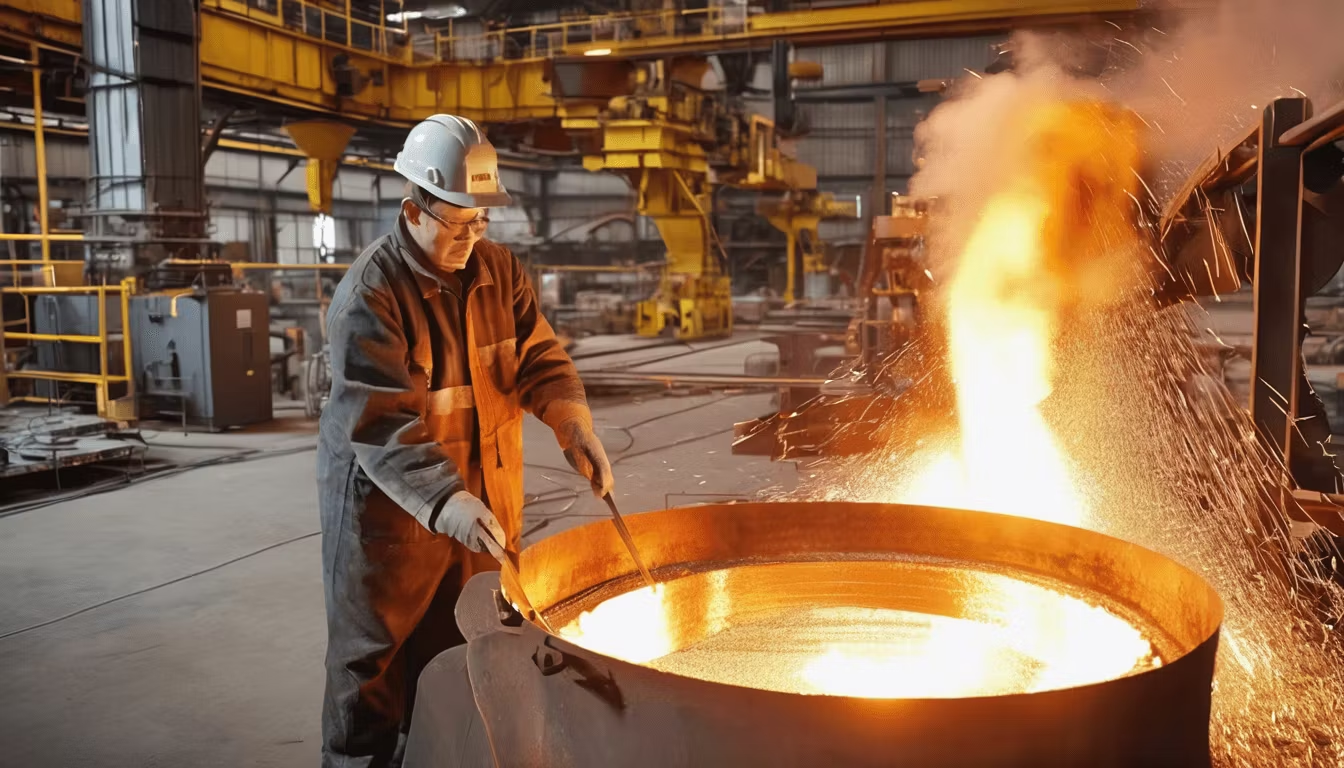
In 2020, Indonesia implemented one of the most significant mining policy shifts in recent history—a complete ban on the export of unprocessed nickel ore. This decision fundamentally altered global nickel supply chains, forced international producers to recalibrate sourcing strategies, and positioned Indonesia as the world's dominant downstream nickel processor. Understanding this policy's implications is critical for B2B mining professionals, smelter operators, and commodity traders navigating today's mineral markets.
Today, as an Indonesian mineral trading company with direct access to premium nickel deposits across Sulawesi and other key regions, we provide practical insights into how this ban continues to reshape opportunities for industrial buyers and downstream processors.
The Indonesia Nickel Export Ban: Policy Overview and Timeline
What Is the Indonesia Nickel Export Ban?
The Indonesia nickel export ban, officially implemented in January 2020, prohibits the export of raw, unprocessed nickel ore (including saprolite and limonite grades). This was later extended and strengthened through the Mineral Beneficiation Law (2009), which mandates that all mineral commodities undergo domestic processing before export.
The ban applies exclusively to unrefined ore. What remains permissible for export includes:
- Nickel pig iron (NPI) and ferronickel products
- High-pressure acid leach (HPAL) processed nickel
- Refined nickel cathodes and intermediate products
Indonesia's government justified this policy as essential to create domestic value-added processing industries, generate employment, and capture higher profit margins from its vast nickel reserves—the world's largest at approximately 21% of global reserves.
Historical Context and Evolution
Prior to 2020, Indonesia exported millions of metric tons of raw ore annually to China, Japan, and Europe. Chinese smelters processed approximately 90% of Indonesian ore imports. The sudden ban forced a dramatic restructuring:
- 2014-2019: Export ban threatened but delayed; industry lobbying delayed implementation
- January 2020: Ban officially enacted; ore exports halted
- 2020-2024: Indonesian smelting capacity expanded rapidly (NPI and HPAL facilities)
- 2024-Present: Policy reinforced; Indonesia now world's largest nickel processor
Global Market Impact: How the Ban Reshaped Supply Chains
Nickel Price Volatility and Market Dynamics
The ban triggered immediate price spikes. In early 2020, nickel prices surged 20-30% as buyers scrambled for alternative supplies. By 2021-2022, volatility intensified further, with the London Metal Exchange (LME) nickel contract experiencing extreme price swings due to supply uncertainty.
Key market impacts include:
- Supply Concentration Risk: Buyers became heavily dependent on Indonesian processed nickel rather than having access to raw ore they could process themselves
- Price Premium Shift: Indonesia gained substantial pricing power, allowing smelters to extract greater margins
- Chinese Dominance: China's role as processor shifted to include larger shares of Indonesia's processed output
- Stainless Steel Industry Pressure: Stainless steel producers globally faced higher input costs, directly impacting end-product pricing
For battery-grade nickel (essential for EV batteries), the ban created supply bottlenecks that contributed to 2021-2022 electric vehicle price increases globally.
Downstream Beneficiation Policy: Indonesia's Strategic Advantage
The downstream beneficiation policy extends beyond nickel. Indonesia's mineral beneficiation law creates a tiered system:
- Tier 1 (Raw Materials): No export permitted; must be processed domestically
- Tier 2 (Semi-Processed): Limited export with higher taxes and processing requirements
- Tier 3 (Refined/Finished): Full export permitted; incentivized through lower duties
This framework incentivizes multinational companies to establish smelting and refining operations within Indonesia rather than importing raw materials elsewhere. Companies like Vale, Eramet, Glencore, and numerous Chinese firms have invested billions in Indonesian nickel smelting capacity to comply with these requirements.
Opportunities and Challenges for B2B Mining Buyers
Challenges: Higher Costs and Supply Constraints
For industries historically dependent on raw ore processing, the ban presents significant challenges:
- Higher Input Costs: Processed nickel commands premiums of 15-40% over raw ore equivalent
- Supply Bottlenecks: Limited processing capacity (though rapidly expanding) creates allocation challenges
- Quality Variability: Different smelting technologies produce varying impurity profiles; buyers must adapt specifications
- Long-Term Contracts: Buyers increasingly must commit to multi-year agreements rather than spot purchases
Opportunities: Direct Domestic Sourcing and Premium Quality
The ban simultaneously created opportunities for companies establishing operations in Indonesia:
- Direct Supply Access: Smelters and refineries operating in Indonesia access premium-grade nickel directly
- Cost Arbitrage: Companies processing Indonesian ore domestically benefit from lower transport costs and domestic pricing advantages
- Technology Transfer: Joint ventures with Indonesian partners provide access to advanced processing technologies
- Diversified Supply: Companies can source from multiple Indonesian smelters rather than relying on single suppliers
Industries most benefiting include glass manufacturers requiring high-purity inputs, ceramic and tile producers, and specialty material suppliers like zircon sand producers who can integrate vertically within Indonesia's industrial ecosystem.
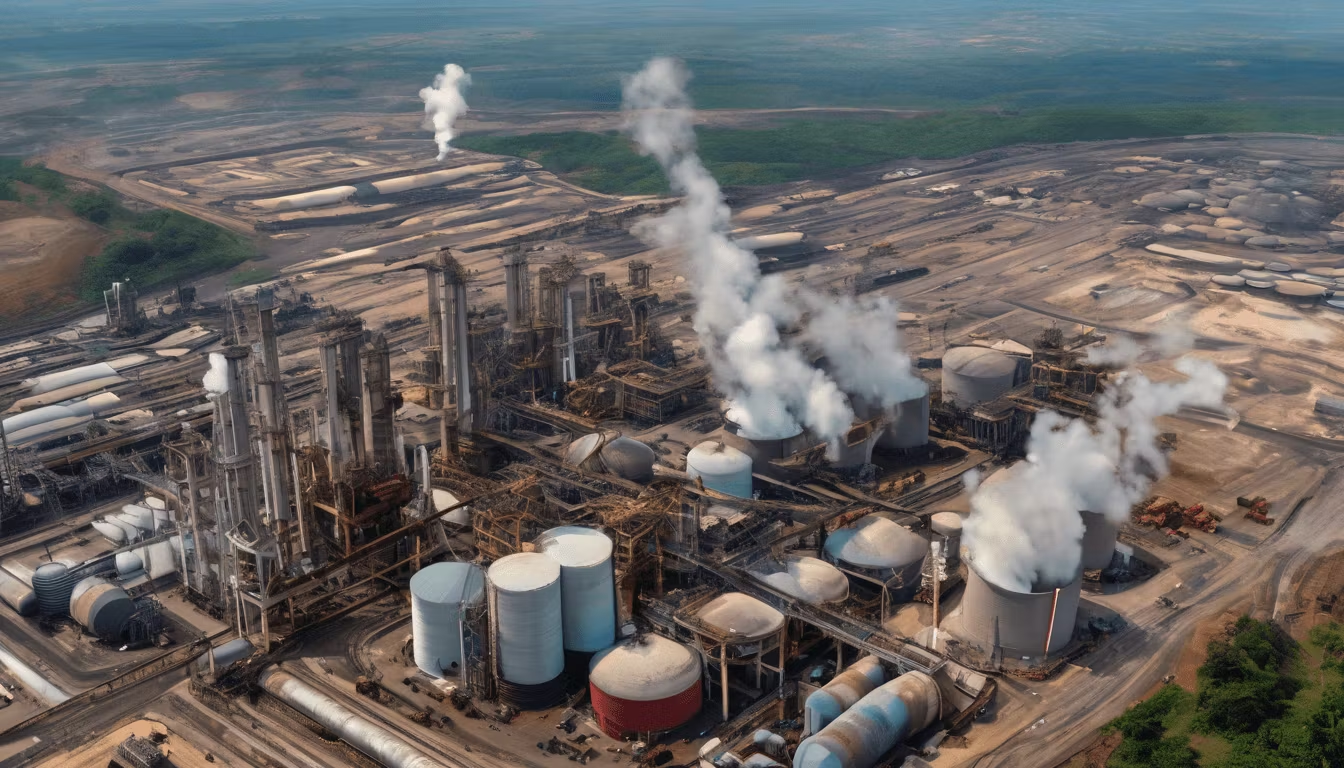
Indonesia's Nickel Smelting Boom: The Processing Response
Rapid Capacity Expansion
Indonesian nickel processing capacity has exploded since 2020:
- 2019: Approximately 800,000 metric tons annual NPI capacity
- 2024: Over 2.5 million metric tons annual capacity across NPI, ferronickel, and HPAL
- Projected 2025-2030: Capacity expansion to 4+ million metric tons
Major producers include state-owned PT Antam, Vale Indonesia, Eramet Indonesia, and numerous Chinese-invested facilities in Sulawesi's industrial parks.
Technology and Quality Standards
Modern Indonesian smelters employ world-class technology:
- HPAL (High-Pressure Acid Leach) systems for battery-grade nickel
- Rotary kiln electric furnace (RKEF) technology for NPI production
- SUCOFINDO and international laboratory certification for quality assurance
Quality control is paramount. Indonesian smelters producing for export markets maintain rigorous standards exceeding international specifications, ensuring compatibility with global supply chains.
Strategic Implications for Different Industries
Stainless Steel Manufacturers
Stainless steel producers remain the largest nickel consumers globally. The ban forced these mills to:
- Establish long-term supply contracts with Indonesian smelters
- Relocate some production capacity to Indonesia or Southeast Asia
- Accept higher input costs, which were partially passed to end consumers
Battery and EV Industries
The electric vehicle revolution depends heavily on nickel for battery chemistries (NCA, NMC, TERNARY). Indonesia's battery-grade nickel production capacity is becoming strategically critical for global EV supply chains. The ban has forced battery makers and carmakers to:
- Invest in Indonesian processing partnerships
- Develop supply agreements directly with HPAL producers
- Integrate backwards into nickel sourcing and processing
Industrial Minerals and Specialty Products
Companies in ceramic, glass, and foundry industries benefit from Indonesia's integrated mineral ecosystem. Silica sand suppliers and other specialty mineral producers can now offer bundled sourcing solutions combining multiple mineral inputs from Indonesian suppliers.
What This Means for Your B2B Mining Strategy
Sourcing Strategy Adjustments
B2B buyers should consider these strategic shifts:
- Establish Indonesian Operations or Partnerships: Direct presence provides pricing and allocation advantages
- Multi-Year Contracts: Spot purchasing is increasingly difficult; commit to medium to long-term agreements
- Quality Specification Flexibility: Processed nickel has different impurity profiles than raw ore; adapt specifications accordingly
- Diversify Suppliers: Maintain relationships with multiple Indonesian smelters to reduce supply risk
Risk Mitigation
Understanding policy risks is critical:
- Policy Stability: While the ban appears permanent, other policy changes (export taxes, quotas, environmental restrictions) remain possible
- Price Volatility: Nickel prices remain volatile; consider hedging strategies
- Supply Concentration: Overreliance on Indonesian supplies creates geopolitical risks; maintain alternative sources where possible
Looking Forward: Future Trends and Market Evolution
Battery Industry Growth and Nickel Demand
Global nickel demand is projected to double by 2030, driven by EV battery production. Indonesia's ban positions the country as a critical supplier to this growth, but also creates competition among buyers for limited capacity.
Environmental and Social Governance (ESG) Considerations
Downstream beneficiation allows Indonesia to capture environmental and labor value-addition domestically. However, buyers should verify that Indonesian processors meet international ESG standards, as processing (particularly RKEF smelting) is energy-intensive and can have environmental impacts if not properly managed.
Potential Policy Evolution
Indonesia may extend beneficiation requirements to additional minerals. Companies should monitor policy developments affecting related mineral supplies and adjust sourcing strategies accordingly.
Partner with Indoalam for Reliable Indonesian Mineral Supply
Navigating Indonesia's mineral export ban requires expertise, local relationships, and reliable supply access. CV Indoalam Mineral Persada has been supplying premium-grade minerals directly from Indonesian mines to B2B industrial partners since 2022.
We understand the complexities of Indonesia's downstream beneficiation policy and maintain direct relationships with licensed mines and smelters across Sulawesi, Kalimantan, and Maluku. Our expertise spans:
- Premium nickel ore (Saprolite Ni 1.5-2.0%, Limonite Ni 0.8-1.2%) for domestic smelters
- High-grade silica sand (SiO2 99.74%) for glass, ceramics, and water treatment
- Aluminum ingots and zircon sand for foundries and specialty manufacturers
- Flexible supply: from 100 MT trial orders to 2.5 million MT annual contracts
All materials are SUCOFINDO laboratory tested, IUP OPK licensed, and RKAB approved—ensuring compliance with Indonesian regulations and international quality standards.
Ready to optimize your Indonesian mineral supply chain? Learn more about our capabilities and how we partner with global B2B mining companies to navigate Indonesia's mineral beneficiation landscape. Contact us today to discuss your specific sourcing requirements and explore partnership opportunities.