Float Glass Manufacturing: Why Silica Sand Purity Is Critical
Float Glass Manufacturing: Why Silica Sand Purity Is Critical
The global float glass market is worth over $100 billion annually, with demand driven by construction, automotive, solar energy, and consumer electronics industries. Yet few manufacturers understand the critical role that silica sand purity plays in determining final product quality, production efficiency, and profitability.
Float glass—the flat, uniform glass used in windows, architectural panels, and solar modules—demands uncompromising raw material standards. The slightest contamination in silica sand can result in visible defects, reduced light transmission, structural weakness, and costly production delays. For glass manufacturers operating on tight margins, choosing the right silica sand supplier is not just a procurement decision—it's a competitive advantage.
This comprehensive guide explains why silica sand purity matters, what quality standards to enforce, and how to source materials that meet the demanding specifications of modern float glass production.
Understanding Float Glass Production
The Float Glass Process: Where Silica Sand Becomes Glass
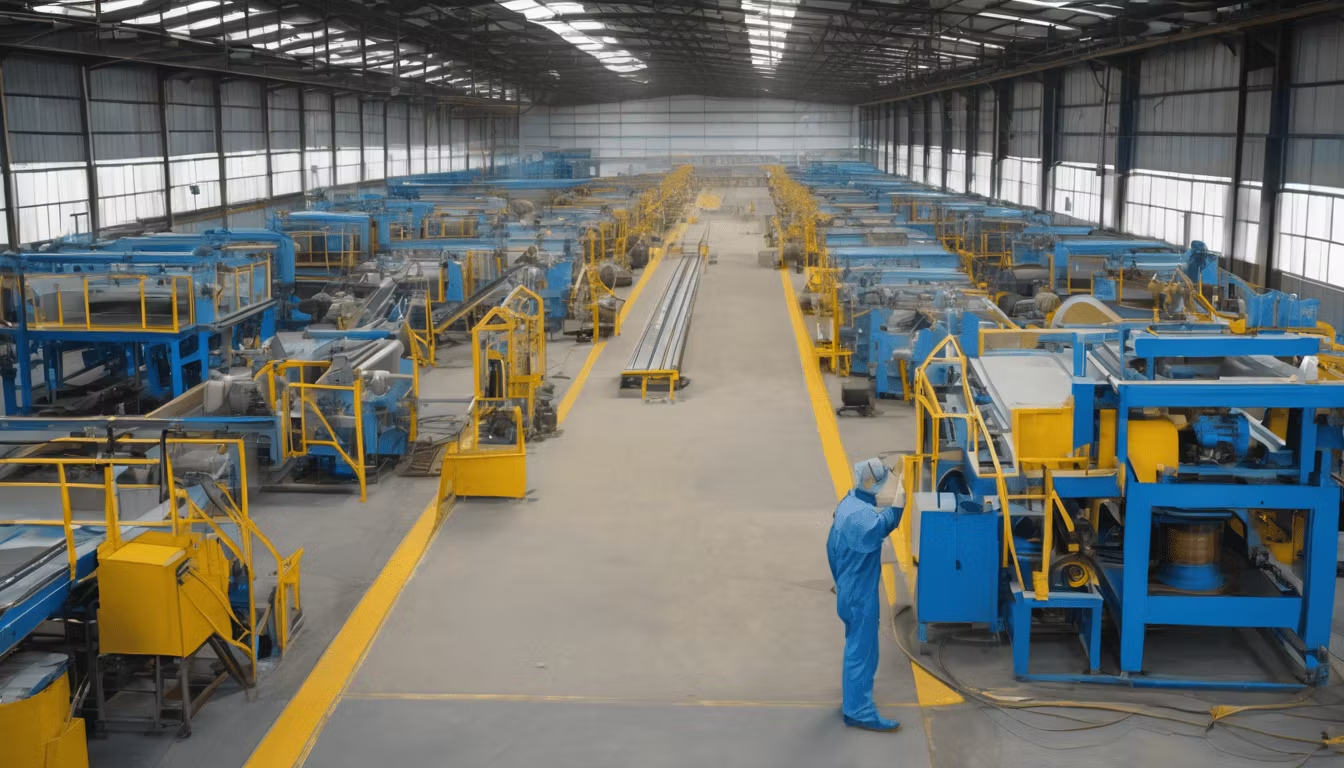
Float glass manufacturing, invented by Sir Alastair Pilkington in 1959, revolutionized the industry by producing perfectly flat, uniform glass without polishing. The process begins with raw materials—primarily silica sand, soda ash, limestone, and cullet (recycled glass)—fed into a furnace at temperatures exceeding 1700°C.
The molten glass flows onto a bath of molten tin, where surface tension creates a naturally flat surface. As the glass cools and solidifies on the tin bath, it achieves exceptional uniformity impossible to achieve through traditional grinding and polishing methods. The tin provides a perfectly smooth interface, requiring no further finishing.
This elegant process has a critical vulnerability: contamination in any raw material—particularly silica sand—transfers directly into the final product. Unlike materials that can be filtered or refined after melting, glass defects originating from impure silica sand cannot be corrected post-production.
Why Silica Sand Is the Foundation of Glass Quality
Silica (SiO₂) comprises 70-75% of typical float glass formulations, making it the dominant component. The quality and purity of silica sand directly determine:
- Optical Properties: Light transmission, clarity, and color consistency
- Chemical Durability: Resistance to weathering and chemical attack
- Thermal Properties: Heat resistance and dimensional stability
- Mechanical Strength: Tensile and flexural strength
- Processing Efficiency: Melting behavior, viscosity, and working temperature
Every iron oxide particle, manganese impurity, or alumina trace creates a defect that propagates through millions of square meters of finished glass. For manufacturers serving automotive, architectural, and solar applications, these defects translate to rejected batches, customer complaints, and damaged reputation.
Critical Purity Standards for Float Glass Silica Sand
SiO₂ 99% and Beyond: Understanding Purity Specifications
The international standard for glass-grade silica sand is SiO₂ 99.5-99.8% purity, though premium float glass applications demand SiO₂ 99.7% or higher. This seemingly small difference between 99% and 99.7% represents the difference between acceptable and exceptional glass.
Consider the practical impact: in a 1000-ton batch of silica sand at 99% purity, 10 tons of impurities are introduced into the furnace. At 99.7% purity, only 3 tons of impurities enter. That 7-ton difference compounds across hundreds of production runs, affecting product consistency, furnace longevity, and waste rates.
Key Impurities That Degrade Glass Quality
Iron Oxide (Fe₂O₃): The most critical specification. Iron oxide imparts yellow-brown coloration, reducing light transmission and creating visible tints. Glass-grade silica sand must maintain Fe₂O₃ below 0.08%, with premium grades below 0.05%.
Alumina (Al₂O₃): Affects glass viscosity and melting temperature. Excessive alumina requires higher furnace temperatures, increasing energy costs and equipment wear. Standard limits are 0.1-0.3%.
Titania (TiO₂): Creates yellow discoloration and reduces transparency. Must remain below 0.05% for clear float glass.
Chromium Oxide (Cr₂O₃): Even trace amounts (>0.01%) cause green coloration visible in thick glass sections.
Organic Matter and Clay: Cause gas bubbles during melting, resulting in defects and reduced structural integrity.
Moisture Content: Must be controlled below 0.5%. Excess moisture causes steam bubbles and delamination during high-temperature processing.
International Quality Standards
Major float glass manufacturers reference these standards:
- ASTM C36: American standard for glass-grade silica sand (North America)
- EN 12327: European standard for silica sand used in glass production
- JIS R 2204: Japanese Industrial Standard for silica sand
- GB 4287: Chinese standard for glass-grade silica
These standards specify not just purity percentages, but also particle size distribution, moisture content, loss on ignition, and heavy metal limits. SUCOFINDO-certified testing ensures compliance with these rigorous international specifications, providing manufacturers with documented proof of material quality.
Sourcing High-Purity Silica Sand for Float Glass
Direct-from-Mine Advantage
The silica sand supply chain creates multiple opportunities for contamination. When purchasing through middlemen, materials pass through numerous storage facilities, transportation vessels, and transfer points. Each handoff introduces dust, moisture, and cross-contamination risks.
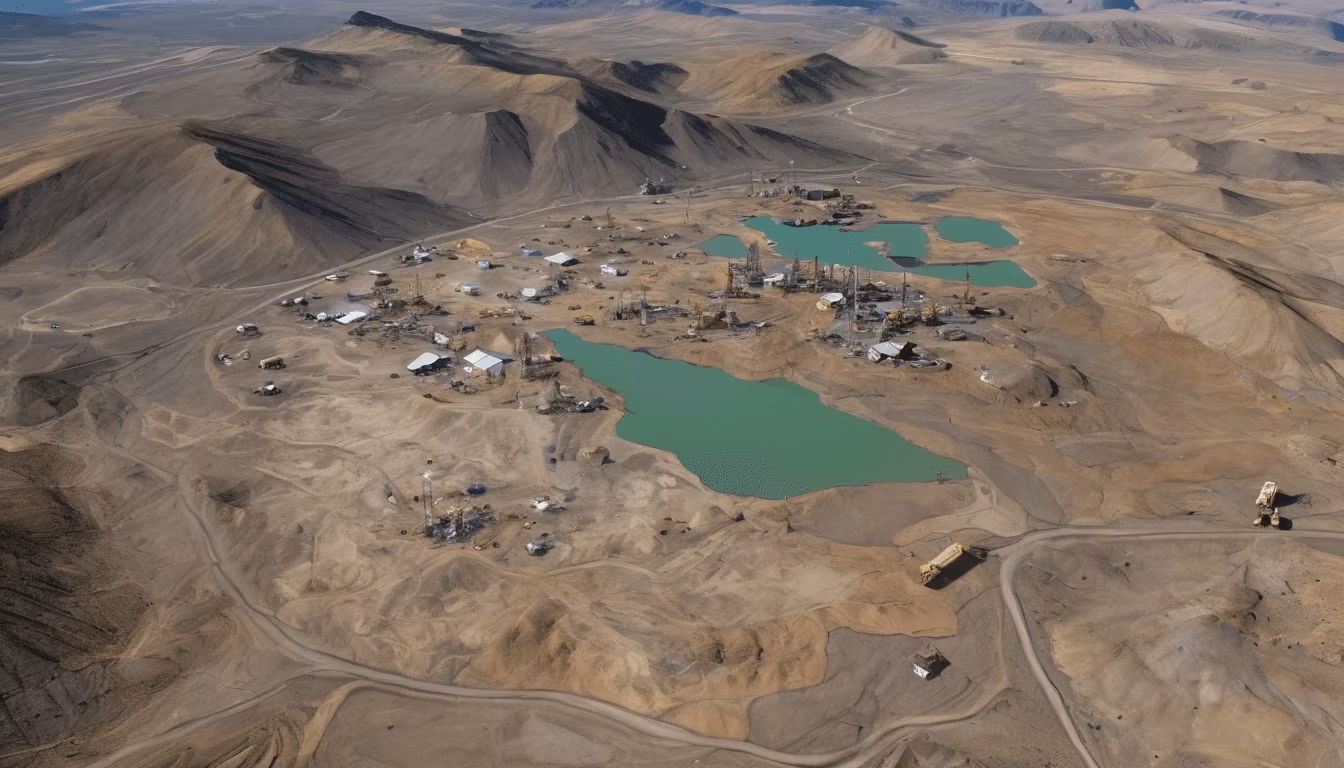
Sourcing silica sand directly from mining operations eliminates intermediaries and provides complete supply chain transparency. Direct-mine suppliers control extraction, washing, beneficiation, and quality testing from source to delivery. This vertical integration ensures consistent purity and reduces contamination risks inherent in complex supply chains.
Beneficiation and Processing Standards
Premium silica sand suitable for float glass requires rigorous beneficiation:
- Washing: Removes clay, silt, and organic matter using multiple wash stages
- Magnetic Separation: Extracts iron-bearing minerals through high-intensity magnetic fields
- Density Separation: Uses spiral classifiers or hydrocyclones to remove heavier contaminating minerals
- Screening: Ensures particle size distribution meets specifications (typically 100-200 mesh for float glass)
- Drying: Reduces moisture to acceptable levels without introducing heat-related contamination
Suppliers with modern beneficiation facilities can achieve the SiO₂ 99.7%+ purity demanded by premium glass manufacturers. Suppliers without these capabilities cannot meet float glass specifications, regardless of raw deposit quality.
Geographic Sourcing Considerations
Silica sand quality varies dramatically by geographic origin. Deposits in Sulawesi, Kalimantan, and Maluku have distinct mineralogical characteristics affecting their suitability for glass manufacturing. Deposits with naturally high quartz content and low iron oxide can achieve premium purity with moderate processing. Deposits with inherent iron-rich minerals require extensive magnetic separation, increasing costs and reducing yield.
Experienced glass manufacturers develop long-term relationships with suppliers whose deposits naturally produce glass-grade material. This reduces supply disruption risk and ensures consistent quality across production seasons.
Practical Sourcing Strategies for Glass Manufacturers
Establishing Quality Specifications
Effective procurement begins with written specifications that go beyond purity percentage:
- SiO₂ minimum percentage (typically 99.5-99.8%)
- Maximum allowable iron oxide content (Fe₂O₃)
- Maximum alumina and titania limits
- Particle size distribution and mesh gradation
- Moisture content maximum
- Loss on ignition limits
- Heavy metal limits (lead, cadmium, chromium)
- Required testing certification (SUCOFINDO, SGS, or equivalent)
- Acceptable delivery conditions and packaging
These specifications should reference recognized international standards and include certification requirements. Suppliers unable to provide SUCOFINDO lab-tested reports should be rejected immediately, regardless of price advantages.
Trial Batch Testing Before Commitment
Before committing to volume purchases, conduct pilot production runs with trial batches. This field-testing reveals real-world performance that laboratory analysis alone cannot predict. Trial batches should be:
- Minimum 100 metric tons (representative of full-scale production)
- Processed through identical furnace configurations as production
- Evaluated for visual defects, optical clarity, and color consistency
- Tested for thermal properties and mechanical strength
- Assessed for furnace operating efficiency and gas evolution
Trial results often reveal optimization opportunities—adjusting melting temperature, adding flux materials, or modifying beneficiation processes to maximize performance with specific silica sand sources.
Building Long-Term Supplier Partnerships
Unlike commodity markets where price determines selection, glass-grade silica sand sourcing benefits from long-term partnerships. Reliable suppliers who consistently deliver SiO₂ 99.7%+ material deserve preferential treatment. Benefits include:
- Price stability and volume discounts
- Priority access during supply constraints
- Collaborative development of tailored products
- Advanced notice of any quality variations
- Technical support and troubleshooting
Suppliers meeting IUP OPK licensing requirements and maintaining RKAB approval demonstrate regulatory compliance and operational stability, reducing supply disruption risk.
The Cost Impact of Purity Levels
Calculating True Cost of Ownership
Price per ton is an incomplete metric for silica sand procurement. True cost of ownership includes:
- Production Losses: Reject batches due to defects add 2-5% to effective material costs
- Energy Efficiency: Impure sand requires higher furnace temperatures, increasing energy consumption by 10-15%
- Equipment Wear: Contaminating minerals accelerate refractory erosion, increasing maintenance costs
- Quality Variation: Inconsistent material requires furnace parameter adjustments, reducing throughput
- Warranty and Returns: Defective glass returned by customers impacts revenue and reputation
Premium silica sand at SiO₂ 99.7% typically costs 15-30% more than lower-purity alternatives. However, when accounting for production losses, energy efficiency, equipment longevity, and customer returns, premium material often delivers lower true cost and higher profitability.
Quality Assurance and Testing Protocols
Third-Party Laboratory Testing
Supplier claims must be verified through independent laboratory testing. SUCOFINDO-certified analysis provides internationally recognized documentation of:
- Elemental composition (SiO₂, Fe₂O₃, Al₂O₃, TiO₂, and others)
- Particle size distribution and surface area
- Moisture content and loss on ignition
- Heavy metal concentrations
- Bulk density and apparent density
Testing should be performed on representative samples taken from each shipment, not just initial qualification batches. Continuous monitoring detects quality drift before it impacts production.
Incoming Quality Control Procedures
Upon receipt, silica sand should undergo rapid quality checks:
- Visual Inspection: Check for obvious discoloration, clay lumps, or organic matter
- Moisture Assessment: Measure moisture content; reject if exceeding specifications
- Particle Size Verification: Confirm mesh gradation matches purchase order
- Density Evaluation: Verify bulk density as indicator of beneficiation quality
- Documentation Review: Confirm SUCOFINDO certificates match actual material batch
Rejected shipments should be returned immediately, with financial penalties assessed for non-conforming deliveries. This reinforces supplier accountability and prevents contaminated material from entering production.
Future Trends in Glass-Grade Silica Sand
Emerging Applications and Purity Requirements
Solar panel glass and specialized optical applications demand even higher purity than traditional float glass. Some solar manufacturers specify SiO₂ 99.9%+ with trace metal limits below 50 ppm. These ultra-premium grades require sophisticated beneficiation technology and command significant price premiums.
Recycled glass (cullet) is increasingly incorporated into glass formulations to reduce energy consumption and environmental impact. However, contamination in recycled streams can compromise quality. High-purity silica sand becomes more critical when cullet quality is variable, as it balances contamination from recycled sources.
Sustainability and Responsible Sourcing
Environmental regulations increasingly scrutinize mining operations. Glass manufacturers risk supply disruptions if suppliers lack proper environmental certifications. Forward-thinking manufacturers prefer suppliers with IUP OPK licensing, RKAB approval, and demonstrated commitment to responsible mining practices. These requirements ensure regulatory compliance and supply chain resilience.
Partnering with Trusted Suppliers for Float Glass Success
Float glass manufacturing demands absolute reliability from raw material suppliers. Contaminated silica sand creates defects affecting millions of square meters of finished glass, damaging customer relationships and eroding profitability.
CV Indoalam Mineral Persada specializes in high-purity quartz sand for glass manufacturing, sourced directly from Sulawesi, Kalimantan, and Maluku deposits. Our material achieves SiO₂ 99.74% purity with rigorous SUCOFINDO laboratory testing on every shipment. We hold complete IUP OPK licensing and RKAB approval, ensuring regulatory compliance and supply chain stability.
Whether you require trial batches for qualification or multi-year volume contracts, we offer flexible supply arrangements from 100 metric tons to 2.5 million metric tons annually. Our direct-from-mine sourcing eliminates intermediaries, ensuring consistent quality and complete supply chain transparency.
Glass manufacturers worldwide trust Indoalam for dependable, laboratory-certified silica sand that meets the most demanding float glass specifications. Contact us to discuss your specific requirements and arrange a trial shipment. Let's partner to ensure your glass production achieves excellence through uncompromised raw material quality.