Zirconium Production from Zircon Sand: Nuclear & Industrial Applications
Introduction: The Strategic Value of Zirconium in Modern Industries
Zirconium stands as one of the most critical materials in the global industrial landscape, commanding premium prices and strict quality requirements across nuclear, aerospace, and advanced manufacturing sectors. Unlike many commodity minerals, zirconium production from zircon sand requires sophisticated processing and rigorous quality control—making reliable sourcing a competitive advantage for B2B buyers.
As demand for clean energy solutions accelerates, the nuclear sector's appetite for high-purity zirconium has surged dramatically. Simultaneously, industrial applications in glass coatings, refractory materials, and chemical catalysts continue expanding. This comprehensive guide explores the journey from raw zircon sand to finished zirconium metal, the applications driving demand, and how to secure consistent supply from trusted partners.
Understanding Zircon Sand: The Raw Material Foundation
What is Zircon Sand and Its Composition?
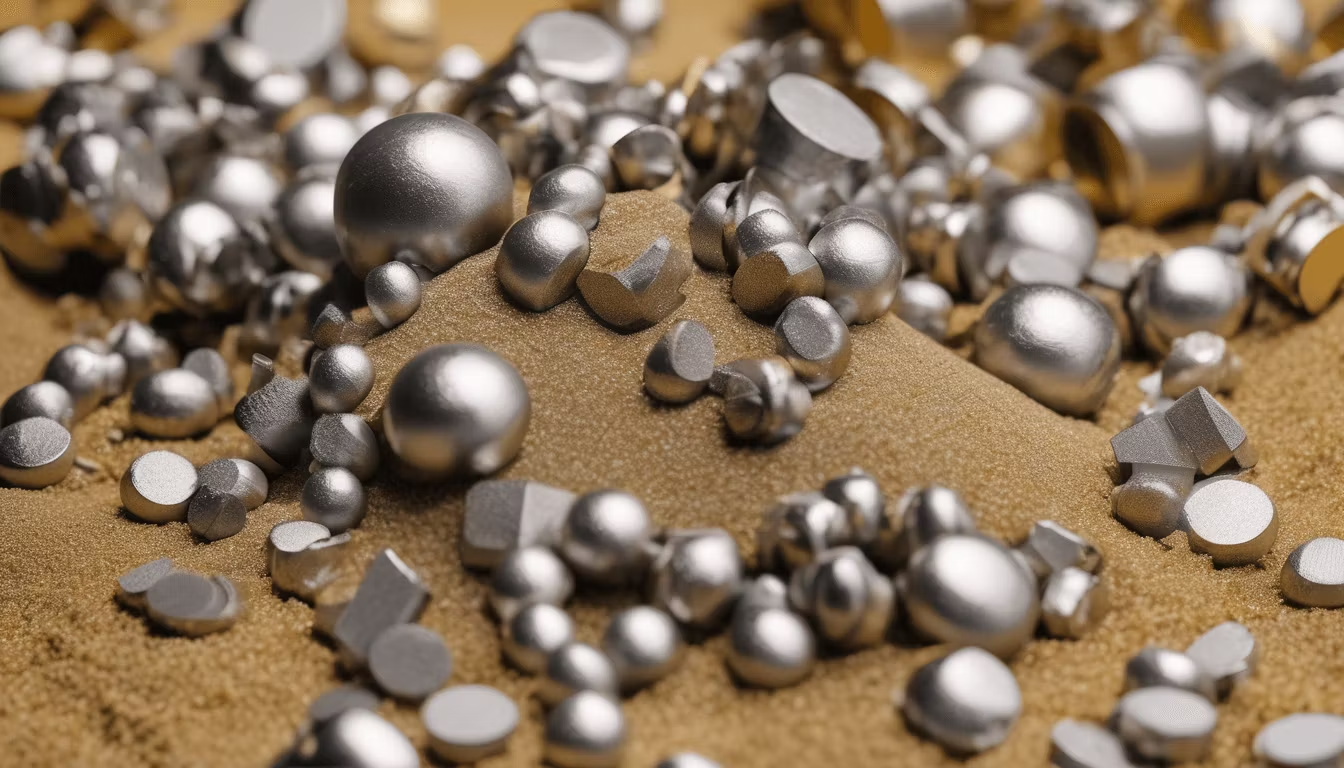
Zircon sand (ZrSiO₄) is a naturally occurring mineral composed of zirconium, silicon, and oxygen. Its crystalline structure makes it exceptionally hard and chemically stable—properties that define both its extraction challenges and its industrial value. Commercial-grade zircon sand typically contains 65% or higher ZrO₂ (zirconium oxide) content, with trace elements carefully monitored depending on end-use specifications.
Indonesia's zircon deposits, particularly in Sulawesi and eastern regions, represent some of the world's highest-quality sources. The geological conditions in these areas produce zircon with minimal iron oxide contamination and exceptional purity—critical factors for nuclear-grade applications.
Mining and Processing Standards
Extracting zircon sand demands environmental compliance and precision processing. Licensed operators like CV Indoalam Mineral Persada follow IUP OPK (mineral exploration and exploitation permits) and RKAB (reclamation and post-mining plans) regulatory frameworks, ensuring both resource efficiency and environmental stewardship. SUCOFINDO testing—Indonesia's accredited quality assurance body—verifies chemical composition, particle size distribution, and contaminant levels before materials leave the source.
This rigorous quality control is non-negotiable. A single percentage point of iron oxide contamination can render material unsuitable for nuclear applications, where purity specifications are often ±0.5% or tighter.
The Zirconium Production Process: From Sand to Metal
Chemical Conversion: Chlorination Route
The primary industrial pathway for nuclear grade zirconium production involves converting zircon sand into zirconium tetrachloride (ZrCl₄) through high-temperature chlorination. This process typically occurs in specialized facilities with sophisticated equipment:
Step 1: Roasting and Chlorination
Zircon sand undergoes high-temperature chlorination in the presence of carbon (coke or graphite). The reaction produces zirconium tetrachloride vapor and silicon tetrachloride byproducts. This stage requires precise temperature control (800-1000°C) and carefully managed chlorine gas flow to maximize yield and minimize losses.
Step 2: Separation and Purification
Zirconium tetrachloride vapor is separated from silicon tetrachloride through fractional distillation. The higher boiling point of ZrCl₄ (331°C) enables clean separation, critical for achieving the purity demands of nuclear applications. Further purification removes hafnium (Hf), a natural companion element in zircon that absorbs thermal neutrons—unacceptable in reactor cores.
Step 3: Reduction to Metal
Zirconium tetrachloride undergoes reduction using magnesium or other reducing agents in an inert atmosphere. This process yields zirconium sponge—porous zirconium metal that undergoes melting, casting, and recrystallization to produce ingots and finished forms.
The Kroll Process and Alternative Methods
The magnesium-based Kroll process dominates commercial zirconium production, particularly for nuclear-grade material. Its advantages include established scalability, reliable quality outcomes, and compatibility with stringent specifications. Vacuum arc remelting and electron beam melting further purify the material for critical applications.
Nuclear-Grade Zirconium: Specifications and Applications
Why Nuclear Applications Demand Premium Purity
Nuclear reactors operate in extraordinarily demanding environments: extreme temperatures, intense radiation, and chemically corrosive coolant systems. Zirconium's exceptional properties make it indispensable:
- Low neutron absorption cross-section: Zirconium absorbs far fewer thermal neutrons than most metals, enabling efficient nuclear reactions.
- Superior corrosion resistance: The passive oxide layer protecting zirconium resists corrosion from pressurized water reactor (PWR) coolants and boiling water reactor (BWR) environments for decades.
- High-temperature stability: Zirconium maintains mechanical strength at operating temperatures exceeding 300°C.
- Hafnium separation critical: Hafnium content must remain below 100 parts per million (ppm) for reactor-grade specifications, as hafnium's thermal neutron absorption would impair reactor performance.
ASTM B550 and ASTM B353 define reactor-grade zirconium specifications, with material typically supplied as tubing, sheet, or ingot depending on reactor design requirements.
Global Nuclear Applications
Zirconium forms the structural matrix of nuclear fuel cladding—the thin metal tubes containing nuclear fuel pellets. Globally, reactors operating in the United States, Europe, Russia, Japan, South Korea, and China all depend on reliable zirconium supplies. With over 440 nuclear reactors currently operational worldwide and new construction accelerating in Asia, demand for nuclear-grade zirconium continues its upward trajectory.
Industrial Applications Beyond Nuclear
Aerospace and Defense Sectors
Zirconium's lightweight-to-strength ratio, combined with corrosion resistance and temperature stability, makes it valuable for aerospace applications. Military aircraft engines, hypersonic vehicle components, and defense systems utilize zirconium alloys where reliability under extreme conditions is non-negotiable. Zirconium also serves in military reactor propulsion systems for submarines and vessels.
Chemical Industry and Catalysis
Zirconium compounds function as catalysts in petroleum refining, organic synthesis, and pharmaceutical manufacturing. Zirconium dioxide (ZrO₂) in particular enables critical hydrocracking, isomerization, and polymerization reactions. Industrial chemical producers source zircon sand as a raw material for producing these catalytic compounds.
Refractory Materials and Ceramics
Zircon's exceptional refractory properties—withstanding temperatures above 2000°C without degradation—make it essential for foundry mold coatings, furnace linings, and high-temperature industrial ceramics. Steel mills, aluminum smelters, and glass manufacturers all consume zircon-based refractory materials. This sector represents one of the largest industrial end-uses for zircon sand, though typically at lower purity grades than nuclear applications.
Optics, Glazes, and Specialty Coatings
Zircon's opacity and refractive properties serve glazing and coating applications. Ceramic tiles, sanitary ware, and decorative applications utilize zircon sand for its whitening and opacifying effects. Additionally, zirconium compounds protect metal surfaces through advanced coating technologies in automotive and architectural applications.
Market Dynamics: Supply, Demand, and Price Drivers
The zirconium market reflects nuclear industry cycles, aerospace activity, and industrial production rates. Supply chain disruptions—whether from mining delays, regulatory changes, or geopolitical factors—create price volatility that impacts manufacturers' cost structures and inventory strategies.
Indonesia's strategic position as a zircon-producing nation provides significant advantages for regional and global buyers. Direct sourcing from licensed Indonesian producers like CV Indoalam eliminates middlemen, reduces lead times, and enables flexible supply arrangements—from trial quantities of 100 metric tons to annual contracts spanning millions of tons.
Quality Assurance and Regulatory Compliance
Buyers of zircon sand destined for zirconium production must prioritize suppliers demonstrating rigorous quality control. CV Indoalam Mineral Persada maintains SUCOFINDO laboratory testing for all shipments, documenting ZrO₂ content, particle size distribution, iron oxide levels, and trace element composition. This third-party verification provides the documentary evidence required by end-users and trading partners.
IUP OPK licensing and RKAB approvals confirm environmental and regulatory compliance, reducing buyer risk and enabling seamless integration into regulated supply chains. For nuclear-grade applications specifically, traceability documentation becomes essential—your supplier must maintain complete chain-of-custody records from mining through delivery.
Sourcing Strategy: Why Direct Supply Matters
Eliminating Supply Chain Inefficiencies
Traditional zircon sourcing often involves multiple intermediaries—each adding cost, delay, and documentation complexity. Direct relationships with licensed mining companies eliminate these inefficiencies. You benefit from:
- Lower per-ton costs through eliminated intermediary markups
- Faster order fulfillment and reduced lead times
- Direct quality negotiations and specification customization
- Complete supply chain transparency and documentation
- Flexibility for trial shipments before committing to large contracts
Complementary Mineral Products
Strategic sourcing partners often supply multiple industrial minerals, enabling consolidated procurement. Alongside zircon sand, buyers in glass manufacturing, ceramics, and industrial processing often require silica sand for production processes and aluminium ingot for casting operations. Consolidating these purchases streamlines logistics, improves cost efficiency, and strengthens supplier relationships.
Technical Specifications for Procurement
When specifying zircon sand for zirconium production, key parameters include:
- ZrO₂ Content: Typically 65-67% for industrial grades; 68%+ for premium reactor applications
- Particle Size Distribution: Measured by mesh grades (commonly 100-200 mesh); distribution affects processing efficiency
- Iron Oxide (Fe₂O₃): Generally <0.3% for industrial uses; <0.1% for nuclear applications
- Silica Content (SiO₂): Typically 30-32%; excess silica impacts reaction yields
- Moisture Content: Usually <0.5%; excessive moisture requires additional drying
- Trace Elements: Hafnium, titanium, and thorium must be documented and controlled
SUCOFINDO testing provides certified documentation of these parameters, enabling confident procurement decisions.
Future Trends in Zirconium Supply and Applications
Several macro trends will shape zirconium markets and sourcing strategies:
Nuclear Renaissance: Advanced reactor designs (small modular reactors, thorium reactors) will drive new specifications and potentially higher zirconium consumption.
Supply Chain Localization: Geopolitical tensions are encouraging regions to develop or secure domestic zirconium supplies, potentially favoring Southeast Asian producers.
Environmental Regulations: Stricter mining and processing environmental standards will increase the importance of compliant, certified suppliers.
Advanced Applications: Research into zirconium-based superalloys, biomedical implants, and high-performance composites continues expanding end-use markets.
Partnering with CV Indoalam for Zircon Supply
CV Indoalam Mineral Persada brings together the essential elements of a reliable zircon supplier: direct mining access in premium Indonesian deposits, full regulatory compliance with IUP OPK and RKAB frameworks, SUCOFINDO-certified quality assurance, and flexible supply arrangements accommodating trial orders through multi-year contracts.
Whether you operate a nuclear fuel processing facility requiring reactor-grade zirconium feedstock, manage a foundry needing refractory materials, or produce industrial catalysts, CV Indoalam delivers consistent quality backed by transparent documentation and technical support.
The journey from zircon sand to nuclear-grade zirconium demands precision, reliability, and expertise at every stage. Partner with a supplier that understands these demands and delivers accordingly.
Contact us today to discuss your zircon sand requirements, request technical specifications, or arrange a trial shipment. Our team is ready to support your sourcing strategy with the quality, reliability, and transparency your operations demand.