Gravity Die Casting vs HPDC: Which Aluminium Method Suits Your Needs?
Understanding Aluminium Casting Methods: An Industry Overview
The aluminium casting industry relies on several proven methodologies to transform raw aluminium ingot feedstock into precision components for automotive, aerospace, electronics, and industrial applications. Among these, gravity die casting and high pressure die casting (HPDC) stand out as two of the most widely adopted processes in modern foundries across Southeast Asia and beyond.
Selecting the correct casting process directly impacts production efficiency, component quality, dimensional accuracy, and ultimately, your bottom line. For procurement specialists and foundry managers sourcing aluminium ingot materials, understanding these two fundamental methods is essential to optimizing your supply chain and manufacturing outcomes.
This comprehensive guide examines gravity die casting versus HPDC, exploring the technical advantages, limitations, cost implications, and ideal applications for each aluminium casting method.
What is Gravity Die Casting?
Process Overview and Mechanism
Gravity die casting, also known as permanent mould casting, relies on gravitational force to fill a reusable steel or iron mould with molten aluminium. The process begins when molten metal is poured into a preheated permanent mould from above. Gravity naturally drives the liquid aluminium through the mould cavity, filling it completely without external pressure application.
The permanent mould remains heated throughout production (typically between 150-250°C) to maintain optimal metal flow and prevent premature solidification. Once the metal solidifies within the mould, the casting is ejected, and the mould is prepared for the next cycle.
Key Characteristics of Gravity Die Casting
- Slower fill rates: Gravitational forces alone control metal flow, resulting in cycle times typically ranging from 3-15 minutes depending on component size
- Lower pressure application: Minimal mechanical pressure means reduced turbulence and gas entrapment compared to high-pressure alternatives
- Fine grain structure: Slower cooling rates often produce refined microstructures with improved ductility
- Lower tooling costs: Permanent moulds experience less mechanical stress, extending mould life and reducing replacement frequency
- Reduced porosity: Gravity casting naturally minimizes gas porosity, producing denser castings suitable for pressure-critical applications
- Better for larger components: Ideal for medium to large castings where pressure containment becomes impractical
Understanding High Pressure Die Casting (HPDC)
How HPDC Works
High pressure die casting operates on fundamentally different principles. Molten aluminium is forced into a hardened steel die cavity at pressures ranging from 1,500 to 6,000 PSI. This extreme pressure injection dramatically accelerates the casting process, with fill times often completing in milliseconds.
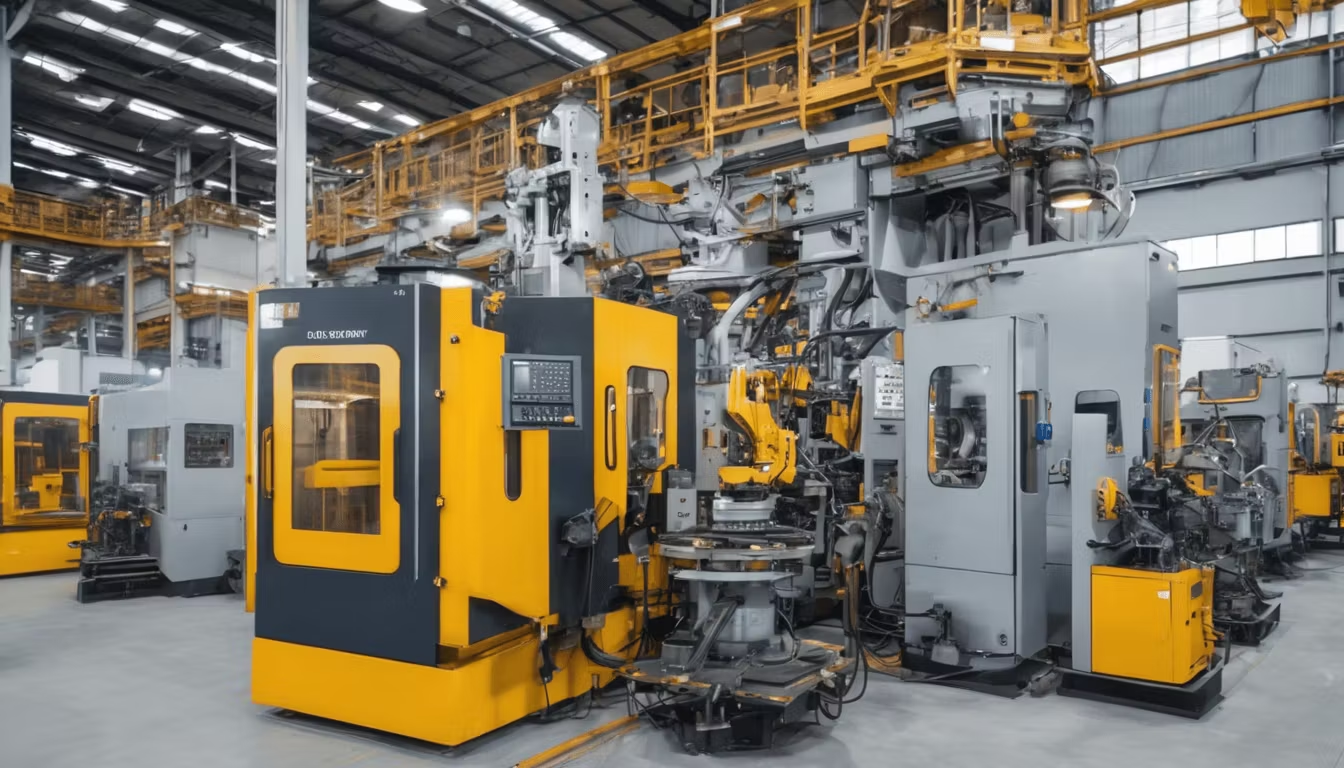
The process employs two die halves clamped together by a powerful hydraulic or mechanical press. The molten metal, held in a chamber, is injected through a plunger mechanism at extreme velocity into the die cavity. Once the metal solidifies, the die separates and the casting is ejected automatically, ready for the next cycle.
Defining HPDC Characteristics
- Ultra-fast cycle times: Complete cycles often occur in 30-60 seconds, maximizing production output
- High-pressure injection: Pressures 10-100 times greater than gravity casting force metal into intricate cavities
- Complex geometry capability: Thin walls, intricate details, and tight tolerances become achievable
- Superior dimensional accuracy: Dimensional repeatability within 0.1-0.2mm is standard for well-designed dies
- Higher tooling investment: Hardened steel dies withstand enormous pressures, requiring substantial upfront capital
- Increased gas porosity: High-velocity injection entraps air and gases, potentially reducing mechanical properties
- Fine surface finish: Dies impart excellent surface quality, often eliminating secondary finishing operations
Gravity Die Casting vs HPDC: Direct Comparison
Production Speed and Efficiency
HPDC dominates in production speed, with cycle times 5-20 times faster than gravity casting. For high-volume consumer electronics, automotive trim components, or mass-market applications requiring tens of thousands of units annually, HPDC's throughput advantage is decisive.
Gravity die casting prioritizes quality over speed. When component performance, longevity, or critical mechanical properties take precedence over volume production, gravity casting's deliberate approach delivers superior results.
Material Quality and Mechanical Properties
Gravity die casting produces castings with superior mechanical properties in most applications. The slower cooling rate and reduced turbulence result in:
- Lower porosity levels (typically 2-5% versus 5-15% in HPDC)
- Better ductility and elongation values
- Improved fatigue resistance for cyclic loading applications
- More consistent microstructure throughout the casting
HPDC excels in producing castings with excellent dimensional accuracy and surface finish, but the inherent porosity can compromise structural integrity when components face high stress or require pressure-tight characteristics.
Cost Implications
Gravity Casting:
- Lower die/mould costs (typically £5,000-£50,000 per mould)
- Lower per-unit production cost for low to medium volumes
- Minimal secondary machining required
- Longer payback period but sustainable for smaller production runs
HPDC:
- High die costs (typically £50,000-£500,000+ per die)
- Lower per-unit production cost at high volumes (typically 50,000+ units annually)
- Exceptional ROI when amortized across millions of units
- Minimal finishing costs due to superior surface quality
Dimensional Accuracy and Tolerance
HPDC achieves superior dimensional accuracy with typical tolerances of ±0.1-0.2mm for small features, making it ideal for precision automotive components, electronic enclosures, and consumer products where tight tolerances are non-negotiable.
Gravity die casting typically achieves tolerances of ±0.3-0.5mm, adequate for many industrial applications but insufficient for precision-critical components requiring computer numerical control (CNC) finishing.
Surface Finish Quality
HPDC produces superior surface finishes (Ra 1.6-3.2 µm) due to precise die contact with molten metal. Many HPDC castings require no post-casting finishing.
Gravity castings typically produce Ra 3.2-6.4 µm finishes, often requiring secondary finishing operations to meet aesthetic or functional requirements.
Choosing the Right Aluminium Casting Method for Your Application
Select Gravity Die Casting When:
- Production volumes remain below 50,000 units annually
- Components require superior mechanical properties and pressure-tightness
- Design complexity involves thick sections or large overall dimensions
- Capital expenditure constraints limit die investment capability
- Flexibility to modify designs without prohibitive re-tooling costs is essential
- Components will experience high stress, fatigue loading, or thermal cycling
- Your target markets demand heritage or premium positioning justifying extended lead times
Select HPDC When:
- Annual production requirements exceed 100,000 units
- Dimensional accuracy within 0.1-0.2mm is non-negotiable
- Complex geometry with thin walls and intricate details is required
- Surface finish quality directly impacts market competitiveness
- Cycle time reduction is critical to meeting market demand
- Cost per unit optimization drives purchasing decisions
- Design specifications permit acceptable porosity levels in non-structural applications
Quality Assurance and Material Sourcing Considerations
Regardless of casting method selection, the quality of your aluminium feedstock directly influences casting performance. Quality aluminium ingot materials meeting ADC12 or A7 specifications ensure consistent casting results and predictable mechanical properties.
Professional foundries implement rigorous quality control protocols including:
- Incoming material certification and chemical composition verification
- Melt temperature monitoring and metal cleanliness analysis
- X-ray or computed tomography scanning for porosity detection
- Tensile and hardness testing on casting samples
- Dimensional verification against engineering specifications
When sourcing premium aluminium ingot materials for your casting operations, partner with suppliers offering documented SUCOFINDO laboratory testing and transparent supply chain documentation.
Industry Trends and Future Outlook
The aluminium casting industry continues evolving with hybrid approaches combining gravity casting's quality benefits with HPDC's efficiency advantages. Squeeze casting and semi-solid metal casting represent emerging technologies addressing traditional method limitations.
Environmental considerations increasingly influence casting method selection. Gravity casting's lower energy intensity and reduced scrap generation appeal to manufacturers pursuing sustainability certifications and carbon footprint reduction initiatives.
Automation integration, artificial intelligence-driven quality control, and advanced simulation software are transforming both casting methods, enabling real-time process optimization and predictive defect prevention.
Conclusion: Making Your Decision
Gravity die casting and high pressure die casting each excel in distinct application domains. Gravity casting prioritizes material quality, mechanical integrity, and cost-effectiveness for lower-volume production. HPDC maximizes production efficiency, dimensional precision, and surface quality for high-volume manufacturing.
Your optimal choice depends on production volume requirements, dimensional tolerance specifications, mechanical property demands, capital expenditure constraints, and market delivery timelines. Many sophisticated manufacturers employ both methods simultaneously, leveraging gravity casting for premium products and HPDC for high-volume commodity components.
To discuss your specific casting requirements or explore sourcing premium-grade aluminium ingot materials for your foundry operations, contact us today. CV Indoalam Mineral Persada supplies quality-assured aluminium ingots meeting international specifications, ensuring your casting processes achieve consistent, predictable results regardless of your chosen manufacturing method. Learn more about our quality standards and supply capabilities to optimize your casting operations.