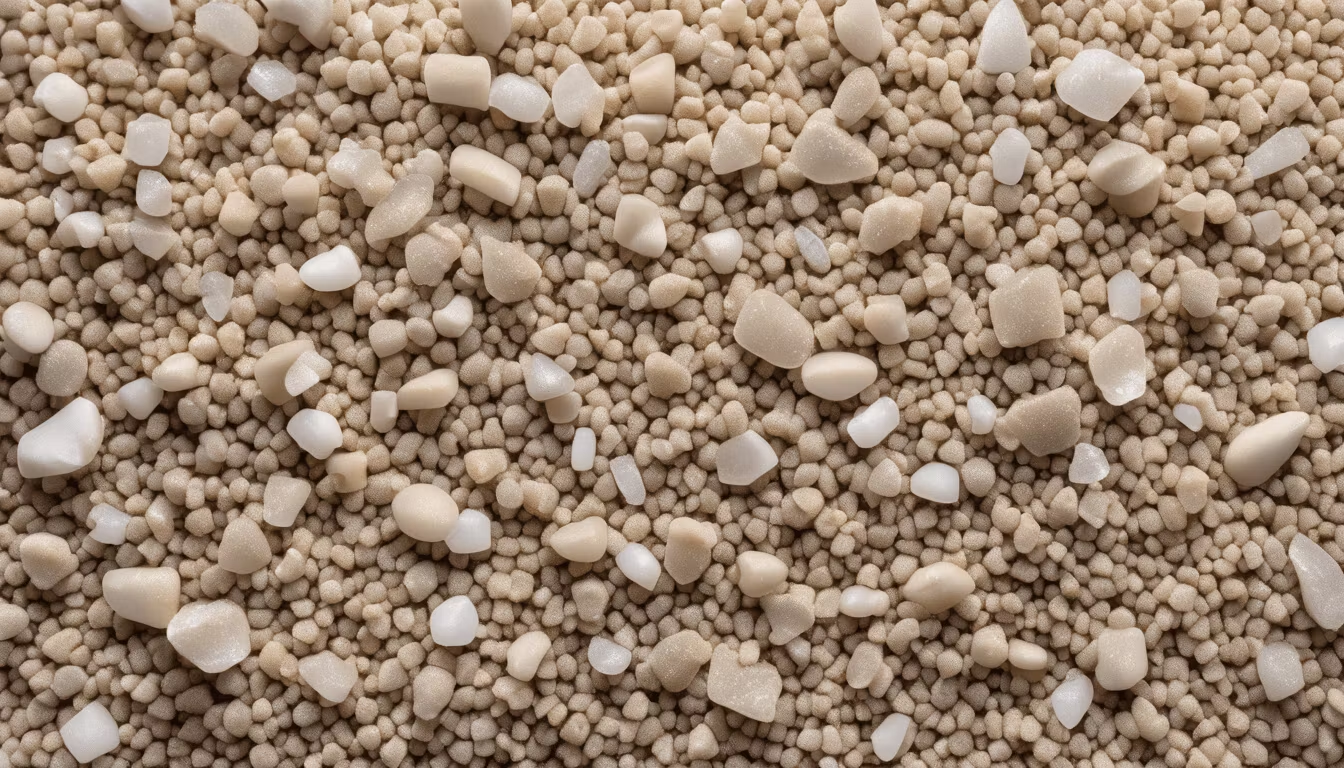
Zircon Sand in Advanced Ceramics: Applications & Benefits
Introduction: The Role of Zircon Sand in Modern Ceramics
The global ceramics industry has undergone significant transformation over the past decade, driven by demand for higher-quality products, improved durability, and enhanced aesthetic properties. At the heart of this evolution lies a critical material: zircon sand. With its exceptional thermal stability, chemical inertness, and optical properties, zircon sand has become indispensable for manufacturers seeking to achieve superior ceramic formulations.
Zircon sand, chemically composed of zirconium silicate (ZrSiO4), offers a unique combination of characteristics that make it invaluable across multiple ceramic applications. Whether used as a ZrO2 opacifier in glazes, a refractory material in kiln linings, or a functional additive in advanced ceramic bodies, zircon sand delivers measurable performance improvements that directly impact production efficiency and end-product quality.
This comprehensive guide explores the multifaceted applications of zircon sand in advanced ceramics manufacturing, examining how this mineral transforms everything from sanitary ware to industrial refractories. For B2B buyers, understanding these applications is essential for optimizing supply chains and ensuring consistent product quality.
What is Zircon Sand? Chemical Properties and Composition
Zirconium Silicate Fundamentals
Zircon sand is a naturally occurring zirconium silicate mineral that forms in a variety of geological environments. The chemical formula ZrSiO4 represents a compound containing approximately 67.2% zirconium oxide (ZrO2) and 32.8% silicon dioxide (SiO2) by weight. Premium-grade zircon sand used in ceramics typically contains ZrO2 concentrations of 65% or higher, ensuring optimal performance in demanding applications.
The crystal structure of zircon sand is tetragonal, providing exceptional hardness and thermal stability. This crystalline structure remains intact even at extremely high temperatures, making it invaluable in refractory applications where traditional materials would fail. The mineral's high refractive index (approximately 1.92-2.01) contributes to its opacity-enhancing properties when used as a glaze additive.
Quality Standards for Ceramic-Grade Zircon
Industrial-grade zircon sand for ceramics must meet stringent specifications. Key quality parameters include:
- ZrO2 Content: Minimum 65% for most applications, with premium grades reaching 67%+
- SiO2 Content: Balanced ratio to optimize sintering behavior
- Particle Size Distribution: Typically 200 mesh for fine glazes to 8-20 mesh for structural applications
- Iron Oxide (Fe2O3): Less than 0.5% to maintain color stability
- Titanium Dioxide (TiO2): Below 2% to prevent unwanted coloration
CV Indoalam Mineral Persada sources premium zircon sand meeting these specifications from established deposits across Indonesia, with all products subjected to SUCOFINDO laboratory testing to guarantee consistency and purity.
Zircon Sand Ceramics Applications: Industry-Specific Uses
Opacifying Agent in Glazes
One of the most widespread uses of zircon sand in the ceramics industry is as a ZrO2 opacifier in ceramic glazes. The zirconium oxide component creates opacity by increasing light scattering within the glaze matrix, producing white, brilliant finishes without requiring lead compounds or other toxic materials.
In traditional ceramic glazing, achieving opacity often required problematic additives. Zircon sand revolutionized this process by offering a safe, effective alternative that enhances visual appeal while maintaining compliance with international environmental standards. The opacity achieved through zircon opacification is superior to tin oxide alternatives in many applications, particularly in high-temperature firing environments where tin oxide can exhibit color shifts.
Tile manufacturers and sanitaryware producers benefit significantly from zircon sand's opacifying properties. A typical glaze formulation incorporating 10-15% zircon sand achieves brilliant white finishes with excellent gloss development. The material performs consistently across different firing temperatures and atmospheres, reducing production variability and improving yield rates.
Refractory Applications
Zircon sand serves critical roles in refractory applications where extreme thermal stress and chemical resistance are paramount. Kiln linings in ceramic factories, glass furnaces, and metal foundries incorporate zircon sand to extend operational lifespan and maintain dimensional stability.
The exceptional refractoriness of zircon stems from its extremely high melting point of approximately 2550°C (4620°F). Unlike many alternative materials that soften or degrade under prolonged high-temperature exposure, zircon sand maintains structural integrity in the most demanding thermal environments. This property is especially valuable in:
- Ceramic Kiln Linings: Extending maintenance cycles and reducing downtime
- Glass Furnace Construction: Providing superior thermal stability in float glass production
- Foundry Applications: Protecting equipment from molten metal corrosion
- Industrial Heat Treatment Chambers: Supporting consistent temperature performance
Refractory-grade zircon sand, when properly processed and fired, develops a robust bonded matrix that resists slag attack and thermal shock better than competing materials. This durability directly reduces operational costs by extending refractory service life from months to years.
Advanced Ceramic Body Formulations
Beyond glaze and refractory applications, zircon sand functions as a critical additive in advanced ceramic body formulations. In technical ceramics and engineering applications, zircon sand additions improve:
- Mechanical Strength: Zircon particles reinforce ceramic matrices, increasing flexural and compressive strength
- Thermal Shock Resistance: The material's thermal expansion characteristics complement traditional clay bodies, reducing crazing and cracking
- Dimensional Stability: Precise particle size control ensures consistent shrinkage rates across production batches
- Surface Quality: Fine zircon grades produce smoother surfaces with improved gloss and color uniformity
Manufacturers of high-end sanitaryware, decorative ceramics, and technical components increasingly specify zircon sand additions to achieve premium product characteristics. The investment in superior raw materials translates directly to reduced waste, fewer quality rejections, and enhanced market positioning.
Technical Advantages of Zircon Sand Over Alternative Materials
Comparison with Tin Oxide and Other Opacifiers
The ceramics industry has traditionally employed several opacifying agents, each with distinct advantages and limitations. Zircon sand compares favorably to alternatives in multiple dimensions:
| Property | Zircon Sand | Tin Oxide | Alumina |
|---|---|---|---|
| Cost Effectiveness | Moderate to Low | High | Low |
| Opacity Level | Excellent | Excellent | Good |
| High-Temperature Stability | Superior | Good | Very Good |
| Color Development | Excellent | Variable | Good |
| Environmental Impact | Minimal | Minimal | Minimal |
Zircon sand's superior thermal stability becomes particularly advantageous in high-fire applications where tin oxide may undergo color shifts or loss of opacity. Additionally, zircon sand's particle structure allows for more predictable glaze development, reducing the variables manufacturers must manage during production.
Superior Refractoriness and Thermal Performance
When competing materials fail under extreme thermal conditions, zircon sand delivers consistent performance. Its thermal expansion coefficient of approximately 5.3 × 10⁻⁶/°C provides excellent compatibility with many ceramic and refractory binders, minimizing thermal stress and extending service life.
Unlike materials that soften gradually at high temperatures, zircon sand maintains its crystalline structure even during extended exposure to temperatures exceeding 2000°C. This property enables designers to specify zircon-containing refractories for applications where traditional materials would require costly, frequent replacement cycles.
Sourcing Premium Zircon Sand: Indonesia's Strategic Advantage
Indonesian Deposits and Production Capacity
Indonesia hosts substantial zircon sand reserves, primarily located in Sulawesi, Kalimantan, and Maluku (particularly Halmahera). These regions feature geology conducive to high-quality zircon formation, producing materials that meet exacting international standards without extensive beneficiation.
The geographic distribution of Indonesian zircon deposits enables efficient sourcing and supply chain management. Multiple production centers reduce dependency on single suppliers while supporting competitive pricing. Direct access to these deposits allows specialized trading companies like CV Indoalam Mineral Persada to maintain consistent supply without the costs and delays associated with international sourcing.
Quality Assurance and Testing Standards
Premium zircon sand sourcing demands rigorous quality control protocols. All materials should undergo SUCOFINDO laboratory testing—Indonesia's leading independent certification body—to verify composition, particle size distribution, and contaminant levels. This independent verification provides buyers with confidence in material specifications and consistency.
Reputable suppliers maintain compliance with IUP OPK (mining permits) and RKAB (approved mining plans), demonstrating legitimate operations and environmental responsibility. These certifications indicate professional operations with established quality management systems and sustainable mining practices.
Practical Guidance for B2B Buyers
Selecting Appropriate Zircon Sand Grades
Different ceramic applications require specific zircon sand characteristics. Buyers should consider:
- For Glaze Applications: Select fine grades (typically 200 mesh) with ZrO2 content of 65-67% and minimal iron oxide contamination
- For Refractory Applications: Choose coarser grades (8-60 mesh) with maximum ZrO2 concentration and low SiO2 reactivity
- For Body Additions: Match particle size to overall ceramic formulation—typically 100-200 mesh for optimum distribution
- For Specialized Applications: Collaborate with suppliers to develop custom sizes and specifications matching specific process requirements
Supply Chain and Logistics Considerations
Effective zircon sand sourcing requires attention to logistics and inventory management. Indonesian suppliers can provide flexible supply arrangements ranging from trial quantities (100 metric tons) to long-term contracts (2.5 million metric tons annually). Bulk sourcing directly from producers eliminates middleman markups and ensures consistent pricing.
Consider these factors when structuring zircon sand procurement:
- Minimum Order Quantities: Establish economical order sizes that balance inventory carrying costs against transportation efficiency
- Quality Consistency: Implement incoming inspection protocols verifying SUCOFINDO test results and batch-to-batch specifications
- Storage Requirements: Zircon sand is relatively stable; standard warehouse storage prevents moisture absorption and contamination
- Supplier Reliability: Partner with established operators with proven compliance records and stable supply chains
Industry Trends and Future Applications
Sustainability and Environmental Considerations
Modern ceramics manufacturers increasingly prioritize sustainable sourcing and production. Zircon sand aligns with these objectives as a naturally occurring mineral that requires minimal chemical processing. Unlike synthetic opacifiers requiring energy-intensive manufacturing, zircon sand extraction and processing demand relatively modest environmental inputs.
Additionally, as industries worldwide phase out problematic additives, zircon sand positions manufacturers to meet stringent environmental compliance requirements. Using zircon sand in place of legacy materials often simplifies regulatory compliance while improving product performance—a compelling value proposition for forward-thinking producers.
Advanced Ceramic Markets and Emerging Applications
Beyond traditional ceramics, zircon sand applications are expanding into technical ceramics, advanced refractories, and specialized coatings. Dental ceramics, electronic components, and high-performance coatings increasingly incorporate zircon sand to achieve superior properties. These emerging markets represent significant growth opportunities for suppliers offering reliable, high-quality material.
Why Choose CV Indoalam Mineral Persada for Zircon Sand Supply
As a specialized B2B minerals trader established in 2022 with formal CV incorporation in 2024, CV Indoalam Mineral Persada brings professional expertise and operational reliability to zircon sand sourcing. Our advantages include:
- Direct-from-Mine Sourcing: Eliminate middlemen and associated cost premiums through direct producer relationships
- SUCOFINDO-Verified Quality: All products undergo independent laboratory testing confirming specifications and purity
- Comprehensive Licensing: Full IUP OPK authorization for mineral logam and non-logam, plus RKAB approval ensures legitimate, sustainable operations
- Flexible Supply Solutions: From trial quantities (100 MT) to annual contracts (2.5M MT), we accommodate diverse buyer requirements
- Regional Expertise: Strategic access to premium deposits across Sulawesi, Kalimantan, and Maluku ensures consistent supply and competitive pricing
- Sector Understanding: Our experience serving major nickel smelters, glass manufacturers, and industrial producers informs our approach to ceramics market needs
Beyond zircon sand, CV Indoalam Mineral Persada supplies premium silica sand (SiO2 99.74%) and aluminium ingot to ceramics and related industries, providing comprehensive mineral procurement solutions through a single trusted partner.
Conclusion: Optimizing Your Ceramic Production with Premium Zircon Sand
Zircon sand represents a transformative material for ceramics manufacturers seeking to enhance product quality, improve operational efficiency, and ensure long-term competitiveness. Its applications span from glaze opacification to advanced refractory systems, delivering measurable performance improvements across diverse manufacturing environments.
For B2B buyers evaluating zircon sand sourcing options, prioritizing quality assurance, supplier reliability, and supply chain efficiency ensures optimal outcomes. Indonesian sources offer compelling advantages through abundant reserves, established quality standards, and competitive pricing—when sourced through reputable, properly licensed traders.
CV Indoalam Mineral Persada stands ready to support your ceramic manufacturing objectives through consistent, SUCOFINDO-verified zircon sand supply. Contact us today to discuss your specific requirements, receive quality samples, and establish a reliable mineral supply partnership. Whether your needs involve trial quantities or multi-year supply agreements, our team is equipped to deliver premium zircon sand supporting your manufacturing excellence and business growth.