Zircon Flour for Precision Casting: Shell Mold Applications
Introduction: The Critical Role of Zircon Flour in Modern Casting
Precision casting demands materials that can withstand extreme temperatures while maintaining dimensional accuracy and surface finish. Zircon flour has become indispensable in the foundry industry, particularly for shell mold casting processes that require superior refractory properties and chemical inertness. As manufacturing standards continue to tighten globally, understanding the technical advantages of high-quality zircon flour is essential for foundries, metal casters, and precision component manufacturers.
In 2024, the global investment casting market relies heavily on advanced ceramic materials, with zircon sand derivatives accounting for a significant portion of shell mold formulations. This comprehensive guide explores how zircon flour performs in shell mold applications, what specifications matter most, and how to source premium-grade material from reliable suppliers.
Understanding Zircon Flour: Composition and Properties
What is Zircon Flour?
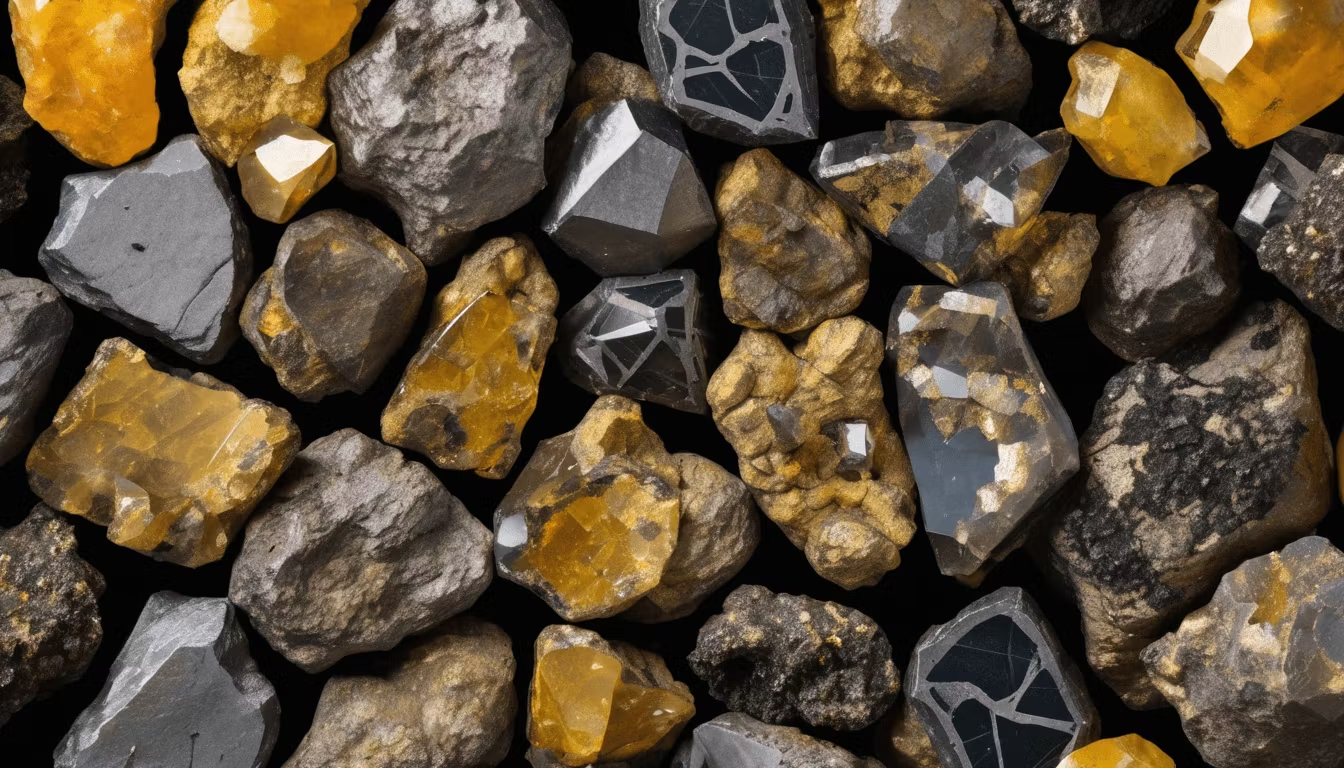
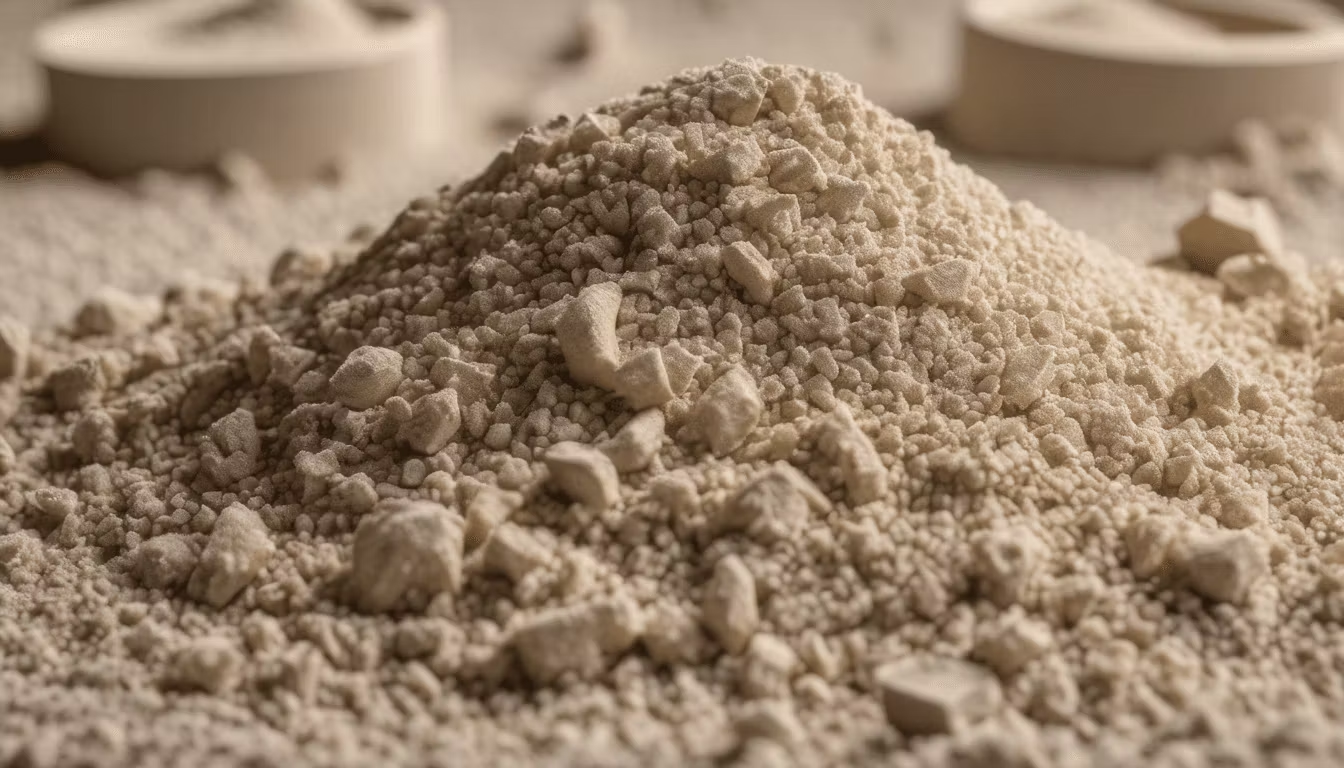
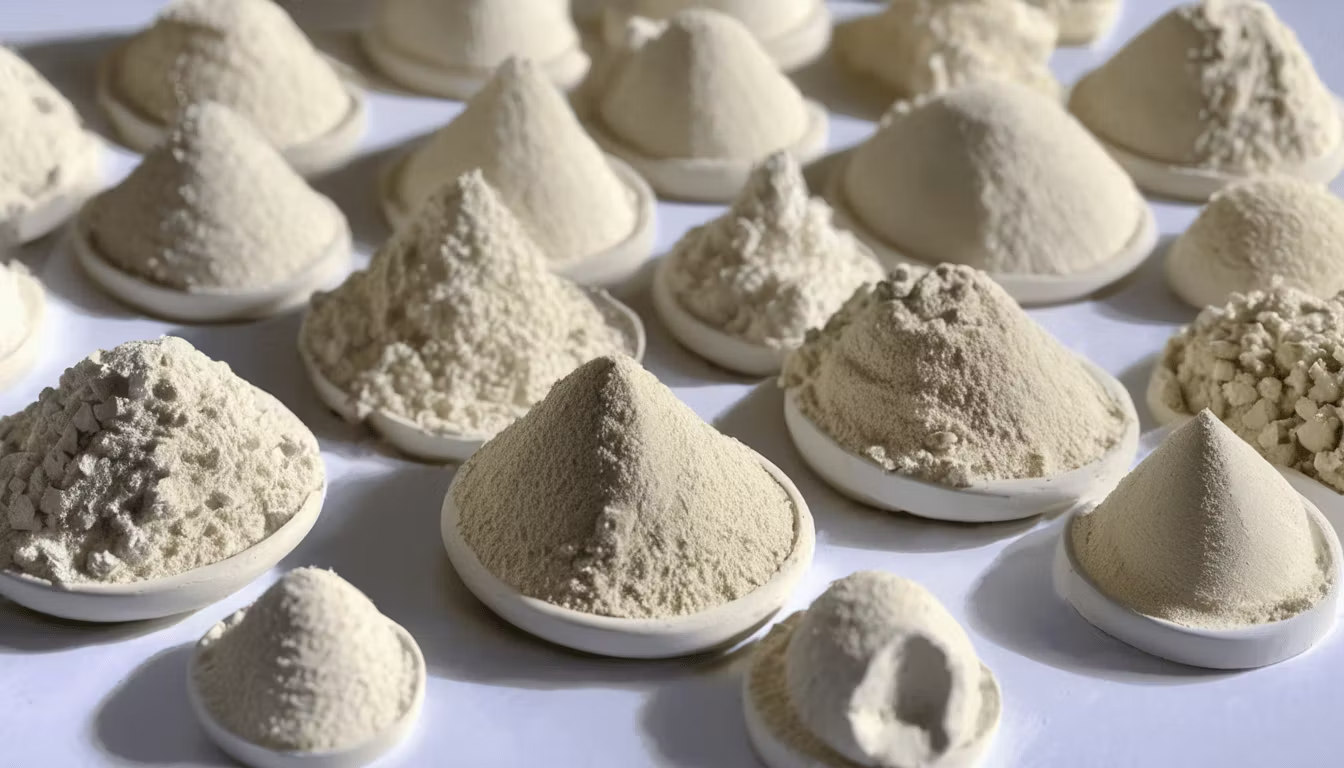
Zircon flour is a finely ground ceramic powder derived from zircon sand (zirconium silicate, ZrSiO₄). The mineral is processed into ultra-fine particles—typically ranging from 200 mesh to micron sizes—specifically engineered for use in refractory coatings and binder systems used in investment casting and shell mold manufacturing.
Unlike coarser zircon sand grades used as stucco in primary shell layers, zircon flour serves as a critical component in ceramic shell face coats, providing the surface that directly contacts molten metal. The powder form allows for superior suspension in slurry systems and better integration with binders.
Key Chemical and Physical Properties
Premium zircon flour meets these specifications:
- ZrO₂ Content: 65% minimum (often 65-68% for high-grade material)
- SiO₂ Content: 32-34%
- Particle Size: 2-10 microns for flour applications
- Bulk Density: 2.85-3.0 g/cm³
- Refractive Index: 1.92-1.96
- Melting Point: 2,550°C (4,620°F)
- Thermal Conductivity: 4-5 W/mK at room temperature
- Thermal Expansion Coefficient: 4.7 × 10⁻⁶/°C
- Loss on Ignition (LOI): <1%
These properties make zircon flour exceptionally suitable for controlling mold surface quality in precision casting operations where dimensional tolerances are critical.
Shell Mold Casting: How Zircon Flour Fits Into the Process
The Shell Mold Manufacturing Process
Shell mold casting, also known as shell molding, is a precision casting technique used to produce high-quality metal castings with excellent surface finishes and dimensional accuracy. The process involves:
- Pattern Creation: A wax or resin pattern of the desired casting is created
- Shell Building: Multiple layers of ceramic shell are built around the pattern by repeatedly dipping into ceramic slurries and stucco coatings
- Shell Curing: Each layer is heated to set the binder
- Pattern Removal: The shell is heated to 700-900°C to melt out the pattern
- Metal Pouring: Molten metal is poured into the ceramic shell cavity
- Shell Knockout: After solidification, the ceramic shell is mechanically removed
The Role of Zircon Flour in Face Coat Formulations
Zircon flour is primarily used in face coat slurries—the innermost shell layers that contact molten metal. These formulations typically contain:
- Zircon Flour: 40-60% by weight of the ceramic component
- Refractory Binder: Colloidal silica or ethyl silicate (10-20%)
- Suspension Medium: Ethanol, water, or proprietary vehicles
- Additives: Rheology modifiers, antifoaming agents, and wetting agents
The zircon flour particles provide the high-temperature stability and chemical resistance necessary to prevent erosion, gas porosity, and metal penetration—three critical defects that compromise casting quality.
Technical Advantages of Zircon Flour in Shell Mold Applications
Superior Refractory Performance
Zircon flour's high melting point (2,550°C) far exceeds typical casting temperatures for aluminum (660°C), copper alloys (1,085°C), and most steel grades (1,500°C). This thermal margin ensures the shell maintains structural integrity without softening or deforming during metal pouring and solidification.
Additionally, zircon's low thermal conductivity minimizes heat transfer through the shell, allowing better control of cooling rates and reducing thermal shock that can cause cracking.
Chemical Inertness and Metal Non-Reactivity
Unlike traditional silica-based refractories, zircon is chemically inert to most molten metals and alloys. This inertness prevents:
- Reaction layers that degrade surface finish
- Inclusion formation from shell material contaminating the casting
- Fusion between shell and casting, which complicates knockout procedures
This is especially critical when casting reactive alloys such as titanium, nickel superalloys, and high-temperature stainless steels.
Dimensional Accuracy and Surface Finish
Zircon flour's fine particle size (2-10 microns) and high density enable uniform packing in ceramic shells. This results in:
- Surface Roughness: Ra values of 0.8-1.6 microns (compared to 1.6-3.2 for traditional slurries)
- Dimensional Tolerance: Consistently achievable ±0.1-0.3 mm on complex geometry features
- Detail Reproduction: Sharp feature definition for thin walls and intricate undercuts
Gas Permeability Control
Properly formulated zircon flour slurries provide controlled porosity that allows gases to escape during metal pouring while remaining impermeable to molten metal penetration. This balance is critical for preventing:
- Gas porosity defects (pinhole porosity)
- Metal penetration (casting roughness)
- Veining (molten metal running along particle boundaries)
Sourcing Premium Zircon Flour: What B2B Buyers Need to Know
Quality Standards and Testing
When evaluating zircon flour suppliers, insist on:
- SUCOFINDO Certification: Third-party laboratory testing confirming ZrO₂ content and particle size distribution
- Particle Size Analysis: Laser diffraction or sedimentation analysis showing median particle size and distribution curve
- Heavy Metal Content: Iron oxide (Fe₂O₃), titanium oxide (TiO₂), and rare earth element assays
- Moisture Content: Typically <0.5% to prevent slurry viscosity issues
- Batch-to-Batch Consistency: Documentation of quality variance across production lots
Production Capacity and Supply Chain Reliability
Indonesia remains a leading zircon producer, with mineral-rich deposits in Sulawesi, Kalimantan, and Maluku. Reputable suppliers should demonstrate:
- Consistent annual capacity (often 100,000+ metric tons for major operations)
- IUP OPK licensing (mining rights documentation)
- Processing facilities with wet grinding and classifier equipment
- Documented supply chain from extraction through milling and packaging
Customization and Technical Support
Premium suppliers offer tailored zircon flour grades optimized for specific applications:
- Ultra-Fine Grades: 2-5 micron median size for premium face coats requiring exceptional surface finish
- Standard Grades: 5-10 micron size for general-purpose shell mold applications
- Specialized Formulations: Beneficiated zircon flour with iron oxide removal for aerospace-grade castings
Applications Across Foundry Industries
Automotive Investment Castings
Engine components, turbocharger housings, and transmission parts benefit from zircon flour's dimensional accuracy. The material enables complex thin-wall designs that reduce weight while maintaining strength.
Aerospace and Defense Components
Jet engine blades, fuel nozzles, and structural brackets demand the exceptional surface finish and defect-free characteristics that zircon flour provides. The material's ability to prevent gas porosity is critical for high-reliability applications.
Medical Device Manufacturing
Orthopedic implants and surgical instruments require biocompatible materials with precise dimensions. Zircon flour contributes to achieving these tight specifications without post-casting finishing.
Industrial Equipment
Pump impellers, compressor housings, and valve bodies cast in ductile iron or aluminum alloys benefit from zircon flour's chemical inertness and superior surface quality.
Comparison: Zircon Flour vs. Alternative Refractory Materials
| Material | Melting Point | Chemical Inertness | Surface Finish | Cost |
|---|---|---|---|---|
| Zircon Flour | 2,550°C | Excellent | Superior (Ra 0.8-1.6) | Premium |
| Silica (Quartz) | 1,710°C | Good | Good (Ra 1.6-3.2) | Economy |
| Alumina | 2,072°C | Good | Fair (Ra 2.4-4.8) | Moderate |
| Mullite | 1,890°C | Fair | Fair (Ra 2.4-4.0) | Moderate-Premium |
| Fused Silica | 1,710°C | Good | Moderate (Ra 1.6-2.4) | Moderate |
While zircon flour represents a higher material cost (typically 20-40% more than silica-based alternatives), the return on investment materializes through reduced casting defects, improved dimensional accuracy, and lower post-casting finishing requirements.
Optimizing Zircon Flour Slurry Formulations
Particle Size Considerations
The optimal particle size for zircon flour depends on shell layer:
- Face Coat (First Shell Layer): 2-5 microns for maximum surface quality
- Intermediate Layers: 5-10 microns for balanced properties
- Back Coat (Structural Layers): Coarser zircon sand stucco (50-200 mesh) mixed with zircon flour binder
Binder System Selection
Zircon flour performs optimally with:
- Colloidal Silica: Standard choice, provides good strength and cost-effectiveness
- Ethyl Silicate: Premium binder for aerospace applications, offers superior green strength and high-temperature stability
- Hybrid Binders: Combinations of silica and organic resins for specialized properties
Suspension and Rheology
Zircon flour's high density (3.0 g/cm³) requires careful rheology management to prevent settling. Recommended practices:
- Maintain slurry viscosity at 40-80 centipoises (cps) for consistent dipping
- Use rheology modifiers such as bentonite or synthetic polymers at 0.5-2.0% by weight
- Implement continuous agitation to prevent particle segregation
- Monitor viscosity daily and adjust as needed
Cost-Benefit Analysis: When to Invest in Zircon Flour
Zircon flour increases material costs per shell mold by approximately 15-30% compared to traditional silica-based systems. However, ROI analysis typically shows positive returns when:
- Casting defect rates exceed 5% (zircon reduces defects by 40-60%)
- Post-casting finishing costs exceed 10-15% of total manufacturing cost
- Dimensional tolerance requirements are ±0.2 mm or tighter
- Casting size exceeds 500 grams (economies of scale improve with larger volumes)
- Alloy reactivity is high (titanium, superalloys, reactive stainless steels)
For precision castings, particularly in aerospace and medical applications, the material cost premium is typically justified by improved first-pass yield and reduced scrap rates.
Environmental and Safety Considerations
Dust Control and Worker Protection
Zircon flour, like all fine ceramic powders, requires proper dust control measures:
- Use local exhaust ventilation (LEV) systems in milling and packaging areas
- Provide personal protective equipment (PPE) including dust masks (N95 minimum) and safety glasses
- Implement regular air quality monitoring
- Ensure proper storage in sealed containers to minimize airborne exposure
Handling and Storage
Zircon flour should be stored:
- In cool, dry conditions (below 60% relative humidity)
- In sealed bags or containers to prevent moisture absorption
- Away from reactive materials and incompatible substances
- With proper labeling and documentation
Sourcing Premium Zircon Flour from Indonesian Suppliers
Indonesia's zircon deposits in Sulawesi, Kalimantan, and Maluku provide access to high-quality raw material processed to international standards. When selecting a supplier, prioritize:
- Certifications: IUP OPK mining licenses, SUCOFINDO testing, and RKAB approval
- Quality Documentation: Certificates of Analysis (CoA) for every batch
- Technical Support: Willingness to provide samples, conduct trials, and optimize formulations
- Reliability: Consistent delivery schedules and supply chain transparency
- Scalability: Capacity to handle volumes from 100 metric tons to multi-million-ton annual requirements
Conclusion: Elevating Precision Casting Quality
Zircon flour represents a critical material for foundries pursuing premium casting quality. Its superior refractory properties, chemical inertness, and exceptional surface finish capabilities make it the material of choice for precision investment castings in aerospace, medical, automotive, and industrial applications. While the material cost premium requires careful ROI analysis, the reduction in casting defects and post-finishing labor typically justifies the investment for precision-critical applications.
For B2B foundry operators and metal casters evaluating zircon flour integration into shell mold processes, partnering with reliable Indonesian suppliers ensures access to consistently high-quality material at competitive international pricing.
Ready to upgrade your shell mold casting process? Contact us to discuss zircon flour specifications, custom formulations, and supply arrangements tailored to your production requirements. CV Indoalam Mineral Persada supplies premium-grade zircon flour to foundries across Southeast Asia, with SUCOFINDO-tested quality and full compliance with international standards. Whether you require trial quantities or annual contracts, we're committed to supporting your precision casting success.