XRF Analysis for Mining: Quick and Accurate Mineral Testing
What is XRF Analysis and Why It Matters in Mining
In the modern mining industry, speed and accuracy are everything. XRF (X-Ray Fluorescence) analysis has revolutionized how mining companies, traders, and processors evaluate mineral quality without destructive sampling or lengthy laboratory delays. Whether you're sourcing nickel ore for smelting operations or evaluating silica sand purity, portable XRF technology provides real-time elemental composition data that directly impacts purchasing decisions, pricing negotiations, and operational efficiency.
XRF analysis works by bombarding a mineral sample with X-rays, causing electrons in the sample to emit secondary fluorescent X-rays. Each element emits X-rays at characteristic wavelengths, allowing the instrument to identify and quantify elemental concentrations within seconds to minutes. For B2B mining operations, this means you can verify ore grades, confirm supplier specifications, and make confident trading decisions on-site—without waiting days for traditional laboratory results.
Types of XRF Analysis: Understanding Handheld and Portable Solutions
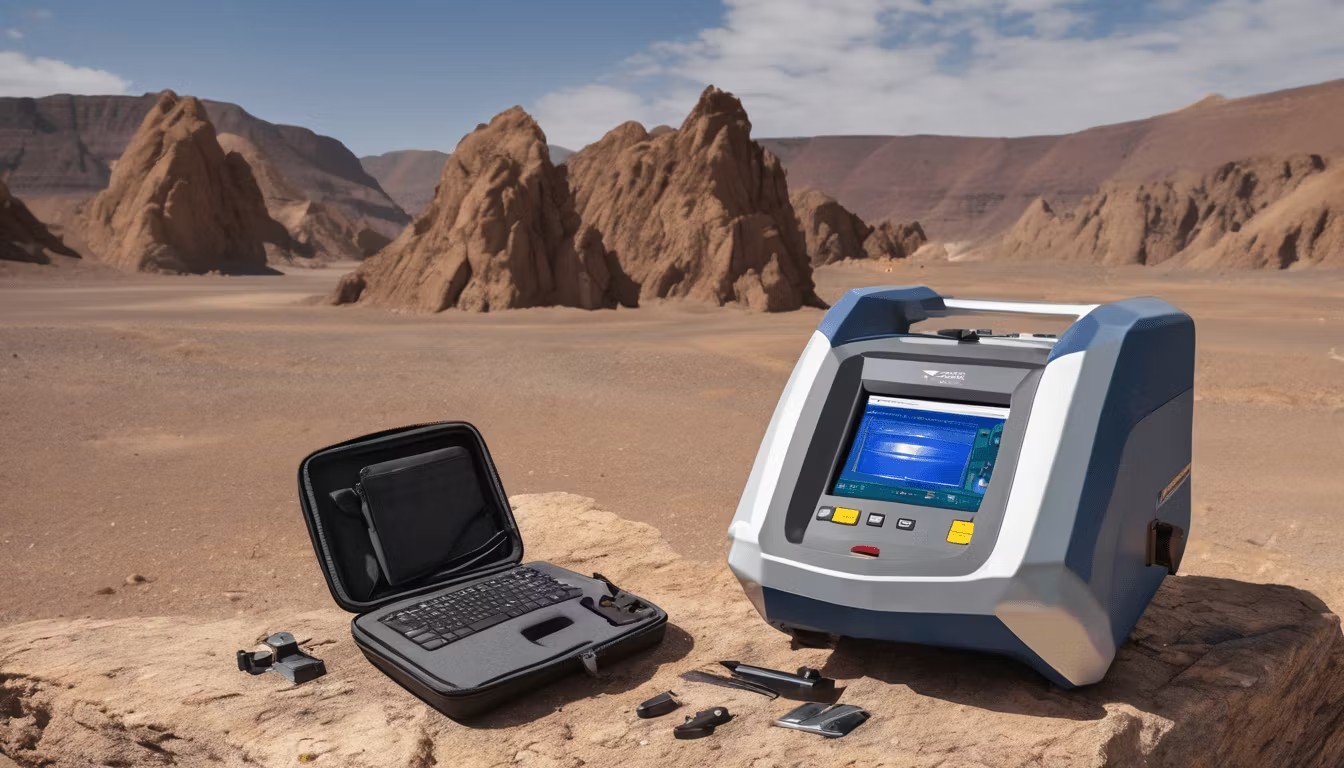
Handheld XRF Analyzers for Field Testing
Handheld XRF miners are compact, battery-powered devices designed for point-of-use testing. Weighing typically between 2-4 kg, these instruments are perfect for:
- Ore pile verification: Testing multiple samples across stockpiles to identify grade variations
- Real-time quality control: Confirming elemental composition before shipment or payment
- Rapid supplier audits: Verifying that incoming materials meet contractual specifications
- Mining site exploration: Identifying high-grade zones during extraction operations
The advantage of handheld XRF is immediate accessibility—technicians can take measurements directly at the mine site, processing facility, or port terminal without transporting samples to remote laboratories.
Benchtop and Laboratory XRF Systems
While handheld devices offer speed, benchtop XRF spectrometers provide superior sensitivity and precision for high-volume trading and quality assurance programs. These systems excel at:
- Multi-element analysis of complex ore bodies
- Certified results for commercial contracts and regulatory compliance
- Lower detection limits for trace elements affecting end-product quality
- Automated sample handling for high-throughput testing
Key Advantages of Portable XRF for Mining Operations
Speed: Results in Minutes, Not Days
Traditional laboratory analysis can require 48-72 hours for results. Portable XRF delivers elemental composition data in 60-120 seconds per sample. This speed advantage translates directly to business benefits: faster payment settlement, quicker load approvals, and reduced working capital tied up in inventory verification.
Cost Efficiency
At approximately $50-150 per XRF test via third-party labs, costs accumulate quickly for high-volume suppliers. A single portable XRF instrument (typically $15,000-40,000) pays for itself within months for companies processing thousands of metric tons annually. CV Indoalam Mineral Persada, for example, manages millions of tons of mineral products annually and relies on rapid, repeatable testing to maintain quality standards and customer confidence.
Non-Destructive Testing
Unlike wet chemical assays that consume samples, XRF analysis is non-destructive. You can test the same sample multiple times, archive it for compliance records, and provide customers with measurable proof of quality—critical when dealing with premium-grade materials like zircon sand or specialty aluminium ingot grades.
Point-of-Origin Verification
For suppliers like those sourcing from Sulawesi's Morowali and Konawe regions or Kalimantan, on-site XRF testing allows verification before material ever leaves the mining operation. This reduces disputes, accelerates logistics, and builds buyer confidence in supply chain integrity.
XRF Applications Across Key Mining Industries
Nickel Ore Processing and Smelting
Nickel smelters require precise grade verification before accepting ore deliveries. Nickel ore specifications vary significantly—saprolite grades (1.5-2.0% Ni) versus limonite grades (0.8-1.2% Ni) command different pricing and processing routes. Portable XRF enables immediate confirmation of nickel content, iron ratios, and impurity levels (manganese, chromium, cobalt), ensuring the delivered material matches contractual terms and optimizes smelting efficiency.
Silica Sand and Quartz Applications
Float glass manufacturers, solar panel producers, and ceramics makers demand silica sand with exceptional purity—typically 99%+ SiO2. Portable XRF rapidly confirms SiO2 concentration and identifies iron oxide contamination, which can compromise optical properties. Testing multiple mesh grades (8-200) across production batches ensures consistent quality for demanding applications.
Foundry and Metallurgical Applications
Foundry operators using aluminium ingot grades such as ADC12 or A7 require precise elemental composition. XRF confirms copper, silicon, iron, and manganese content—critical parameters affecting casting properties, tensile strength, and machinability. Rapid on-site testing prevents production delays caused by out-of-spec material.
Industrial Minerals and Zircon
Zircon sand used in ceramics, refractories, and advanced applications requires ZrO2 content verification. Portable XRF confirms zirconium dioxide concentration and detects silica, iron, and other impurities that affect end-product performance and market value.
Limitations and Best Practices for XRF Testing
Understanding XRF Limitations
While powerful, XRF analysis has important constraints:
- Surface sensitivity: XRF primarily analyzes the surface layer of samples (typically 1-3mm depth depending on element and matrix)
- Light element detection: Elements lighter than magnesium (Mg) are difficult or impossible to detect reliably
- Sample preparation: Irregular or wet samples can produce inaccurate results; proper drying and crushing improves accuracy
- Matrix effects: High concentrations of certain elements can suppress detection of others, requiring calibration adjustments
Maximizing XRF Accuracy
To achieve reliable results with mineral testing XRF:
- Standardize sample preparation: Dry samples to consistent moisture levels, crush to appropriate particle sizes (-200 mesh for most minerals)
- Use representative sampling: Collect multiple sub-samples from different locations within a pile and average results
- Calibrate regularly: Use certified reference standards quarterly to verify instrument accuracy and detect drift
- Document conditions: Record temperature, humidity, and ambient radiation when possible to explain result variations
- Cross-verify critical results: For high-value transactions, confirm XRF results with traditional lab assays from SUCOFINDO-certified facilities
Choosing the Right XRF Solution for Your Mining Business
Handheld vs. Laboratory Testing
The choice depends on your operation's scale and priorities:
Choose handheld XRF if you: Test frequently (50+ samples weekly), need rapid turnaround for logistics decisions, operate in remote locations, or conduct spot-checks across multiple sites.
Choose benchtop XRF or certified lab analysis if you: Require certified results for compliance, need high precision for complex multi-element analysis, test lower volumes, or serve customers requiring standardized assay reports.
Investment Considerations
Quality portable XRF instruments range from $15,000 (entry-level) to $60,000+ (advanced multi-element systems). Factor in:
- Annual sample volume and cost savings vs. lab testing
- Required detection accuracy and element range
- Warranty, calibration services, and support availability
- Training requirements for operators
- Compliance and certification needs for your customer base
Industry Standards and Certification
Professional mining operations should follow ASTM standards for XRF analysis, particularly ASTM B568 (X-ray fluorescence measurement of coating thickness) and industry-specific protocols for ore analysis. Companies like CV Indoalam Mineral Persada maintain rigorous quality standards through SUCOFINDO laboratory testing alongside field verification, ensuring clients receive the accuracy and documentation their operations demand.
The Future of XRF Technology in Mining
Emerging XRF innovations include improved light-element detection, faster analysis cycles, enhanced portability, and integration with digital platforms for cloud-based result tracking. Real-time data streaming from mining sites to trader dashboards and smelter operations centers will increasingly enable automated procurement decisions and supply chain optimization.
Partnering with Reliable Mineral Suppliers
While XRF provides powerful testing capabilities, sourcing from transparent, quality-conscious suppliers remains essential. CV Indoalam Mineral Persada combines portable and laboratory XRF testing with comprehensive IUP OPK licensing, SUCOFINDO certification, and RKAB approval across all product lines—from nickel ore to silica sand to specialty minerals. With direct sourcing from premium deposits in Sulawesi, Kalimantan, and Maluku, backed by verified testing protocols, Indoalam ensures the mineral specifications your operations require.
Whether you're a glass manufacturer evaluating silica sand purity, a nickel smelter confirming ore grades, or a foundry verifying metal ingot composition, understanding and implementing XRF analysis strengthens your supply chain integrity and operational efficiency.
Conclusion: Making XRF Part of Your Quality Strategy
XRF mining analysis—whether deployed as handheld field testing or laboratory benchtop systems—provides the speed, accuracy, and cost efficiency modern mining businesses require. By understanding XRF capabilities and limitations, standardizing sample protocols, and partnering with suppliers who prioritize testing transparency, you can confidently source the high-quality minerals your operations demand.
Ready to optimize your mineral sourcing strategy? Contact us today to discuss how CV Indoalam Mineral Persada's tested, certified minerals and quality assurance protocols can support your procurement goals. Whether you require bulk silica sand, specialty zircon grades, premium aluminium ingots, or compliant nickel ore, our team delivers proven reliability backed by rigorous analytical verification.