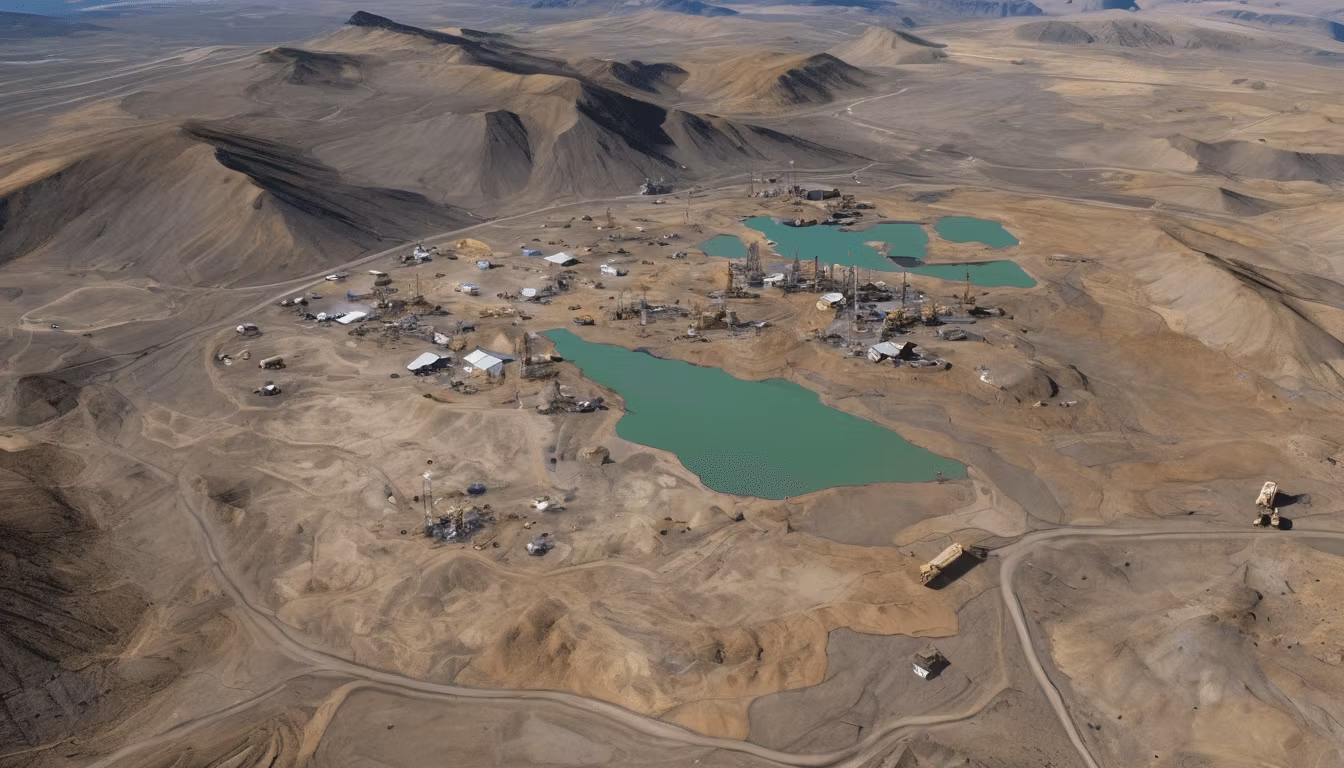
Silica Sand for Water Treatment: Complete Filtration Media Guide
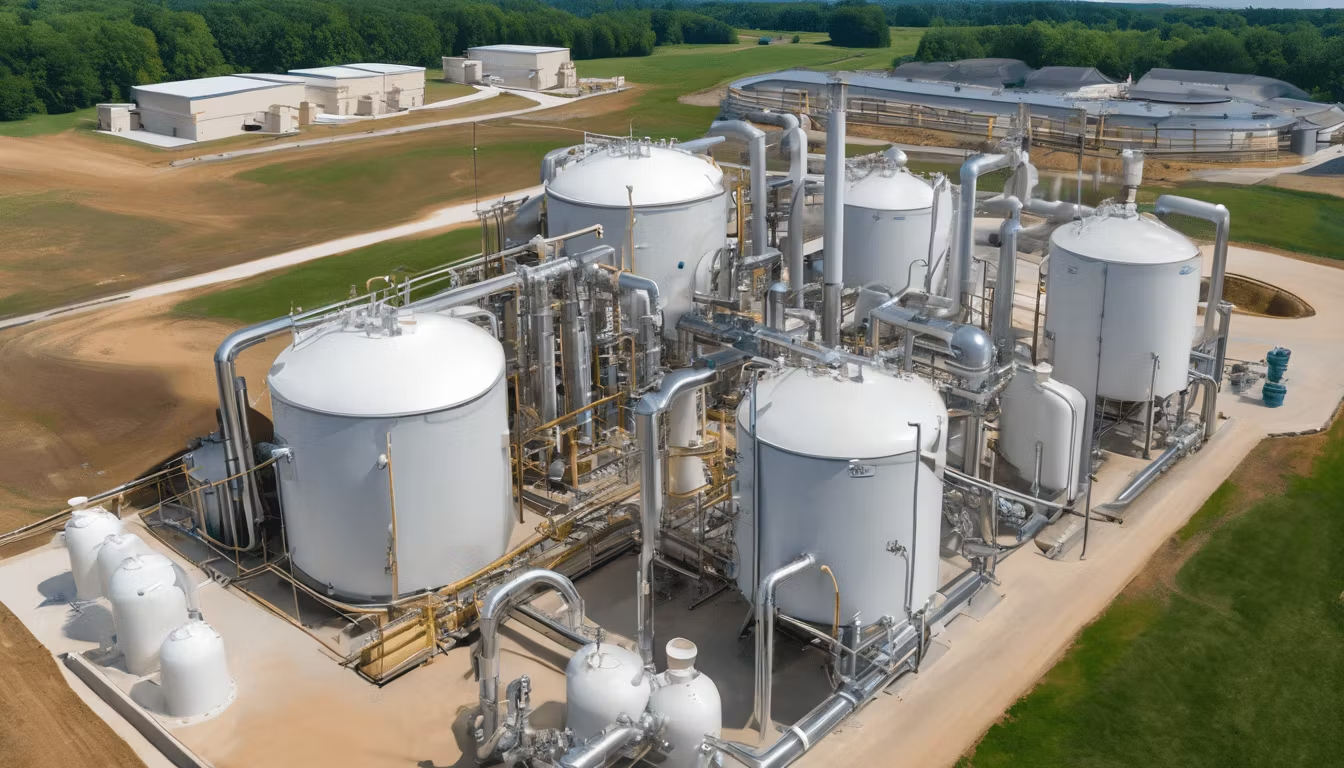
Introduction: Why Silica Sand Matters in Modern Water Treatment
Water treatment facilities worldwide rely on high-quality filtration media to remove suspended solids, contaminants, and impurities from municipal and industrial water supplies. Among all filtration materials, silica sand remains the gold standard—trusted by water engineers for over a century due to its exceptional performance, proven reliability, and cost-effectiveness.
For B2B buyers managing water treatment operations, selecting the right silica sand can mean the difference between meeting strict regulatory standards and facing expensive system failures, increased maintenance, and compromised water quality. This comprehensive guide covers everything you need to know about silica sand as a filtration medium, from technical specifications to practical selection criteria.
What is Silica Sand and Why It Works for Water Filtration
Composition and Structure
Silica sand, or quartz sand, consists primarily of silicon dioxide (SiO₂). High-purity silica sand contains 99%+ SiO₂ content, making it chemically stable and resistant to degradation under operational stress. The angular to sub-rounded grain structure creates natural interstices that capture particulates while maintaining acceptable head loss characteristics.
The filtration media must possess specific gravitational and structural properties. Industrial-grade silica sand used in water treatment systems typically has a specific gravity of 2.55–2.65 g/cm³, ensuring the bed remains stable during backwashing and flow reversals.
Why Water Treatment Plants Choose Silica Sand
Several factors make silica sand the preferred choice for water purification sand applications:
- Abundant Availability: Silica is one of the Earth's most abundant minerals, ensuring consistent supply and competitive pricing.
- Chemical Stability: Silica does not react with treated water, coagulants, or disinfectants across pH ranges typically encountered (pH 4–8).
- Physical Durability: Quartz sand resists attrition and breakage during backwashing and normal operation, maintaining filter bed integrity over extended service life.
- Particle Size Control: Silica sand can be produced in precise mesh grades (8–200), allowing engineers to design optimal filter bed stratification.
- Cost-Effectiveness: Lower material and replacement costs compared to alternative media like anthracite or activated carbon.
Filtration Media Types and Silica Sand Applications
Single-Media Vs. Dual-Media Filter Beds
A single-media filter bed uses silica sand alone, typically 24–30 inches deep with effective size (ES) of 0.45–0.55 mm. This design works well for pre-treated water with low to moderate suspended solids (turbidity < 10 NTU). The homogeneous bed provides consistent filtration velocity and predictable performance.
Dual-media systems combine silica sand (bottom layer) with a lighter medium like anthracite coal (top layer). The anthracite layer, with lower specific gravity, captures larger particles and extends filter run times by 50–100% compared to single-media systems. This configuration is standard in municipal water treatment plants handling variable influent quality.
High-Rate Vs. Standard Filtration Rates
Silica sand filtration performance depends on hydraulic loading rate (flow velocity). Standard filtration operates at 2–6 gallons per minute per square foot (gpm/ft²), allowing longer filter runs and higher turbidity removal. High-rate filtration (6–10 gpm/ft²) requires coarser sand grades and more frequent backwashing but reduces capital costs and footprint in space-constrained facilities.
Technical Specifications for Water Treatment Silica Sand
Effective Size (ES) and Uniformity Coefficient (UC)
Effective size refers to the grain diameter at which 10% of sand (by weight) is finer. For water treatment applications, ES ranges typically follow these guidelines:
- ES 0.35–0.45 mm: Fine filtration (turbidity removal > 95%), used when influent quality is excellent or where ultra-low effluent turbidity is required (< 0.1 NTU).
- ES 0.45–0.60 mm: Standard municipal treatment (most common), balancing filtration efficiency with acceptable backwash requirements.
- ES 0.60–0.90 mm: Coarse filtration, for high-flow applications or pre-treatment ahead of activated carbon or ion exchange systems.
Uniformity coefficient (UC), calculated as D₆₀/D₁₀, should not exceed 1.5 for optimal performance. Sand with UC > 1.7 produces stratified beds during backwashing, reducing effective filter depth and increasing turbidity breakthrough risk.
Purity and Contaminant Limits
High-quality filtration media must meet strict purity standards. Industry specifications require:
- SiO₂ content: ≥ 99%
- Iron oxide (Fe₂O₃): ≤ 0.05%
- Aluminum oxide (Al₂O₃): ≤ 0.1%
- Calcium carbonate (CaCO₃): ≤ 0.05%
- Loss on ignition: ≤ 0.5%
Contaminants like iron oxide can leach into treated water, causing discoloration and fouling downstream systems. SUCOFINDO laboratory testing ensures that quartz sand suppliers meet these rigorous specifications before delivery.
Filter Bed Design Principles
Depth and Stratification
Standard single-media silica sand filter beds range from 24–36 inches in depth. Deeper beds (36+ inches) provide higher turbidity removal efficiency but increase head loss and backwash water consumption. Most municipal plants operate with 30-inch beds as a cost-effective compromise.
Stratification—the layering of different sand grades during operation—is normal and desirable. Coarser sand settles at the bottom, finer sand at the top. This natural arrangement creates a graded filter that captures different-sized particles at different bed depths, maximizing utilization of available media.
Backwashing and Media Loss
Backwashing reverses water flow through the filter to remove accumulated particles and restore permeability. Proper backwash procedures prevent excessive silica sand attrition and media loss. Typical backwash water velocity (2–4 ft/min) fluidizes the sand bed without causing grain breakage or escaping media over the collection system.
Annual media loss in well-designed systems should not exceed 2–3% of the total bed volume. Operators should monitor effluent clarity during backwash cycles and maintain accurate sand inventory.
Support Gravel Layers
Beneath the silica sand filtration media, a support gravel layer prevents sand from escaping into the clear well during operation and backwashing. Support gravel typically consists of 2–3 layers of progressively coarser stones (16–64 mm), totaling 12–18 inches in depth. Proper gravel gradation is essential for even water distribution and preventing media bridging.
Selection Guide: Choosing the Right Silica Sand for Your Application
Step 1: Analyze Your Influent Water Quality
Before selecting filtration media, perform a 30-day monitoring program of your source water. Critical parameters include:
- Turbidity: Sustained levels > 10 NTU may require coagulation/sedimentation ahead of filtration.
- Particle size distribution: Identify dominant particle sizes (clay, silt, organic matter) to match appropriate sand ES.
- Seasonal variations: Summer algal blooms or winter sediment peaks require filter design flexibility.
Step 2: Determine Filtration Rate Requirements
Calculate your facility's peak flow demand and available filter area. Higher flow rates demand coarser sand and more frequent backwashing. A facility requiring 5 million gallons per day needs minimum filter area of 800 sq ft (assuming 6 gpm/ft² standard rate).
Step 3: Select Appropriate Sand Grade
Based on your influent quality and filtration rate, choose ES accordingly:
- Low turbidity + standard rate: ES 0.45–0.55 mm (most common)
- High turbidity + standard rate: Dual-media with ES 0.55–0.65 mm silica sand base
- High-rate filtration: ES 0.65–0.85 mm with more frequent backwashing
Step 4: Verify Quality Certification
Request SUCOFINDO test certificates confirming SiO₂ purity, effective size, uniformity coefficient, and contaminant limits. Verify that sand meets ASTM D1141 or equivalent international standards.
Common Applications in Industrial Water Treatment
Municipal Drinking Water
Municipal water treatment plants are the largest users of silica sand filtration media. Dual-media systems with anthracite/silica sand combinations handle variable source water quality while meeting Safe Drinking Water Act turbidity standards (≤ 0.5 NTU).
Industrial Process Water
Foundries, cement manufacturers, and cooling tower operations depend on silica sand filters to remove suspended solids and extend equipment lifespan. Many industrial users source from regional mining suppliers to minimize transportation costs and ensure supply security.
Food and Beverage Production
Beverage manufacturers and food processors use fine silica sand (ES 0.35–0.45 mm) for ultra-pure water production. Strict NSF/ANSI 61 certification requirements apply to all components contacting potable water, making certified silica sand essential.
Aquaculture and Fish Farming
Recirculation aquaculture systems (RAS) rely on multi-stage filtration including silica sand media to maintain water clarity and remove organic waste. Coarser grades (ES 0.65–0.85 mm) with rapid backwashing cycles support the high organic loading typical in fish farming.
Quality Standards and Third-Party Testing
International Standards
Global water treatment standards ensure consistent filtration media performance:
- ASTM D1141: Standard practice for the acceptance of sedimentary quartz aggregates (silica sand)
- ISO 12954: Water treatment equipment—silica sand and gravel—specification and test methods
- NSF/ANSI 61: Drinking Water System Components—Health Effects certification
Laboratory Testing and Certification
Reputable silica sand suppliers conduct third-party testing to verify compliance with these standards. SUCOFINDO, Indonesia's leading independent testing body, certifies silica sand for SiO₂ purity, grain size distribution, and contaminant levels. Suppliers like Indoalam maintain current certifications to assure buyers of consistent, reliable media.
Cost-Benefit Analysis: Investing in Quality Filtration Media
Initial Media Costs
Silica sand pricing typically ranges from $15–$40 per ton depending on purity, ES grade, and geographic location. A 30-inch deep filter serving 5 million gallons/day requires roughly 200–300 tons of media, representing a capital investment of $3,000–$12,000. This cost is modest compared to overall water treatment plant capital expenditure.
Lifecycle Costs and Operational Savings
High-quality silica sand reduces total cost of ownership through:
- Extended filter runs: Premium sand with low UC maintains longer runs, reducing backwash frequency and water/chemical consumption by 20–30%.
- Reduced media replacement: Durable quartz sand experiences minimal attrition; annual replacement often drops to 1–2% vs. 5–10% for lower-grade alternatives.
- Improved effluent quality: Contaminant-free silica sand eliminates troublesome iron breakthrough and discoloration.
Comparing Media Types
While activated carbon offers superior taste/odor removal and zircon sand finds niche specialty applications, silica sand remains the most economical choice for broad-spectrum turbidity and particulate removal. Dual-media systems using silica sand with anthracite deliver 40–60% longer filter runs than silica sand alone, justifying the modest additional cost.
Ensuring Supply Chain Reliability
Sourcing and Geographic Considerations
Water treatment facilities should establish relationships with mining suppliers offering consistent, certified silica sand. Indonesian suppliers like Indoalam Mineral extract premium silica sand from proven deposits in Sulawesi, Kalimantan, and Maluku regions. Direct-from-mine sourcing eliminates middlemen and ensures quality control from extraction through delivery.
Contractual Specifications
Water treatment contracts should specify:
- Exact effective size (ES ± 0.05 mm tolerance)
- Maximum uniformity coefficient (typically ≤ 1.5)
- Minimum SiO₂ purity (typically ≥ 99%)
- Third-party testing intervals (recommend semi-annual for established suppliers)
- Delivery schedules and buffer inventory requirements
Implementation Best Practices
Filter Installation and Startup
Proper installation of silica sand filtration media is critical for optimal performance. Carefully layer the support gravel, add silica sand gradually while circulating water to prevent air pockets, and conduct slow startup to develop the filter schmutzdecke—the biologically active upper layer that enhances filtration efficiency over time.
Monitoring and Maintenance
Establish routine monitoring protocols including:
- Daily effluent turbidity and pressure drop measurements
- Weekly sand sample inspection for breakage or discoloration
- Monthly backwash sequence testing to ensure proper fluidization
- Annual SUCOFINDO re-testing of media for purity confirmation
Troubleshooting Common Issues
Rapid turbidity breakthrough: Often indicates sand settlement or bed cracking. Inspect for bridging and conduct controlled backwash cycles.
Excessive head loss: Excessive head loss over normal media life suggests sand degradation or calcification from hard water. Consider water softening or sand replacement.
Filter media escape: Indicates insufficient support gravel or sand grade misselection. Verify support layer integrity and check uniformity coefficient of sand.
Conclusion and Next Steps
Silica sand remains the most reliable, cost-effective filtration media for municipal and industrial water treatment applications. Success depends on selecting the right grade for your specific application, sourcing from certified suppliers, and maintaining rigorous quality standards throughout the filter lifecycle.
Whether you're designing a new water treatment facility, upgrading existing filters, or troubleshooting performance issues, the technical foundation is the same: premium silica sand with verified purity, appropriate effective size, and third-party certification.
Ready to source premium filtration media? Contact Indoalam Mineral Persada for consultation on silica sand specifications, bulk pricing, and reliable delivery to your water treatment facility. With IUP OPK licensing, SUCOFINDO lab certification, and direct-from-mine supply chains, Indoalam ensures your filtration systems receive only the highest-quality silica sand. From 100-ton pilot shipments to 2.5 million metric ton annual contracts, we partner with water treatment professionals across Indonesia and internationally to deliver consistent, certified performance.