Silica Sand Shipping Guide: Container vs Bulk Carrier Logistics
Silica Sand Shipping: Container vs Bulk Carrier Options
For industrial buyers and commodity traders sourcing silica sand from Indonesia, shipping logistics represent a critical cost factor and operational consideration. Whether you're importing high-purity SiO2 for glass manufacturing, ceramics production, or foundry applications, selecting the right transport method directly impacts your total landed cost, delivery timeline, and product quality upon arrival.
This comprehensive guide compares the two primary shipping methods available for bulk silica sand exports: containerized transport and bulk carrier vessels. We'll break down capacity, costs, timelines, regulatory requirements, and operational considerations to help you make an informed decision for your supply chain.
Understanding Silica Sand as a Bulk Commodity
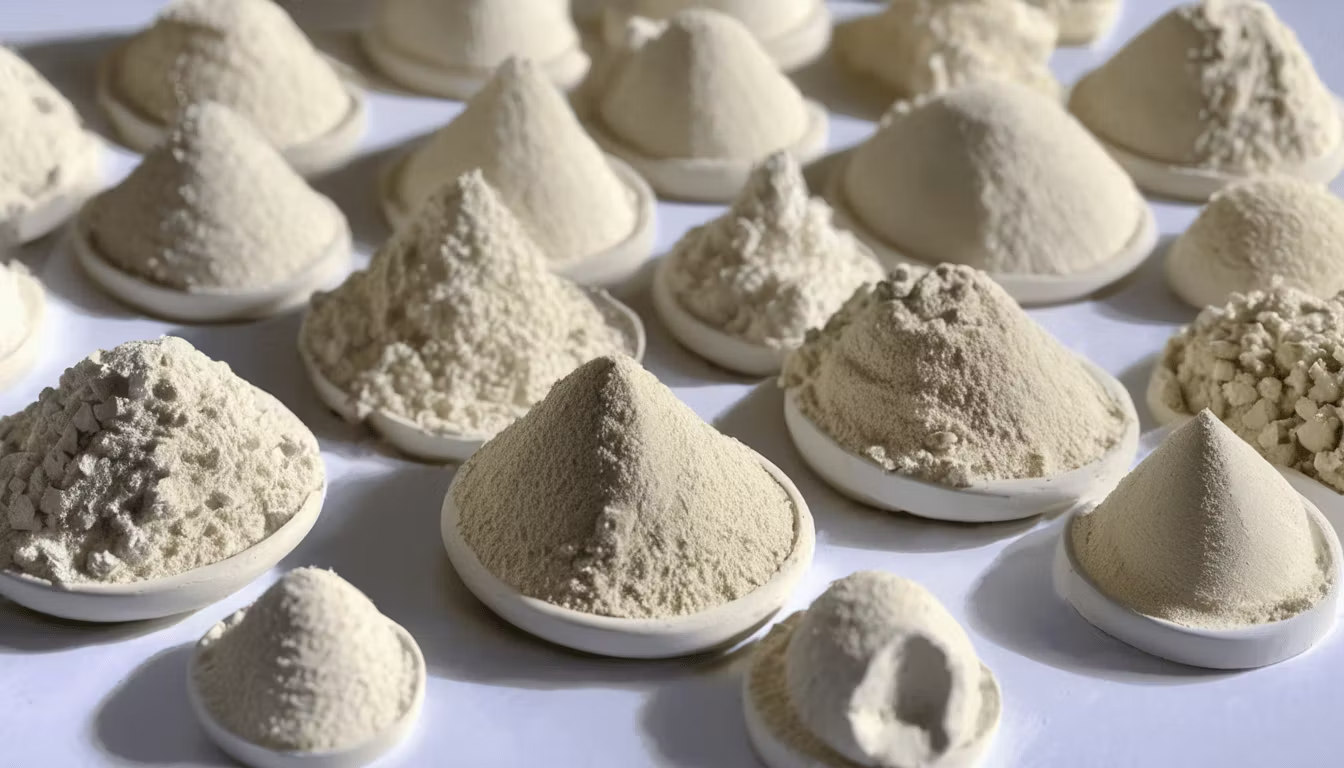
Silica sand, or quartz sand, is classified as a dry bulk commodity with specific handling requirements. Industrial-grade silica sand typically contains SiO2 content of 99.74% and comes in various mesh grades ranging from 8 to 200, depending on end-use applications.
Key characteristics affecting shipping logistics include:
- Density: Approximately 2.65 g/cm³, making it relatively dense for volume calculations
- Moisture content: Generally low (under 2%), reducing corrosion risks during transit
- Particle size variation: Different mesh grades require appropriate ventilation and dust containment
- Non-hazardous classification: Allows flexible handling under standard maritime regulations
- Hygroscopic properties: Can absorb moisture if exposed to humid conditions, requiring proper packaging protection
Understanding these material properties is essential for choosing between containerized and bulk carrier shipping, as each method offers different protection and handling capabilities.
Container Shipping for Silica Sand: Advantages and Limitations
How Container Shipping Works
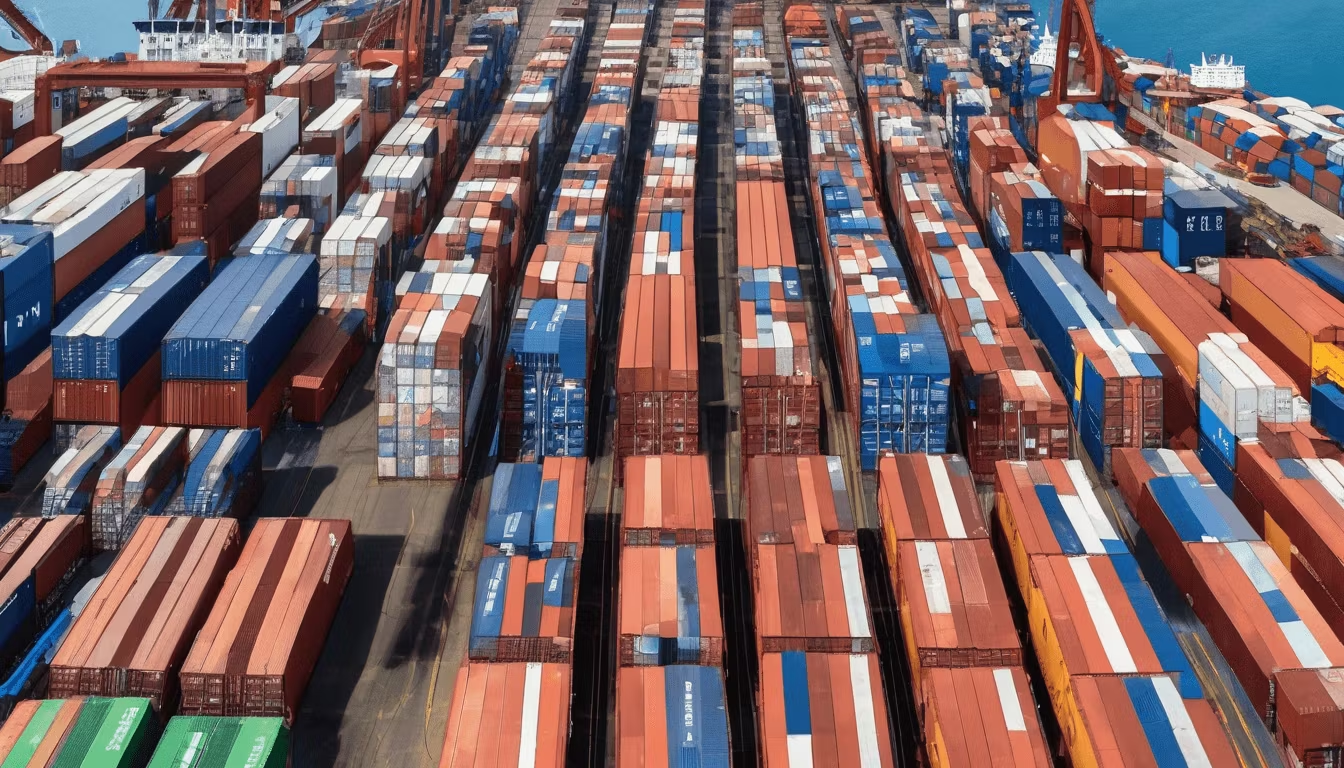
Container shipping involves loading silica sand into standard 20-foot (TEU) or 40-foot (FEU) containers. Sand is typically bagged (25kg or 50kg sacks) or loaded in bulk into lined containers with appropriate dunnage and moisture barriers.
For containerized exports, the typical workflow includes:
- Material consolidation at port warehousing facilities
- Bagging or bulk loading with protective lining
- Container sealing with desiccant packs for moisture control
- Port documentation and customs clearance
- Vessel booking and loading onto container ships
- Transit to destination port (typically 10-14 days for Asian-Pacific routes)
- Discharge and customs clearance at arrival port
Container Shipping Advantages
Smaller minimum orders: Container shipping accommodates smaller purchase volumes, making it ideal for buyers requiring 100-500 metric tons rather than full bulk vessel quantities (3,000-10,000 MT).
Scheduled services: Regular container ship schedules provide predictable departure and arrival dates, improving supply chain planning accuracy.
Port accessibility: Container ships call at numerous major ports worldwide, offering more destination options than bulk carriers, which require specialized port facilities.
Enhanced product protection: Containerized sand benefits from weathertight enclosure, reducing exposure to saltwater spray, dust contamination, and moisture ingress during ocean transit.
Lower theft and piracy risk: Sealed containers provide better security for valuable commodity shipments compared to open-deck bulk carrier loads.
Container Shipping Limitations
Higher per-unit costs: Container freight rates typically range from USD 1,500-3,500 per container depending on route and season, translating to approximately USD 40-80 per metric ton for silica sand—substantially higher than bulk carrier rates.
Handling labor: Bagging and unbagging operations at origin and destination ports add labor costs and potential product losses during transfer.
Space inefficiency: Standard containers limit how much weight can be loaded before reaching volumetric capacity, resulting in under-utilization for dense materials like silica sand.
Packaging waste: Plastic bags and dunnage materials create disposal costs and environmental considerations at the destination.
Bulk Carrier Shipping: Economies of Scale
How Bulk Carriers Operate
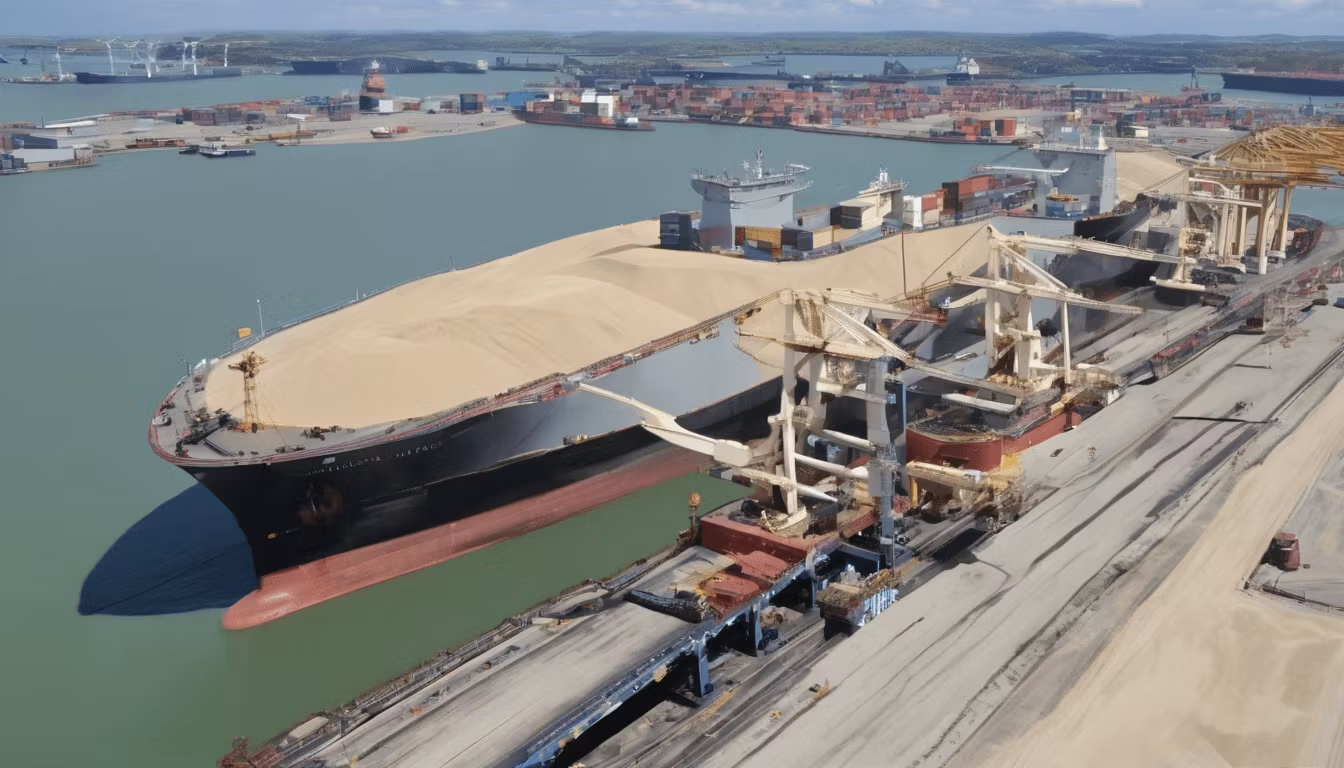
Bulk carriers are specialized vessels with large open holds designed for direct loading of dry bulk commodities. Silica sand is loaded directly into hold spaces, typically without bagging, using shore-based cranes and ship's cargo handling equipment.
The bulk carrier process includes:
- Vessel procurement and scheduling
- Pre-loading inspections and hold cleanliness certification
- Direct loading into vessel holds via conveyor or clamshell systems
- Trimming and leveling of cargo within holds
- Hatch cover closure and weather-tight sealing
- Transit with regular condition monitoring
- Discharge at destination port using shore equipment or ship-based cranes
Bulk Carrier Advantages
Superior cost efficiency: Bulk carrier freight for silica sand typically ranges from USD 15-35 per metric ton, offering 50-75% cost savings compared to container shipping when calculated on a per-ton basis.
Large cargo capacity: Panamax and Capesize bulk carriers can transport 30,000-180,000 metric tons per voyage, enabling massive consolidation of multiple orders or building strategic inventory.
Minimal handling: Direct loading and discharge eliminate bagging operations, reducing labor costs, product loss, and turnaround times at ports.
Environmental benefit: Bulk transport generates significantly lower carbon footprint per ton compared to containerized shipping with packaging materials.
Optimized for dry bulk: Bulk carriers feature specialized ventilation systems, hatch covers, and hold designs specifically engineered for dry cargo protection.
Bulk Carrier Limitations
Minimum cargo requirements: Bulk carriers typically require minimum orders of 3,000-5,000 metric tons to achieve economically viable freight rates. Smaller shipments face substantially higher per-ton costs.
Port limitation: Many regional ports lack bulk cargo handling infrastructure (ship cranes, conveyor systems), restricting destination options to major international ports.
Schedule inflexibility: Bulk vessel schedules depend on cargo availability and route optimization, making departure dates less predictable than container services.
Moisture exposure risk: Open-hold design exposes cargo to potential moisture ingress during rough weather or if hatch covers are compromised, requiring robust weather monitoring and hold preparation.
Cross-contamination concerns: Previous cargo residues in holds may affect silica sand purity if holds aren't properly cleaned, necessitating pre-loading hold inspections and certification.
Cost Comparison: Real-World Scenarios
Small Shipment: 200 Metric Tons
Container Option (8 x 20-foot containers):
- Freight cost: USD 1,800 per container × 8 = USD 14,400
- Bagging/labor: USD 800-1,200
- Desiccants/packaging: USD 300-400
- Total: USD 15,500-16,000 (USD 77.50-80/MT)
Bulk Carrier Option: Not economical (minimum order requirements not met)
Medium Shipment: 2,500 Metric Tons
Container Option (40 x 20-foot containers):
- Freight cost: USD 1,800 per container × 40 = USD 72,000
- Bagging/labor: USD 3,500-4,500
- Desiccants/packaging: USD 1,500-2,000
- Total: USD 77,000-78,500 (USD 30.80-31.40/MT)
Bulk Carrier Option (Handymax vessel):
- Freight cost: USD 25/MT × 2,500 = USD 62,500
- Port fees/handling: USD 2,500-3,500
- Hold inspection/certification: USD 500-800
- Total: USD 65,500-66,800 (USD 26.20-26.72/MT)
Large Shipment: 8,000 Metric Tons
Bulk Carrier Option (Panamax vessel):
- Freight cost: USD 20/MT × 8,000 = USD 160,000
- Port fees/handling: USD 4,000-6,000
- Hold inspection/certification: USD 800-1,200
- Total: USD 164,800-167,200 (USD 20.60-20.90/MT)
These scenarios demonstrate that bulk carrier shipping becomes increasingly cost-advantageous at volumes exceeding 2,000-2,500 metric tons.
Regulatory and Compliance Considerations
Documentation Requirements
Both shipping methods require comprehensive documentation:
- Bill of Lading (B/L): Primary shipping contract and title document
- Commercial Invoice: Stating quantity, quality specifications, and pricing
- Packing List: Itemizing contents by container or hold section
- Certificate of Analysis: Laboratory test results confirming SiO2 content and grade specifications
- Phytosanitary/Health Certificate: Confirming non-hazardous status if required by destination
- Import/Export Licenses: Country-specific commodity trading permits
Quality Assurance During Transit
CV Indoalam Mineral Persada ensures all shipments are SUCOFINDO lab-tested and meet strict quality parameters before loading. Regardless of shipping method, maintaining product specifications during transit requires:
- Moisture control measures (desiccant packs for containerized loads)
- Proper ventilation within sealed containers or vessel holds
- Weather protection from rain and saltwater spray
- Hold cleaning certification for bulk carriers to prevent cross-contamination
- Pre-discharge inspections to verify cargo condition
Logistics Timeline Comparison
Container Shipping Timeline
Total transit time: 18-25 days
- Consolidation and documentation: 3-5 days
- Port operations (loading): 2-3 days
- Ocean transit (Asia-Pacific): 10-14 days
- Port operations (discharge): 2-3 days
- Customs clearance and pickup: 1-2 days
Bulk Carrier Timeline
Total transit time: 15-30 days (more variable)
- Cargo consolidation and hold preparation: 5-7 days
- Port operations (loading): 3-5 days
- Ocean transit: 10-14 days
- Port operations (discharge): 3-5 days
- Customs clearance: 1-2 days
While container shipping offers more predictable timelines, bulk carriers can complete the journey faster despite variable scheduling, particularly for long-distance international routes.
Choosing the Right Shipping Method for Your Business
Select Container Shipping When:
- Order volume is under 2,500 metric tons
- Destination port lacks bulk cargo infrastructure
- You require predictable, scheduled departures
- Product protection from environmental exposure is critical
- You're testing new suppliers or establishing initial supply relationships
- Budget allows for higher per-ton freight costs for supply chain flexibility
Select Bulk Carrier Shipping When:
- Order volume exceeds 3,000-5,000 metric tons
- Destination port has modern bulk cargo handling capabilities
- Per-ton freight cost optimization is a primary objective
- You can accommodate slightly longer planning horizons for vessel scheduling
- Destination facility has adequate storage for large-volume unloading
- Regular, recurring orders enable predictable bulk consolidation
CV Indoalam's Flexible Shipping Solutions
As an IUP OPK licensed silica sand supplier in Indonesia, CV Indoalam Mineral Persada accommodates both containerized and bulk carrier export requirements. Our annual capacity of 2.5 million metric tons provides reliable supply for any order size.
We maintain relationships with established freight forwarders and shipping lines, offering:
- Trial shipments from 100 MT with container consolidation options
- Large-volume bulk carrier charters for strategic partnerships
- SUCOFINDO-certified quality testing on all shipments
- Comprehensive logistics coordination and documentation support
- Direct sourcing from Sulawesi, Kalimantan, and Maluku mining regions
Whether you're a glass manufacturer requiring consistent silica sand grades, a ceramics producer needing high-purity quartz, or an industrial trader consolidating multiple orders, our flexible supply chain accommodates your shipping method preference and volume requirements.
Conclusion
The choice between container and bulk carrier shipping for silica sand depends on your specific business requirements: order volume, destination port capabilities, budget constraints, and supply chain timeline. Container shipping excels for small to medium orders with maximum flexibility and product protection, while bulk carriers deliver superior cost efficiency for large consolidated shipments.
For most industrial buyers, a hybrid approach works best—using containerized options for initial orders and smaller replenishments while transitioning to bulk carriers as order volumes increase and supplier relationships mature.
CV Indoalam Mineral Persada stands ready to support your silica sand sourcing strategy with reliable supply, quality assurance, and flexible logistics solutions. Contact us today to discuss your specific shipping requirements and receive a customized quote for your next silica sand procurement.