High-Purity Silica Sand for Semiconductor & Electronics Manufacturing

Introduction: The Critical Role of Silica Sand in Electronics Manufacturing
The semiconductor and electronics industry depends on materials of exceptional purity and consistency. Among these, silica sand stands as one of the most fundamental raw materials, serving as the foundation for silicon wafer production, integrated circuits, and advanced electronic components. Yet not all silica sand meets the rigorous demands of high-tech electronics manufacturing.
The journey from mineral ore to semiconductor-grade material requires precise processing, strict quality control, and deep industry expertise. This comprehensive guide explores what makes silica sand suitable for electronics applications, the critical specifications manufacturers demand, and how sourcing the right supplier can impact your production efficiency and final product quality.
Understanding Silica Sand in Electronics: Beyond Basic Definitions
What Sets Electronics-Grade Silica Apart
Silica sand used in semiconductor and electronics manufacturing differs fundamentally from construction-grade or industrial-use silica. Electronics-grade silica must achieve exceptional purity levels—typically 99.5% SiO2 or higher—with minimal iron oxide, aluminum oxide, and other contaminants that can compromise semiconductor performance.
CV Indoalam Mineral Persada supplies silica with SiO2 content reaching 99.74%, positioning it within the premium range for electronics applications. This level of purity is not coincidental; it represents the result of rigorous source selection, advanced beneficiation techniques, and comprehensive laboratory testing through SUCOFINDO certification.
The Silicon Wafer Manufacturing Connection
Silicon wafer production begins with high-purity silicon metal, which is derived from electronics-grade silica. Manufacturers of silicon wafers—essential components in virtually every microprocessor, memory chip, and power semiconductor—require raw material that meets exacting specifications. Even trace elements at parts-per-million levels can introduce electrical conductivity variations, affect doping processes, or compromise wafer yield rates.
The transformation from raw silica sand to purified silicon involves chemical processing, thermal treatment, and multiple refinement stages. Each step depends on the incoming material meeting baseline purity standards, making raw material selection a critical decision point in the supply chain.
Key Specifications for Electronics-Grade Silica Sand
Chemical Composition Requirements
Electronics manufacturers evaluate silica sand against several critical chemical parameters:
Silicon Dioxide (SiO2) Content: The primary specification, typically requiring 99.5% minimum, with premium grades exceeding 99.7%. This measures the primary valuable component and indicates overall purity.
Iron Oxide (Fe2O3): Limited to extremely low levels—often below 0.05% or even 0.01% in ultra-pure applications. Iron contamination can alter electrical properties and introduce unwanted conductive pathways.
Aluminum Oxide (Al2O3): Must remain below specified thresholds (typically 0.1-0.3%) to prevent introduction of trivalent ions that can affect silicon crystalline structure.
Trace Elements: Chromium, vanadium, titanium, and other heavy metals must be monitored and kept below critical concentrations, sometimes measured in single-digit ppm ranges.
Physical and Granulometric Specifications
Beyond chemistry, physical characteristics directly influence downstream processing efficiency. Electronics-grade silica sand is supplied in multiple mesh sizes (ranging from 8 to 200 mesh), allowing manufacturers to optimize for their specific crushing, beneficiation, or transport requirements.
Particle Size Distribution: Uniform granulometry improves handling, reduces segregation, and ensures consistent processing performance in chemical reactors.
Bulk Density: Affects storage efficiency and transport economics while influencing flowability in processing equipment.
Moisture Content: Must be controlled to prevent agglomeration and ensure consistent feed rates in continuous chemical processing systems.
Applications Across the Electronics Sector
Semiconductor Silicon Production
The most direct application involves converting high-purity silica sand into metallurgical-grade and electronic-grade silicon. Manufacturers perform carbothermic reduction in electric arc furnaces, transforming silica into silicon with 99.9999% purity through successive refinement steps. The quality of incoming silica directly impacts the energy efficiency of these processes and the final purity achievable.
Solar Panel Manufacturing
Photovoltaic (PV) cell production depends on silicon wafers derived from high-purity silica. As global solar capacity expands, demand for electronics-grade silica sand grows correspondingly. Solar manufacturers often maintain stringent specifications ensuring reliable conversion efficiency and long-term performance of installed systems.
Optical and Fiber Optics Applications
While distinct from semiconductor manufacturing, optical-grade applications require comparable purity standards. Silica sand serves as feedstock for specialty glass used in fiber optics, optical lenses, and precision instruments. The transparency and optical properties depend on eliminating chromophoric impurities that would absorb or scatter light.
Advanced Ceramics and Electronic Components
Electronics manufacturers use high-purity silica in advanced ceramic substrates, insulators, and packaging materials. These applications require contamination-free source material to achieve desired dielectric properties and mechanical reliability.
Sourcing High-Purity Silica Sand: Quality Assurance Matters
The Importance of Independent Laboratory Certification
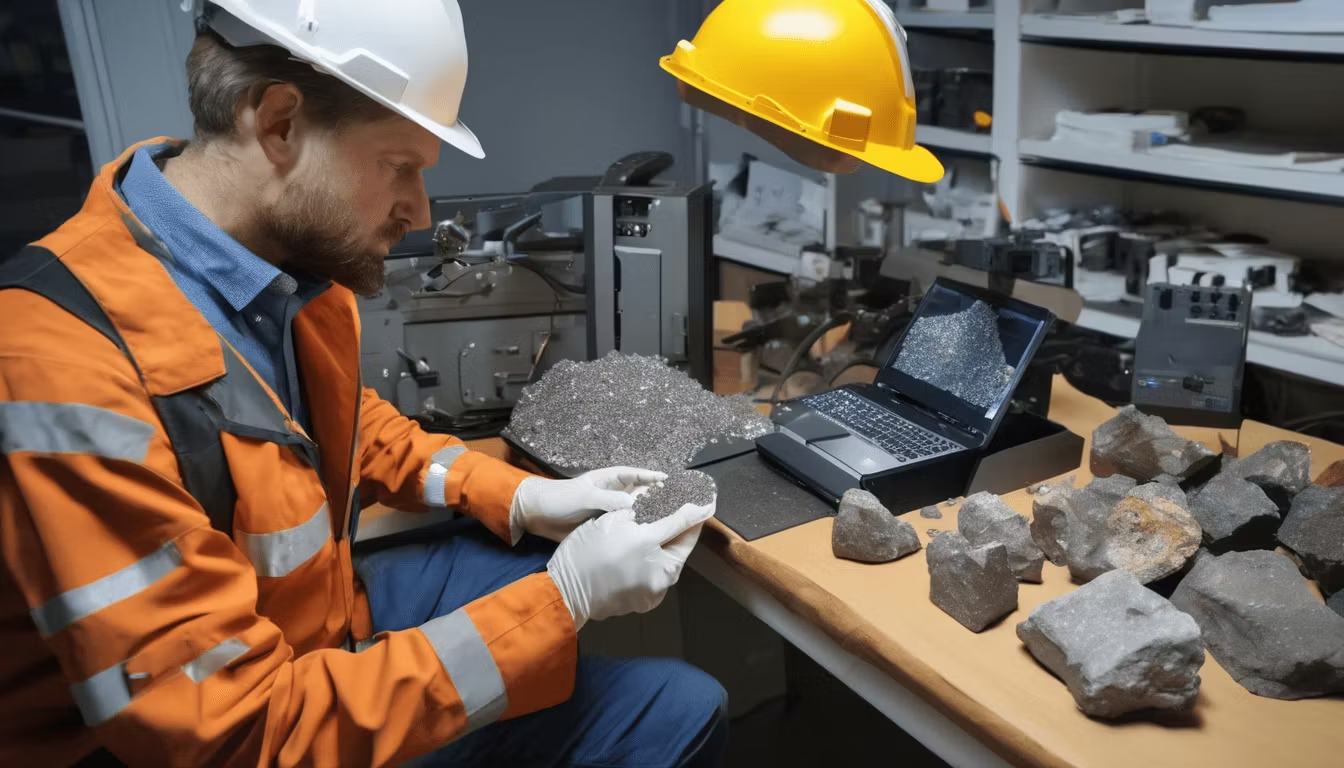
Reputable suppliers of electronics-grade silica sand provide third-party testing through accredited laboratories. CV Indoalam Mineral Persada utilizes SUCOFINDO (an internationally recognized inspection and certification company) to verify chemical composition, granulometry, and physical properties. This independent verification provides assurance that material meets specifications and maintains consistency across multiple shipments.
Electronics manufacturers should never accept supplier self-testing alone; independent certification creates accountability and provides objective evidence of compliance.
Understanding Source Material and Processing Methods
The geological source of silica sand significantly influences achievable purity. Some deposits naturally contain lower iron and contaminant concentrations, requiring less aggressive beneficiation. Others demand advanced processing including magnetic separation, flotation, or acid leaching to reach electronics-grade specifications.
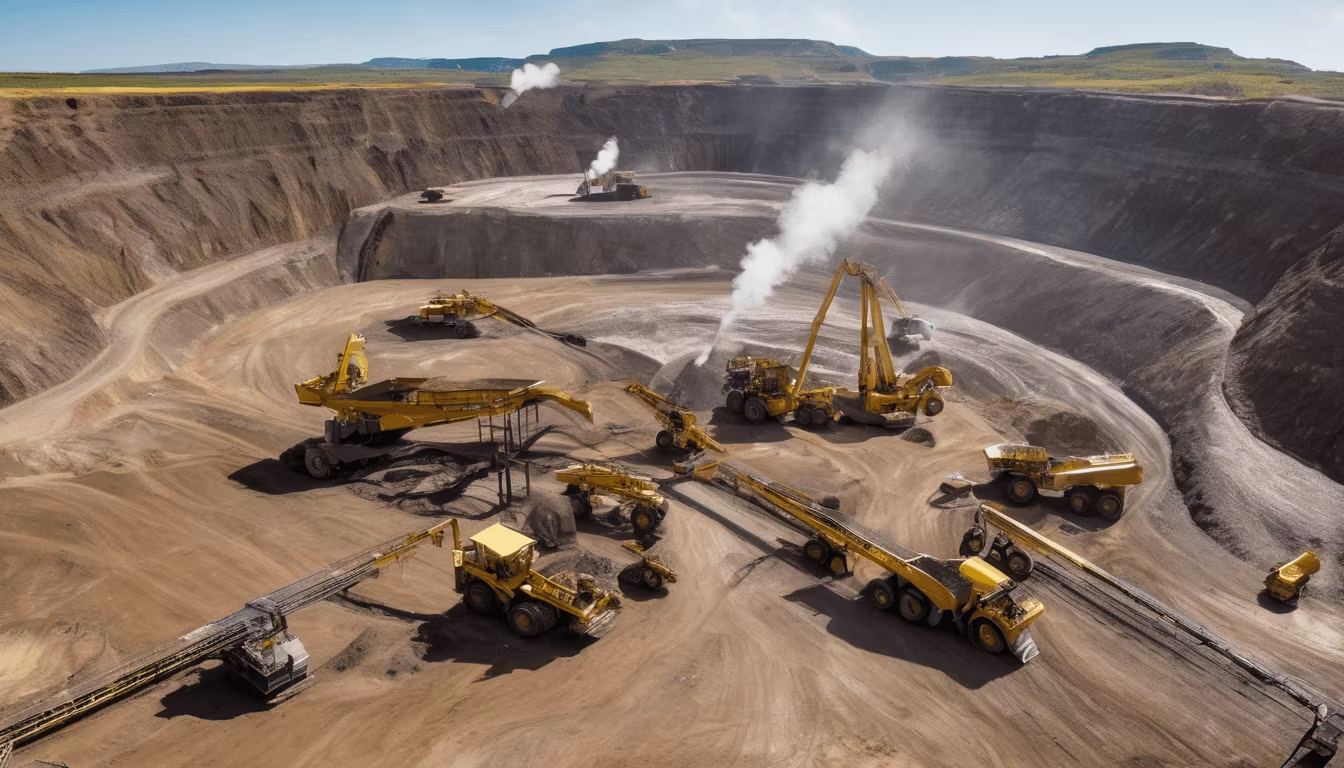
Understanding your supplier's source regions, mining techniques, and beneficiation methods provides insight into quality consistency and long-term supply reliability. Indoalam sources from premier deposits in Sulawesi's Morowali and Konawe regions, areas recognized for naturally high-purity silica formations suitable for advanced applications.
Regulatory Compliance and Licensing
Legitimate suppliers of industrial minerals in Indonesia hold appropriate licenses and regulatory approvals. CV Indoalam maintains IUP OPK licensing (covering mineral logam, non-logam, and bahan bakar categories), demonstrating compliance with Indonesian mineral extraction regulations and environmental standards. This compliance provides assurance of legal, sustainable sourcing practices.
Supply Chain Considerations for Electronics Manufacturers
Volume Flexibility and Scalability
Electronics manufacturers operate across vastly different scales—from laboratory research consuming 100 metric tons annually to large-scale wafer fabrication facilities processing thousands of tons. Reliable suppliers offer volume flexibility, accommodating trial shipments for new customers while scaling to multi-million ton annual contracts for established relationships.
CV Indoalam's annual capacity of 2.5 million metric tons, combined with willingness to serve customers from pilot-scale operations upward, reflects this market reality.
Consistency and Long-Term Supply Security
Electronics manufacturers cannot tolerate supply disruptions or quality variations. Establishing relationships with suppliers offering consistent specifications, reliable delivery schedules, and transparent communication becomes essential risk management. Long-term contracts with clearly defined quality parameters and delivery schedules provide operational predictability.
Logistics and Transport Efficiency
High-volume silica sand consumption makes transportation costs significant. Suppliers capable of efficient logistics—whether through direct mine-to-customer arrangements or optimized port facilities—reduce total landed costs. Direct sourcing from mining operations, as offered by Indoalam, eliminates middleman markups while enabling greater supply chain transparency.
Comparing Silica Sand Suppliers: Key Evaluation Criteria
When selecting a silica sand supplier for electronics applications, evaluate across multiple dimensions:
Chemical Specification Consistency: Request historical test data across multiple shipments, not just single samples. Suppliers demonstrating tight specification ranges across quarters and years indicate genuine process control.
Laboratory Certification: Verify that testing occurs through independent, internationally recognized laboratories. SUCOFINDO certification, as provided by CV Indoalam, represents a recognized standard in Asian industrial mineral trading.
Regulatory Status: Confirm current licensing, environmental compliance, and regulatory standing. Suppliers with clear legal status eliminate procurement risks associated with illegal or non-compliant operations.
Supply Chain Transparency: Suppliers offering direct-from-mine sourcing provide visibility into material origins and handling practices, reducing contamination risk during intermediary storage or trading.
Technical Support: Reputable suppliers offer technical consultation, assisting customers in specification refinement, process optimization, and troubleshooting. This partnership approach creates mutual success rather than transactional relationships.
Market Trends Driving Electronics-Grade Silica Demand
Semiconductor Industry Growth and Advanced Packaging
Global semiconductor demand continues expanding, driven by artificial intelligence, data centers, IoT devices, and automotive electrification. Advanced packaging technologies like chiplets and 3D integration demand consistent, high-quality raw materials. This sustained demand supports strong long-term markets for electronics-grade silica sand suppliers.
Solar Energy Expansion
Renewable energy transitions globally drive massive silicon wafer demand for photovoltaic applications. Solar manufacturing capacity continues shifting toward Asia, particularly Southeast Asia, creating regional demand for locally-sourced silica sand that meets international specifications.
Supply Chain Localization
Electronics manufacturers increasingly prioritize supply chain diversification and localization, reducing dependency on limited geographic sources. Indonesian suppliers offering consistent, certified-quality silica sand represent attractive alternatives to established suppliers in traditional markets.
Beyond Silica: Comprehensive Mineral Supply Solutions
While this article focuses specifically on silica sand for electronics applications, comprehensive mineral suppliers often offer additional materials supporting electronics manufacturing. CV Indoalam provides complementary products including zircon sand (used in specialized ceramic applications and refractory materials) and aluminium ingot (essential for electronic packaging and thermal management applications). These integrated supply relationships streamline procurement and improve supply chain coordination.
Conclusion: Partnering with Trusted Silica Sand Suppliers
Electronics-grade silica sand represents a critical raw material whose quality directly impacts semiconductor manufacturing efficiency and final product performance. The market demands suppliers offering consistently high purity, independent certification, regulatory compliance, and reliable supply chain performance.
CV Indoalam Mineral Persada represents the category of modern, professionally-managed mineral suppliers meeting these demanding standards. With 99.74% SiO2 content, SUCOFINDO certification, proper licensing, and direct-from-mine sourcing across 2.5 million metric tons annual capacity, Indoalam delivers the reliability and quality that electronics manufacturers require.
Whether you're evaluating initial suppliers, seeking supply chain diversification, or scaling production requirements, contact us to discuss your specific silica sand specifications and volume requirements. Our technical team stands ready to support your electronics manufacturing success with premium, certified-quality materials backed by professional service and transparent partnerships.