Silica Sand Filtration vs Chemical Water Treatment: Which Method Works Best?
Introduction: Understanding Water Treatment Options
Water treatment is a critical operational challenge for manufacturers, municipalities, and industrial facilities worldwide. Two primary approaches dominate the industry: chemical-based water treatment and sand filtration systems. While both methods effectively remove contaminants, they differ significantly in cost, sustainability, maintenance requirements, and long-term effectiveness.
For industrial operators making decisions about water purification methods, understanding these differences is essential. This guide provides a detailed comparison to help you select the most suitable solution for your specific water treatment needs.
Chemical Water Treatment: Overview and Applications
How Chemical Water Treatment Works
Chemical water treatment relies on adding specific compounds to water to precipitate contaminants, neutralize unwanted substances, or disinfect the supply. Common chemicals include:
- Chlorine and chlorine compounds for disinfection
- Aluminum sulfate (alum) and ferric sulfate for coagulation
- Lime for pH adjustment and hardness removal
- Ozone for oxidation and microbial control
- Activated carbon for taste and odor removal
These chemicals work by changing the chemical properties of water, causing impurities to separate and settle for removal.
Advantages of Chemical Treatment
- Quick disinfection: Eliminates pathogens and bacteria rapidly
- Versatile: Addresses multiple contaminant types simultaneously
- Scalable: Works effectively for both small and large volumes
- Established infrastructure: Widely available equipment and expertise
Disadvantages of Chemical Treatment
- Ongoing chemical costs: Requires continuous purchasing and replacement
- Chemical handling risks: Staff must manage hazardous materials safely
- Residual chemical concerns: Potential trace chemicals remain in treated water
- Sludge generation: Creates chemical byproducts requiring disposal
- Environmental impact: Chemical discharge affects aquatic ecosystems
- Long-term expenses: Chemical costs accumulate significantly over years
Water Treatment Silica Sand Filtration: A Natural Alternative
How Silica Sand Filtration Works
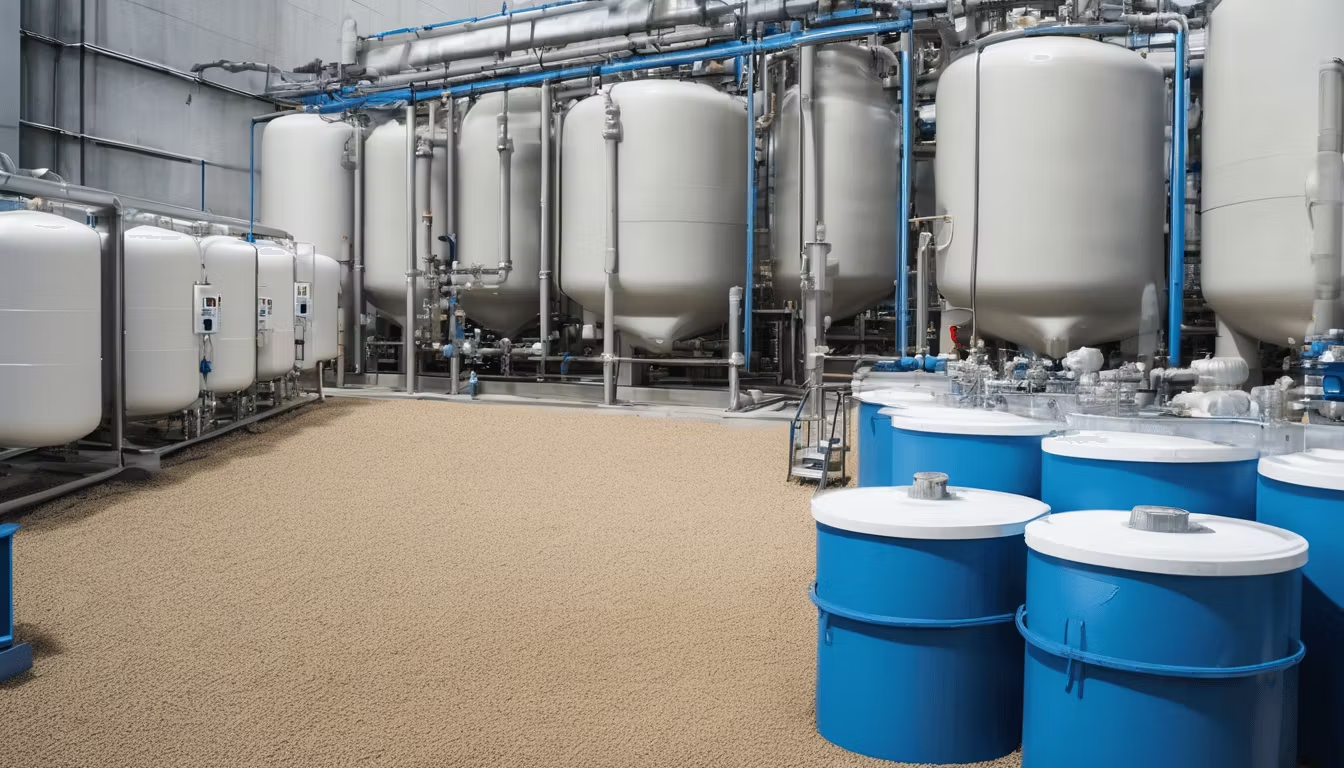
Silica sand filtration is a physical treatment method that removes suspended solids, sediment, and contaminants through mechanical straining and adsorption. Water passes through layers of sand of varying grain sizes, with larger particles filtering first and finer grades catching increasingly small contaminants. The naturally porous structure of quartz sand creates a large surface area that captures and traps impurities.
Advantages of Sand Filtration
- Cost-effective: Lower operational costs after initial installation
- Environmentally sustainable: No chemical additives or hazardous waste
- Low maintenance: Simple backwashing restores filter efficiency
- Long media life: Quality sand lasts 5-7 years before replacement
- Safe handling: No hazardous chemicals to manage or store
- Scalability: Suitable for small household systems to large industrial operations
- Removes diverse contaminants: Sediment, iron, turbidity, and some bacteria
Disadvantages of Sand Filtration
- Limited disinfection: Does not kill pathogens independently
- Slower process: Requires more residence time than chemicals
- Backwashing waste: Produces wastewater during cleaning cycles
- Not suitable for all contaminants: Cannot address chemical pollutants or dissolved substances
- Initial capital investment: Requires filtration system installation
Direct Comparison: Sand Filter vs Chemical Treatment
Cost Analysis
While chemical treatment appears economical initially, operational costs accumulate quickly. A facility consuming 1,000 cubic meters daily might spend $200-400 monthly on chemicals alone. Sand filtration systems require higher upfront investment ($5,000-50,000 depending on capacity) but generate minimal ongoing chemical expenses. Over a 5-year period, sand filtration typically proves 40-60% more cost-effective.
Water Quality Results
Chemical treatment excels at disinfection and removing specific dissolved contaminants but may leave trace residues. Sand filtration produces exceptionally clean water for industrial use, removes visible turbidity effectively, and requires no residual chemical management. For manufacturing processes where water purity directly impacts product quality—such as glass production, ceramics, or electronics—sand filtration often provides superior results.
Environmental Considerations
Chemical treatment generates chemical-laden sludge requiring specialized disposal. Sand filtration uses a natural, abundant material that eventually becomes inert sand suitable for other industrial applications. For companies committed to sustainable operations, sand filtration aligns with environmental responsibility goals and reduces regulatory compliance costs.
Operational Complexity
Chemical treatment requires trained operators, safety protocols, chemical storage facilities, and strict inventory management. Sand filtration systems are straightforward: backwash regularly, monitor water quality, and replace sand when needed. This simplicity reduces operational overhead and staff training requirements.
Optimal Applications for Each Method
When to Choose Chemical Treatment
- Municipal water systems requiring pathogen elimination
- Water containing dissolved chemicals or heavy metals
- Emergency disinfection situations
- Very high microbial contamination requiring rapid response
- Compliance with strict disinfection bylaws
When to Choose Sand Filtration
- Industrial cooling water systems
- Manufacturing processes requiring sediment-free water
- Facilities with budget constraints and long-term planning horizons
- Environmental-conscious operations
- Applications where chemical residues are undesirable
- Water sources with primarily physical contaminants (sediment, turbidity, iron)
Hybrid Approaches: Combining Methods
Many facilities achieve optimal results using both methods strategically. A typical configuration filters water through quartz sand first to remove physical contaminants, then applies minimal chemical treatment for disinfection. This approach reduces chemical usage by 50-70% while maintaining superior disinfection.
A reverse osmosis system combined with sand pre-filtration represents another effective hybrid approach. Sand removes particles that would otherwise damage the RO membrane, while RO handles dissolved substances. This combination extends equipment life and reduces overall treatment costs.
Quality Standards for Water Treatment Silica Sand
Not all sand is suitable for water filtration. Industrial-grade sand must meet strict specifications:
- SiO2 content: Minimum 95% (preferably 99%+)
- Grain size consistency: Uniform sizing prevents channeling
- Purity: Free from clay, silt, and contaminants
- Hardness: Resistant to attrition during backwashing
- Lab testing: Third-party verification of specifications
When sourcing sand for your filtration systems, verify compliance with ISO 14688 standards and request SUCOFINDO laboratory testing certificates. Quality sand directly impacts filtration efficiency and system lifespan.
Making Your Water Filtration Decision
Assessment Questions
- What contaminants are present in your water source?
- What is your budget for initial installation versus ongoing operations?
- What water quality standards must you meet?
- How important is environmental sustainability to your organization?
- What is your treatment capacity requirement?
- Do you have skilled staff for chemical management?
Implementation Timeline
Chemical treatment systems can be operational within days of installation. Sand filtration requires more planning but offers faster ROI over extended periods. Most industrial facilities can transition to sand filtration within 2-4 weeks, including system design, equipment procurement, and media installation.
The Role of Quality Materials in Water Treatment Success
Regardless of your chosen method, the quality of materials determines system performance. High-purity silica sand with proper grain gradation ensures consistent filtration rates and maximum contaminant removal. For industrial operations, this isn't a commodity purchase—it's infrastructure investment that directly affects product quality and operational efficiency.
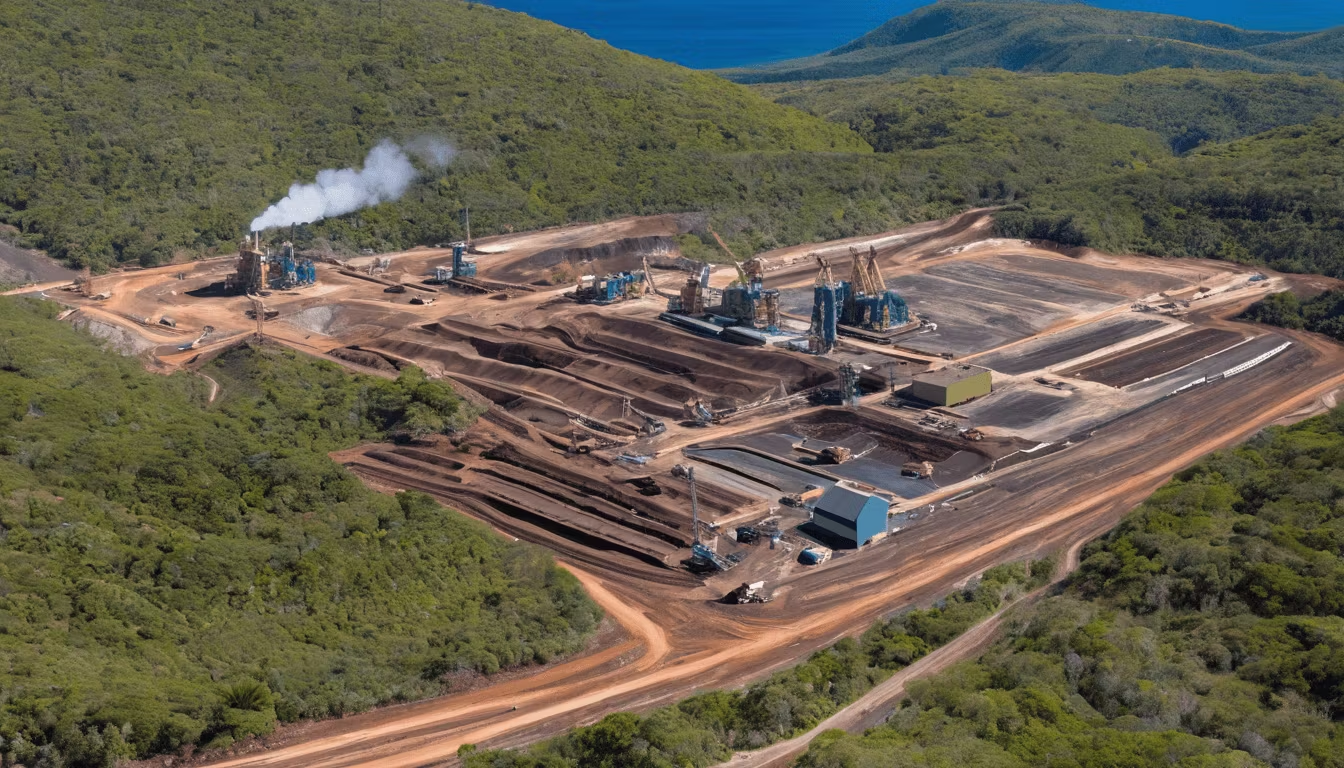
Sourcing from reputable suppliers who provide lab-tested, certified materials eliminates variables and ensures predictable performance. Direct sourcing from mining operations eliminates middlemen and quality inconsistencies common in commodity markets.
Conclusion: Choosing the Right Water Treatment Approach
Water treatment silica sand filtration and chemical treatment represent valid approaches with distinct advantages. Chemical treatment excels at disinfection and emergency response, while sand filtration offers superior cost-effectiveness, sustainability, and operational simplicity for industrial applications.
The optimal choice depends on your specific water quality challenges, budget constraints, and operational priorities. Many leading industrial facilities employ hybrid approaches, combining sand filtration for primary treatment with targeted chemical intervention for disinfection—achieving the best of both methods while minimizing costs and environmental impact.
For industrial water treatment projects, reliable material sourcing is fundamental to success. Contact us to discuss your specific water treatment requirements and discover how high-quality industrial sand can improve your filtration system performance and reduce operational costs over time.