Silica Sand for Solar Panels: Quality Requirements & Sourcing
The Critical Role of Silica Sand in Solar Panel Manufacturing
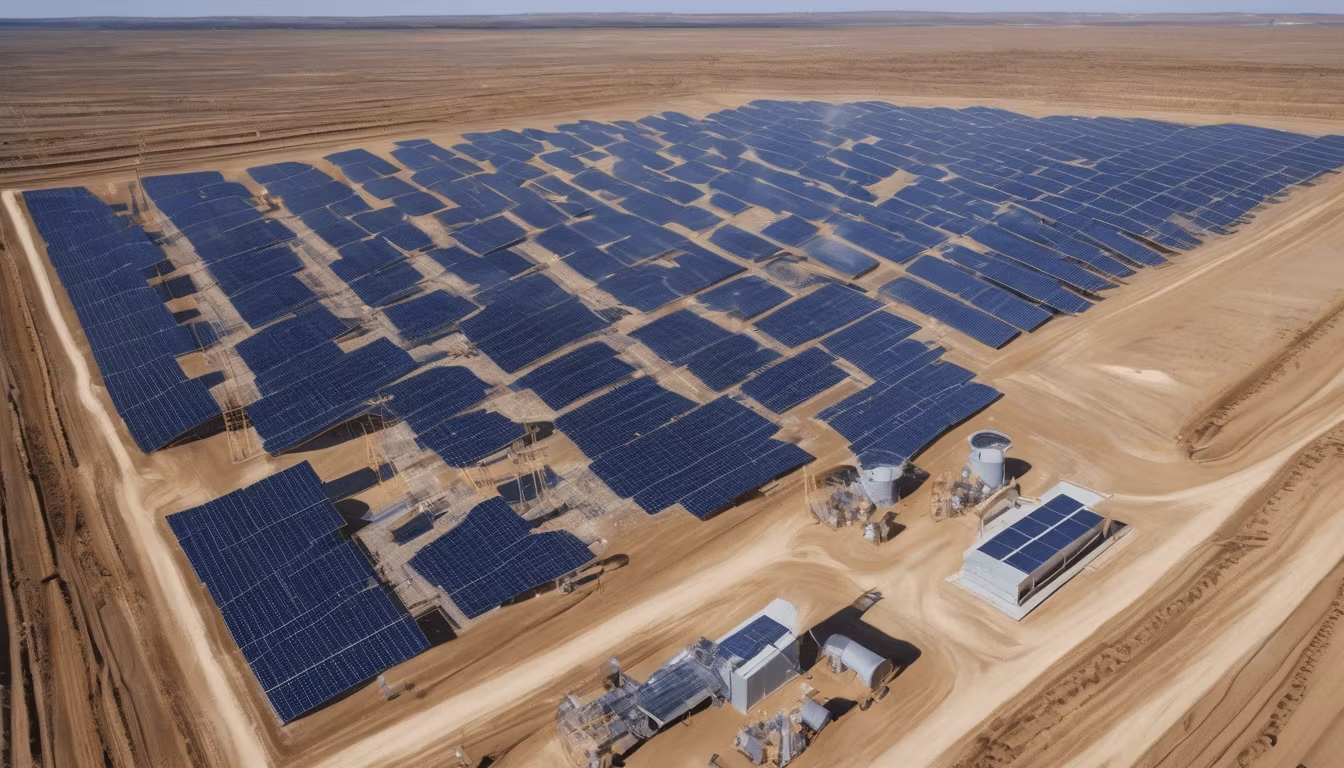
The global renewable energy transition has created unprecedented demand for high-quality solar panels, and behind every photovoltaic system lies a crucial material: silica sand. As the solar industry accelerates toward multi-terawatt capacity, understanding the relationship between silica sand and photovoltaic manufacturing has become essential for procurement professionals, engineers, and supply chain managers across the renewable energy sector.
Silica sand serves as the foundational raw material for solar-grade silicon, which is processed into crystalline silicon wafers—the core component of approximately 95% of global solar panels. The purity, particle size distribution, and mineral composition of the silica sand directly impact the efficiency, durability, and cost-effectiveness of the final photovoltaic product. This makes sourcing reliable, high-purity silica sand not just a procurement decision, but a strategic advantage for solar manufacturers.
Why Silica Sand Matters in PV Manufacturing
Solar panel efficiency begins with raw material quality. When silica sand is processed through metallurgical routes to produce solar-grade silicon, impurities can significantly reduce cell efficiency and increase manufacturing costs. Trace elements like iron, aluminum, and titanium can create defects in the silicon crystal structure, reducing the photovoltaic effect and limiting energy conversion rates.
The typical solar manufacturing process involves:
- Silica sand sourcing and purification – Raw material selection and initial beneficiation
- Metallurgical silicon production – Arc furnace reduction at 1800°C+ temperatures
- Polysilicon processing – Chemical conversion and purification (Siemens or Czochralski methods)
- Wafer crystallization – Formation of monocrystalline or multicrystalline ingots
- Cell and module assembly – Integration into functional solar panels
Each stage depends on the quality foundation established by the initial silica sand. This is why leading solar manufacturers worldwide maintain strict specifications for their silica suppliers, often conducting extensive third-party testing and qualification processes.
Solar-Grade Silica Sand Specifications & Requirements
Purity Standards for Photovoltaic Applications
Solar-grade silica sand typically requires SiO₂ content of 99.5% or higher, with particularly strict limits on metallic impurities. The most demanding specifications come from Tier-1 solar manufacturers and integrated photovoltaic producers who maintain tight quality controls throughout the supply chain.
Standard specifications for solar-grade silica include:
- SiO₂ Content: 99.5–99.9% minimum
- Iron (Fe₂O₃): 50–300 ppm maximum (varies by application)
- Aluminum (Al₂O₃): 100–500 ppm maximum
- Titanium (TiO₂): 30–100 ppm maximum
- Calcium (CaO): 10–50 ppm maximum
- Moisture Content: Less than 0.5% after drying
- Particle Size Distribution: Typically 100–200 mesh for optimal processing efficiency
High-purity quartz sand meeting these specifications ensures maximum conversion efficiency in the silicon production process and minimizes defect rates during wafer fabrication. Manufacturers testing with SUCOFINDO-certified materials can achieve consistent batch-to-batch quality and reduce downstream processing losses.
Particle Size and Mesh Grade Considerations
Particle size distribution critically affects metallurgical processing efficiency. Finer particles (200+ mesh) provide greater surface area for chemical reactions but may increase dust handling requirements and processing complexity. Coarser grades (100–150 mesh) improve flowability and reduce airborne contamination risks during handling and transport.
Leading solar silicon producers typically specify silica sand in the 150–200 mesh range, balancing reactivity with handling characteristics. Some applications require multi-grade silica supply—coarser material for initial beneficiation stages and finer grades for final purification steps.
Sourcing High-Quality Silica for Solar Manufacturers
Direct-from-Mine Advantages in Supply Chain Efficiency
The silicon production process is capital-intensive and operationally complex. Solar manufacturers cannot afford supply disruptions or quality inconsistencies that could halt production at critical stages. Working directly with mine-based suppliers, rather than trading intermediaries, provides several competitive advantages:
- Quality Traceability: Direct mine sourcing enables comprehensive documentation of geological origins, processing methods, and testing protocols
- Cost Transparency: Eliminating middlemen reduces markup layers and improves pricing predictability for long-term contracts
- Supply Reliability: Direct relationships ensure priority allocation during market supply constraints
- Customization Capability: Mine-based suppliers can adjust processing and particle size specifications for specific PV applications
- Regulatory Compliance: Direct sourcing from licensed, fully-permitted mining operations ensures adherence to international environmental and labor standards
Indonesia's silica sand resources, particularly deposits in Sulawesi and Kalimantan regions, have emerged as critical supply sources for Asian and global solar manufacturers. Indonesian silica typically exhibits natural purity levels of 99.7%+ and benefits from well-established maritime logistics networks connecting to manufacturing hubs throughout Southeast Asia, China, and beyond.
Logistics, Testing, and Supply Chain Integration
Reliable solar-grade silica sourcing requires robust quality assurance frameworks. Professional suppliers maintain third-party laboratory partnerships (such as SUCOFINDO certification in Indonesia) to verify purity specifications, trace element composition, and moisture content for every production batch.
Supply contracts for silica in solar manufacturing typically include:
- Detailed specification sheets with acceptable tolerance ranges
- Certificate of analysis (CoA) from accredited laboratories
- Sample retention protocols for dispute resolution
- Flexible volume commitments (trial quantities through multi-year volume agreements)
- Delivery timing coordinated with production schedules
- Packaging options (bulk, bags, or containerized depending on end-use)
Leading B2B mineral suppliers maintain capacity flexibility to accommodate trial orders (100+ metric tons) through major annual contracts (up to 2.5+ million metric tons), enabling manufacturers to test materials before scaling purchasing volumes.
Market Trends: Growing Demand for Renewable Energy Materials
Global Solar Capacity Expansion and Raw Material Pressure
The International Energy Agency (IEA) projects that solar photovoltaic capacity will reach over 4,000 GW by 2050, with annual installations exceeding 600 GW by 2030. This expansion translates directly into unprecedented demand for high-purity silica sand and derivative silicon products.
Current market dynamics include:
- Supply Chain Diversification: Solar manufacturers are reducing geographic concentration risk by qualifying multiple silica suppliers across different regions
- ESG and Sustainability Requirements: Buyers increasingly prioritize suppliers with certified environmental management systems, responsible mining practices, and transparent supply chain documentation
- Price Volatility Management: Long-term contracts with floor/ceiling pricing mechanisms provide cost stability amid commodity market fluctuations
- Technical Collaboration: Tier-1 manufacturers work closely with suppliers on continuous improvement initiatives targeting impurity reduction and processing efficiency gains
Indonesia's position as a top-10 global silica producer, combined with proximity to high-growth solar markets in Asia, creates strategic sourcing opportunities for manufacturers targeting cost optimization without sacrificing quality specifications.
Comparing Silica with Other Essential Solar Manufacturing Materials
Complementary Materials in the PV Supply Chain
While silica sand forms the silicon foundation of photovoltaic cells, modern solar panels integrate numerous complementary materials. Understanding the broader material ecosystem helps procurement teams optimize integrated supply strategies.
For example, aluminium ingot materials serve critical functions in solar frame manufacturing and heat sink applications, requiring coordination with silica sourcing schedules. Similarly, zircon sand finds applications in specialized refractories and coating materials used within certain solar manufacturing processes.
Integrated suppliers capable of providing multiple material categories—silica, aluminium products, and specialty sand grades—enable streamlined procurement and logistics coordination, reducing complexity for solar manufacturers managing complex supply chains.
Best Practices for Silica Sand Procurement in Solar Manufacturing
Supplier Qualification and Risk Management
Effective silica sourcing requires rigorous supplier evaluation frameworks. Leading solar manufacturers implement systematic qualification processes including:
- Regulatory Verification: Confirm mining permits (IUP/OPK licenses in Indonesia), environmental compliance certifications, and production capacity documentation
- Quality System Audits: Evaluate laboratory infrastructure, testing protocols, and sample handling procedures to ensure analytical accuracy
- Batch Testing Programs: Conduct independent verification testing of incoming material to validate supplier-provided CoA documentation
- Supply Continuity Assessment: Evaluate reserve bases, production capacity, and geographic diversification to minimize single-supplier dependency risks
- Financial Stability Review: Assess supplier financial health and business continuity planning to prevent supply disruptions from company instability
Contract Structuring for Long-Term Supply Security
Solar manufacturing involves substantial capital investment and extended project timelines. Silica supply contracts should reflect these realities through:
- Volume Commitments: Tiered pricing based on minimum annual volumes with flexibility mechanisms for demand adjustments
- Quality Specifications: Detailed technical requirements with defined tolerance bands and dispute resolution procedures
- Price Mechanisms: Indexed pricing formulas tied to commodity benchmarks with floor/ceiling protections for both parties
- Force Majeure Provisions: Clear protocols for managing supply interruptions from weather events, geological issues, or regulatory changes
- Performance Metrics: Defined KPIs for on-time delivery, quality consistency, and customer service responsiveness
The Sustainability Imperative in Solar Material Sourcing
Environmental and Social Considerations
The renewable energy industry's core mission to reduce carbon emissions and environmental impact creates inherent expectations for responsible sourcing practices. Silica sand suppliers serving solar manufacturers increasingly face demands to demonstrate:
- Certified environmental management systems (ISO 14001)
- Water conservation and recirculation practices
- Dust control and air quality management programs
- Habitat restoration and biodiversity protection initiatives
- Transparent supply chain documentation and third-party auditing
- Fair labor practices and community engagement programs
Leading mining operations in Indonesia have implemented advanced beneficiation technologies and environmental management practices that exceed regulatory minimums, positioning them as preferred suppliers for globally-conscious solar manufacturers.
Navigating Export Regulations and International Trade
Silica sand for solar manufacturing is traded across international markets with varying regulatory frameworks. Suppliers maintaining robust compliance documentation and customs expertise can streamline exports and reduce delays. Professional suppliers understand HS code classifications, anti-dumping provisions, quality certifications required by destination countries, and documentation standards for international transactions.
Southeast Asian suppliers benefit from established maritime logistics infrastructure and free trade agreements that facilitate competitive delivery to major solar manufacturing regions in Asia, Europe, and North America.
Conclusion: Strategic Sourcing for Solar Manufacturing Excellence
Silica sand quality directly impacts the efficiency, reliability, and cost-effectiveness of photovoltaic systems powering the global renewable energy transition. As solar manufacturing scales toward multi-terawatt deployment levels, securing reliable, high-purity silica supplies from qualified, direct-from-mine suppliers becomes increasingly strategic.
The competitive advantages of direct mineral sourcing—quality traceability, cost transparency, supply reliability, and customization capability—position manufacturers to optimize both production performance and bottom-line economics. Whether you're qualifying new silica suppliers, consolidating your supply base, or scaling production capacity, working with licensed, tested, professionally-managed mineral suppliers ensures consistent material quality and supply chain security.
CV Indoalam Mineral Persada stands ready to support solar manufacturers' silica requirements. With SUCOFINDO-certified testing, full IUP OPK licensing, and direct sourcing from proven deposits across Sulawesi and Kalimantan, we deliver high-purity silica sand meeting the most demanding photovoltaic specifications. Whether your need is a 100-metric-ton trial shipment or annual supply agreements exceeding 2.5 million metric tons, our flexible capacity and quality assurance systems ensure reliable partnership for your solar manufacturing operations.
Explore how Indoalam's direct-from-mine silica sourcing can optimize your renewable energy material supply chain. Contact us today to discuss your specifications and discover competitive sourcing solutions backed by proven quality, regulatory compliance, and supply chain expertise.