Silica Sand Drying and Classification: Industrial Processing Guide
Introduction: Why Silica Sand Processing Matters
Silica sand is one of the most versatile industrial minerals, serving critical roles in glass manufacturing, ceramics production, foundries, water treatment, and construction materials. However, raw silica sand from mining operations contains moisture, fine particles, and impurities that limit its industrial application. This is where proper drying and classification become essential.
The quality of your final silica sand product directly impacts downstream manufacturing processes. Inadequate drying leads to caking and flowability issues, while poor classification results in off-spec material that customers reject. Understanding industrial silica sand drying and classification techniques is crucial for mining operations, traders, and manufacturers seeking consistent, high-quality material.
In this comprehensive guide, we'll explore the science and practice of silica sand processing, covering drying technologies, classification methods, quality control, and best practices used by leading suppliers across Southeast Asia and beyond.
Understanding Silica Sand Moisture Content and Drying Requirements
Why Moisture Matters in Silica Sand
Raw silica sand extracted from deposits typically contains 8-15% moisture by weight, depending on the source and extraction method. This moisture creates several operational challenges:
Flowability Issues: Wet sand tends to bridge and clump during storage and transport, reducing handling efficiency and increasing unloading times at customer facilities.
Contamination Risk: Moisture promotes oxidation and can trap fine clay particles on sand grain surfaces, affecting purity and SiO₂ content.
Storage Stability: Moist sand stored in containers can develop microbiological growth and chemical reactions that degrade product quality during transit.
Industrial Application Problems: Glass manufacturers, ceramic producers, and foundries require moisture content below 0.5% to prevent defects in final products. Float glass production, in particular, is highly sensitive to moisture content, which can cause bubbling and optical defects.
Target Moisture Levels by Application
Different industries require varying final moisture specifications:
- Float Glass Manufacturing: 0.1-0.3% moisture (most stringent)
- Container Glass: 0.3-0.5% moisture
- Ceramics & Tiles: 0.5-1.0% moisture
- Foundry Applications: 0.2-0.8% moisture
- Water Treatment Media: Up to 2-3% moisture (least stringent)
Understanding your customer's specific moisture requirements is essential for optimizing your drying process and avoiding costly rejections.
Rotary Dryer Systems: The Industry Standard
How Rotary Dryers Work
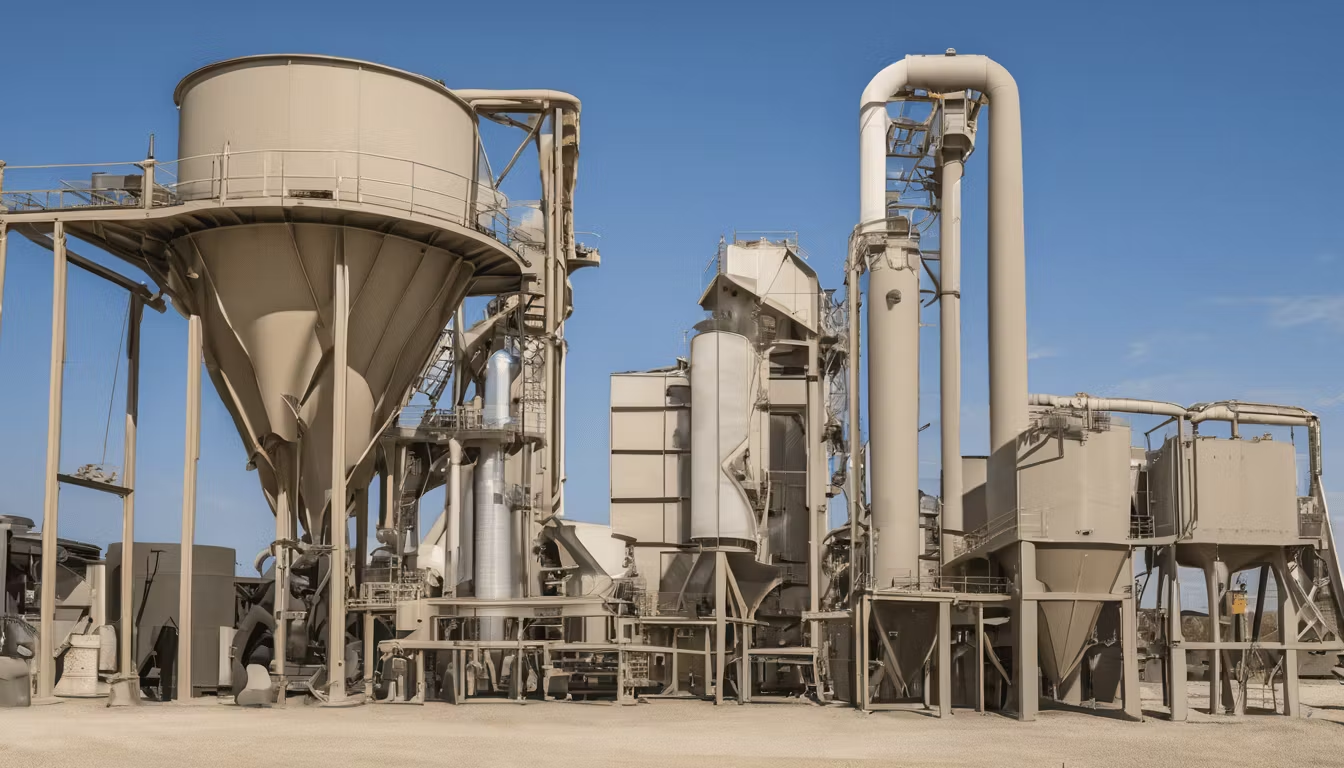
Rotary dryers are the most widely used technology for industrial silica sand drying globally. These cylindrical drums rotate at controlled speeds (typically 4-8 RPM for sand applications), creating tumbling action that exposes material to hot air and maximizes evaporative drying.
Operating Principle:
- Wet sand enters the rotating drum via a feed chute
- Internal lifter blades continuously lift and cascade the sand, creating a curtain effect
- Hot air (typically 250-350°C) flows through the drum, either co-currently or counter-currently with the sand
- Moisture evaporates as the material tumbles
- Dried sand exits through an outlet at the drum's end
Key Parameters in Rotary Dryer Operation
Residence Time: Typically 10-20 minutes for silica sand, depending on initial moisture content and target final moisture. Longer residence times achieve lower moisture but increase energy consumption and may cause sand degradation.
Air Temperature: Higher temperatures accelerate drying but risk product degradation and increase fuel costs. Industrial operators typically target 280-320°C inlet air for optimal balance.
Drum Diameter and Length: Larger drums (2-4 meters diameter, 10-20 meters length) process higher tonnages but require more energy. Smaller operations may use compact dryers for flexibility.
Rotation Speed: Optimal RPM depends on drum diameter. Too slow causes material to stick; too fast may eject material. Industrial operators typically target 3-7 RPM for sand applications.
Advantages of Rotary Dryers for Silica Sand
- High throughput capacity (10-100+ MT/hour depending on equipment size)
- Uniform drying across the sand mass
- Relatively low maintenance compared to other drying technologies
- Ability to handle variable input moisture content
- Compatible with downstream classification equipment
Energy Efficiency Considerations
Modern rotary dryers use fuel-efficient burners (gas, coal, or biomass) with heat recovery systems. For industrial operators processing high volumes, investing in advanced dryer designs with improved heat transfer and insulation can reduce fuel consumption by 15-25% while maintaining output quality.
Direct-fired dryers (flame inside the drum) are faster but create dust and require robust dust collection. Indirect dryers (heat exchanger) preserve product purity but are more expensive. Most silica sand producers use direct-fired systems with comprehensive dust management systems.
Sand Classification: Achieving Precise Mesh Gradation
What is Sand Classification?
Classification is the process of separating sand into specific particle size ranges (mesh grades). Raw silica sand contains particles ranging from fine dust to coarse grains. Industrial customers require specific mesh gradations—such as 8-16 mesh, 16-30 mesh, 30-100 mesh, or 100-200 mesh—depending on their application.
Proper classification ensures:
- Consistency with customer specifications
- Optimal performance in end-use applications
- Reduced waste and improved yield
- Higher premium pricing for well-graded material
Air Classifier Systems for Silica Sand
Air classifiers are the most common technology for separating silica sand into fine and coarse fractions. These systems use upward-flowing air currents to separate particles by size and density.
How Air Classifiers Work:
- Wet, dried sand enters the classifier's mixing chamber
- An upward air stream is generated by a variable-speed fan
- Heavy particles (coarser sand) cannot be lifted and fall to the bottom as coarse product
- Light particles (fine dust and clay) are carried upward by air currents and separated as fine product
- Classification sharpness is controlled by adjusting air velocity
Key Advantages of Air Classifiers:
- No mechanical wear compared to sieve-based systems
- Precise separation without material degradation
- Lower maintenance and longer equipment life
- Ability to handle high temperatures directly from rotary dryers
- Excellent separation sharpness (narrow size distribution)
- No water required (dry classification)
Advanced Classification: Multi-Stage Systems
High-specification operations use multi-stage classifiers to achieve multiple mesh grades in one pass. A primary classifier might separate coarse (>100 mesh) from fine material, while secondary classifiers further divide the fine fraction into specific mesh ranges like 100-150 and 150-200.
This approach is particularly valuable for suppliers serving diverse markets—glass manufacturers, ceramic producers, and foundries—each requiring different mesh specifications.
Quality Control and Product Testing
SUCOFINDO Testing and Certification
Leading Indonesian silica sand suppliers conduct rigorous laboratory testing through accredited facilities like SUCOFINDO. Essential tests include:
Chemical Analysis: SiO₂ content (typically 99.5%+ for high-grade material), iron oxide (Fe₂O₃), alumina (Al₂O₃), and loss on ignition (LOI).
Physical Properties: Moisture content (loss on drying at 105°C), bulk density, particle size distribution (sieve analysis), and Mohs hardness.
Impurity Analysis: Clay content, organic matter, and specific contaminants relevant to customer applications (e.g., heavy metals for food-grade applications).
Real-Time Process Monitoring
Modern facilities integrate:
- Moisture analyzers: Inline measurement of product moisture exiting the dryer
- Particle size analyzers: Continuous monitoring of classifier output
- Metal detection: Identification of foreign material
- Data logging: Automated recording of dryer temperature, fan speed, and product parameters
This real-time monitoring enables operators to make immediate adjustments, maintaining consistent quality throughout production runs.
Sourcing Superior Silica Sand: Indonesian Advantages
Indonesia is a world-class source of high-purity silica sand, particularly from Sulawesi (Morowali, Konawe regions) and Kalimantan. These deposits feature naturally high SiO₂ content (99.5-99.74%), low iron content, and favorable grain characteristics for glass and industrial applications.
When sourcing from Indonesian suppliers, verify:
- IUP OPK License: Legal permission to extract and trade minerals
- RKAB Approval: Environmental management plan compliance
- Quality Documentation: SUCOFINDO test certificates confirming specifications
- Supply Reliability: Proven capacity to deliver consistent volumes
Optimizing Your Silica Sand Processing Operations
Best Practices for Industrial Efficiency
Preventive Maintenance: Regular inspection and maintenance of dryer drums, lifter blades, and classifier components prevent unexpected downtime and maintain consistent product quality.
Seasonal Adjustments: Moisture content varies with seasons and rainfall. Adjust drying parameters to compensate for seasonal input variations.
Customer Communication: Maintain close contact with end-users regarding their specific mesh and moisture requirements. Some customers accept wider specifications that reduce processing costs.
Energy Optimization: Monitor fuel consumption per ton of dried sand. Small improvements in dryer efficiency compound significantly over annual production volumes.
Capacity Planning
High-volume suppliers like CV Indoalam, capable of processing 2.5 million metric tons annually, balance equipment investment with market demand. Consider:
- Peak customer demand seasons
- Storage and buffer capacity
- Equipment redundancy for critical processes
- Flexibility to adjust mesh grades based on market demand
Applications Driving Silica Sand Demand
Understanding end-use applications helps optimize your product offerings:
Float Glass Manufacturing: Requires 8-16 mesh, <0.3% moisture, high SiO₂ purity. Premium specifications command higher prices.
Ceramics & Tile Production: Uses 60-200 mesh material; moisture tolerance is higher. Bulk volume business with consistent specifications.
Foundry Applications: Requires clean sand, specific particle size distribution, and low clay content. Refractory-grade material commands premium pricing.
Water Treatment: Uses 8-30 mesh, less stringent purity requirements, largest volume market globally.
Why Partner with Established Silica Sand Suppliers
Reliable sourcing directly from licensed, certified suppliers eliminates middleman costs and ensures quality consistency. Established producers invest in modern drying and classification technology, maintain rigorous quality control, and offer flexible supply arrangements from trial shipments (100 MT) to long-term contracts (2.5M MT/year+).
Quality suppliers provide:
- Complete traceability and documentation
- Consistent particle size and moisture specifications
- Responsive customer service and flexible delivery terms
- Technical support for application optimization
- Competitive pricing on high-volume contracts
Conclusion: Mastering Silica Sand Processing for Competitive Advantage
Silica sand drying and classification are critical processes that transform raw mined material into valuable industrial products. Proper rotary dryer operation, air classifier technology, and rigorous quality control ensure consistent specifications that meet the demanding requirements of glass manufacturers, ceramic producers, foundries, and other industrial customers.
Whether you're a manufacturer seeking reliable supply or an operator looking to optimize your processing facility, understanding these technologies and best practices is essential for success in today's competitive industrial mineral market.
For high-quality silica sand sourced directly from certified Indonesian mines with complete laboratory testing and flexible supply options, contact us to discuss your specific requirements. CV Indoalam Mineral Persada supplies leading glass manufacturers, ceramic producers, and industrial facilities across Indonesia and internationally, with production capacity up to 2.5 million metric tons annually and IUP OPK licensing ensuring full regulatory compliance.
Learn more about us and our commitment to quality, reliability, and customer success in industrial mineral supply.