Nickel and the EV Battery Revolution: Indonesia's Strategic Role
The Global EV Battery Boom Is Reshaping Nickel Demand
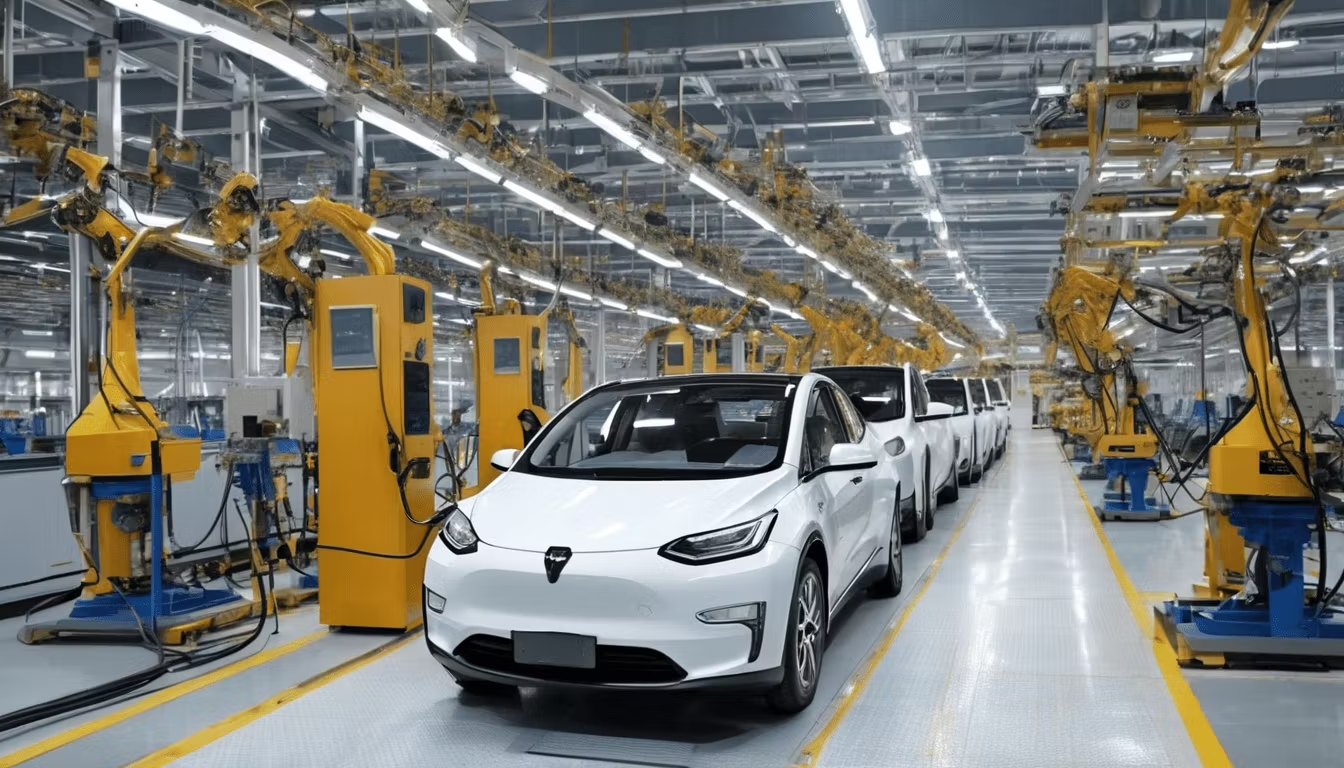
The automotive industry is undergoing a seismic shift. Electric vehicles (EVs) are no longer a niche market—they're becoming mainstream. In 2023, global EV sales reached 14 million units, a 35% increase from the previous year. Behind every electric vehicle lies a critical mineral: nickel.
Nickel is essential for lithium-ion batteries, particularly in nickel-rich cathode chemistries like NCA (nickel cobalt aluminum) and NMC (nickel manganese cobalt). The higher the nickel content in a battery, the greater its energy density and the lower its cost per kilowatt-hour. For EV manufacturers seeking to extend driving range while reducing battery costs, nickel is indispensable.
This explosive growth in EV production has created unprecedented demand for high-quality nickel ore. Global nickel demand is projected to grow from approximately 2.6 million metric tons in 2023 to over 4 million metric tons by 2030, driven almost entirely by battery manufacturing. This presents both challenges and opportunities for the global supply chain.
Indonesia: The World's Nickel Powerhouse
Dominance in Global Supply
Indonesia has emerged as the world's largest nickel producer, accounting for approximately 35% of global nickel output. The country's vast mineral reserves, particularly in Sulawesi, combined with established mining infrastructure and favorable regulatory frameworks for mineral processing, make it an unbeatable supplier.
The nickel deposits in Indonesia are concentrated in the eastern regions, with Sulawesi being the primary source. Areas like Morowali in Central Sulawesi and Konawe in Southeast Sulawesi are home to some of the world's richest nickel laterite deposits. These regions are strategically positioned to supply both domestic smelters and international markets, making Indonesia central to global battery supply chains.
From Raw Ore to Battery-Grade Metal
Indonesia's advantage extends beyond raw ore production. The country has invested heavily in downstream processing, particularly in nickel smelting and refining. This vertical integration means that Indonesian nickel can be processed into high-purity metal suitable for battery manufacturing—a critical requirement for EV manufacturers.
Understanding Nickel Ore Types: Saprolite vs. Limonite
Saprolite Nickel Ore
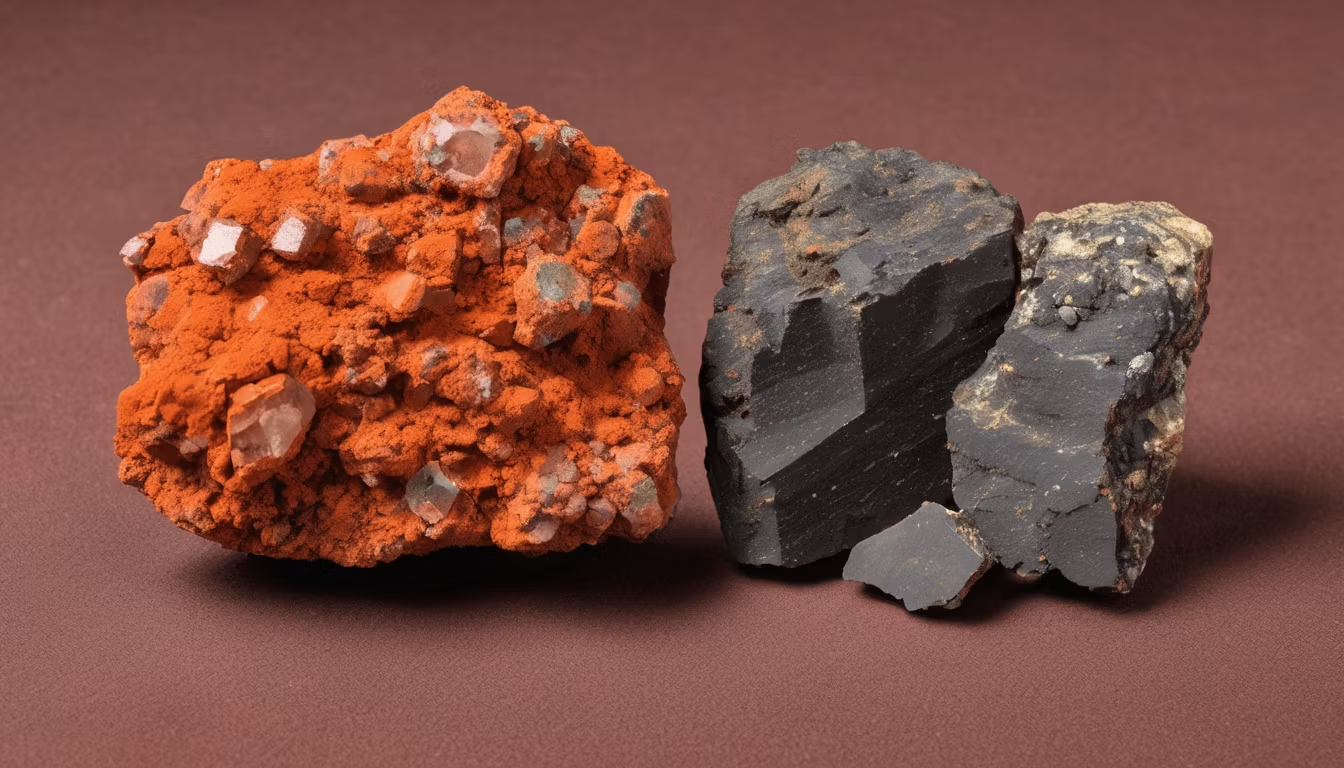
Saprolite nickel ore contains nickel concentrations typically between 1.5% and 2.0%. This ore type is formed through deep weathering of ultramafic rocks and contains lower iron and magnesium content compared to limonite. Saprolite is particularly valuable for pyrometallurgical processes and certain hydrometallurgical applications.
The higher nickel grade of saprolite ore means fewer processing steps are required to achieve battery-grade concentrations. This translates to lower operational costs and faster production timelines for smelters.
Limonite Nickel Ore
Limonite nickel ore, containing 0.8% to 1.2% nickel, is more abundant but requires more intensive processing. Despite the lower nickel content, limonite is increasingly valuable due to the HPAL (High-Pressure Acid Leach) process, which can efficiently extract nickel from these lower-grade ores.
The abundance of limonite deposits means a more sustainable, long-term supply of nickel for the global battery industry. As limonite-to-battery-grade nickel processing becomes more efficient, this ore type will play an increasingly important role in meeting EV battery demand.
The HPAL Process: Converting Ore Into Battery Gold
How HPAL Works
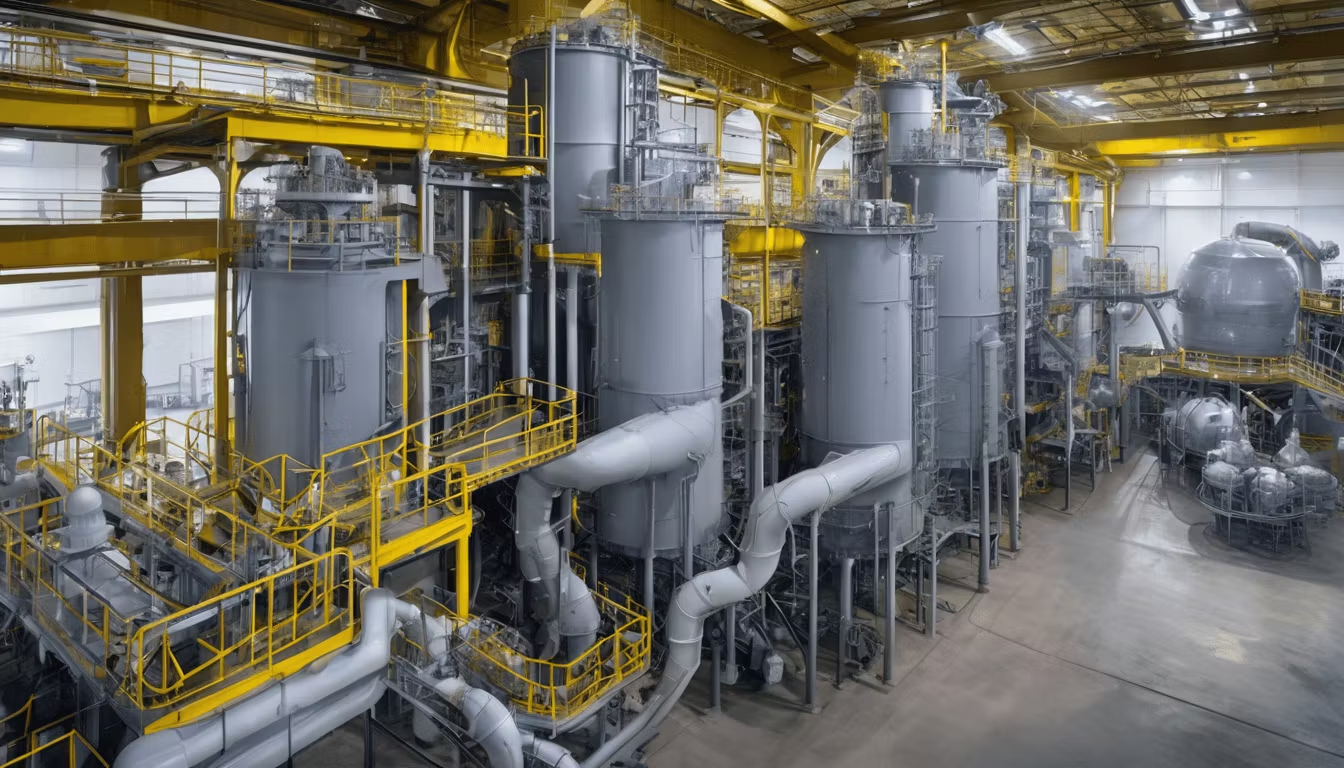
The High-Pressure Acid Leach (HPAL) process is a hydrometallurgical technology that extracts nickel from laterite ores through chemical leaching. The process works by crushing nickel ore and leaching it with sulfuric acid under high temperature and pressure. This breaks down the ore and separates nickel into a solution that can be further concentrated and refined.
HPAL is particularly suited to processing lower-grade limonite ores that would be uneconomical to process using traditional roasting and smelting methods. The process produces nickel sulfate, which can then be converted into nickel metal or used directly in battery cathode manufacturing.
Why HPAL Matters for Battery-Grade Nickel
HPAL processes can achieve exceptionally high recovery rates—often above 95%—and produce nickel of sufficient purity for battery applications. The process is scalable, allowing operations from small trial batches of 100 metric tons to massive industrial facilities processing millions of tons annually.
For CV Indoalam Mineral Persada and other mining companies, the HPAL process represents an opportunity to unlock the value in their laterite reserves while meeting the stringent quality requirements of battery manufacturers. The process bridges the gap between raw ore and the high-purity nickel that modern EV batteries demand.
Quality Standards and Specifications for Battery-Grade Nickel
What Constitutes Battery-Grade Nickel?
Battery-grade nickel is not simply "pure nickel." It must meet specific technical specifications for use in cathode precursors and intermediate compounds. These specifications include precise requirements for:
• Nickel purity (typically 99.8% or higher)
• Iron content (carefully controlled, not eliminated—iron affects crystal structure)
• Cobalt content (must be separated for independent sale)
• Impurities like copper, zinc, and manganese (must be below specific thresholds)
• Moisture and sodium content (critical for powder form)
• Particle size distribution (affects downstream processing)
Testing and Certification
CV Indoalam Mineral Persada's use of SUCOFINDO laboratory testing ensures that every batch meets international quality standards. This certification is crucial for B2B relationships with battery manufacturers, smelters, and other industrial buyers who require documented proof of ore composition and purity.
The Global Supply Chain: Indonesia's Critical Position
Challenges in Meeting Growing Demand
Despite Indonesia's dominance, the global nickel supply chain faces significant challenges. Processing capacity in established smelting regions is constrained. Environmental regulations in many countries limit new smelter development. Transportation and logistics costs add complexity to international trade.
Nickel-rich countries like the Philippines and Russia also produce significant quantities, creating competitive pressure. However, Indonesia's combination of ore reserves, processing infrastructure, and established trade relationships gives it a structural advantage.
The Role of Direct Suppliers
Mining and trading companies like CV Indoalam play a vital role by connecting mine operations directly to industrial users. By eliminating middlemen, direct suppliers like CV Indoalam can offer competitive pricing while ensuring supply chain transparency and quality assurance.
This direct-from-mine approach is increasingly valued by battery manufacturers and smelters seeking to reduce supply chain risk and build long-term partnerships with reliable suppliers.
Indonesia's Domestic Nickel Policy and Export Opportunities
The Export Ban on Unprocessed Nickel Ore
Indonesia has implemented an export ban on unprocessed nickel ore, requiring domestic processing before export. This policy has accelerated investment in smelting and refining capacity within Indonesia, creating a more vertically integrated supply chain.
For mining companies like CV Indoalam, this means opportunities to supply domestic nickel smelters and industrial processors—a robust market in its own right. Domestic customers include major nickel smelters producing ferronickel and HPAL intermediates, as well as industrial parks processing nickel for various applications.
Licensing and Regulatory Framework
CV Indoalam operates under comprehensive regulatory approval: IUP OPK licenses for mineral logam (metallic minerals), non-logam (non-metallic minerals), and bahan bakar (fuel), plus ET Batubara and RKAB (Rencana Kerja dan Anggaran Biaya) approval. This regulatory compliance is essential for supplying regulated industries like battery manufacturing and advanced smelting operations.
Meeting Diverse Customer Needs: From Trial to Full-Scale Supply
Flexibility in Sourcing and Supply
Not all customers have identical needs. Some require small trial quantities to test processing compatibility. Others operate massive industrial facilities demanding millions of metric tons annually. CV Indoalam Mineral Persada's supply model accommodates both extremes—from 100 metric ton trial orders to 2.5 million metric ton annual contracts.
This flexibility, combined with sourcing from multiple regions (Sulawesi, Kalimantan, and Maluku), ensures consistent supply and allows customers to diversify their supply chains across different ore grades and geographies.
Building a Sustainable EV Battery Supply Chain
Why Responsible Sourcing Matters
EV adoption is a sustainability imperative. However, the mining and processing of nickel must also meet environmental and social standards. Major EV manufacturers increasingly require that their nickel suppliers adhere to responsible mining practices.
CV Indoalam's SUCOFINDO testing and regulatory compliance demonstrate a commitment to transparency and quality. These practices help build the trust necessary for long-term relationships with major industrial buyers.
Beyond Nickel: Integrated Mineral Solutions
While nickel is the focus of this discussion, the battery and industrial manufacturing sectors require diverse minerals. CV Indoalam supplies not only nickel ore but also silica sand (essential for glass in solar panels and electronic components), aluminium ingot for automotive and aerospace applications, and zircon sand for advanced ceramics and refractory applications.
This integrated approach allows industrial customers to develop long-term relationships with a single, trusted supplier across multiple commodity categories.
The Road Ahead: Indonesia and Global EV Growth
Projected Demand Growth
The International Energy Agency (IEA) projects that EV sales will grow to 35 million units annually by 2030, and reach 60% of global vehicle sales by 2035. This trajectory will drive nickel demand to levels that currently seem almost unimaginable.
Indonesia, with its vast reserves and expanding processing capacity, is positioned to capture a significant share of this growing market. Companies investing in sustainable, quality-focused mining and supply operations will be best positioned to benefit from this long-term growth.
Technology and Efficiency Improvements
As HPAL and other processing technologies mature, recovery rates will improve and costs will decline. This will make lower-grade limonite ores increasingly economical to process, extending the productive lifespan of existing mining operations.
For suppliers, maintaining commitment to quality, efficiency, and regulatory compliance will be critical to competing in this evolving landscape.
Choosing a Reliable Nickel Supplier: What to Look For
Essential Criteria for B2B Buyers
When selecting a nickel ore supplier, industrial buyers should consider:
• Regulatory compliance and licensing (IUP OPK, RKAB, ET Batubara)
• Independent laboratory testing (SUCOFINDO certification)
• Proven track record of consistent supply and quality
• Geographic diversification of ore sources
• Direct access to mining operations (no middlemen)
• Flexibility in order sizes and terms
• Transparent pricing and supply chain visibility
Why CV Indoalam Stands Out
CV Indoalam Mineral Persada meets all of these criteria. With operations in prime nickel-producing regions across Sulawesi, Kalimantan, and Maluku, combined with full regulatory licensing and SUCOFINDO testing, CV Indoalam provides the quality assurance and supply chain reliability that modern industrial operations demand.
The company's approach—direct from mine, lab-tested, fully licensed—eliminates the uncertainties and inefficiencies that characterize many commodity supply relationships.
Taking Action: Partnering for the EV Battery Revolution
The nickel EV battery market is one of the defining industrial trends of our time. Indonesia's role is not just important—it's essential. For industrial buyers seeking to participate in the battery supply chain, securing reliable access to quality nickel ore is fundamental.
CV Indoalam Mineral Persada is ready to be your partner in this transformation. Whether you require trial quantities to test processing compatibility or long-term supply agreements for industrial-scale operations, contact us today to discuss your specific needs.
For a comprehensive overview of our company, capabilities, and track record, please visit our about us page. Discover how CV Indoalam is powering Indonesia's nickel contribution to the global EV revolution—and how we can power your operations.