Zircon Sand vs Chromite Sand for Foundry: Complete Performance Comparison
Introduction: Choosing the Right Foundry Sand for Optimal Casting Performance
In modern foundry operations, the selection of refractory and specialty casting sands directly impacts casting quality, production efficiency, and operational costs. Two materials dominate the foundry sand market for high-performance applications: zircon sand and chromite sand. While both offer superior thermal and chemical properties compared to standard silica sand, they serve different purposes and excel under specific casting conditions.
For foundry professionals evaluating zircon sand versus chromite sand, understanding the performance characteristics, cost-benefit analysis, and application suitability is essential for making informed procurement decisions. This comprehensive guide examines both materials side-by-side, helping you determine which specialty foundry sand best aligns with your production requirements.
Understanding Foundry Sand Materials and Their Role
What Are Specialty Foundry Sands?
Specialty foundry sands—including zircon, chromite, olivine, and silica variants—are engineered materials used in casting molds and cores to achieve superior surface finishes, dimensional accuracy, and thermal stability. Unlike standard silica sand, these materials offer enhanced refractoriness, allowing them to withstand extreme temperatures and aggressive molten metal contact without degradation.
Foundries employ these sands in different zones of a mold based on their specific properties. The face sand (directly contacting molten metal) requires maximum refractory performance, making specialty sands critical for high-temperature alloy casting, including iron, steel, and nickel-based superalloys.
The Foundry Sand Selection Criteria
When evaluating casting sand selection, foundries must assess multiple factors:
- Refractory Temperature: Maximum temperature the sand can withstand without chemical or physical breakdown
- Thermal Conductivity: Heat transfer rate affecting cooling rate and thermal shock resistance
- Chemical Stability: Resistance to molten metal penetration and oxide formation
- Particle Size and Distribution: Surface finish and mold permeability
- Cost per Ton: Raw material expenses and total casting cost impact
- Recycling and Reusability: Environmental and economic lifecycle considerations
Zircon Sand: Properties, Benefits, and Applications
Composition and Physical Properties
Zircon sand (ZrSiO₄) is an engineered mineral with a zirconium oxide (ZrO₂) content of 65% or higher in premium grades. This composition provides exceptional thermal and chemical stability, making it one of the most valued specialty sands in foundry operations worldwide.
Key physical properties of zircon sand include:
- Melting Point: 2550°C (4620°F), the highest among commonly used foundry sands
- Thermal Conductivity: 7-12 W/m·K, significantly higher than silica sand, enabling faster cooling and reduced thermal shock
- Density: 4.5-4.7 g/cm³, providing excellent mold strength and rigidity
- Chemical Inertness: Minimal reaction with ferrous and non-ferrous molten metals
- Particle Shape: Angular to sub-rounded, creating dense packing and superior surface finish
Performance Advantages in Casting Operations
Zircon sand delivers multiple performance benefits that justify its premium cost in specialized applications:
Superior Surface Finish: The high density and angular particle structure produce exceptionally smooth casting surfaces, reducing post-casting cleaning and finishing costs. This is critical for precision automotive components and aerospace applications requiring minimal surface defects.
Reduced Metal Penetration: Zircon's chemical inertness and low porosity prevent molten metal from penetrating the mold matrix. This eliminates costly casting defects such as metal scabs, erosion, and surface roughness.
Excellent Thermal Conductivity: Unlike chromite sand, zircon's superior thermal properties accelerate solidification, enabling faster casting cycles and reduced cycle times in high-volume production environments.
Multi-Metal Compatibility: Zircon performs exceptionally well with iron, steel, aluminum alloys, and nickel-based superalloys, making it ideal for foundries producing diverse alloy types.
Ideal Zircon Applications
- Precision investment casting for aerospace and turbine components
- Automotive engine blocks and cylinder heads
- Dental and medical implant casting
- Art bronze and high-end sculptural casting
- Small-to-medium batch production where surface quality is paramount
Chromite Sand: Properties, Benefits, and Applications
Composition and Physical Properties
Chromite sand is a naturally occurring mineral (FeCr₂O₄) processed for foundry use. It contains iron oxide and chromium oxide compounds that provide unique thermal and mechanical properties distinct from zircon.
Key physical properties of chromite sand include:
- Melting Point: 2180°C (3956°F), lower than zircon but adequate for most ferrous casting applications
- Thermal Conductivity: 4-7 W/m·K, moderate and lower than zircon, resulting in slower cooling rates
- Density: 4.0-4.4 g/cm³, providing good mold strength with slightly less rigidity than zircon
- Chemical Reactivity: Variable reactivity depending on oxidation state and impurities; more reactive than zircon with certain alloy systems
- Particle Shape: Angular and blocky, creating good packing but coarser surface characteristics
Performance Advantages in Casting Operations
Cost Effectiveness: Chromite sand typically costs 40-60% less than premium zircon sand, making it economically attractive for high-volume commodity casting operations where cost per unit is critical.
Excellent for Steel Casting: Chromite's iron oxide content and thermal properties are optimized for ferrous metal casting, including ductile iron, gray iron, and steel alloys. Its moderate thermal conductivity is actually advantageous for thicker steel castings requiring controlled cooling rates.
Good Refractoriness: While lower than zircon, chromite's melting point is sufficient for most industrial casting temperatures, including high-temperature steel applications up to 1600°C.
Thermal Shock Resistance: Chromite's lower thermal conductivity, while slower to cool, provides better resistance to rapid temperature fluctuations and thermal shock cracking during the casting and cooling cycles.
Ideal Chromite Applications
- Large ductile iron castings (pump bodies, valve housings)
- Steel locomotive wheels and industrial forgings
- Heavy machinery components requiring thick sections
- High-volume commodity casting production
- Applications where cost optimization is essential
Direct Performance Comparison: Zircon vs Chromite Sand
Thermal Properties Comparison
| Property | Zircon Sand | Chromite Sand |
|---|---|---|
| Melting Point (°C) | 2550 | 2180 |
| Thermal Conductivity (W/m·K) | 7-12 | 4-7 |
| Density (g/cm³) | 4.5-4.7 | 4.0-4.4 |
| Thermal Shock Resistance | Good | Excellent |
Cost and Economics
Zircon sand commands premium pricing, typically $800-1,200 USD per metric ton depending on grade and market conditions. Chromite sand ranges from $400-600 USD per metric ton, offering significant cost savings for volume producers.
However, total casting cost must account for yield, defect rates, and post-casting finishing. Zircon's superior surface quality often justifies premium costs in precision casting, while chromite excels in high-volume, cost-sensitive applications.
Metal Compatibility
Zircon: Universal compatibility with all ferrous, non-ferrous, and superalloy systems. No chemical reactions with molten metal.
Chromite: Excellent for steel and iron casting. May show minor reactivity with aluminum and copper alloys. Requires careful formulation for nickel-based superalloys.
Quality Standards and Testing: Ensuring Reliability
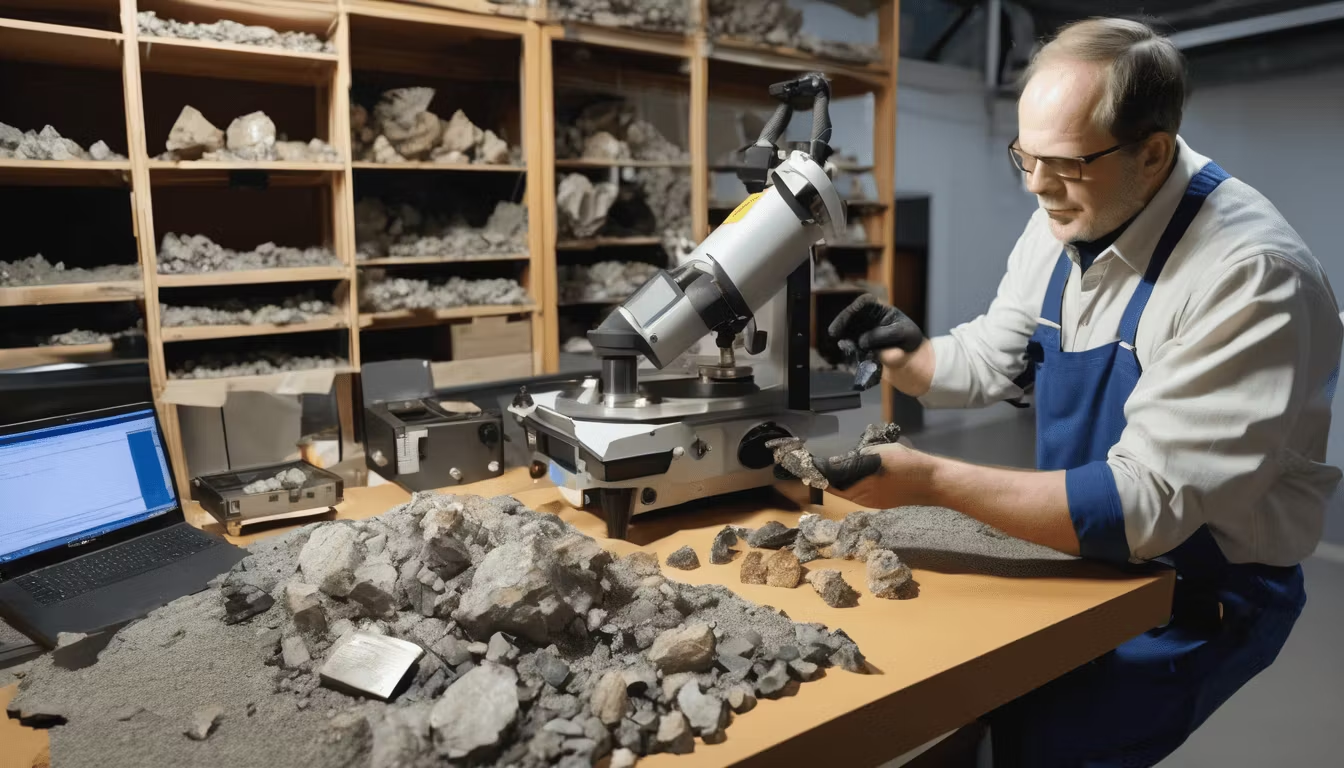
When sourcing specialty foundry sands, quality assurance is non-negotiable. Premium suppliers, such as those with proven foundry supply expertise, maintain rigorous testing protocols to ensure consistent performance.
Key quality parameters include:
- Particle Size Distribution: AFS standards (20-200 mesh) with tight distribution for predictable mold behavior
- Chemical Composition: Verified ZrO₂ content (65%+ for zircon) through X-ray fluorescence (XRF) analysis
- Loss on Ignition (LOI): Moisture and volatile content < 0.5% for consistent flowability
- Bulk Density: Standardized compaction testing for mold strength prediction
- Permeability: AFS permeability number confirming gas escape capability
Reputable suppliers conduct SUCOFINDO lab testing and maintain ISO certifications to guarantee specification compliance and consistent quality across shipments.
Environmental and Sustainability Considerations
Modern foundries increasingly prioritize environmental responsibility. Both zircon and chromite sands offer sustainability advantages:
Zircon Sand Benefits: High reusability (70-90% recovery rates), minimal waste generation, and lower environmental impact due to reduced defect rates and smaller production volumes.
Chromite Sand Benefits: Natural mineral extraction, recyclable properties, and lower manufacturing energy intensity compared to synthetic alternatives.
Foundries should partner with suppliers committed to responsible sourcing and environmental stewardship. Verified sourcing from licensed mining operations with proper reclamation practices ensures compliance with environmental regulations and corporate sustainability goals.
How to Select Between Zircon and Chromite for Your Foundry
Decision Framework
Choose Zircon Sand If:
- Casting precision and surface finish are critical quality parameters
- Production volumes are moderate (small-to-medium batches)
- Your foundry produces aerospace, automotive precision, or high-value components
- You require universal compatibility with diverse alloy systems
- Thermal conductivity and rapid cooling are production advantages
- You can justify premium material costs through reduced finishing expenses
Choose Chromite Sand If:
- High-volume commodity casting production is your focus
- Cost per unit weight is the primary cost driver
- Your primary applications are ductile iron, gray iron, or steel casting
- Thermal shock resistance and controlled cooling rates are beneficial
- Post-casting finishing costs are secondary to material economics
- Your foundry operates on tight profit margins requiring maximum efficiency
Hybrid Approach: Blended Sand Systems
Many advanced foundries employ hybrid sand systems, combining zircon and chromite in strategic mold zones. Face sands use zircon for superior surface quality, while backup and intermediate sands incorporate chromite for cost optimization. This tiered approach maximizes quality while controlling overall material costs.
Sourcing Quality Specialty Foundry Sands: Indoalam's Advantage
Selecting a reliable supplier for specialty foundry sands is as critical as material selection itself. CV Indoalam Mineral Persada operates as a direct-from-mine supplier of premium zircon sand meeting stringent international foundry specifications.
Our advantages for foundry operations include:
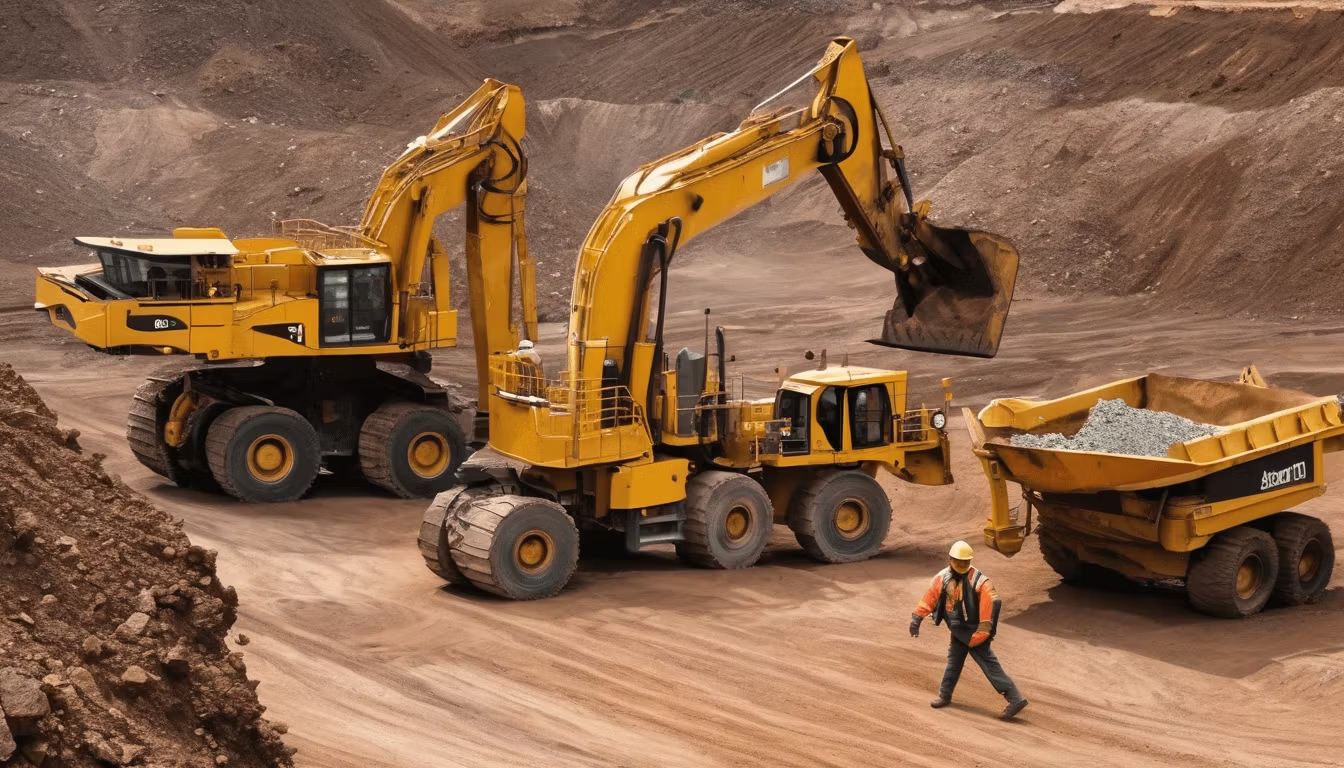
- Direct Mining Operations: Sourced from established mining regions in Sulawesi, Kalimantan, and Maluku, eliminating middlemen and ensuring transparent quality control
- Quality Assurance: SUCOFINDO laboratory testing certifies composition, particle size distribution, and performance characteristics before shipment
- Licensing and Compliance: IUP OPK mineral licenses and RKAB approval ensure legal sourcing and environmental compliance
- Flexible Supply Options: Volumes from 100 MT trial shipments to 2.5M MT annual contracts accommodate foundries of all sizes
- Competitive Pricing: Direct sourcing model enables competitive pricing without sacrificing quality standards
- Technical Support: Expert consultation on sand selection, formulation optimization, and performance troubleshooting
Conclusion: Making Your Foundry Sand Decision
The zircon vs chromite foundry sand comparison ultimately resolves to your specific operational requirements, budget constraints, and quality standards. Zircon sand delivers unmatched performance in precision, high-value casting applications, while chromite sand provides exceptional cost-effectiveness for high-volume commodity production.
The most successful foundries evaluate both materials objectively, considering total cost of ownership rather than material price alone. Many leverage hybrid approaches, using zircon where precision is critical and chromite where economics dominate.
When sourcing specialty foundry sands, partner with established suppliers offering SUCOFINDO-tested quality, transparent sourcing, and technical expertise. Whether you require premium zircon or cost-effective chromite, reliable supply and consistent quality are non-negotiable for competitive foundry operations.
For detailed specifications, sample testing, or bulk supply discussions regarding premium zircon sand and other specialty materials for your foundry operations, contact us today. Indoalam's team is prepared to support your casting success with quality materials and expert guidance.