Zircon Sand in Advanced Ceramics: Applications, Benefits & Sourcing
Understanding Zircon Sand and Its Role in Ceramic Manufacturing
The ceramics industry demands materials that combine exceptional thermal stability, chemical inertness, and optical properties. Zircon sand, derived from zirconium silicate (ZrSiO₄), has emerged as a critical raw material for advanced ceramic applications. With zirconium dioxide (ZrO₂) content exceeding 65%, zircon sand ceramics deliver superior performance characteristics that traditional silica-based materials cannot match.
For manufacturers producing high-end ceramics—from decorative tableware to industrial technical ceramics—understanding zircon sand applications is essential for maintaining competitive advantage. This comprehensive guide explores how zircon sand transforms ceramic production, why quality matters, and how to source reliable supplies for consistent manufacturing performance.
What is Zircon Sand? Composition and Properties
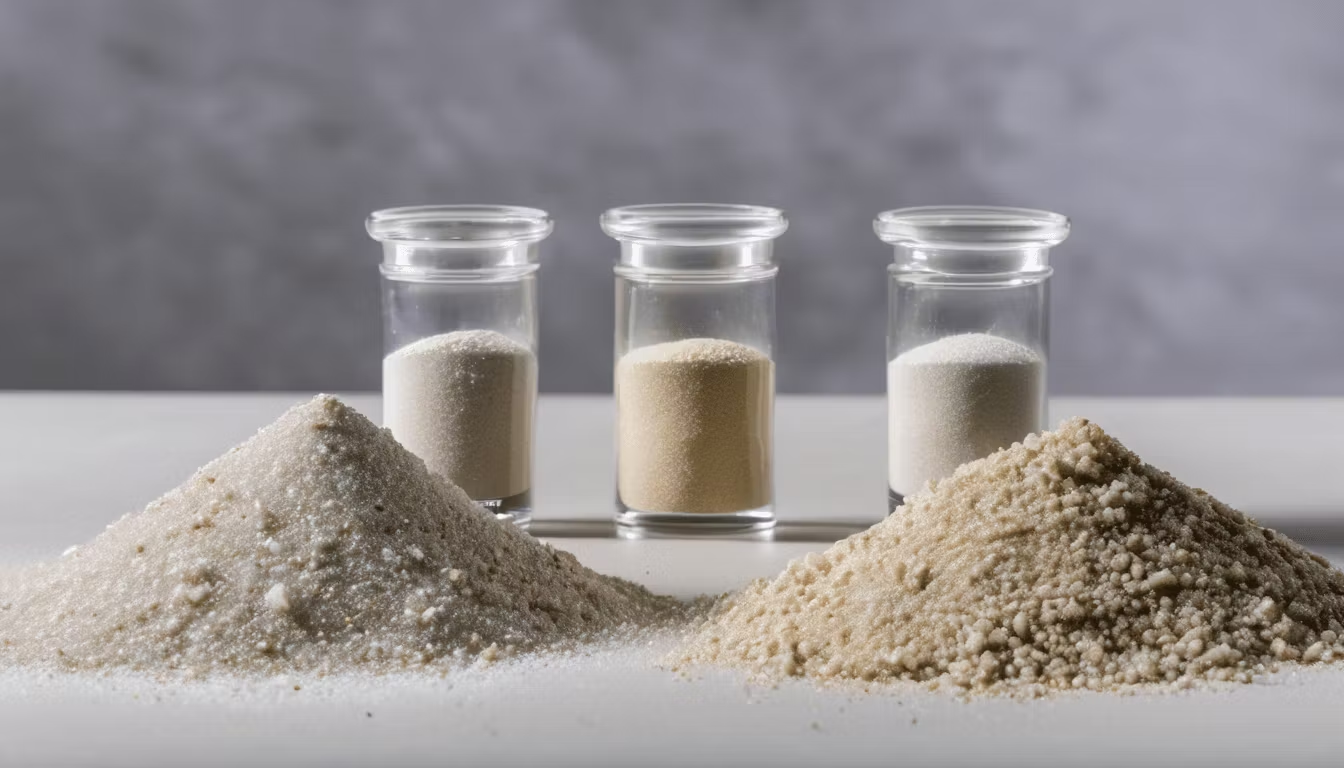
Zircon sand is a naturally occurring mineral composed primarily of zirconium silicate. Premium-grade zircon sand contains ZrO₂ concentrations of 65% or higher, making it an excellent source material for extracting zirconia compounds used throughout the ceramic industry.
Key physical properties include:
- High refractive index: 1.92-2.01, providing excellent opacity
- Thermal stability: Melting point around 2200°C
- Chemical inertness: Resistant to corrosive environments
- Particle consistency: Available in multiple mesh grades (8-200) for precise application requirements
- Density: Approximately 4.6-4.7 g/cm³
Unlike standard silica sand or quartz sand commonly used in glass and construction applications, zircon sand offers superior refractory characteristics and optical properties that justify its higher processing costs in specialized ceramic applications.
ZrO₂ Opacifier: The Core Function in Advanced Ceramics
Opacity and Whiteness Enhancement
The primary industrial use of zircon sand in ceramics revolves around its function as a ZrO₂ opacifier. When incorporated into ceramic glazes and bodies, zircon sand creates opacity by scattering light through its high refractive index difference with the ceramic matrix.
This opacification effect is particularly valuable for:
- Sanitaryware: Achieving the bright white finish required for toilets, sinks, and bathtubs
- Tableware: Creating uniform, attractive glazed surfaces for dinnerware and decorative pieces
- Tiles: Producing vibrant, consistent colors and glossy finishes
- Technical ceramics: Enhancing surface aesthetics while maintaining structural integrity
Manufacturers typically employ 6-10% zircon sand in glaze formulations to achieve optimal opacity without compromising thermal processing or final product durability. The amount required depends on desired opacity level and base glaze composition.
Color Development and Stability
Beyond opacity, ZrO₂ opacifiers influence color development in ceramic glazes. Zircon sand enables more vibrant and stable colors by preventing color migration during firing. This stability is crucial for high-volume production where batch consistency directly impacts product quality and customer satisfaction.
Zircon Sand Ceramics Applications Across Industries
Sanitaryware Production
The sanitaryware sector represents the largest industrial application for zircon sand. Manufacturers of porcelain toilets, bidets, sinks, and bathtubs rely on zircon-based glazes to achieve the distinctive bright white appearance consumers expect. The material's opacity eliminates the need for thicker clay bodies, reducing production costs while improving firing efficiency.
Industrial-scale sanitaryware producers in Southeast Asia consume significant volumes of premium zircon sand, making consistent supply from reliable sources essential for maintaining production schedules.
Decorative Tiles and Wall Ceramics
Tile manufacturers use zircon sand to create glazes that produce sharp color contrast and glossy finishes. Whether producing simple ceramic tiles or elaborate decorative pieces, the opacifying properties of zircon sand enable manufacturers to achieve precise color matching across production batches. This consistency is critical for large projects requiring thousands of matched tiles.
Refractory Zircon in High-Temperature Applications
Beyond decorative ceramics, refractory zircon serves specialized industrial functions. Zircon-containing refractories are used in:
- Glass furnaces: Withstanding extreme temperatures and chemical corrosion from molten glass
- Steel foundries: Lining crucibles and casting equipment
- Ceramic kilns: Creating durable kiln furniture and insulation materials
- Thermal barrier coatings: Protecting metal components in aerospace and industrial applications
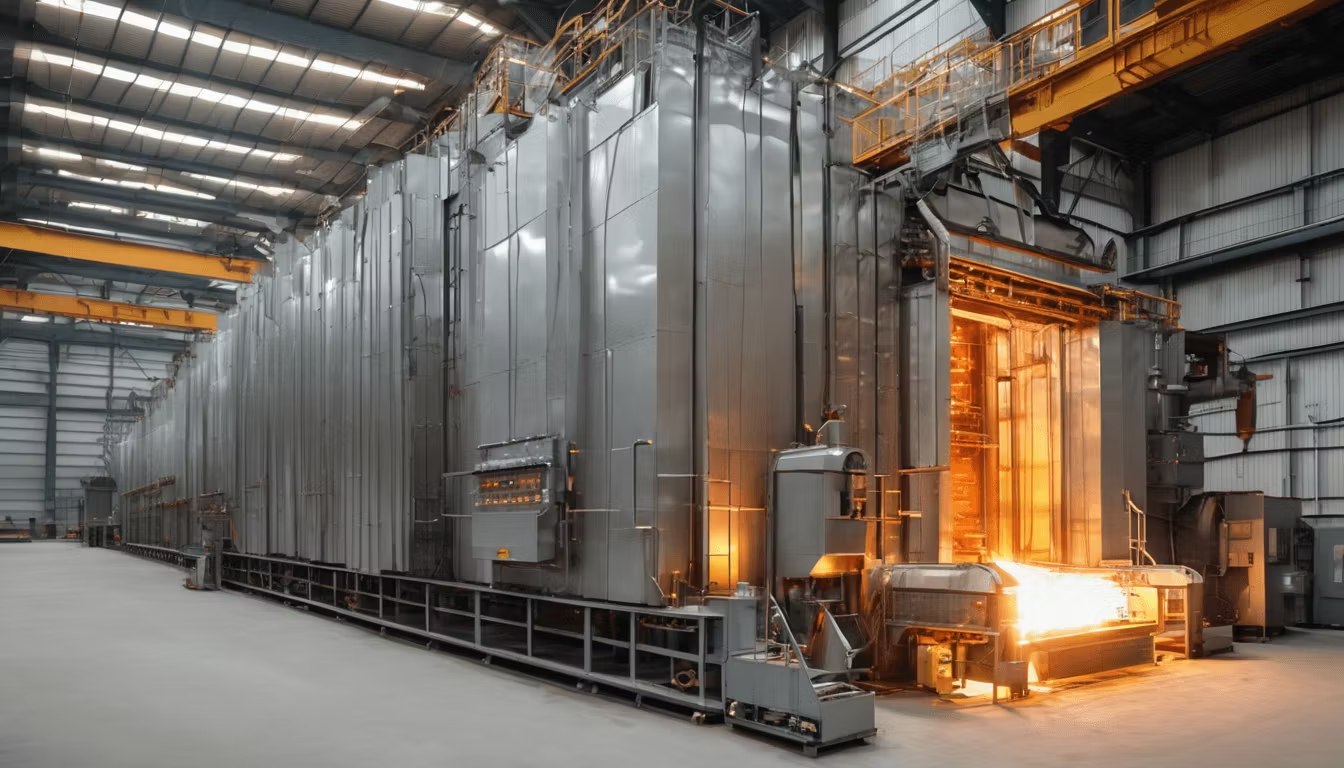
The thermal stability and chemical resistance of zircon make it superior to silica-based alternatives for these demanding applications. Refractory zircon products maintain structural integrity at temperatures where other ceramics would degrade.
Advanced Technical Ceramics
Engineers designing technical ceramics for automotive, electronics, and medical applications often incorporate zircon sand or zirconia compounds to enhance specific performance characteristics:
- Thermal conductivity: Zirconia coatings on engine components
- Electrical insulation: Circuit substrates and electronic packaging
- Biocompatibility: Dental ceramics and orthopedic implants
- Chemical resistance: Laboratory equipment and industrial vessels
Quality Standards and Material Specifications
Success in ceramic applications depends critically on consistent material quality. When evaluating zircon sand suppliers, specifying manufacturers should verify:
Chemical Composition
- ZrO₂ content (target: 65%+ for premium grades)
- SiO₂ percentage and consistency
- Iron oxide (Fe₂O₃) levels—lower is better for color-sensitive applications
- TiO₂ and other trace element concentrations
Physical Properties
- Particle size distribution according to mesh specification
- Bulk density and true density
- Moisture content (typically <1%)
Third-Party Testing
Reputable suppliers provide SUCOFINDO laboratory testing or equivalent international certification documenting material properties. This independent verification ensures batch-to-batch consistency and protects manufacturers from quality variations that could disrupt production schedules or compromise final product specifications.
Sourcing Zircon Sand: Key Considerations for B2B Buyers
Geographic Supply and Sustainability
Indonesia is a major global source of zircon sand, with deposits concentrated in Sulawesi (particularly Morowali and Konawe regions), Kalimantan, and Maluku. Indonesian zircon sand suppliers benefit from proximity to major Southeast Asian ceramic manufacturers, reducing logistics costs and supply chain complexity.
When sourcing from Indonesian suppliers, verify that operations comply with environmental regulations and possess appropriate mining licenses (IUP OPK—Izin Usaha Pertambangan Operasi Produksi). Sustainable sourcing practices increasingly matter to multinational manufacturers and end consumers.
Supply Consistency and Volume Flexibility
Ceramic manufacturers operate across diverse scales—from artisanal producers requiring 100 metric tons annually to industrial facilities needing consistent monthly supplies of thousands of tons. Ideal suppliers offer zircon sand in volumes ranging from trial shipments to long-term contracts supporting 2.5+ million metric ton annual capacity.
This flexibility enables manufacturers to:
- Test new suppliers without substantial financial commitment
- Scale production based on market demand
- Maintain competitive pricing through volume negotiations
Licensing and Regulatory Compliance
Indonesian suppliers should possess:
- IUP OPK mining licenses for mineral extraction
- RKAB (Rencana Kerja dan Anggaran Biaya) approval from mining authorities
- ET Batubara or equivalent environmental compliance certification
- Third-party laboratory testing (SUCOFINDO or international equivalent)
These certifications ensure legal operation, environmental responsibility, and material quality accountability.
Cost Optimization Strategies for Ceramic Manufacturers
Zircon sand represents a significant raw material cost in ceramic production. Strategic sourcing decisions can improve profitability:
- Direct sourcing: Purchasing directly from mining operations eliminates middleman markups, typically reducing costs 15-25%
- Volume commitments: Long-term supply agreements often secure better pricing than spot market purchases
- Specification optimization: Using the minimum zircon sand content effective for your application reduces material costs without compromising quality
- Quality consistency: Reliable suppliers reduce production losses from batch failures, indirectly reducing per-unit material costs
The Future of Zircon Sand in Advanced Ceramics
Emerging trends are reshaping the zircon sand market:
- Sustainability focus: Environmental concerns are driving investment in more efficient extraction and processing technologies
- Technical ceramics growth: Expanding demand from automotive and electronics sectors is increasing demand for ultra-pure, engineered zircon products
- Cost-performance optimization: Manufacturers increasingly seek zircon alternatives or reduced-zircon formulations without sacrificing performance
Despite these trends, high-quality zircon sand remains irreplaceable for premium ceramic applications where opacity, thermal stability, and chemical resistance are non-negotiable.
Partnering with CV Indoalam Mineral Persada for Your Zircon Sand Supply
CV Indoalam Mineral Persada has established itself as a trusted supplier of premium zircon sand and related materials to ceramic manufacturers throughout Southeast Asia. Founded with deep expertise in mineral sourcing and processing, the company offers distinct advantages:
- Direct mining operations: Eliminates intermediaries, ensuring competitive pricing and supply reliability
- Comprehensive certification: Full IUP OPK licensing, RKAB approval, and SUCOFINDO laboratory testing
- Flexible supply models: From trial shipments of 100 metric tons to annual supply contracts exceeding 2.5 million metric tons
- Proven track record: Supplying major nickel smelters, industrial parks, and manufacturers across Indonesia since 2022
- Quality consistency: Rigorous quality control and third-party verification ensure batch-to-batch reliability
Whether you're developing new ceramic formulations, scaling production, or seeking to optimize material costs, contact us to discuss your specific requirements. Our technical team can provide samples, detailed specifications, and customized supply solutions that align with your manufacturing objectives.
For more information about us and our full range of mineral products including silica sand, aluminium ingot, and other industrial materials, explore our comprehensive product catalog and discover why leading manufacturers trust CV Indoalam for their critical raw material needs.