Zircon Foundry Sand: Green Sand & Shell Mold Applications

Zircon Foundry Sand: Premium Material for Advanced Casting Solutions
The foundry industry demands materials that withstand extreme temperatures, maintain dimensional accuracy, and produce superior surface finishes. Zircon sand has emerged as a critical material in modern foundry operations, particularly for green sand and shell mold casting applications. With its exceptional refractory properties and thermal stability, zircon foundry sand delivers consistent results across diverse casting requirements.
As foundry operations become increasingly sophisticated, material selection directly impacts casting quality, production efficiency, and overall competitiveness. This comprehensive guide explores zircon sand's role in foundry applications and how it transforms casting performance.
Understanding Zircon Sand: Properties and Foundry Advantages
What Makes Zircon Sand Ideal for Foundries?
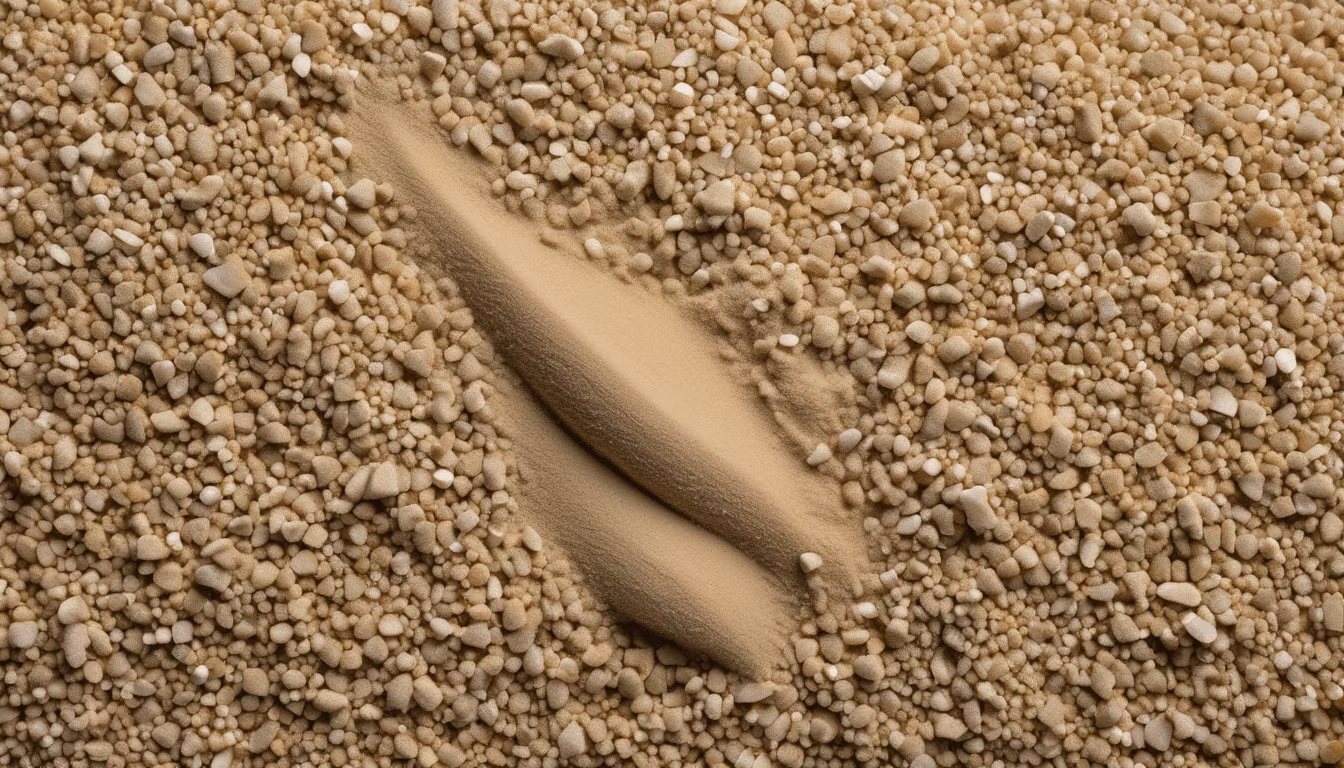
Zircon sand (ZrSiO₄) is a naturally occurring mineral renowned for its exceptional thermal and chemical stability. Unlike conventional silica sand, zircon possesses superior refractoriness, making it the material of choice for high-performance casting applications. The mineral's crystalline structure maintains integrity at temperatures exceeding 1700°C, a critical requirement when molten metal contacts foundry surfaces.
Key physical properties that define zircon foundry sand include:
- High melting point: Remains stable above 2000°C without degradation
- Low thermal expansion: Minimizes hot cracking and casting defects
- Superior hardness: Resists erosion from turbulent metal flow
- Chemical inertness: Non-reactive with ferrous and non-ferrous alloys
- Excellent density: Improves mold strength and dimensional stability
These characteristics position zircon sand as a premium alternative to conventional silica sand, particularly where casting complexity and material specifications demand superior performance.
Zircon Sand Specifications and Grades
Quality foundry operations require consistent, lab-tested zircon sand meeting stringent specifications. Premium zircon sand typically contains ZrO₂ content of 65% or higher, with particle size distribution carefully controlled to match specific casting requirements. Mesh grades commonly range from 50-200, allowing foundries to select optimal grain sizes for their molding processes.
Critical specifications for foundry-grade zircon include:
- ZrO₂ content: 65% minimum (premium grades: 67%+)
- SiO₂ content: 30-34%
- Loss on ignition: Less than 1%
- Particle size uniformity coefficient: 1.3-1.5
- Bulk density: 2.8-3.1 g/cm³
All testing should be performed by independent laboratories using standardized methods to ensure material compliance with foundry specifications and customer requirements.
Zircon Sand in Green Sand Casting
Green Sand Molding Process Overview
Green sand casting remains the most widely used molding technique in foundries worldwide. The process utilizes moist sand mixed with clay binders and water to create molds that retain their shape without baking. For standard ferrous castings, silica sand has traditionally dominated the market. However, when casting complexity increases or surface finish requirements become critical, zircon foundry sand offers distinct advantages.
Performance Benefits in Green Sand Applications
Zircon sand delivers multiple advantages in green sand casting environments:
Enhanced Surface Finish: Zircon's higher density and hardness create smoother mold surfaces, resulting in superior casting surface quality and reduced post-casting machining requirements. Castings produced with zircon-containing molds exhibit lower roughness values (Ra 2.5-4.0 µm vs. 4.0-6.0 µm with traditional silica sand).
Reduced Thermal Shock: The mineral's low thermal expansion coefficient minimizes stress development during metal pouring and solidification. This property particularly benefits castings with varying wall thicknesses where differential cooling rates create internal stress.
Improved Dimensional Accuracy: Zircon sand's rigid crystal structure maintains dimensional stability throughout the casting cycle. High-precision castings requiring tight tolerances benefit significantly from this characteristic.
Versatile Grain Sizing: Foundries can utilize zircon sand as a complete replacement sand or blend it with conventional silica sand at strategic percentages (typically 10-30% zircon in blended formulations) to balance performance improvements with cost considerations.
Green Sand Formulation Strategies
Successful zircon sand integration in green sand systems requires thoughtful formulation adjustments. The mineral's higher density necessitates slight modifications to traditional green sand recipes:
- Clay content: Reduce by 0.5-1.0% due to zircon's superior binding properties
- Water content: Adjust based on final bulk density targets; zircon-rich molds may require 1-2% less water
- Bentonite type: Sodium bentonite works optimally with zircon sand blends
- Reclamation rates: Zircon allows for extended sand reclamation cycles without performance degradation
Zircon Sand in Shell Mold Casting
Shell Mold Process Fundamentals
Shell mold casting represents a precision casting technique producing exceptional surface finishes and dimensional accuracy. The process involves coating sand particles with thermosetting resin, depositing the coated sand onto a heated pattern, and creating a thin shell structure through heat-induced polymerization. Zircon sand's properties make it exceptionally well-suited for premium shell mold applications.
Why Zircon Excels in Shell Mold Foundries
Shell mold casting demands materials capable of withstanding rapid thermal cycling and high-energy metal impact. Zircon sand addresses these requirements more effectively than conventional sands:
Superior Erosion Resistance: The hardness and density characteristics that define zircon sand create exceptional resistance to erosion from turbulent metal flow within the mold cavity. This resistance becomes particularly valuable in complex castings with narrow sections and high metal velocity.
Thermal Cycle Stability: Shell molds experience extreme thermal gradients—from ambient temperature during coating to 200-250°C during curing to 1000°C+ during metal pouring. Zircon's thermal characteristics minimize crack propagation and maintain structural integrity throughout these cycles.
Excellent Gas Permeability: Properly sized zircon sand maintains optimal porosity for gas escape without compromising mold strength. This balance reduces casting defects related to gas entrapment while maintaining the dimensional precision shell molding promises.
Extended Resin Life: Zircon sand's inert nature minimizes chemical reactions with thermosetting resins, allowing for extended resin bath life and reduced material waste during production.
Shell Mold Zircon Sand Specifications
Shell mold applications typically specify finer zircon sand grades (100-200 mesh) to maximize surface finish quality. Key specifications for shell mold zircon include:
- Particle size: 100-200 mesh (primary grades)
- Uniformity coefficient: 1.2-1.4
- ZrO₂ content: 65-68%
- Loose bulk density: 2.75-2.95 g/cm³
- Surface area: 1.8-2.2 m²/g
- Moisture content: Less than 0.5%
Cost-Benefit Analysis: When to Choose Zircon Foundry Sand
Investment Considerations
Zircon sand commands a premium price relative to conventional silica sand—typically 3-5 times higher per unit weight. However, comprehensive cost analysis often reveals favorable ROI when considering casting quality improvements, reduced rework rates, and enhanced production efficiency.
Foundries should evaluate zircon sand adoption for applications including:
- High-precision castings with tight tolerances
- Complex geometries with multiple thin sections
- Castings requiring superior surface finishes
- Non-ferrous metal casting (aluminum, magnesium alloys)
- Specialty alloy production where dimensional stability proves critical
- Premium product lines targeting cost-insensitive markets
Return on Investment Metrics
Smart foundry managers evaluate zircon adoption through multiple metrics: scrap rate reduction (typically 2-8% improvement), surface finish improvement (20-40% reduction in post-casting machining), and production cycle optimization (faster cooling reduces total cycle time). When these factors combine, the material premium often proves economical.
Quality Assurance and Sourcing Premium Zircon Foundry Sand
Testing and Certification Standards
Foundry-grade zircon sand must comply with rigorous quality standards verified through independent laboratory testing. Comprehensive testing protocols should include particle size distribution analysis, chemical composition verification via X-ray fluorescence, bulk density measurement, and refractoriness testing.
Leading suppliers provide SUCOFINDO-certified testing documentation confirming material specifications and consistent quality across shipments. This certification ensures compliance with Indonesian mining standards and international quality expectations.
Sourcing from Reliable Indonesian Suppliers
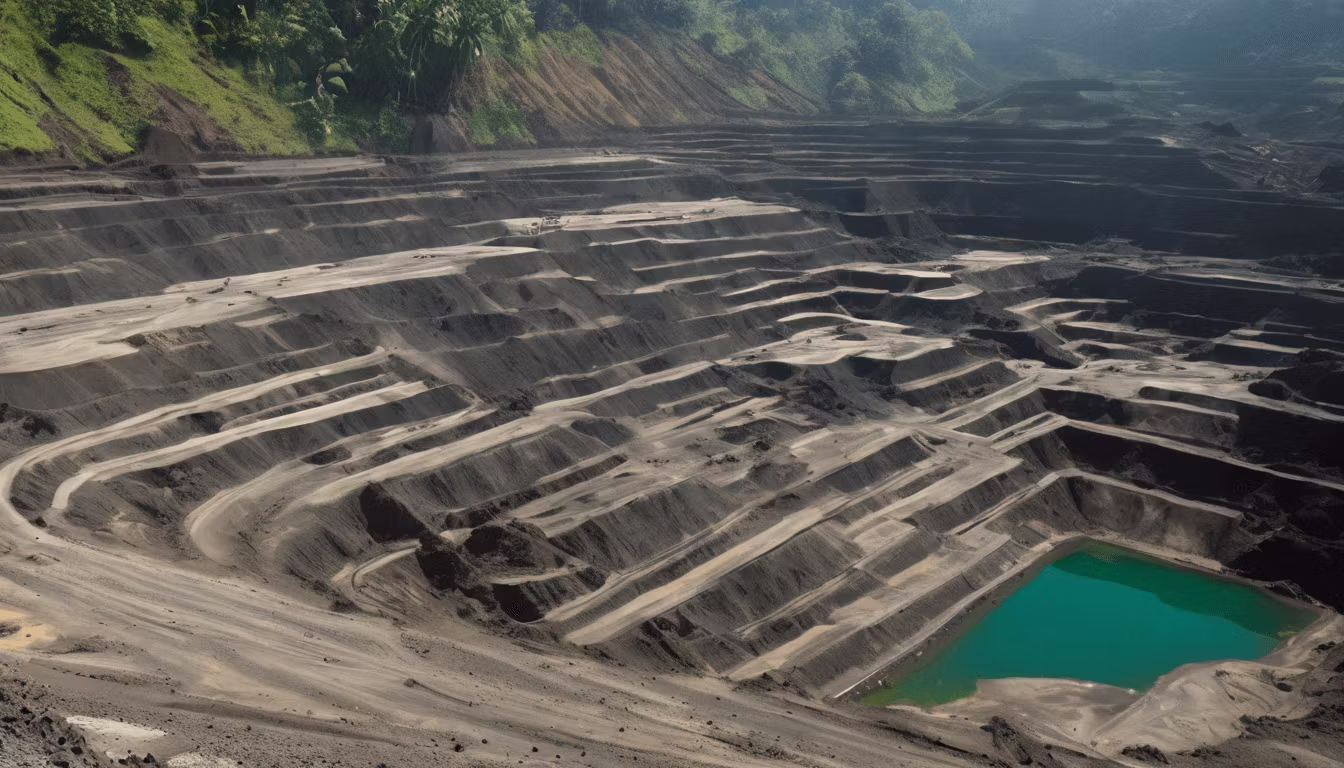
Indonesia possesses abundant zircon reserves concentrated in Sulawesi, Kalimantan, and eastern regions. Direct sourcing from licensed mining operations ensures material consistency, reduces supply chain complexity, and provides transparent pricing structures. Reputable Indonesian suppliers maintain full licensing (IUP OPK designation) and RKAB approval, ensuring sustainable sourcing practices and regulatory compliance.
When evaluating potential zircon sand suppliers, foundries should verify:
- IUP OPK mining licenses and regulatory approvals
- SUCOFINDO testing certifications for recent shipments
- Documented quality control procedures and testing frequency
- Flexible supply arrangements accommodating 100 MT trial orders through multi-million ton annual contracts
- Transparent specifications and technical documentation
- Reliable delivery schedules and supply continuity commitment
Implementation Best Practices
Transitioning to Zircon Sand Molding Systems
Successful zircon sand implementation requires systematic approach rather than wholesale replacement. Pilot programs testing zircon sand blends (10-20% zircon mixed with existing sand inventory) allow foundries to optimize formulations and train operators without disrupting production schedules.
Progressive implementation strategies include:
- Start with premium casting grades or problem products
- Conduct controlled trial runs with documented results
- Adjust equipment settings and process parameters based on pilot results
- Document performance improvements in scrap rates, surface finish, and production metrics
- Gradually increase zircon sand percentages as operators gain proficiency
- Monitor sand reclamation effectiveness and equipment wear patterns
Integration with Existing Equipment
Zircon sand's higher density requires minimal equipment modifications. Standard sand handling systems, molding machines, and reclamation equipment operate effectively with zircon-containing formulations. The primary adjustment involves sand delivery rates and compaction pressures, which operators can fine-tune based on mold density targets.
The Future of Zircon in Foundry Applications
As foundry operations face increasing pressure to improve quality while managing costs, zircon sand's role continues expanding. Advanced casting requirements in aerospace, automotive, and precision manufacturing segments drive demand for superior foundry materials. Emerging applications in complex alloy casting and near-net-shape manufacturing further expand zircon sand market opportunities.
Sustainability considerations also favor zircon adoption—the mineral's extended reclamation cycle reduces waste and material consumption, supporting environmental objectives while improving economics.
Partner with Indonesian Mining Excellence
CV Indoalam Mineral Persada stands ready to supply premium zircon foundry sand meeting exacting specifications. As a licensed Indonesian mining and mineral trading company, we maintain direct relationships with established mining operations across Sulawesi and eastern regions, ensuring consistent quality and reliable supply.
Our commitment to foundry excellence includes:
- SUCOFINDO-certified lab testing on all shipments
- IUP OPK licensing and RKAB regulatory compliance
- Flexible supply arrangements from 100 MT trial orders to 2.5 million metric ton annual contracts
- Transparent specifications and technical documentation
- Dedicated support for foundry process optimization
Whether optimizing green sand formulations for enhanced casting performance or implementing shell mold precision requirements, premium zircon sand from Indonesian sources delivers the reliability and quality modern foundries demand. Contact us today to discuss your zircon sand requirements and discover how premium material sourcing transforms foundry performance.