Zircon Flour for Precision Casting: Complete Shell Mold Guide
Understanding Zircon Flour in Precision Casting Applications
Zircon flour has become an indispensable material in the precision casting industry, particularly for shell mold investment casting processes. As manufacturers demand increasingly complex components with tighter tolerances, the role of high-quality zircon flour continues to grow. This comprehensive guide explores how zircon flour transforms casting operations and why sourcing from reliable suppliers matters for your production success.
Precision casting, also known as investment casting or lost-wax casting, requires materials that can withstand extreme temperatures while maintaining dimensional accuracy. Zircon flour—a finely milled form of zircon sand—serves as both a primary and backup refractory material in shell mold systems. Its exceptional thermal properties make it the preferred choice for aerospace, automotive, medical device, and industrial equipment manufacturers worldwide.
What is Zircon Flour and Why It Matters for Shell Mold Casting
Composition and Properties of Zircon Flour
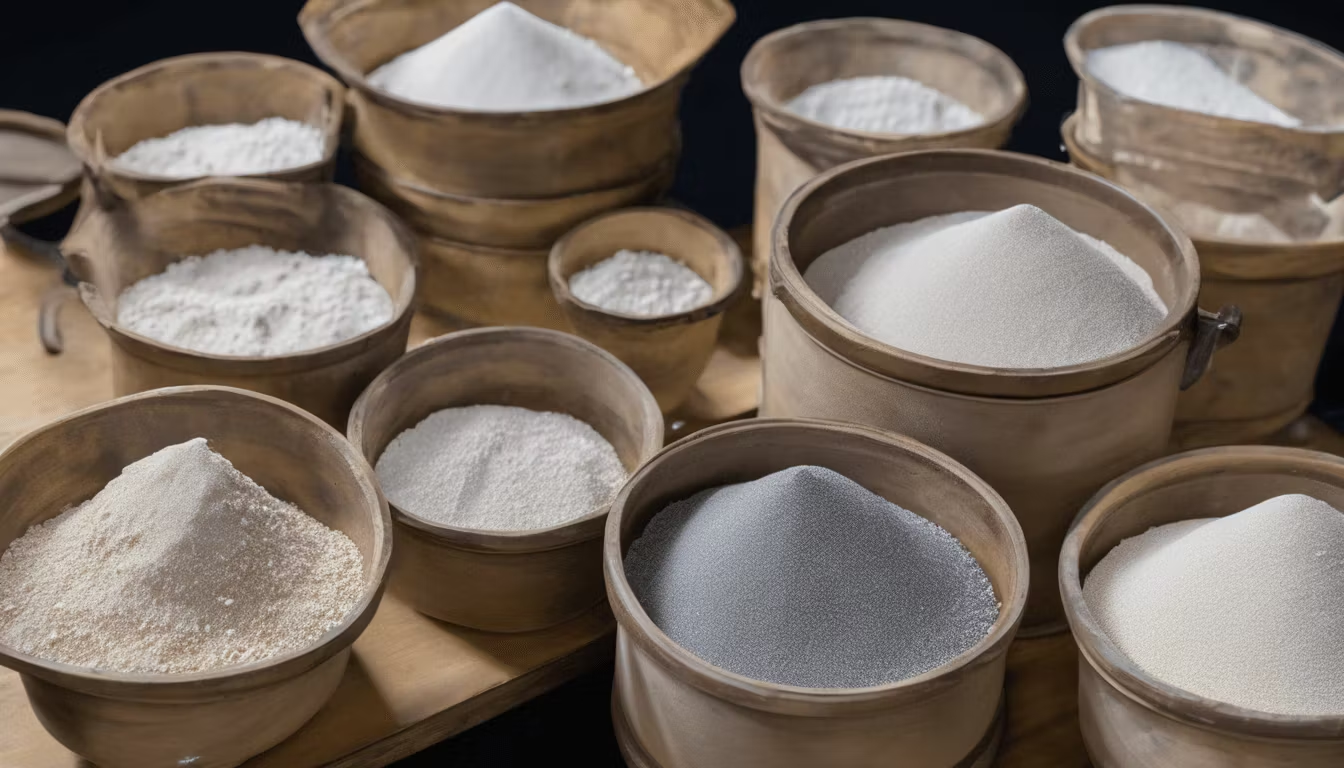
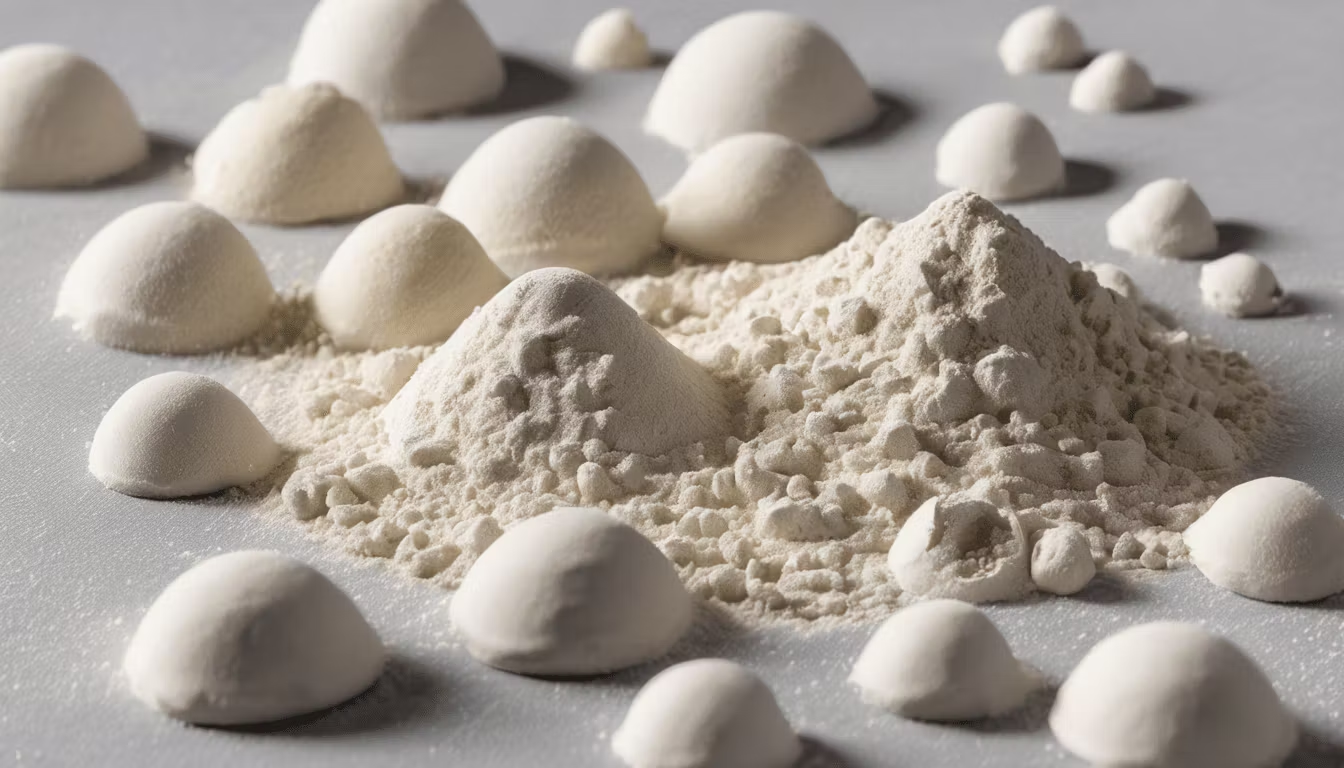
Zircon flour is produced by grinding zircon sand to extremely fine particle sizes, typically ranging from 200 mesh to 325 mesh and beyond. The primary chemical composition consists of zirconium silicate (ZrSiO₄), with high-grade zircon flour containing ZrO₂ content of 65% or higher. This exceptional composition delivers several critical advantages:
Thermal Stability: Zircon flour maintains structural integrity at temperatures exceeding 1,800°C, making it ideal for casting superalloys and high-performance metals. Unlike traditional silica sand, zircon resists thermal shock and expansion cracking.
Low Thermal Expansion: With a coefficient of linear thermal expansion far lower than silica, zircon flour minimizes dimensional distortion during the casting cycle. This property directly translates to improved casting accuracy and reduced scrap rates.
Chemical Inertness: Zircon flour exhibits exceptional resistance to chemical attack from molten metals and alloys. It doesn't react with aluminum, steel, superalloys, or titanium, ensuring clean metal surfaces and reducing defect rates.
High Density: The material's high specific gravity provides excellent suspension in zircon slurry formulations, ensuring uniform distribution throughout the shell mold system.
The Role of Zircon Flour in Shell Mold Construction
Shell mold investment casting involves building up multiple ceramic layers on a wax pattern. Zircon flour plays two critical roles:
Primary Refractory Stucco: Zircon flour serves as the primary stucco in the first few coating layers that directly contact the molten metal. This position demands maximum heat resistance and chemical stability.
Backup Refractory Stucco: In subsequent layers, zircon flour provides structural support and additional thermal insulation, protecting the mold from thermal shock during pouring.
Zircon Slurry Formulation: Creating the Perfect Casting Mixture
Components of Effective Zircon Slurry Systems
A well-engineered zircon slurry combines zircon flour with binders and other refractory materials. The standard composition includes:
Zircon Flour (Primary Component): Comprises 35-50% of the slurry by weight, providing the refractory backbone.
Colloidal Silica Binder: Typically 8-15% by weight, colloidal silica ensures particle adhesion and shell strength. Quality binders improve mold permeability and reduce gas entrapment.
Water and Additives: The remaining percentage includes deionized water and proprietary additives that enhance flow properties, reduce viscosity, and improve coating adhesion.
Supplementary Refractories: Some formulations incorporate fused silica or alumina flour to optimize thermal properties for specific alloy systems.
Critical Slurry Specifications for Shell Mold Success
Achieving consistent casting results requires precise control of zircon slurry parameters:
Viscosity: Optimal range typically falls between 85-95 seconds (Marsh funnel test). Viscosity that's too high causes uneven coating buildup; too low results in inadequate shell thickness.
Specific Gravity: Most foundries target 1.55-1.65 specific gravity for zircon slurry. This density range ensures proper suspension of zircon flour particles without excessive settling.
Particle Size Distribution: Zircon flour gradation significantly impacts slurry performance. A well-balanced distribution—combining fine particles for surface finish with coarser particles for strength—produces superior shell molds.
pH Level: Maintaining pH between 9-10 optimizes binder performance and prevents particle agglomeration within the slurry.
Superior Performance Benefits of Zircon Flour in Precision Casting
Enhanced Casting Surface Quality
Zircon flour's fine particle size and chemical inertness dramatically improve casting surface finishes. When used in the primary face coat, zircon produces Ra surface roughness values as low as 1.6-3.2 micrometers. This superior surface quality reduces post-casting machining requirements, lowering production costs and lead times.
The material's inability to react with molten metal eliminates metal-mold chemical reactions that typically create casting defects like scabs and inclusions. Aerospace and medical device manufacturers particularly value this benefit when producing complex geometries requiring minimal rework.
Dimensional Accuracy and Tolerance Achievement
Precision casting applications demand accuracy within ±0.005 inches for critical dimensions. Zircon flour's minimal thermal expansion coefficient ensures shell molds maintain precise dimensions throughout the casting cycle. This stability proves especially valuable when casting thin-walled sections or complex undercuts where traditional materials would experience distortion.
The low thermal expansion also reduces the thermal stress between the mold and cooling casting, minimizing cracking and warping defects in the final component.
Extended Mold Life and Cost Efficiency
While premium zircon flour commands higher initial material costs compared to silica-based alternatives, the extended mold life and reduced scrap rates deliver superior return on investment. Zircon molds tolerate higher pouring temperatures and faster metal flow rates without experiencing degradation. This capability allows foundries to increase production throughput while maintaining quality standards.
Cost analysis across multiple industries consistently shows that zircon-based shell molds generate 15-25% lower total casting costs through reduced rework, scrap elimination, and increased mold durability.
Selecting High-Quality Zircon Flour for Your Casting Operations
Critical Quality Specifications and Testing Standards
Not all zircon flour meets the demanding requirements of precision casting. When evaluating suppliers, prioritize these essential specifications:
Zirconia Content (ZrO₂): Minimum 65% ZrO₂ content ensures optimal refractory performance. Lower-grade zircon flour produces inferior thermal stability and increased casting defects.
Particle Size Consistency: Zircon flour should demonstrate tight particle size distribution, with 90% of particles falling within a specified range. This consistency ensures predictable slurry behavior and coating uniformity.
Iron Content: Iron oxide impurities should remain below 0.5% to prevent color contamination and unwanted chemical reactions in certain alloy systems.
Moisture Content: Quality zircon flour maintains moisture below 0.5%, preventing particle agglomeration and slurry consistency problems.
Loss on Ignition: This value should typically remain below 1%, indicating minimal organic contamination and water of hydration.
Testing and Certification Requirements
Reputable suppliers provide independent laboratory testing verifying material specifications. Look for certifications from established testing organizations that validate zircon flour composition, particle size distribution, and refractory performance. Testing should include:
• X-ray fluorescence (XRF) analysis for chemical composition verification
• Laser particle size analysis for gradation confirmation
• Standard refractory property testing (thermal expansion, refractoriness under load)
• Slurry performance testing (viscosity stability, coating adhesion)
When sourcing zircon sand and flour products, verification through independent testing ensures consistent performance across production runs. This investment in quality assurance prevents costly casting failures and production delays.
Comparing Zircon Flour to Alternative Refractory Materials
Zircon Versus Silica-Based Refractories
Traditional silica sand-based shell molds offer lower material costs but significant performance limitations. Silica exhibits higher thermal expansion coefficients, creating dimensional distortion during casting cycles. Additionally, silica reacts chemically with certain molten alloys, particularly titanium and reactive metals, generating surface defects and requiring extensive post-casting cleanup.
Zircon flour's superior thermal stability and chemical inertness address these limitations, making it the preferred choice for demanding applications despite higher material costs.
Zircon Versus Alumina-Based Alternatives
Alumina refractories provide reasonable thermal performance but fall short of zircon's capabilities in several areas. Alumina exhibits higher thermal expansion than zircon, limiting dimensional accuracy. Furthermore, alumina can chemically interact with certain alloy systems, particularly nickel-based superalloys commonly used in aerospace applications.
Zircon's proven performance with superalloys, titanium alloys, and other reactive metals makes it the superior choice for the most demanding precision casting applications.
Industry Applications: Where Zircon Flour Excels
Aerospace and Defense Components
Aerospace manufacturers rely on zircon flour shell molds for casting complex superalloy components including turbine blades, vanes, and combustor liners. The material's exceptional thermal stability enables production of thin-walled sections with intricate cooling passages—impossible to achieve with traditional refractories.
Automotive High-Performance Parts
Turbocharger turbine wheels, high-strength aluminum components, and other performance-critical automotive parts benefit from zircon flour's superior casting precision. The material enables production of components with tight dimensional tolerances and excellent surface finishes, reducing secondary machining operations.
Medical Device Manufacturing
Precision-cast medical implants and surgical instruments demand exceptional surface quality and biocompatibility. Zircon flour eliminates surface defects and chemical contamination risks, making it ideal for these critical healthcare applications.
Industrial Equipment and Heavy Machinery
Pump components, valve bodies, and other industrial castings produced with zircon flour exhibit superior service life and reliability due to improved internal structure and surface quality.
Best Practices for Implementing Zircon Flour in Your Foundry
Transitioning to Zircon-Based Shell Systems
If your foundry currently uses silica-based or other refractory systems, transitioning to zircon flour requires careful planning:
Conduct Trial Production Runs: Begin with limited production using zircon flour to validate compatibility with your specific metal systems and casting geometries. This approach minimizes risk while gathering performance data.
Optimize Slurry Formulation: Work with your material supplier to develop zircon slurry specifications optimized for your specific equipment and casting requirements. Slurry formulation significantly impacts final results.
Train Your Production Team: Ensure operators understand how zircon flour differs from previous materials in terms of handling, mixing, and application procedures.
Adjust Pouring Parameters: Zircon molds may tolerate different pouring temperatures and speeds compared to traditional systems. Optimize these parameters during trial production.
Storage and Handling Guidelines
Maximize zircon flour performance through proper storage:
• Store in moisture-controlled environments to prevent water absorption
• Maintain storage temperatures above 15°C to prevent moisture condensation
• Use sealed containers to protect against contamination
• Implement first-in, first-out inventory rotation
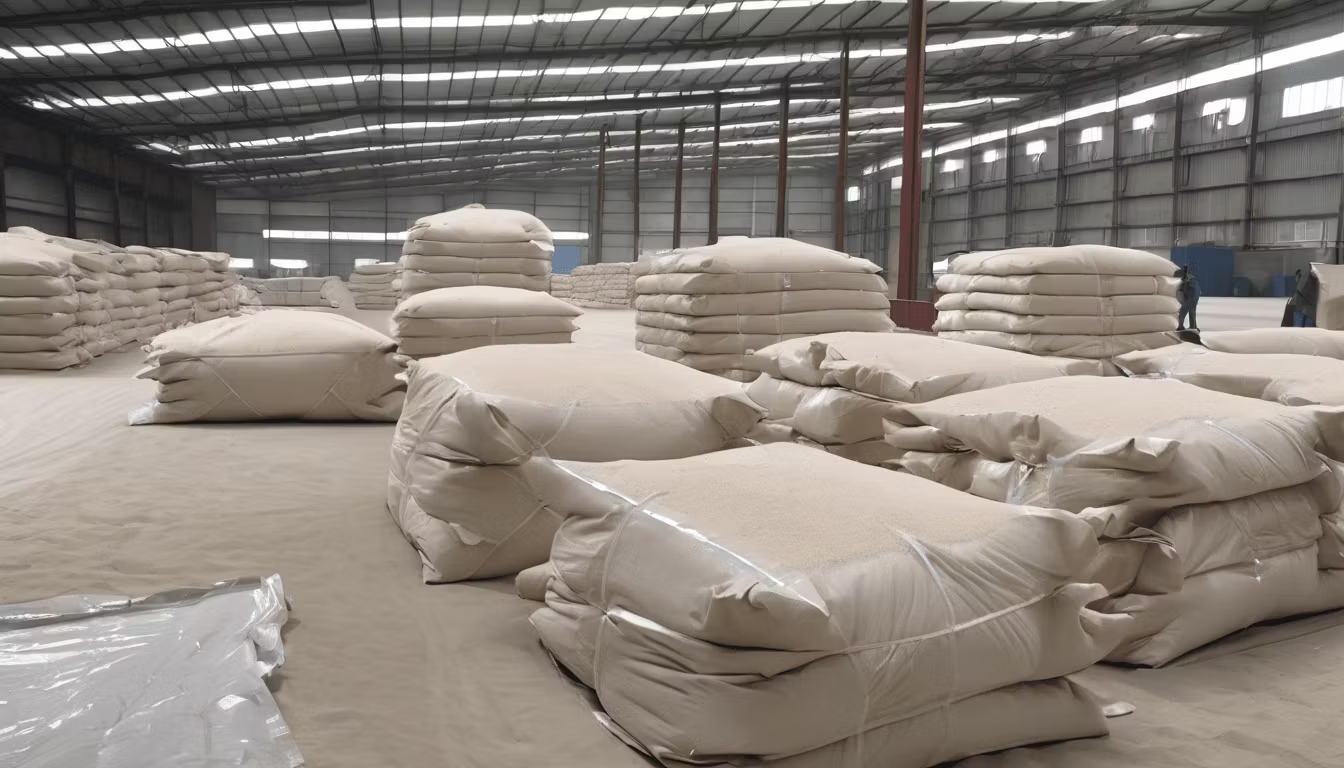
• Avoid direct floor storage that promotes moisture uptake
Sourcing Reliable Zircon Flour: Partner with Indoalam
CV Indoalam Mineral Persada stands as a trusted supplier of premium zircon sand and flour products throughout Indonesia and internationally. With direct sourcing from select mining regions across Sulawesi, Kalimantan, and Maluku, we deliver consistent, laboratory-tested materials meeting the most demanding precision casting specifications.
Our advantages for your operations include:
SUCOFINDO Laboratory Verification: Every shipment undergoes independent testing confirming zirconia content (65%+), particle size distribution, and refractory properties. This third-party verification ensures material consistency and performance reliability.
IUP OPK and RKAB Licensing: Full regulatory compliance and licensing demonstrate our commitment to legal operations and material traceability throughout the supply chain.
Flexible Supply Options: Whether you require 100-metric-ton trial quantities to validate zircon flour performance or sustained supply agreements supporting 2.5 million metric tons annually, we accommodate your operational needs.
Direct-from-Source Pricing: By sourcing directly from mining operations, we eliminate middleman markups, delivering competitive pricing without compromising material quality.
Technical Support: Our team provides expert guidance on slurry formulation, implementation strategies, and optimization to maximize performance within your specific casting processes.
Beyond zircon products, we supply complementary materials for casting operations. Our silica sand options serve backup coating layers, while aluminium ingot supplies support foundry operations producing aluminum castings. For foundries working with nickel-containing alloys, our sourcing expertise in materials extends across multiple mineral categories.
Taking the Next Steps: Implement Zircon Flour in Your Production
The decision to upgrade to zircon flour-based shell mold systems represents a significant commitment to casting quality and operational efficiency. The evidence is clear: foundries investing in premium zircon flour achieve measurably superior results in casting precision, surface quality, dimensional accuracy, and overall cost performance.
Your next step is straightforward: contact us today to discuss your specific casting requirements, request samples, and explore how zircon flour can transform your production capabilities. Indoalam's technical team stands ready to support your transition to premium precision casting materials.
Whether you're currently evaluating alternative refractories or seeking to upgrade from existing suppliers, premium zircon flour from Indoalam delivers the material quality, supply reliability, and technical partnership your precision casting operations demand.