Stainless Steel & Nickel: How Ore Quality Impacts Final Product

Introduction: The Critical Link Between Nickel Ore Quality and Stainless Steel Performance
The global stainless steel industry produces over 30 million metric tons annually, with nickel serving as a cornerstone element in its metallurgical composition. Yet many manufacturing professionals overlook a fundamental reality: the quality of nickel ore extracted from the ground directly determines the performance, durability, and commercial value of the final stainless steel product.
This relationship between raw material quality and end-product specifications isn't merely theoretical—it's an operational reality that impacts production costs, waste management, and customer satisfaction across the entire value chain. Understanding this connection is essential for foundries, mills, and manufacturers who depend on consistent, high-performance stainless steel alloys.
At CV Indoalam Mineral Persada, we've spent years sourcing premium nickel ore from Indonesia's richest mineral deposits in Sulawesi and Kalimantan. Our experience reveals why ore quality matters more than price in long-term procurement strategies.
Understanding Nickel Ore: Types and Quality Metrics
Saprolite vs. Limonite: What's the Difference?
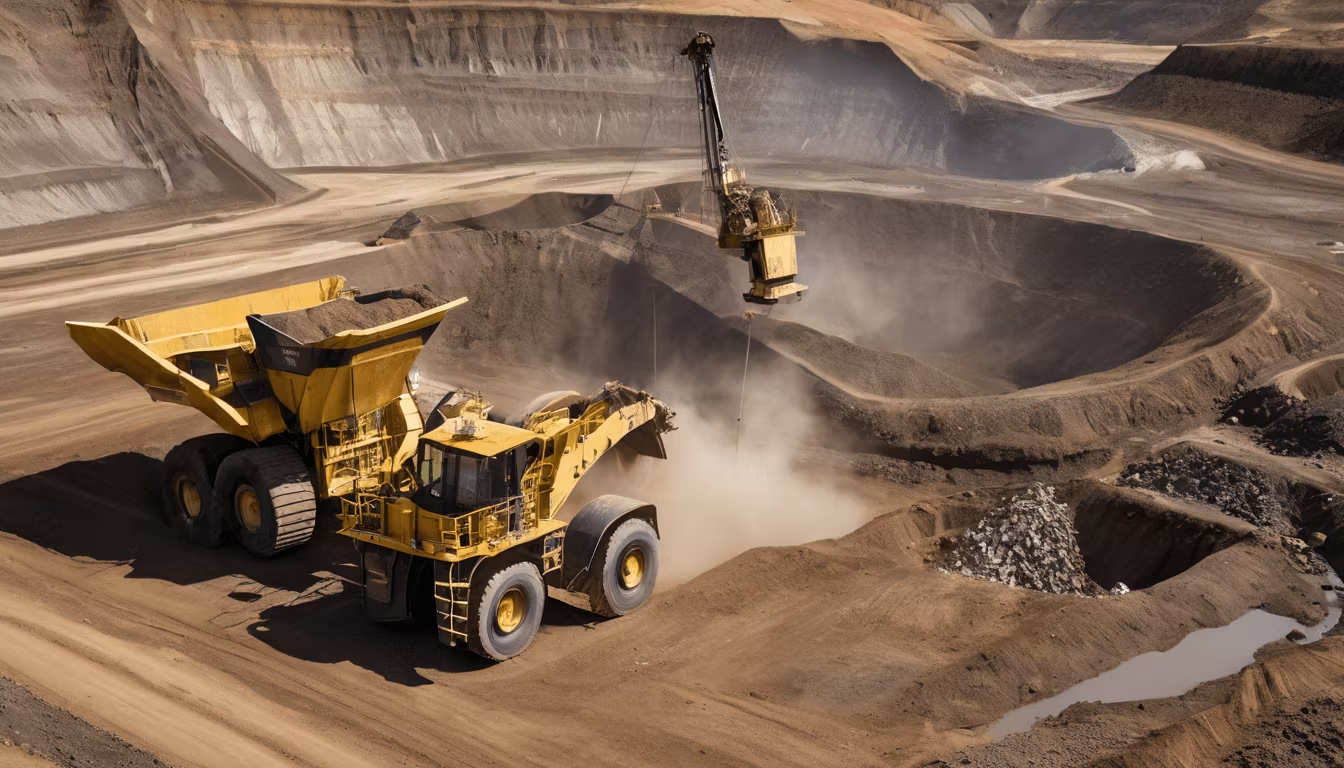
Indonesian nickel deposits primarily yield two ore types: saprolite and limonite. These aren't interchangeable commodities—they possess fundamentally different characteristics that affect downstream processing and final product quality.
Saprolite Nickel typically contains 1.5-2.0% nickel content and features a clay-like composition with relatively low iron ratios. This ore type is preferred for nickel pig iron (NPI) production and laterite-based ferronickel processing. The higher nickel concentration means fewer tons must be processed to achieve target yields, reducing energy consumption and production waste.
Limonite Nickel ranges from 0.8-1.2% nickel content and contains significantly more iron oxide. While lower-grade, limonite is increasingly valuable for high-pressure acid leaching (HPAL) processes that feed stainless steel mills directly. The iron content, though requiring additional processing, can actually enhance certain alloy characteristics when managed correctly.
The choice between these ore types influences everything from smelter operating costs to the final alloy composition in 300-series stainless steel production.
Key Quality Indicators for Nickel Ore
Professional ore procurement specialists evaluate nickel ore across multiple dimensions:
- Nickel Grade (%Ni): Direct measurement of usable nickel content; higher percentages reduce processing requirements
- Iron Content (%Fe): Affects smelting temperatures and alloy composition; must be controlled within specific ranges
- Silica and Alumina Ratios: Influence slag formation and processing efficiency in ferronickel production
- Moisture Content: Impacts transportation costs and ore stability; lower moisture = better handling characteristics
- LOI (Loss on Ignition): Indicates volatile compounds; affects furnace operations and energy efficiency
- Impurities (Chromium, Cobalt, Manganese): Can enhance or degrade specific alloy properties depending on target grades
At CV Indoalam, all ore shipments undergo rigorous SUCOFINDO laboratory testing to verify these parameters before customer delivery, ensuring transparency and predictability in your supply chain.
How Nickel Ore Quality Determines Stainless Steel Specifications
The Role of Nickel in 300-Series Stainless Steel
The 300-series stainless steel family—dominated by grades like 304, 316, 316L, and 310—derives its corrosion resistance and mechanical properties from chromium and nickel alloying. While chromium (typically 16-26%) provides oxidation resistance, nickel (typically 6-12%) contributes austenitic crystal structure, enhancing ductility, toughness, and resistance to stress corrosion cracking.
Nickel demand in stainless production remains inelastic; manufacturers cannot simply reduce nickel percentages without compromising performance standards. This creates a direct economic imperative: ore quality directly affects production efficiency and cost management.
When nickel ore quality is inconsistent—with variable grades, unpredictable impurity profiles, and moisture fluctuations—smelters must allocate additional resources to:
- Sorting and pre-processing to meet minimum specifications
- Adjusting furnace parameters mid-production to compensate for composition variations
- Implementing quality control measures to catch off-spec alloy batches
- Managing increased scrap and rework costs
Impurity Management and Alloy Performance
High-quality nickel ore minimizes deleterious impurities that compromise stainless steel properties. Excess sulfur, for instance, promotes hot shortness and brittleness. Elevated phosphorus levels reduce toughness at low temperatures. Cobalt contamination can interfere with magnetic properties in specific applications.
Conversely, controlled trace elements sometimes enhance performance. Small chromium concentrations from ore can reduce the amount of ferrochrome additives required. Manganese within acceptable ranges improves work-hardening characteristics.
The distinction separates premium ore suppliers from commodity traders: premium suppliers understand these nuanced relationships and maintain ore sources with consistent, predictable impurity profiles.
The Economic Impact: Why Ore Quality Affects Your Bottom Line
Processing Efficiency and Yield Rates
A 1% variation in nickel ore grade translates to measurable differences in smelting efficiency. Processing saprolite nickel at 1.8% grade versus 1.5% grade means the higher-quality ore yields nickel metal at lower cost per ton. This efficiency cascades through the value chain: lower smelting costs enable more competitive pricing for steel mills, foundries, and end-product manufacturers.
Higher-grade ore also reduces the volume that must be mined, transported, and processed—multiplying environmental and logistical benefits across supply chains.
Quality Consistency and Supply Reliability
Manufacturing facilities operating on just-in-time inventory models cannot tolerate ore quality surprises. A supplier that consistently delivers ore within specified ranges eliminates the need for buffer stock, reduces holding costs, and enables predictable production scheduling.
Inconsistent ore quality forces manufacturers to maintain safety stock, implement more frequent quality testing, and allocate engineering resources to troubleshooting. These hidden costs often exceed the apparent savings from purchasing lower-cost, lower-quality material.
Stainless Steel Applications Demanding Superior Nickel Ore
High-Performance Industrial Applications
Certain stainless steel applications absolutely demand the enhanced properties that quality nickel ore enables:
Marine and Offshore Environments: 316 and 316L stainless steels require exceptionally clean nickel to resist pitting corrosion in saltwater. Any ore-derived impurities that create inclusion sites can initiate corrosion paths, leading to equipment failure in high-cost offshore installations.
Pharmaceutical and Food Processing: Grade 304 and 316 stainless used in pharmaceutical reactors and food-grade equipment must meet strict material certifications. Trace impurities from inferior ore can violate product safety standards and regulatory requirements.
High-Temperature Applications: 310 stainless steel, used in furnace components and high-temperature piping, requires superior nickel quality to maintain mechanical properties at elevated temperatures. Inferior ore creates microstructural weaknesses that manifest as premature failure.
Automotive and Industrial Components
Automotive manufacturers increasingly specify stainless steel for fasteners, springs, and exhaust components. The cost pressures in automotive drive demand for efficient production, which depends directly on consistent, quality-appropriate nickel ore supplies.
Sourcing Strategy: How to Evaluate Nickel Ore Suppliers
Beyond Price: Evaluating True Supplier Value
Procurement professionals should evaluate nickel ore suppliers across dimensions beyond per-ton pricing:
- Testing and Certification: Insist on independent laboratory verification (SUCOFINDO or equivalent) with detailed assay reports documenting grade, impurities, and moisture content
- Supply Consistency: Request samples from multiple shipments to verify grade stability; calculate standard deviation in ore composition
- Licensing and Compliance: Verify suppliers possess current IUP OPK mining permits and RKAB (Rencana Kerja dan Anggaran Biaya) approvals ensuring legal, sustainable sourcing
- Traceability: Confirm supply chain transparency; understanding mine locations (Sulawesi vs. Kalimantan sources, for example) helps predict consistency patterns
- Flexibility: Assess whether suppliers can accommodate your volume requirements, from trial quantities (100 MT) to full-year contracts
- Technical Support: Quality suppliers provide metallurgical guidance, help optimize smelting parameters, and assist in troubleshooting production issues
Indonesian Nickel Ore: Competitive Advantages and Export Dynamics
Understanding Indonesia's Market Position
Indonesia possesses approximately 21% of global nickel reserves, concentrated in Sulawesi (Morowali and Konawe districts) and East Kalimantan. These deposits naturally yield higher-grade saprolite ores compared to many competing sources in the Philippines and other regions.
However, Indonesia's 2020 nickel ore export ban fundamentally altered market dynamics. Domestic manufacturers can now access premium Indonesian ore directly, but international customers must source from smelters or licensed traders with domestic access.
For domestic users—nickel smelters, ferronickel producers, and stainless steel mills within Indonesia—this creates sourcing advantages. Direct access to premium ore before smelting means tighter specification control and more transparent supply chains than accessing finished ferronickel or stainless ingots.
The Logistics of Indonesian Ore Sourcing
Sourcing directly from Indonesian mines requires understanding regional logistics. Ore from Sulawesi's Morowali district travels via barge to major ports in Surabaya or Jakarta. Kalimantan sources reach ports in Samarinda or Semarang. These transportation patterns create natural lead times (typically 5-10 days) that suppliers must manage to maintain on-time delivery.
Established suppliers like CV Indoalam maintain direct relationships with mine operators, enabling priority access and coordinated logistics that smaller traders cannot replicate.
Quality Assurance: The Laboratory Testing Standard
SUCOFINDO Certification and What It Means
SUCOFINDO (PT Sucofindo) represents Indonesia's primary independent testing authority, authorized by the government for mineral commodity verification. SUCOFINDO testing provides:
- Certified nickel content (%Ni) via XRF or wet chemical analysis
- Iron, silica, alumina, and impurity quantification
- Moisture content analysis per ISO standards
- Chain of custody documentation for transparency
- International recognition—buyers can trust SUCOFINDO reports in dispute resolution
Insisting on SUCOFINDO testing (rather than supplier in-house testing) eliminates conflicts of interest and provides objective third-party assurance that ore meets specified grades.
Integration with Your Supply Chain: Practical Recommendations
Building Resilient Nickel Procurement Strategies
Single-source nickel ore supply creates vulnerability to disruption. Consider structuring procurement across 2-3 qualified suppliers, allocating volume based on performance metrics. This approach reduces logistics risk and provides negotiating leverage while maintaining supply security.
Establish formal supply agreements that specify:
- Minimum ore grade (e.g., "Saprolite Ni 1.7-2.0%" rather than vague "premium grade")
- Maximum impurity limits for critical elements
- Moisture content specifications
- SUCOFINDO testing requirements and payment responsibility
- Dispute resolution procedures if ore fails to meet specifications
- Volume commitments and pricing structures
- Delivery schedules and logistics coordination
Documentation discipline prevents misunderstandings and creates institutional memory as personnel change.
The Future of Nickel Demand and Ore Quality Implications
Electric Vehicles and Battery Materials Impact
Global nickel demand is intensifying as electric vehicle production expands. Lithium-ion battery cathodes consume increasing nickel volumes, particularly high-nickel formulations (NCA, NCM 811). This demand surge is competing with traditional stainless steel markets for limited ore supplies.
As competition intensifies, premium-quality ore—with consistent grades and minimal impurities—commands price premiums over lower-grade material. This trend rewards suppliers who maintain operational discipline and direct mine relationships over commodity traders working with inconsistent sources.
Sustainability and ESG Considerations
End-customers increasingly scrutinize supply chain sustainability. Sourcing from licensed, RKAB-approved Indonesian mines—rather than questionable gray-market sources—provides documented environmental and social compliance.
This compliance documentation becomes increasingly valuable as automotive manufacturers, aerospace suppliers, and other regulated industries implement supply chain due diligence requirements.
Why CV Indoalam Mineral Persada Is Your Strategic Nickel Ore Partner
CV Indoalam brings specialized expertise to nickel ore sourcing that generic commodity traders cannot replicate. Our direct relationships with premium mines in Sulawesi and Kalimantan ensure consistent access to saprolite ore grading 1.5-2.0% nickel—ideal for the stainless steel production efficiency you require.
Every shipment undergoes SUCOFINDO laboratory verification, eliminating guesswork about composition. Our IUP OPK mining permits and RKAB approvals demonstrate legal compliance and sustainable sourcing practices that protect your supply chain from regulatory exposure.
Whether you require trial shipments (100 MT) to evaluate ore quality or committed annual volumes (up to 2.5 million metric tons), our flexible contracting accommodates your operational needs. Our team provides technical support to help optimize your smelting processes and maximize yield from premium Indonesian ore.
The relationship between ore quality and final product performance isn't abstract theory—it's measurable, demonstrable economics that impacts your competitive position. By partnering with a supplier who prioritizes quality consistency and technical transparency, you gain reliable access to the premium nickel ore that stainless steel excellence demands.
Contact us today to discuss your nickel ore requirements and explore how direct sourcing from Indonesia's premier mines can strengthen your supply chain and product specifications.
Related Products and Resources
Beyond nickel ore, CV Indoalam supplies complementary industrial minerals that support integrated manufacturing operations. Our silica sand and zircon sand products serve glass, ceramics, and foundry applications. For integrated material sourcing, learn more about us and our full product portfolio.