Stainless Steel & Nickel: How Ore Quality Impacts Final Product

The Critical Link Between Nickel Ore Quality and Stainless Steel Production
The global stainless steel industry depends entirely on one fundamental truth: the quality of raw materials determines the quality of the final product. Among all inputs, stainless steel nickel content and purity stand as the most critical factors in achieving reliable, durable stainless steel grades that meet international standards.
For manufacturers producing everything from kitchen appliances to industrial equipment, the source and composition of nickel ore can mean the difference between a product that lasts decades and one that corrodes prematurely. This is why leading stainless steel producers invest heavily in understanding their nickel supply chains and the metallurgical properties of the ore they process.
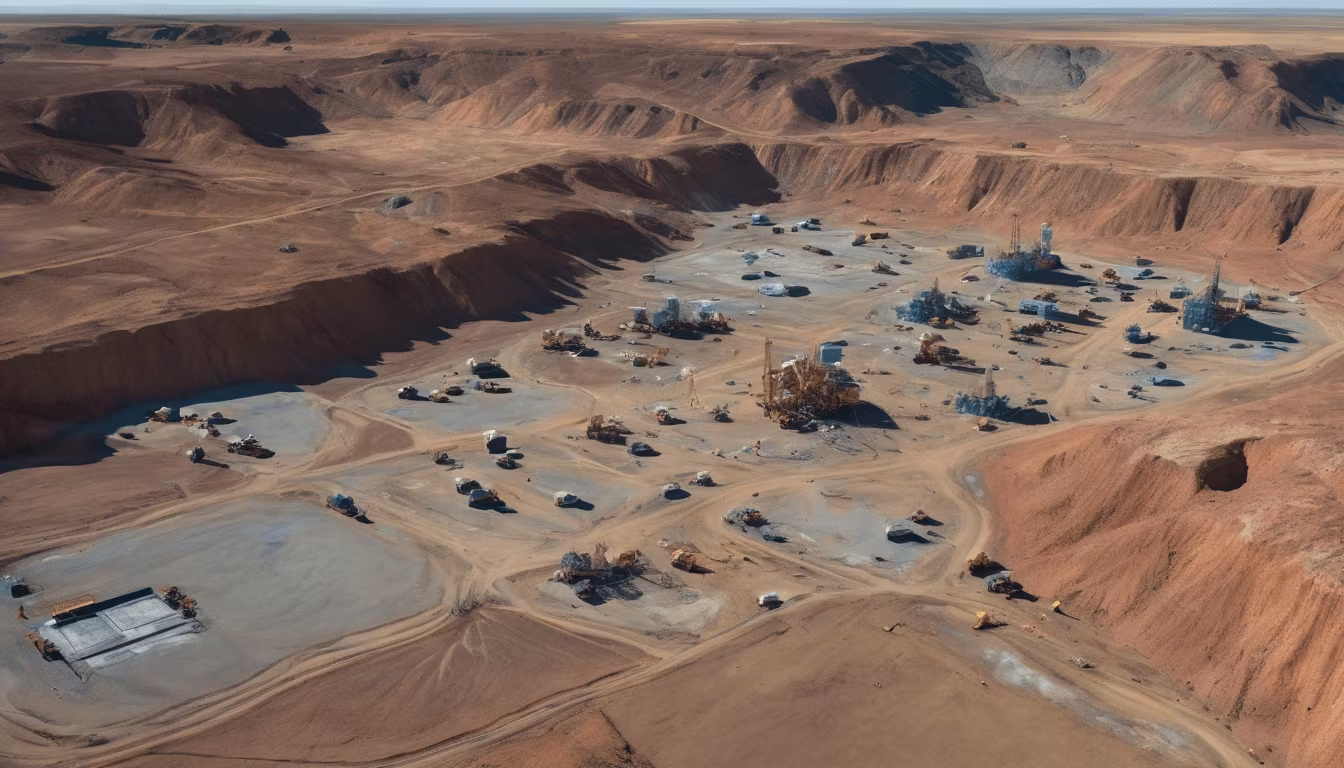
CV Indoalam Mineral Persada, a leading Indonesian mineral trading company, understands this reality intimately. With direct sourcing from mines in Sulawesi, Kalimantan, and Maluku, we supply premium-grade nickel ore to some of Southeast Asia's largest nickel smelters and stainless steel manufacturers. This article explores the crucial relationship between ore quality and stainless steel performance, and why it matters for your production decisions.
Understanding Nickel's Role in Stainless Steel Composition
Why Nickel Matters in Austenitic Stainless Steel
Stainless steel is fundamentally an alloy system, and nickel plays a transformative role in its metallurgical properties. In the widely used 300 series stainless steel (austenitic grades like 304 and 316), nickel content typically ranges from 8-12%, making it the third most important element after iron and chromium.
Nickel serves three critical functions in austenitic stainless steel:
- Austenite Stabilization: Nickel expands the austenitic phase field, creating the face-centered cubic crystal structure that gives stainless steel its superior corrosion resistance and formability. Without adequate nickel, the metal becomes brittle and prone to sensitization.
- Corrosion Resistance Enhancement: While chromium provides the primary passive film that resists oxidation, nickel improves resistance to pitting corrosion, particularly in chloride environments—critical for marine and coastal applications.
- Mechanical Properties: Nickel increases tensile strength, ductility, and toughness at low temperatures, making the steel more workable and suitable for demanding applications.
The Impact of Nickel Demand on Global Supply Chains
Global nickel demand stainless steel production has surged dramatically over the past decade. The International Nickel Study Group reports that stainless steel production now accounts for approximately 70% of global nickel consumption—a testament to the metal's indispensability in modern manufacturing.
This explosive demand, driven by infrastructure development in Asia, renewable energy projects, and automotive electrification, has created intense pressure on nickel supply. Mines that can consistently deliver high-purity ore—like those we partner with in Indonesia—have become strategic assets for manufacturers looking to secure stable, reliable supplies.
How Ore Grade Directly Affects Stainless Steel Quality
Nickel Content: The Primary Quality Metric
When evaluating nickel ore for stainless steel production, the critical metric is nickel (Ni) content by weight percentage. Indonesian nickel ore typically falls into two categories:
- Saprolite Ore (Ni 1.5-2.0%): Higher grade, laterite ore suitable for direct smelting via High Pressure Acid Leach (HPAL) and ferronickel production. This ore type produces the purest nickel products with minimal impurities.
- Limonite Ore (Ni 0.8-1.2%): Lower grade, often requiring beneficiation before processing. While more challenging to work with, limonite still plays an important role in bulk nickel production.
The difference between 1.5% and 0.8% nickel content might seem modest, but it directly translates to yield rates during smelting. A smelter processing saprolite ore with 1.8% Ni will achieve significantly higher metal recovery than one processing limonite at 0.9% Ni, reducing per-unit production costs and improving overall profitability.
Impurity Content and Final Product Integrity
Beyond nickel percentage, the types and concentrations of impurities in ore critically affect stainless steel quality. Key impurities include:
- Cobalt: While small amounts can be tolerated, excessive cobalt complicates smelting chemistry and can affect final steel properties.
- Iron Laterites: High iron content increases slag formation and reduces smelting efficiency.
- Magnesium and Silica: These create refractory challenges in furnaces and impact energy consumption during processing.
Pure, well-characterized ore allows smelters to optimize their processes, maintain tighter control over final nickel purity, and consistently produce nickel products that meet or exceed 99.8% purity requirements demanded by stainless steel makers. This is why manufacturers insist on SUCOFINDO lab certification—third-party verification that ore meets published specifications.
300 Series Stainless Steel and Ore Grade Requirements
The popular 300 series stainless steel grades (304, 304L, 316, 316L) impose specific requirements on input materials. Grade 304, for example, requires:
- 17-19% chromium
- 8-10.5% nickel
- Maximum 2% manganese
- Maximum 0.08% carbon (0.03% for 304L)
To meet these tight specifications consistently, steelmakers must source nickel from refined sources produced from high-grade ore. Using lower-purity ore creates batches that drift outside specification, requiring costly remediation or downgrading to lower grades—unacceptable for manufacturers selling into stringent industries like pharmaceuticals, food processing, and aerospace.
This is precisely why premium Indonesian saprolite ore, processed through modern HPAL technology, commands premium prices. The consistency and purity justify the investment for quality-conscious manufacturers.
Practical Implications for Stainless Steel Manufacturers
Cost-Quality Tradeoffs in Ore Selection
Stainless steel producers constantly navigate the tension between cost minimization and quality assurance. Cheaper limonite ore reduces raw material expense but increases processing complexity, energy consumption, and yield losses. High-grade saprolite ore costs more upfront but delivers:
- Higher metal recovery rates (typically 2-3 percentage points better)
- Lower energy consumption per ton of finished nickel
- Fewer rejections due to impurity content
- More predictable chemistry and product consistency
Forward-thinking manufacturers conduct total cost of ownership (TCO) analysis that extends beyond raw ore price to include smelting efficiency, waste management, and final product yield. In most cases, premium ore proves economical when viewed holistically.
Supply Chain Resilience Through Direct Sourcing
The nickel market volatility of 2021-2022—when ore and metal prices fluctuated wildly—highlighted the importance of secure, direct sourcing relationships. Manufacturers relying on spot market purchases faced unpredictable costs and availability gaps. Those with direct relationships to mines enjoyed preferential access and price stability.
This is why partnerships with mining and trading companies that have IUP OPK licenses and proven extraction capabilities matter. Such partners can offer flexible contract terms, from trial quantities of 100 metric tons to long-term annual arrangements supporting 2.5 million metric ton operations, providing the stability modern manufacturers require.
Nickel Alloy Steel and Premium Ore Requirements
Beyond 300 Series: Specialty Applications
While 300 series grades dominate stainless steel applications, nickel alloy steel compositions—including 400 series (ferritic), 600 series (martensitic), and superalloys—serve specialized, high-value markets. These grades often demand even more rigorous ore quality controls.
Duplex stainless steels (2205, 2507), for example, contain 4.5-7% nickel but require extremely low impurity tolerances to achieve the desired balance of austenite and ferrite phases. Any deviation in input nickel purity can skew the phase ratio, degrading corrosion resistance and mechanical properties.
Superalloys used in jet engines, power generation turbines, and chemical processing equipment can contain 30-60% nickel, making ore quality absolutely paramount. A defect introduced at the ore stage can propagate through the entire supply chain, potentially leading to service failures in mission-critical applications.
The Role of Quality Assurance in Ore Trading
Leading mining and trading companies like CV Indoalam implement rigorous quality assurance protocols that begin at the mine face and extend through delivery. This includes:
- Ore sampling and assaying at multiple points in the extraction process
- Third-party laboratory testing (SUCOFINDO certification) for all shipments
- Traceability documentation linking final products back to specific mining sites and extraction dates
- Moisture and particle size control to meet smelter specifications
Manufacturers purchasing ore should always verify these certifications and audit supplier quality systems. The cost of discovering impurity issues after smelting has commenced far exceeds the marginal cost of premium ore from verified sources.
Market Trends Shaping Nickel-Stainless Steel Dynamics
Battery-Grade Nickel vs. Stainless Grade Competition
Emerging competition for high-grade nickel ore comes from the electric vehicle battery industry. Nickel-cobalt-manganese (NMC) and nickel-metal-hydride (NiMH) batteries require battery-grade nickel, increasingly diverting premium ore supplies away from traditional stainless steel producers.
This supply reallocation pressures stainless makers to accept lower-grade ore or pay premium prices for preferential allocation. Indonesia's abundant nickel reserves provide buffer capacity, but this dynamic underscores the importance of maintaining secure, long-term supply contracts rather than relying on spot purchases.
Environmental and Regulatory Pressures
Modern nickel mining faces increasing environmental scrutiny regarding water management, waste rock disposal, and rehabilitation requirements. Mines meeting the highest environmental standards often achieve higher ore quality as a byproduct of their rigorous operational discipline—another reason to prioritize suppliers with full IUP OPK licensing and environmental compliance credentials.
Practical Sourcing Guidance for Stainless Steel Producers
If you're evaluating nickel ore suppliers, prioritize these factors:
- Certifications: Verify IUP OPK licenses, SUCOFINDO testing, and RKAB approval. These demonstrate legitimate, regulated operations.
- Ore Specifications: Request detailed assay reports showing Ni content, impurity profiles, and moisture levels. Demand consistency across shipments.
- Supply Flexibility: Ensure suppliers can accommodate your volume needs, whether starting with 100 MT trials or managing 2.5M MT annual operations.
- Traceability: Confirm that ore sourcing is transparent, traceable to specific mines, and free from conflict mineral concerns.
- Technical Support: Partner with suppliers who understand metallurgy and can advise on ore selection for your specific stainless steel grades.
The Role of Industrial Infrastructure
Beyond ore quality itself, access to complementary industrial materials affects overall production efficiency. Stainless steel makers often source multiple materials from integrated suppliers. For instance, while nickel forms the alloy matrix, silica sand and zircon sand support foundry and casting operations. Aluminium ingot serves adjacent light metal industries. Integrated suppliers offering multiple commodities provide logistical convenience and consistency that specialized single-product vendors cannot match.
Conclusion: Quality as Competitive Advantage
The relationship between nickel ore quality and stainless steel final product performance is direct, quantifiable, and consequential. Every percentage point of ore grade, every part per million of impurity, influences metallurgical properties, manufacturing costs, and customer satisfaction.
Manufacturers serious about stainless steel quality—particularly those producing 300 series or specialty nickel alloy steel grades—must invest time in understanding their ore suppliers and verifying quality claims through independent testing.
CV Indoalam Mineral Persada brings two decades of collective mining experience to the Indonesian mineral market, with direct sourcing from some of Southeast Asia's richest nickel deposits. Our SUCOFINDO-certified saprolite ore (Ni 1.5-2.0%) and limonite ore (Ni 0.8-1.2%) serve leading nickel smelters and industrial manufacturers across Indonesia and internationally. Whether you're evaluating ore for initial qualification or seeking to optimize an existing supply chain, we're positioned to help.
Contact us today to discuss your nickel ore requirements, request sample shipments, or explore long-term supply partnerships that support your stainless steel production goals.