Silica Sand for Resin Bonded Proppants: Manufacturing Guide
Silica Sand for Resin Bonded Proppants: Manufacturing and Applications
Resin bonded proppants represent one of the most sophisticated applications of industrial-grade silica sand in the global energy and mining sectors. As hydraulic fracturing technology continues to evolve, the demand for high-performance proppants has surged, creating opportunities for mineral suppliers who can deliver consistent quality and engineered specifications. This comprehensive guide explores the manufacturing process, technical requirements, and market applications of resin bonded proppants derived from premium silica sand.
Understanding Resin Bonded Proppants: Definition and Purpose
Resin bonded proppants are engineered materials created by coating high-purity silica sand particles with a thin layer of resin—typically phenolic, epoxy, or furan-based polymers. These coated sand grains serve a critical function in hydraulic fracturing (fracking) operations within oil and gas production.
The primary purpose of proppants is to keep fractures open in subsurface rock formations after hydraulic pressure is released. Without proppants, natural stress would cause fractures to close, preventing fluid flow and reducing well productivity. Resin bonded proppants offer superior performance compared to uncoated sand by providing:
- Enhanced crush strength: The resin coating strengthens individual particles, allowing them to withstand higher downhole pressures
- Improved flowback control: Reduced dust and fines generation during transport and placement
- Better pack stability: Maintained conductivity over extended production periods
- Superior embedment resistance: Prevention of particle embedment into surrounding rock matrix
Quality Requirements for Silica Sand in Proppant Manufacturing
Not all silica sand is suitable for resin bonded proppant production. Manufacturers require raw materials meeting stringent specifications to ensure final product performance.
Chemical Composition Standards
Premium silica sand for proppants typically demands:
- SiO₂ content: 99.5% minimum (often 99.7%+)
- Fe₂O₃ (iron oxide): <0.05% maximum
- Al₂O₃ (alumina): <0.5% maximum
- CaO (calcium oxide): <0.1% maximum
- MgO (magnesium oxide): <0.05% maximum
- Loss on ignition: <0.3%
These stringent requirements ensure that impurities don't compromise the resin coating effectiveness or the structural integrity of bonded particles. CV Indoalam Mineral Persada's silica sand production meets these demanding specifications through rigorous quality control and SUCOFINDO laboratory testing, making it suitable for premium proppant applications.
Physical Properties and Grain Size
Proppant manufacturers require precise grain size distributions, typically:
- Mesh size: 20/40, 30/50, or 40/70 (conforming to API standards)
- Roundness: >0.6 (sphericity preferred for optimal pack density)
- Sphericity: >0.6 for premium applications
- Bulk density: 1.55–1.65 g/cm³
- True density: 2.64–2.65 g/cm³
- Porosity: <2% preferred
CV Indoalam sources silica sand from proven deposits in Sulawesi and other premium regions, with production capabilities spanning mesh grades 8–200, allowing customization for specific proppant applications.
Resin Coating Technology and Manufacturing Process
Resin Selection and Formulation
The choice of resin binder is critical to proppant performance. Common resin systems include:
- Phenolic resins: Cost-effective, excellent thermal stability up to 300°F+, industry standard
- Epoxy resins: Superior adhesion, higher crush strength, better chemical resistance, premium pricing
- Furan resins: Enhanced strength at moderate temperatures, specific niche applications
- Hybrid systems: Combining properties of multiple resin types for optimized performance
Resin formulations typically include:
- Base resin: 75-85% of coating weight
- Hardeners/catalysts: 10-15%
- Coupling agents: 2-5% (improving sand-resin adhesion)
- Flow control additives: 1-3%
- Fillers (optional): Lightweight minerals to adjust density and cost
Coating Application Methods
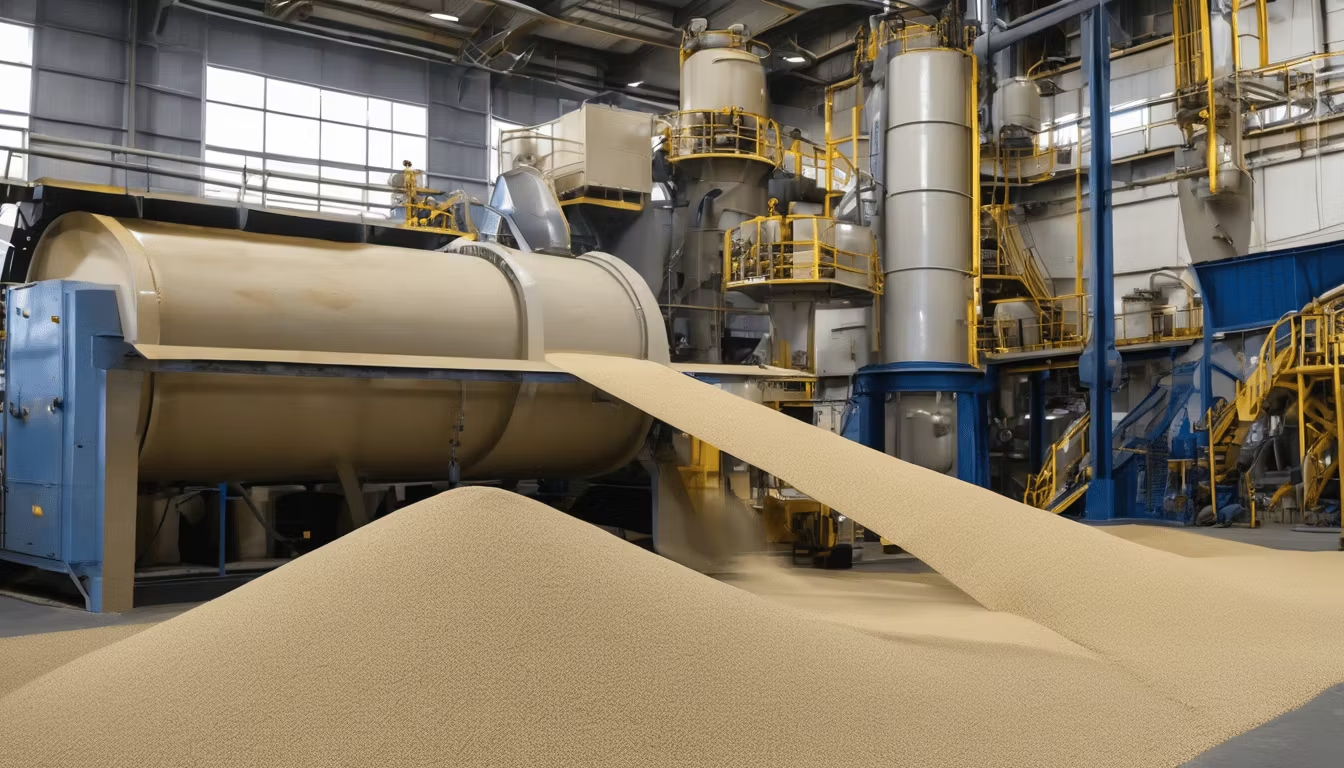
Rotary drum coating is the most prevalent method in industrial proppant manufacturing:
- Silica sand (typically heated to 150-200°C) is introduced into a rotating drum
- Liquid resin is sprayed onto the tumbling sand particles
- The rotation ensures uniform coating distribution
- Drying occurs through continued rotation and heat application
- Coated sand exits onto cooling belts for temperature reduction
- Final sizing and QC screening removes agglomerates and oversized particles
Fluidized bed coating represents an alternative approach, particularly for specialty applications. This method:
- Suspends sand particles on air flow while resin is sprayed
- Provides more precise coating thickness control
- Reduces agglomeration through continuous particle separation
- Requires careful optimization of airflow and resin spray timing
Curing and Cross-linking
Post-application curing is essential for developing full mechanical properties. The process varies by resin type:
- Phenolic resins: Heat curing at 180-220°C for 15-30 minutes, achieving 85-95% strength within hours
- Epoxy resins: Ambient or low-temperature curing (24-48 hours) or accelerated heat curing (60-90°C)
- Complete cross-linking: Maximum strength achieved over 7-14 days post-application
Proper curing is critical; insufficient curing results in weak coatings that fail under downhole stress, while over-curing can cause brittleness and particle fracture.
Quality Control and Testing Standards
API and Industry Standards
Resin bonded proppants must conform to API RP 56 (Recommended Practice for Testing Sand Used in Hydraulic Fracturing Operations) and related specifications. Critical test parameters include:
- Crush strength (25% fines): Minimum 4,000-7,000 psi depending on grade
- API conductivity: Measurement of fracture conductivity under stress
- Apparent density: Bulk density measurements for transport and placement calculations
- Particle size distribution: Verification of mesh conformity
- Fines content (<200 mesh): Maximum 3-5% to prevent flowback and permeability reduction
- Dust content: <1% for premium coated products
Laboratory Testing at CV Indoalam
CV Indoalam Mineral Persada maintains partnership with SUCOFINDO, Indonesia's premier independent laboratory, ensuring comprehensive testing of raw silica sand and intermediate products. Testing protocols include particle size analysis, SiO₂ purity verification, moisture content measurement, and physical property characterization—all essential for proppant manufacturers requiring certified feedstock.
Applications of Resin Bonded Proppants
Unconventional Oil and Gas Extraction
Resin bonded proppants dominate unconventional resource development, including:
- Shale gas extraction: Horizontal wells with multiple fracture stages requiring high crush-strength proppants
- Tight oil plays: Extended lateral wells in formations like Eagle Ford and Bakken requiring sustained conductivity
- Deepwater completions: High-pressure, high-temperature (HPHT) environments where thermal stability is critical
Geothermal Energy Development
Emerging applications in enhanced geothermal systems (EGS) leverage resin bonded proppants' thermal stability and mechanical properties for fracture creation in deep rock formations.
Coal Seam Gas (CSG) Production
Australia and Southeast Asian CSG operations utilize fine-mesh resin bonded proppants (30/50, 40/70) to maintain permeability in low-stress coal seams.
Supply Chain Considerations for Proppant Manufacturers
Raw Material Sourcing
Successful proppant production requires reliable access to high-purity silica sand. CV Indoalam's strategic sourcing from premium deposits in Sulawesi (Morowali, Konawe) and other Indonesian regions ensures consistent SiO₂ content and minimal impurities. The company's annual capacity of 2.5 million metric tons supports large-scale proppant manufacturing operations.
Logistics and Quality Assurance
Proppant manufacturers benefit from direct relationships with mining companies, eliminating middleman markups and quality inconsistencies. CV Indoalam offers flexible supply arrangements, from 100 MT trial quantities to multi-year contracts, with transparent SUCOFINDO documentation and full IUP OPK licensing compliance.
Cost Optimization
Raw material cost typically represents 30-40% of resin bonded proppant manufacturing expenses. By sourcing directly from reliable suppliers like CV Indoalam, proppant manufacturers can achieve cost advantages while maintaining strict quality standards. Custom mesh size production (8-200 mesh range) enables manufacturers to optimize yield and minimize waste.
Market Trends and Future Outlook
Lightweight Proppants
Industry evolution continues toward lighter-density proppants reducing transportation costs and subsurface placement challenges. These innovative products often incorporate specialty fillers and optimized resin formulations, requiring feedstock with exceptionally tight purity specifications—areas where premium Indonesian silica sand excels.
Regional Supply Resilience
Geopolitical diversification of proppant supply chains has increased attention toward Southeast Asian sources. Indonesia's abundant silica sand resources and established IUP/RKAB regulatory framework position the country as a strategic alternative to traditional North American suppliers.
Environmental Considerations
Dust control and worker safety in proppant plants increasingly drive demand for low-fines, low-dust silica sand feedstock. Advanced sizing and washing processes implemented by modern suppliers further enhance product suitability for health-conscious manufacturing operations.
Conclusion and Partnership Opportunities
Resin bonded proppants represent a high-value application of premium silica sand, requiring unwavering commitment to quality, consistency, and technical specification compliance. Successful proppant manufacturers recognize that raw material quality directly impacts final product performance and profitability.
CV Indoalam Mineral Persada brings two decades of combined trading experience and full regulatory compliance to the Indonesian mineral supply market. Our SUCOFINDO-tested, IUP OPK-licensed silica sand meets the stringent requirements of sophisticated proppant manufacturing operations. Whether you're seeking trial quantities or long-term supply partnerships, our flexible contracting and transparent quality documentation provide the reliability and technical support that B2B mineral buyers demand.
For proppant manufacturers, foundries, glass producers, and other industrial mineral users, contact us today to discuss your specific silica sand requirements. Learn how CV Indoalam's direct-from-mine sourcing, quality assurance protocols, and competitive pricing create value across your supply chain. Explore our full range of industrial minerals, including zircon sand and aluminium ingot, for integrated procurement solutions.