Silica Sand Mining & Water Management: Protecting Resources

Introduction: The Critical Balance Between Mining and Water Conservation
The global demand for silica sand continues to rise, driven by industries ranging from glass manufacturing to semiconductors and construction materials. However, this increased extraction comes with significant environmental responsibilities, particularly regarding water resource protection. As mining operations expand across Southeast Asia and beyond, understanding the relationship between sand mining and water management has become essential for industry stakeholders, regulators, and environmentally conscious businesses.
Water is both a critical input and a potential casualty of mining operations. Sand mining water management practices directly influence the sustainability of mining projects and the health of surrounding ecosystems. At CV Indoalam Mineral Persada, we recognize that responsible mineral extraction requires robust hydrology management and commitment to protecting groundwater resources for future generations.
Understanding the Water Impact of Sand Mining Operations
How Sand Mining Affects Groundwater Systems
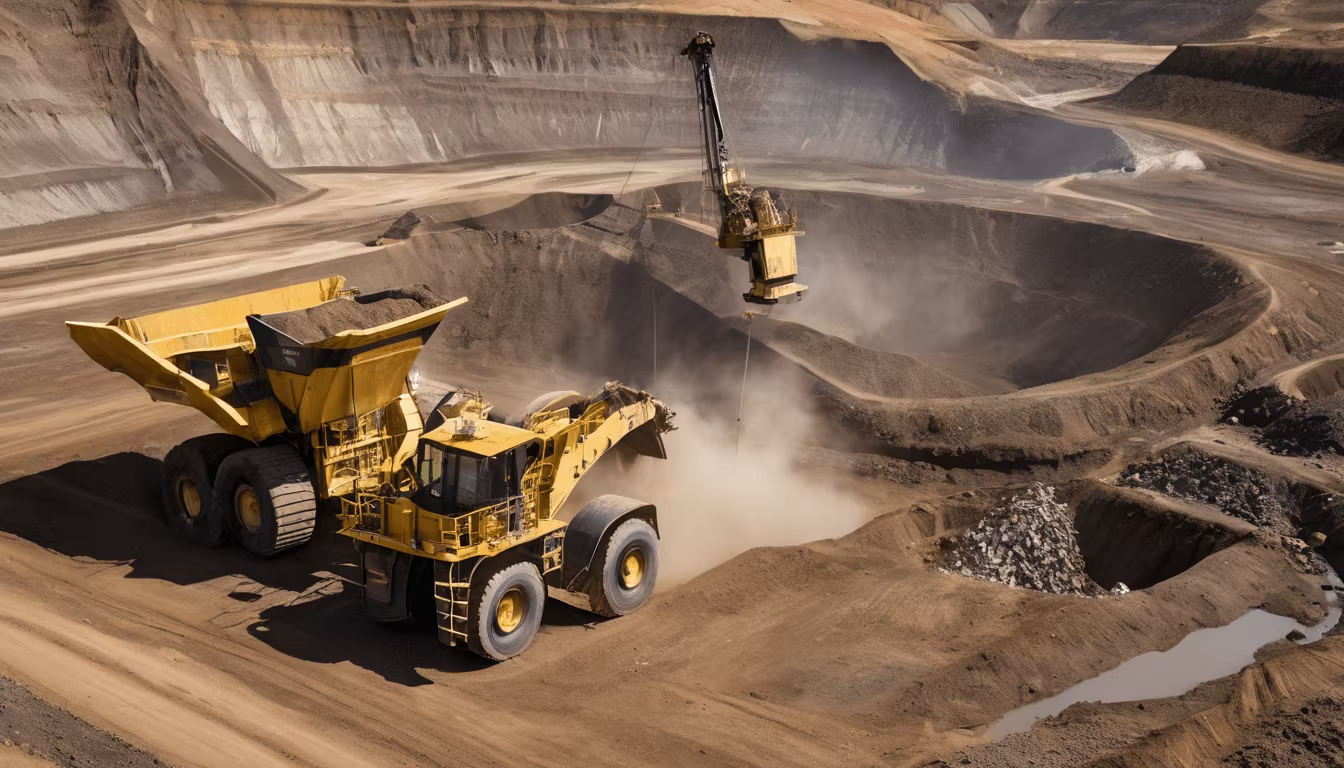
Sand and gravel mining operations inherently interact with water systems. When extracting materials from deposits, mining activities can penetrate aquifer layers, alter water flow patterns, and potentially contaminate groundwater resources. The groundwater mining impact extends beyond the immediate extraction site—it can affect water tables across wide geographical areas, particularly in regions with interconnected aquifer systems.
In Indonesia, where CV Indoalam operates across Sulawesi, Kalimantan, and Maluku regions, understanding local hydrology is paramount. These tropical regions experience significant seasonal variations in rainfall and water availability. Mining operations must account for these natural cycles while implementing sand mining water management strategies that prevent depletion and contamination.
Key concerns in mining hydrology include:
- Aquifer Drawdown: Excessive water extraction during mining operations can lower groundwater tables, affecting water availability for agriculture and communities
- Subsidence: Removal of sand deposits can cause ground settling, disrupting natural water flow patterns
- Saltwater Intrusion: In coastal mining areas, improper management can allow saltwater to infiltrate freshwater aquifers
- Turbidity and Sediment Release: Mining activities can increase water turbidity, affecting aquatic ecosystems and water treatment requirements
The Role of Hydrology in Mining Operations
Mining hydrology encompasses the study and management of water movement through mining sites. Effective water resource protection requires comprehensive hydrological assessments before, during, and after mining operations. These assessments identify water-bearing zones, estimate recharge rates, and establish baseline conditions against which environmental impacts can be measured.
Professional mining operations conduct detailed hydrological surveys to map aquifer systems, determine water flow directions, and assess vulnerability to contamination. This scientific foundation enables operators to implement targeted interventions that minimize disruption to groundwater systems while maintaining productive mining capacity.
Best Practices in Water Resource Protection During Mining
Comprehensive Environmental Impact Assessments
Before commencing operations, responsible mining companies conduct Environmental Impact Assessments (EIA) that specifically address water resources. These assessments establish baseline conditions, identify potential impacts, and propose mitigation measures. In Indonesia, such assessments are integral to obtaining IUP OPK licenses and regulatory approvals.
CV Indoalam's operations include detailed environmental evaluations that consider local water availability, existing water uses, and potential conflicts. Our SUCOFINDO-tested quality standards and RKAB-approved operations reflect commitment to environmental stewardship alongside mineral extraction excellence.
Groundwater Monitoring and Protection Systems
Ongoing groundwater monitoring is essential for detecting changes in water quality or quantity. Modern mining operations install monitoring wells around extraction sites to track water table elevations, measure water chemistry, and identify emerging contamination threats. Data from these wells inform adaptive management decisions throughout the mining lifecycle.
Protection strategies include:
- Barrier Systems: Installing clay or geomembrane barriers to prevent surface contaminants from infiltrating groundwater
- Water Treatment Plants: Processing extracted water to remove suspended solids and contaminants before discharge
- Controlled Dewatering: Managing water removal during mining to prevent aquifer drawdown and maintain water table stability
- Sediment Control: Implementing erosion control measures to minimize sediment transport into water bodies
Sustainable Water Use in Mining Processes
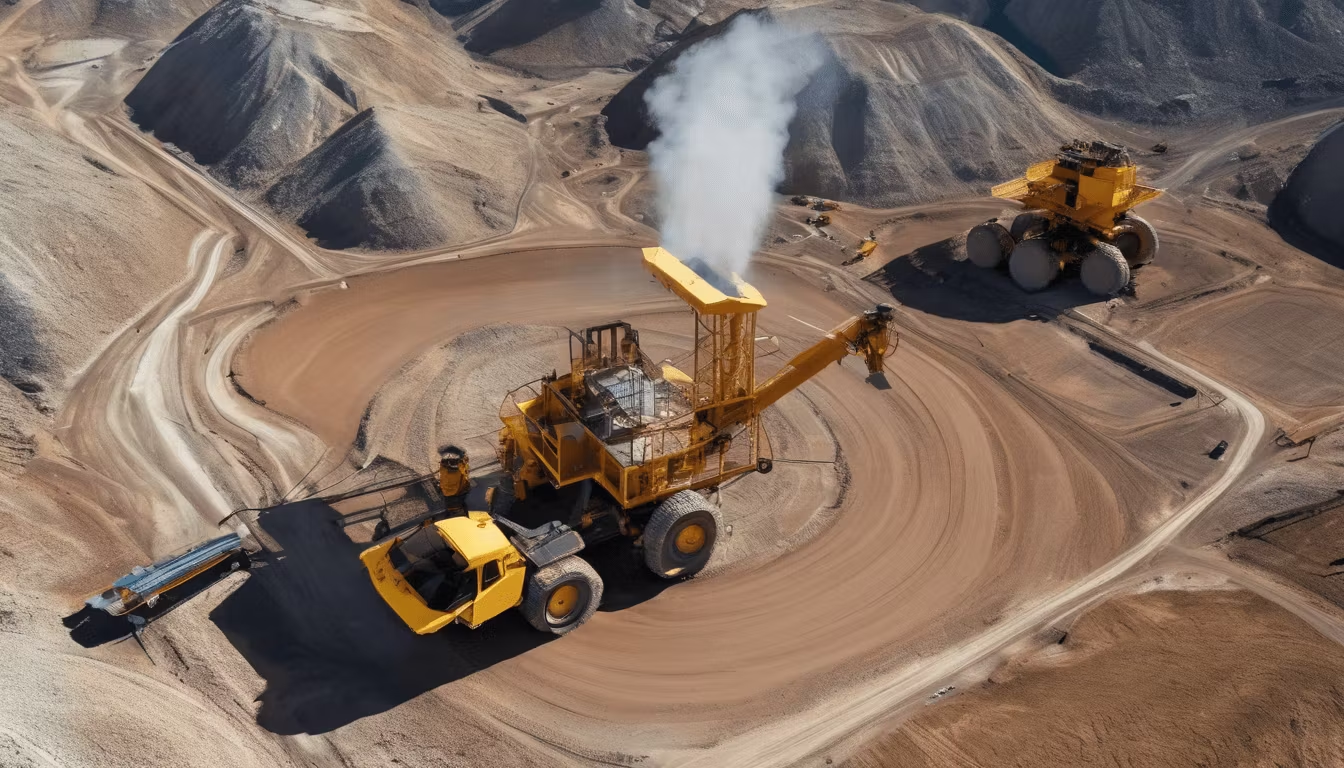
Water is used extensively in mining operations for dust suppression, material washing, and equipment operation. Sustainable practices minimize freshwater consumption through recycling and reuse systems. Many modern facilities recirculate process water multiple times before discharge, significantly reducing overall water demand.
For operations processing high-purity quartz sand, water management becomes particularly critical. Quality specifications require thorough washing to achieve the SiO2 99.74% purity that industrial glass manufacturers and semiconductor producers demand. Efficient washing systems recover and reuse water while producing the premium-grade materials that our customers require.
Regional Water Management Challenges in Indonesia
Tropical Climate Considerations
Indonesia's tropical climate presents unique water management challenges. High rainfall during monsoon seasons alternates with dry periods, creating significant seasonal variations in water availability. Mining operations must adapt to these cycles, potentially increasing water retention during wet seasons while minimizing extraction during dry periods when water scarcity threatens agricultural and community needs.
The Sulawesi and Kalimantan regions where CV Indoalam sources materials experience these climatic patterns intensely. Effective water resource protection requires operational flexibility and sophisticated water storage and management infrastructure.
Multi-Use Water Systems
In many Indonesian mining regions, water resources serve multiple users—communities, agriculture, industrial operations, and ecosystems. Mining operations must balance their water needs with these competing demands. Responsible operators invest in water treatment and recycling to minimize impact on shared water resources.
This consideration influences how companies operate. Rather than depleting local water resources, sustainable mining businesses implement closed-loop water systems where possible and coordinate with local water management authorities to ensure equitable resource distribution.
Regulatory Framework and Compliance in Indonesian Mining
Environmental Licensing Requirements
Indonesian mining operations must obtain multiple environmental clearances. The IUP OPK license, which CV Indoalam holds for mineral logam, non-logam, and bahan bakar extraction, includes specific water management requirements. Environmental compliance officers must demonstrate that operations protect water resources and maintain water quality standards.
The RKAB (Rencana Kerja dan Anggaran Biaya) approval process requires detailed operational and environmental plans, including water management strategies. SUCOFINDO testing and certification validate that extracted materials meet quality standards while operations maintain environmental compliance.
Water Quality Standards and Monitoring
Indonesia establishes water quality standards for different water uses—drinking water, irrigation, industrial processes, and ecosystems. Mining operations must maintain monitoring programs that demonstrate compliance with relevant standards. Regular water testing ensures that discharge water meets established parameters for pH, suspended solids, turbidity, and chemical contamination.
Professional mining operations maintain comprehensive water quality databases, enabling regulatory agencies to verify compliance and providing evidence of environmental stewardship over time.
Technology and Innovation in Mining Water Management
Advanced Dewatering Technologies
Modern mining operations employ sophisticated dewatering systems that extract water from mined materials while treating that water for safe discharge or reuse. Technologies include:
- Hydrocyclones: Use centrifugal force to separate fine solids from water, enabling water recycling
- Thickeners: Allow suspended solids to settle, clarifying water for reuse or discharge
- Filter Press Systems: Mechanically separate water from settled solids, recovering clean water
- Reverse Osmosis: Advanced purification for sensitive applications or where water scarcity demands maximum efficiency
Real-Time Monitoring and Data Analytics
Digital technology enables continuous monitoring of water systems throughout mining operations. Sensors track water levels, flow rates, and quality parameters in real-time, with data transmitted to centralized management systems. Analytics identify trends, predict potential issues, and enable rapid response to emerging problems.
This technological approach transforms water management from periodic checking to continuous optimization, ensuring that operations maintain the highest environmental standards while maximizing operational efficiency.
Long-Term Site Rehabilitation and Water Restoration
Post-Mining Water System Recovery
Responsible mining includes planning for site conditions after extraction concludes. Many mining sites are reclaimed into productive uses—agricultural land, aquaculture facilities, recreational areas, or natural habitat restoration. Water system recovery is central to successful rehabilitation.
Post-mining water management involves:
- Restoring natural water flow patterns and aquifer recharge rates
- Removing contamination sources and remediating affected groundwater
- Creating water retention features that support ecosystems and human uses
- Monitoring water quality and quantity during recovery periods
Community Water Security
Mining operations that prioritize water resource protection contribute to long-term community water security. By maintaining groundwater quality and quantity, mining companies ensure that water remains available for agriculture, drinking water, and industrial uses that communities depend upon. This long-term perspective aligns mining economics with community welfare.
Why Choose a Responsible Mineral Supplier
Environmental Accountability in Supply Chains
Purchasing from suppliers committed to water resource protection means your operations don't inadvertently contribute to water depletion or contamination elsewhere. As industrial buyers source silica sand, zircon sand, aluminium ingots, or other minerals, supplier selection influences environmental outcomes across global supply chains.
CV Indoalam's commitment to licensed operations, SUCOFINDO testing, and regulated water management reflects our understanding that sustainable business requires environmental responsibility. Our customers can source materials with confidence that extraction respected water resources and followed Indonesian environmental regulations.
Long-Term Supply Reliability
Mining operations that protect water resources maintain long-term operational viability. Water depletion or contamination can force operational shutdowns, creating supply disruptions for dependent industries. By sourcing from responsible operators, industrial buyers reduce supply risk and ensure consistent access to materials.
Conclusion: Water Stewardship as a Competitive Advantage
Sand mining water management represents far more than environmental compliance—it reflects a commitment to sustainable business practices that protect resources for future generations. As global water scarcity intensifies, mining operations that demonstrate superior water stewardship differentiate themselves in competitive markets and build stronger relationships with customers, regulators, and communities.
CV Indoalam Mineral Persada recognizes that responsible mineral supply requires comprehensive water resource protection. Through licensed operations, scientific monitoring, advanced technologies, and ongoing environmental stewardship, we extract high-quality materials while preserving the water systems that support regional prosperity.
Whether you source minerals for glass manufacturing, industrial ceramics, foundry operations, or construction materials, partnering with suppliers committed to water resource protection aligns your business with sustainable practices that create long-term value. Contact us to learn how CV Indoalam's responsible mining practices and premium materials can support your operational and environmental goals.