Silica Sand for Glass Manufacturing: Specifications & Quality Standards

Introduction: The Foundation of Quality Glass Production
Silica sand is the fundamental raw material in modern glass manufacturing, accounting for 70-75% of most glass formulations. However, not all silica sand is suitable for glass production. The quality of your silica sand directly impacts the transparency, strength, color, and durability of the finished glass product. For manufacturers of float glass, container glass, specialized glassware, solar panels, and industrial glass products, sourcing premium-grade silica sand with consistent specifications is critical to operational efficiency and product quality.
This guide explores the essential silica sand specifications and quality standards that glass manufacturers must understand when procuring raw materials. Whether you're producing architectural glass, tableware, or solar panel glass, understanding these parameters ensures you invest in materials that meet your production requirements and regulatory standards.
Understanding Silica Sand Composition for Glass Applications
What Makes Glass-Grade Silica Sand Different?
Glass-grade silica sand differs significantly from construction-grade or industrial-grade sand. While construction sand may contain various minerals and impurities, glass manufacturers require exceptionally pure quartz sand specifications that minimize contaminants. The purity directly influences glass transparency, color, and mechanical properties.
The primary component in glass-grade silica is silicon dioxide (SiO₂), which should constitute 99% or higher for premium applications. However, the remaining 1% or less—comprised of iron oxide (Fe₂O₃), aluminum oxide (Al₂O₃), calcium oxide (CaO), magnesium oxide (MgO), and trace elements—significantly affects the final glass quality.
The Role of SiO₂ Purity in Glass Quality
Quartz sand specifications for glass manufacturing demand extremely high SiO₂ purity because impurities directly affect glass color and transparency. Even trace amounts of iron oxide can impart yellowish or greenish tints to clear glass, requiring costly remediation processes. For specialized applications like pharmaceutical bottles, laboratory glassware, and solar panel glass, SiO₂ purity glass standards are particularly stringent.
Premium suppliers now deliver silica sand with SiO₂ content exceeding 99.74%, meeting the most demanding glass manufacturing standards. This level of purity ensures:
- Crystal-clear transparency without color distortion
- Reduced energy consumption during melting
- Improved glass strength and durability
- Minimal batch adjustment requirements
- Consistent product quality across production runs
Key Specifications for Glass Manufacturing
Essential Parameters for Glass-Grade Silica
Glass manufacturers must evaluate multiple parameters when sourcing silica sand. Beyond basic composition, several technical specifications determine suitability for specific glass applications:
- SiO₂ Content: Minimum 99.5-99.8% for standard glass; 99.74%+ for premium applications
- Fe₂O₃ (Iron Oxide): Below 0.03-0.05% for clear glass; below 0.1% for colored glass applications
- Al₂O₃ (Aluminum Oxide): Ideally below 0.5% to maintain glass clarity
- CaO & MgO: Combined typically below 0.5% for optimal melting characteristics
- Moisture Content: Below 0.5% to prevent processing issues
- Loss on Ignition: Below 0.5% indicating minimal organic matter
- Particle Size Distribution: Consistent mesh grades (8-200 mesh) depending on application
Mesh Grades and Particle Size Requirements
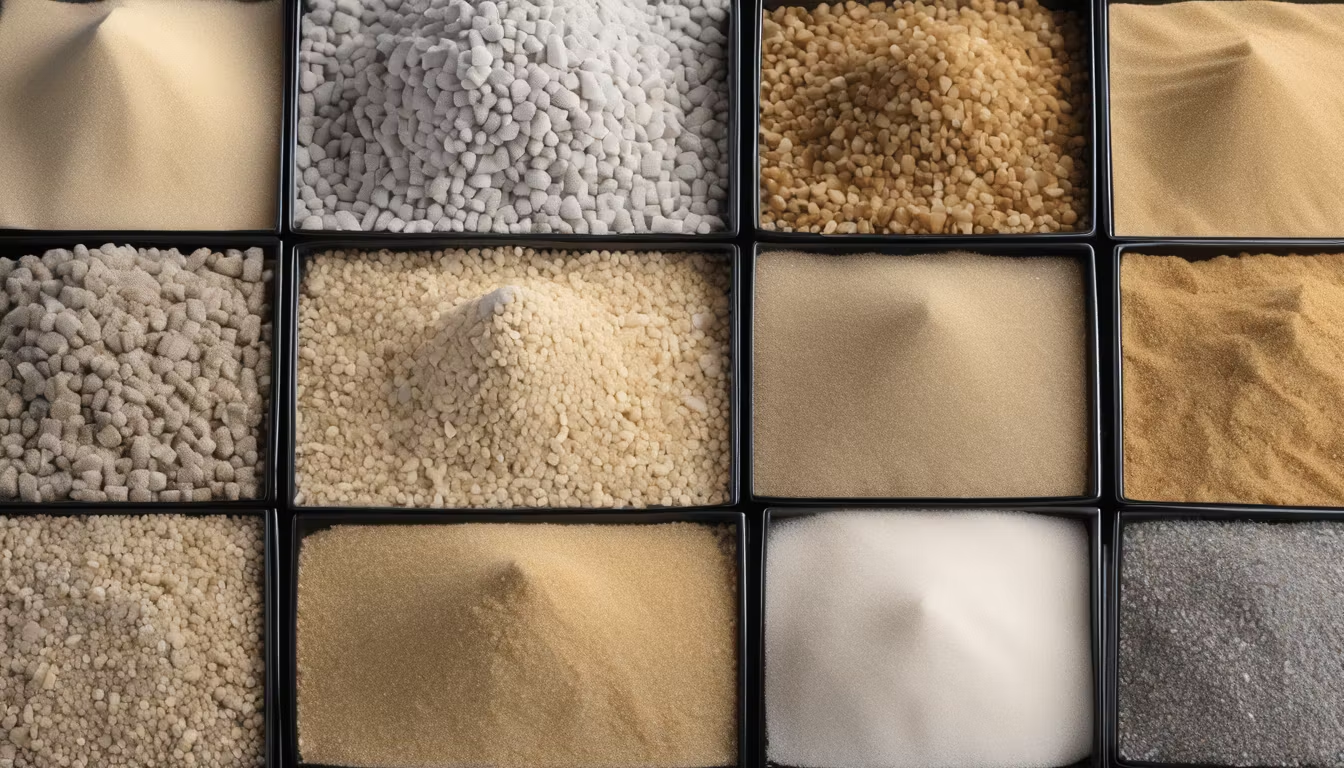
Glass-grade silica sand is supplied in multiple mesh grades, each suited to different manufacturing processes. The mesh classification determines particle size distribution and affects how the sand performs during melting:
- Coarse Grades (8-40 mesh): Used in glass container production and float glass manufacturing; larger particles improve melting efficiency
- Medium Grades (40-100 mesh): Standard for most architectural and container glass applications; balanced between surface area and processing efficiency
- Fine Grades (100-200 mesh): Preferred for specialized applications including optical glass, precision glassware, and frit production
- Extra Fine Grades (200+ mesh): Required for high-precision laboratory glass and specialized coatings
Consistent particle size distribution ensures uniform melting behavior, reduces temperature variations in the furnace, and improves overall glass homogeneity.
SiO₂ Purity: The Critical Success Factor
Why SiO₂ Purity Glass Standards Matter
The level of SiO₂ purity glass producers require depends heavily on their specific application. Container glass manufacturers might accept 99.5% purity, while solar panel glass producers demand 99.8% or higher. Understanding your application requirements prevents overspecification (unnecessary cost) or underspecification (quality compromises).
Impact of Common Impurities
Several impurities commonly found in lower-grade silica sand create significant problems in glass manufacturing:
- Iron Oxide (Fe₂O₃): Causes color distortion; even 0.05% can produce noticeable tinting in clear glass
- Chromium Oxide: Imparts green coloration; particularly problematic in pharmaceutical packaging
- Titanium Oxide: Creates yellowish tints; interferes with optical properties
- Organic Matter: Causes bubbling and defects during melting; requires careful calcination
- Clay Minerals: Increase batch viscosity and create processing inefficiencies
Advanced beneficiation techniques, including magnetic separation, flotation, and acid washing, help achieve the high purity levels required for premium glass-grade silica.
Quality Testing and Certification Standards
Laboratory Analysis for Glass-Grade Silica
Reputable silica sand suppliers conduct comprehensive laboratory testing to verify compliance with international glass industry standards. Testing typically includes:
- X-Ray Fluorescence (XRF): Determines elemental composition and SiO₂ content
- Particle Size Analysis: Verifies mesh grade consistency using sieve analysis
- Acid Solubility Testing: Measures resistance to dissolution in acid environments
- Density and Bulk Density: Ensures consistent handling and processing characteristics
- Moisture Content Analysis: Verifies dryness to prevent processing issues
- Trace Metal Analysis: ICP-MS testing for heavy metals and contaminants
International Standards and Compliance
Glass manufacturers typically reference international standards when procuring silica sand. Key standards include:
- ASTM C729: Standard specification for silica sand used in glass manufacturing
- ISO 695: International standard for silica sand classification
- EN 12589: European specification for silica sand used in glass manufacturing
- JIS R5404: Japanese industrial standard for glass-grade silica sand
When sourcing from Indonesian suppliers, verify that materials are tested by internationally recognized laboratories such as SUCOFINDO, Indonesia's leading independent testing organization. This ensures your silica sand meets both Indonesian regulatory requirements and international buyer expectations.
Sourcing High-Quality Silica Sand from Indonesia
Indonesia's Silica Sand Advantages
Indonesia remains one of the world's largest and most reliable sources of premium-quality silica sand. Key advantages include:
- Abundant High-Quality Reserves: Extensive deposits in Sulawesi, Kalimantan, and Halmahera
- Naturally High Purity: Geological formations produce naturally pure quartz sand specifications
- Sustainable Production: Comprehensive IUP OPK (mineral resource utilization permits) and environmental compliance frameworks
- Competitive Pricing: Lower extraction costs than alternative sources without compromising quality
- Reliable Supply Chain: Direct mine-to-buyer relationships ensure consistent availability
Choosing the Right Supplier
When evaluating Indonesian silica sand suppliers, prioritize:
- Regulatory Compliance: Verify IUP OPK licensing, RKAB (Rencana Kerja dan Anggaran Biaya) approvals, and environmental certifications
- Laboratory Testing: Confirm SUCOFINDO or equivalent independent testing for all batches
- Supply Consistency: Ensure suppliers can maintain stable specifications across multiple shipments
- Traceability: Request detailed sourcing documentation and quality reports for each delivery
- Flexible Volumes: Select suppliers capable of scaling from trial quantities to regular large-volume contracts
Application-Specific Requirements
Float Glass Manufacturing
Float glass production demands particularly stringent specifications. Silica sand for float glass typically requires 99.7%+ SiO₂ purity, minimal iron oxide (below 0.03%), and consistent medium mesh grades (60-100 mesh) for optimal furnace melting.
Container and Packaging Glass
While slightly more forgiving than float glass, container glass still requires high-purity silica sand to maintain clarity and minimize color. Brown and green glass production allows marginally higher iron content but still demands consistent SiO₂ purity glass standards above 99.5%.
Specialized Glass Applications
Optical glass, laboratory glassware, and solar panel manufacturing impose the most demanding silica sand specifications. These applications require 99.8%+ SiO₂ purity, ultra-low iron oxide, and precise particle size distribution. Zircon sand and other specialty minerals are sometimes added to specific glass formulations, requiring careful supplier coordination.
Best Practices for Silica Sand Procurement
Establish Clear Specifications
Document your exact requirements before approaching suppliers. Specify required SiO₂ purity glass levels, acceptable impurity thresholds, desired mesh grades, and testing standards. This prevents miscommunication and ensures suppliers quote accurately.
Request Detailed Quality Reports
Reputable suppliers provide comprehensive laboratory analysis with each delivery. These reports should include elemental composition (XRF results), particle size distribution, moisture content, and batch traceability information.
Conduct Trial Shipments
Before committing to large volumes, request trial shipments to evaluate silica sand performance in your specific glass formulations. This practical testing often reveals compatibility issues that laboratory specifications alone might miss.
Establish Long-Term Relationships
Consistent supply relationships with proven suppliers reduce procurement risk and often result in more favorable pricing and priority allocation during supply constraints. Learn more about establishing partnerships with reliable mineral suppliers.
Conclusion: Investing in Premium Silica Sand Quality
Silica sand quality directly determines glass manufacturing efficiency, product quality, and operational costs. By understanding essential specifications—particularly SiO₂ purity glass standards, mesh grades, and impurity tolerances—you can make informed procurement decisions that optimize both your manufacturing process and final product quality.
Indonesia's abundant silica sand resources, combined with modern testing and quality assurance frameworks, position Indonesian suppliers as reliable partners for glass manufacturers worldwide. Whether you require premium float glass sand, container glass materials, or specialized formulations, sourcing directly from licensed Indonesian producers ensures you receive consistently high-quality materials tested to international standards.
Ready to source premium silica sand for your glass manufacturing operation? Contact us today. CV Indoalam Mineral Persada specializes in supplying glass-grade silica sand meeting the most demanding international specifications. Our SUCOFINDO-tested materials, backed by comprehensive IUP OPK licensing and environmental compliance certifications, deliver the consistent quality your glass manufacturing requires. From trial quantities to multi-thousand-ton annual contracts, we provide flexible sourcing solutions tailored to your production needs.