Silica Sand for Glass Manufacturing: Specs & Quality Standards

Introduction: The Critical Role of High-Purity Silica Sand in Glass Manufacturing
Silica sand is the cornerstone of modern glass production. Whether manufacturing float glass for architectural applications, container glass for beverages, or specialized glass for solar panels and electronics, the quality of your raw material directly impacts product performance, production efficiency, and profitability.
For glass manufacturers across Southeast Asia and beyond, sourcing silica sand that meets strict international specifications is non-negotiable. In this comprehensive guide, we'll explore the technical specifications, quality standards, and sourcing considerations that glass producers need to understand when selecting silica sand suppliers.
Understanding Silica Sand Composition and Glass Grade Requirements
Glass manufacturing demands exceptionally pure silica sand. At CV Indoalam Mineral Persada, we supply quartz sand with SiO2 purity of 99.74%, meeting the stringent requirements of modern glass production facilities.
What Makes Glass-Grade Silica Different?
Glass-grade silica sand differs fundamentally from industrial-grade applications. The glass industry requires:
- Extreme SiO2 Purity: Minimum 99.5% to 99.9% SiO2 content, with our products reaching 99.74% purity
- Low Iron Content: Iron oxides create unwanted coloration; glass manufacturers typically require Fe₂O₃ levels below 0.05%
- Minimal Contaminants: Titanium, chromium, copper, and other trace elements must be controlled to prevent glass defects
- Consistent Particle Size Distribution: Uniform mesh grades ensure predictable melting behavior and product quality
- Low Moisture Content: Typically below 0.3% to prevent processing issues
These demanding specifications reflect the reality that even minute impurities can compromise glass transparency, strength, thermal properties, and aesthetic qualities—making sourcing from reliable, lab-tested suppliers essential.
SiO2 Purity Standards: What the Glass Industry Expects
International Glass Manufacturing Standards
Leading glass manufacturers worldwide adhere to rigorous specifications for raw materials. The most relevant standards include:
- ISO 12505: Specifies classification of high-purity silica sand for glass manufacturing
- ASTM C33: American standard for silica sand in construction glass applications
- European EN 12620: Requirements for silica sand in float glass production
- USGS Classification: High-purity silica typically classified as 99%+ SiO₂ content
Breaking Down SiO2 Purity Tiers
Different glass applications require varying purity levels:
- Standard Float Glass: 99.5–99.7% SiO₂ (architectural, automotive, container applications)
- High-Grade Container Glass: 99.7–99.9% SiO₂ (pharmaceutical bottles, premium beverage containers)
- Solar Panel Glass: 99.8–99.95% SiO₂ (photovoltaic efficiency depends on optical clarity)
- Specialty Glass: 99.9%+ SiO₂ (optical glass, laboratory glassware, electronics)
Our supply of 99.74% SiO₂ purity positions us as a reliable source for mainstream float glass and container glass production while exceeding most industrial specifications.
Mesh Grades and Particle Size Distribution in Glass Production
Understanding Mesh Classification
Silica sand mesh grades determine particle size, which critically influences:
- Melting temperature and energy efficiency
- Glass homogeneity and transparency
- Production line throughput
- Final product quality and surface finish
Common Glass-Grade Mesh Specifications
CV Indoalam Mineral Persada offers multiple mesh grades from 8 to 200, with these representative applications:
- Mesh 8–20: Coarser grades for preliminary melting stages; improves permeability and reduces processing time
- Mesh 40–100: Standard float glass production grades; balances melting rate with homogeneity
- Mesh 120–200: Fine grades for container glass and specialty applications; ensures superior optical clarity and surface quality
The most commonly specified range for modern glass furnaces is mesh 100–140, providing optimal melting characteristics while maintaining excellent product quality.
Particle Size Distribution (PSD) Control
Beyond single mesh designation, glass manufacturers increasingly demand tight particle size distribution. Key considerations:
- Narrow PSD reduces segregation in storage and feeding systems
- Consistent particles improve batch melting uniformity
- Reduces "fines" (ultra-fine particles) that can cause bridging and processing delays
- Maximizes furnace throughput and product consistency
Chemical Composition and Trace Element Control
Critical Chemical Parameters for Glass-Grade Silica
Beyond SiO₂ content, glass manufacturers monitor specific trace elements:
Iron (Fe₂O₃)
Even small iron concentrations create green or brown coloration in clear glass. Requirements typically specify:
- Clear/flint glass: Fe₂O₃ < 0.03%
- Amber/colored glass: Fe₂O₃ < 0.1%
- Reduction in iron content directly correlates with reduced energy costs in color correction
Titanium (TiO₂)
Titanium dioxide impurities can cause undesirable opacity and yellowing. Specifications typically require TiO₂ < 0.02%.
Alumina (Al₂O₃)
Aluminum oxides increase glass viscosity and melting temperature. Most specifications limit Al₂O₃ to 0.1–0.3%.
Alkaline Oxides (Na₂O, K₂O)
Naturally occurring sodium and potassium affect glass composition and must be carefully managed through source selection and processing.
Moisture and Organic Content
Glass furnaces require dry feed material:
- Moisture content: Typically < 0.3%
- Loss on ignition (organic matter): < 0.2%
- These parameters prevent steam formation, furnace foaming, and processing delays
Quality Assurance and Testing Protocols
SUCOFINDO Laboratory Testing
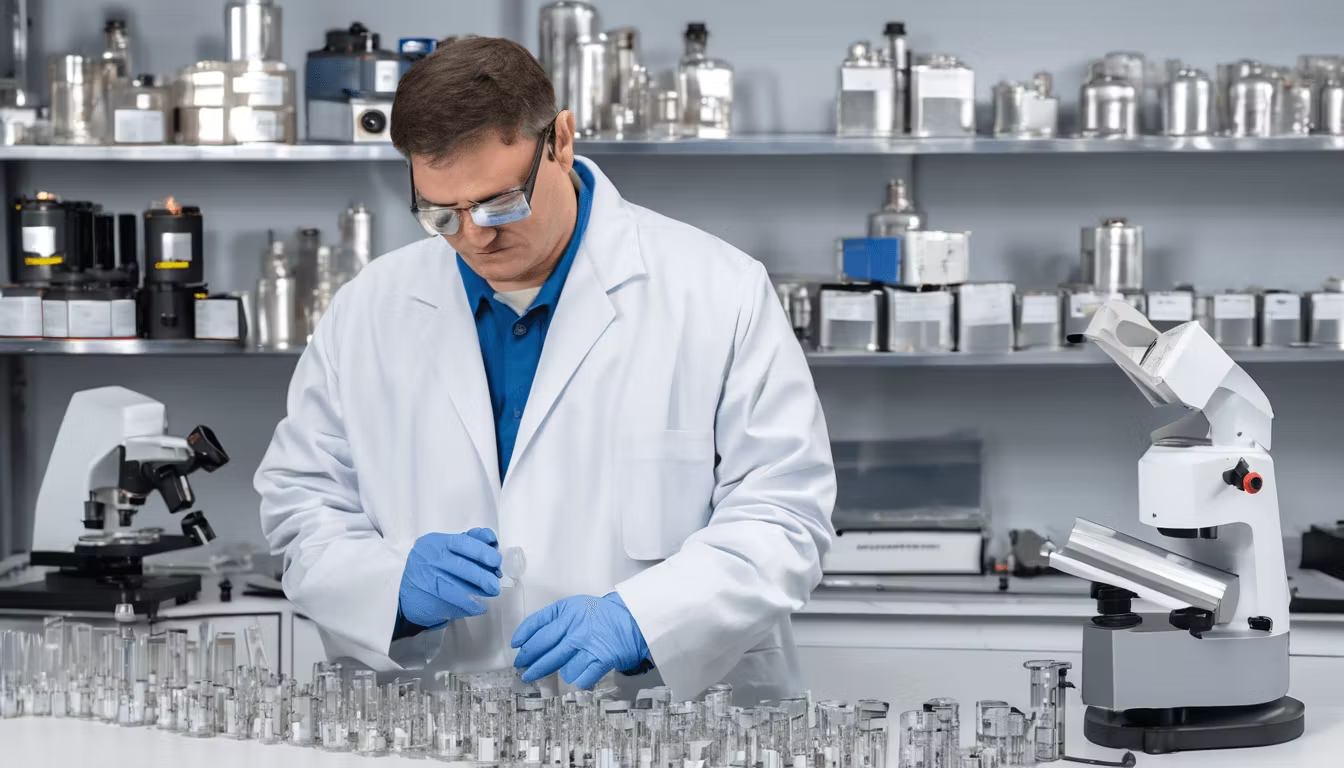
At CV Indoalam, all silica sand shipments undergo comprehensive SUCOFINDO (Superintending Company of Fumigation & Survey) testing—an ISO 17025-accredited laboratory. This ensures:
- Independent verification of SiO₂ purity and chemical composition
- Particle size distribution analysis
- Moisture content determination
- Trace element quantification
- Internationally recognized certification for import/export compliance
Testing Methods and Standards
Our quality assurance employs:
- X-Ray Fluorescence (XRF): Rapid elemental composition analysis
- Inductively Coupled Plasma (ICP): Trace element detection at sub-ppm levels
- Laser Particle Size Analysis: Precise mesh grade and PSD verification
- Loss on Ignition (LOI): Organic content and moisture assessment
Sourcing Glass-Grade Silica: Key Supplier Considerations
Direct-from-Mine Advantages
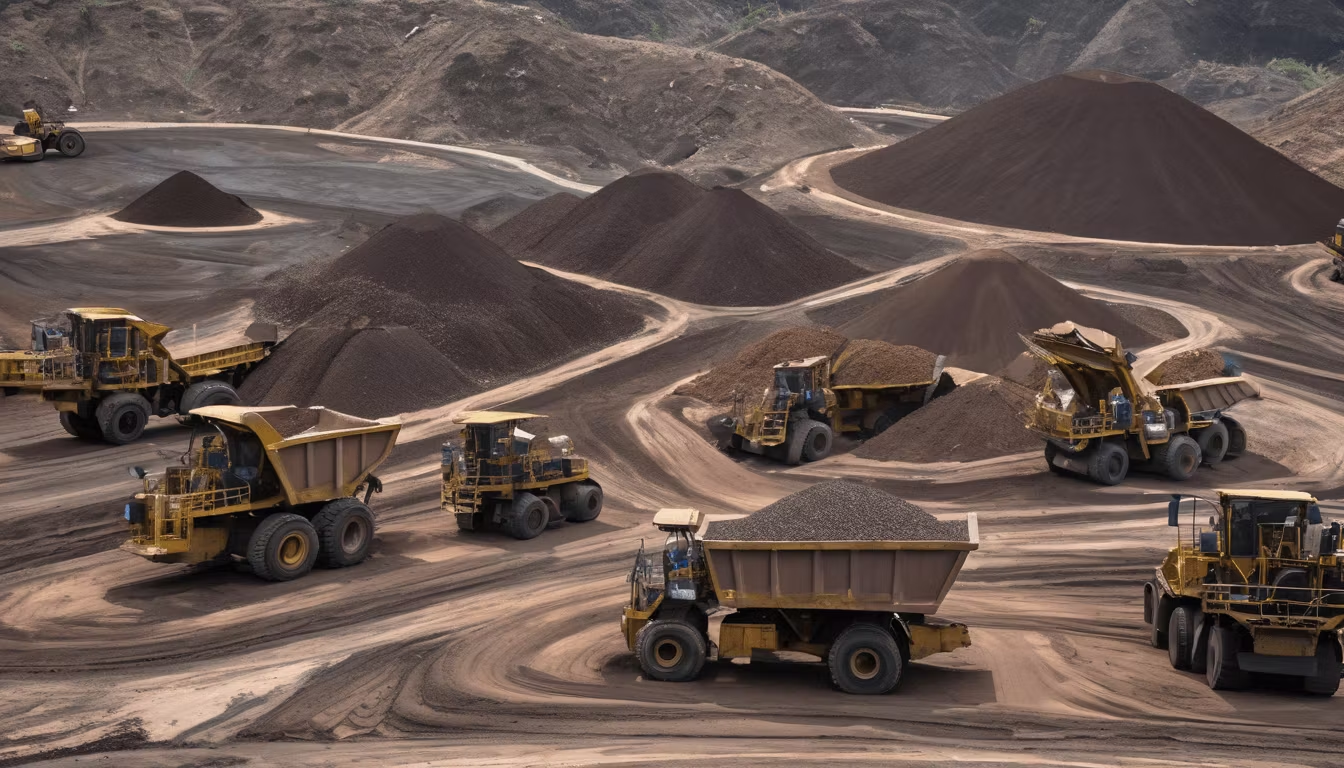
CV Indoalam sources silica sand directly from premium deposits in Sulawesi, Kalimantan, and Maluku—eliminating middlemen and ensuring:
- Complete supply chain traceability
- Consistent quality from known geological sources
- Competitive pricing without trader markups
- Flexible order quantities from trial shipments (100 MT) to full-contract volumes (up to 2.5M MT annually)
- Reliable long-term supply partnerships
Certifications and Regulatory Compliance
Our operations hold:
- IUP OPK License: Mining authorization for mineral logam, non-logam, and bahan bakar
- ET Batubara: Energy minerals export certification
- RKAB Approval: Mining operational plan validation
- SUCOFINDO Certification: Independent quality verification
Supply Flexibility and Order Management
Different glass manufacturers have varying requirements. We accommodate:
- Small trial orders for product evaluation
- Regular supply contracts with fixed monthly volumes
- Project-based sourcing for seasonal demands
- Custom mesh grade blending and preparation
- Logistical support including packaging and port handling
Applications: Where Glass-Grade Silica Excels
Float Glass Manufacturing
The most common application, float glass represents approximately 90% of global flat glass production for architectural and automotive uses. Our 99.74% SiO₂ purity and controlled mesh grades ensure optimal melting and product clarity.
Container Glass Production
Bottles, jars, and food containers demand high optical clarity and structural consistency. Our silica sand supply meets pharmaceutical-grade purity requirements.
Solar Panel Glass
Photovoltaic applications require exceptional optical transparency and minimal defects. High-purity silica sand directly impacts panel efficiency.
Specialty Glass Applications
Laboratory glassware, optical components, and electronic glass benefit from our premium-grade material.
Comparison: Why Quality Silica Sand Matters for Your Bottom Line
Investing in premium, lab-tested silica sand from trusted suppliers like CV Indoalam delivers measurable benefits:
- Reduced Energy Costs: Higher purity requires less recycling and less furnace temperature compensation
- Lower Defect Rates: Consistent composition minimizes color variations, bubbles, and structural weaknesses
- Improved Throughput: Uniform particle size distribution prevents processing bottlenecks
- Enhanced Product Quality: Superior optical clarity and mechanical properties command premium pricing
- Supply Chain Stability: Direct sourcing from licensed mines ensures consistent availability
- Regulatory Compliance: SUCOFINDO certification and IUP OPK licensing provide international credibility
Beyond Silica Sand: Our Complete Mineral Solutions
While silica sand serves glass manufacturers exceptionally well, CV Indoalam Mineral Persada offers complementary products for diversified industrial operations:
- Nickel ore for smelters and ferronickel producers
- Aluminium ingot (ADC12, A7 grades) for foundries and metal casting
- Zircon sand for advanced ceramics and refractory applications
Conclusion: Partnering with a Trusted Silica Sand Supplier
Glass manufacturing success depends on reliable access to consistent, high-purity silica sand. CV Indoalam Mineral Persada has established itself as a premium supplier by combining direct mine sourcing with rigorous SUCOFINDO laboratory testing and comprehensive regulatory compliance.
Our 99.74% SiO₂ purity, diverse mesh grades (8–200), and flexible supply options make us an ideal partner for glass manufacturers ranging from large industrial producers to specialized facilities. With over 2.5 million metric tons annual capacity and sourcing from premium deposits across Indonesia, we're positioned to support your glass production regardless of scale.
Whether you're optimizing current operations or evaluating new suppliers, our commitment to quality, transparency, and reliability sets us apart in the competitive mineral trading landscape.
Contact us today to discuss your silica sand requirements, request samples, or explore how CV Indoalam can become your trusted supplier of glass-grade materials.