Silica Sand Beneficiation: Complete Guide to Washing & Processing

Understanding Silica Sand Beneficiation
Silica sand beneficiation is a critical process that transforms raw mineral deposits into high-quality industrial material suitable for diverse applications. Unlike simple sand extraction, beneficiation involves multiple stages of processing that remove impurities, classify particles by size, and enhance the overall purity and performance characteristics of the final product.
The global demand for high-purity silica sand continues to grow across industries including glass manufacturing, foundries, ceramics, and water treatment. Industrial buyers increasingly require materials that meet strict specifications—often SiO₂ content above 99.7%—making proper beneficiation essential for competitive market positioning.
At CV Indoalam Mineral Persada, we employ industry-standard beneficiation techniques across our operations in Sulawesi, Kalimantan, and Maluku to deliver premium-grade silica sand with consistent quality and composition.
The Three Core Beneficiation Processes
1. Sand Washing Plants: Initial Purification
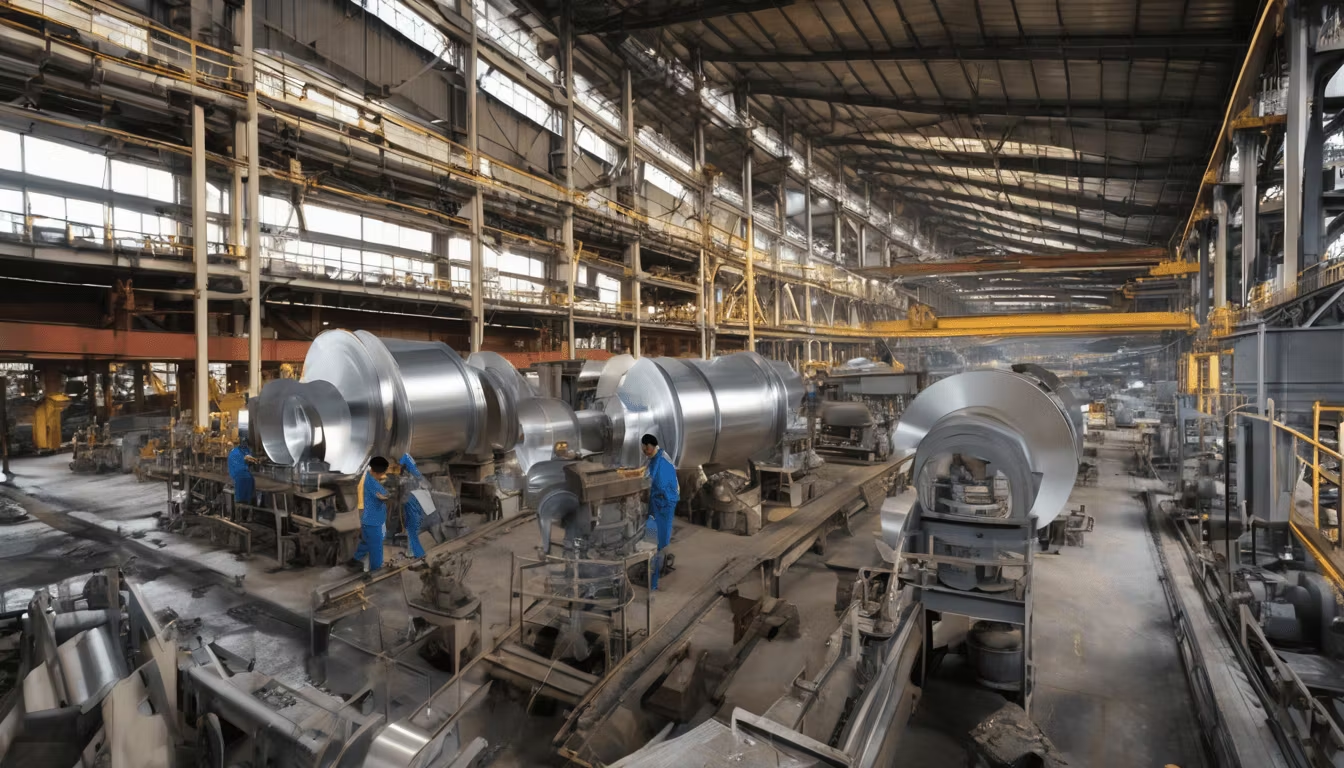
Sand washing represents the foundational stage of silica sand beneficiation. Raw silica sand extracted from deposits contains clay, silt, iron oxide, and other deleterious materials that compromise product quality. A sand washing plant uses controlled water flow and mechanical action to separate these contaminants from the silica particles.
The washing process operates through several mechanisms:
- Hydraulic Classification: Water flowing at specific velocities lifts lighter clay and silt particles away from heavier silica grains, allowing them to overflow while sand settles.
- Mechanical Agitation: Rotating screws and paddles within wash tanks generate friction that breaks clay coatings adhering to sand surfaces.
- Attrition Scrubbing: Sand grains rubbing against each other removes additional surface contaminants, improving brightness and whiteness.
- Water Clarification: Overflow water passes through settling tanks where fine particles precipitate before water recirculation.
Modern sand washing plants achieve iron oxide reduction from 0.5-1.5% down to 0.1-0.3%, significantly improving the final product's suitability for sensitive applications like solar panel glass and optical-grade materials.
2. Screening and Classification Systems
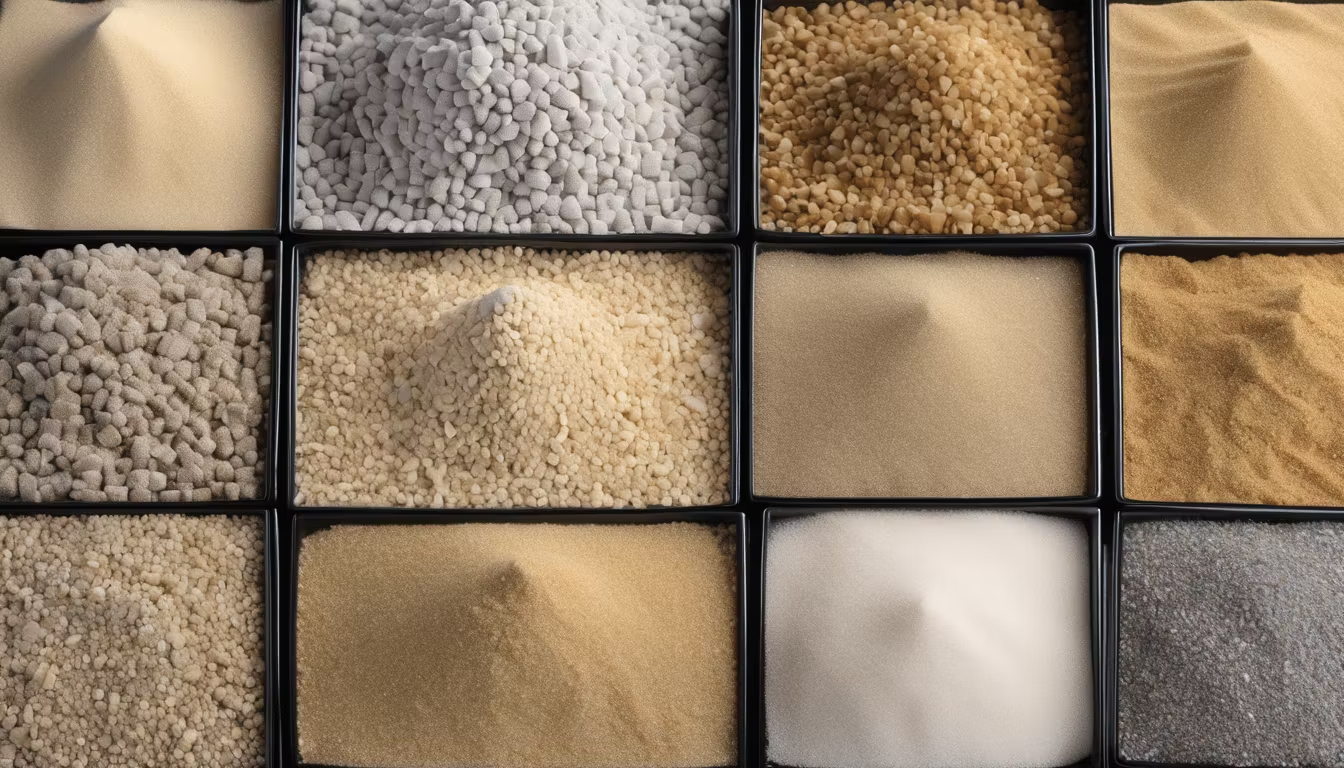
After washing, sand beneficiation continues through precision screening that classifies material into specific mesh grades. This stage is crucial because different industries require different particle size distributions.
Silica sand beneficiation uses multiple screening technologies:
- Vibratory Screens: High-frequency vibration (1200-1800 RPM) efficiently separates sand into 40-60 mesh, 60-100 mesh, 100-200 mesh, and finer grades. Precise mesh selection prevents material loss and maximizes yield.
- Dewatering Screens: Remove excess moisture from washed sand before bagging or shipping, reducing logistics costs and preventing material degradation.
- Scalping Screens: Remove oversized material that could damage downstream equipment or compromise product specifications.
Glass manufacturers often specify 40-60 mesh sand, while ceramics producers prefer 100-200 mesh for superior finish. Foundries typically use coarser grades (20-40 mesh) for core binders. Our beneficiation process accommodates all these specifications, ensuring customers receive exactly the particle distribution their processes require.
3. Magnetic Separation in Sand Processing
Magnetic separation represents the final critical stage of professional silica sand beneficiation. Even after washing, paramagnetic iron oxides and ferromagnetic iron minerals remain in the product. These contaminants cause discoloration, create defects in glass, and reduce material performance in precision applications.
Magnetic separation sand equipment employs several technologies:
- Dry Magnetic Separators: Utilize permanent magnets or electromagnets to remove ferromagnetic particles from dry sand. Most cost-effective for initial iron removal stages.
- Wet Magnetic Separators: Process sand suspended in water, achieving superior iron oxide removal (down to 0.05%) compared to dry methods. Particularly effective for float glass applications.
- High-Intensity Magnetic Separators: Using field strengths of 5,000-20,000 Gauss, these systems capture weakly magnetic minerals that conventional separators miss. Essential for producing SiO₂ 99.7%+ products.
- Multi-Stage Configuration: Combining coarse and fine magnetic separation with intermediate screening maximizes iron removal while maintaining production efficiency.
The effectiveness of magnetic separation directly correlates with final product brightness. Silica sand with brightness values above 92 (using Hunter Scale) commands premium pricing and opens access to high-value markets like optical glass and semiconductor applications.
Process Flow Integration and Best Practices
Optimal silica sand beneficiation requires seamless integration of all three process stages. The typical production sequence follows this workflow:
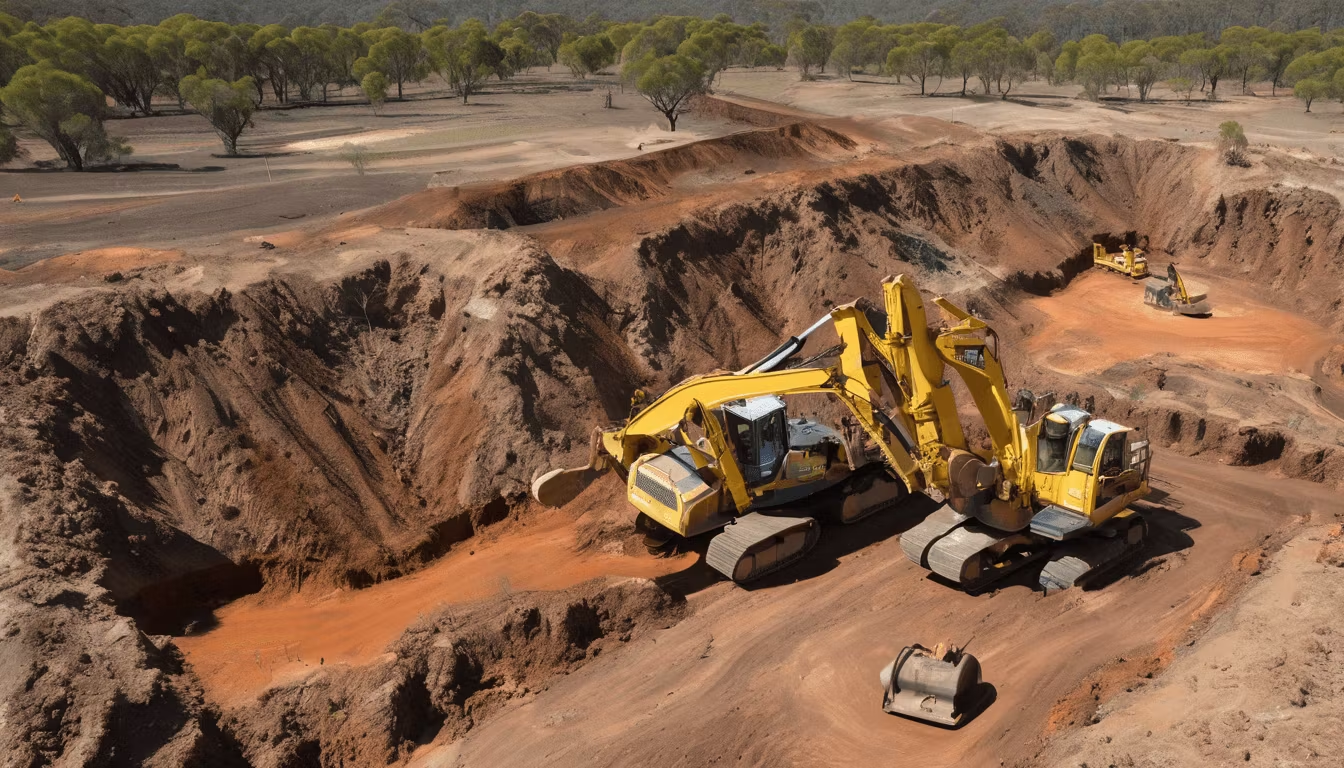
- Raw sand delivery from mining operations
- Primary washing in attrition scrubbers (1-2 minutes residence time)
- Secondary washing with classification (hydrocyclones separate fines)
- First-stage coarse magnetic separation (remove obvious iron oxides)
- Vibratory screening into target mesh grades
- Fine magnetic separation on individual size fractions
- Dewatering and moisture adjustment
- Quality verification through SUCOFINDO laboratory testing
- Bagging, containerization, or bulk loading
Process efficiency metrics that professional operators monitor include water recovery rates (typically 85-95%), yield (percentage of saleable product from raw material), and power consumption per ton processed.
Quality Standards and Testing Protocols
Industrial buyers increasingly demand third-party verification of silica sand beneficiation effectiveness. All material from CV Indoalam Mineral Persada undergoes SUCOFINDO laboratory analysis confirming:
- SiO₂ content (specification: 99.74%)
- Fe₂O₃ levels (target: <0.1%)
- Al₂O₃ percentage (<0.1%)
- Moisture content (<0.5%)
- Particle size distribution across specified mesh grades
- Brightness and color values
- Loss on ignition (LOI) <0.5%
Our IUP OPK license and RKAB approval provide additional assurance of compliance with Indonesian mining regulations and sustainable extraction practices.
Applications Enabled by Advanced Beneficiation
Professional silica sand beneficiation opens access to premium market segments:
Glass Manufacturing: Float glass producers require SiO₂ >99.5% with minimal iron oxides. Beneficiated sand produces clearer, more consistent glass with fewer defects and reduced production costs.
Foundry Operations: High-quality beneficiated sand improves mold and core strength, enabling thinner walls, better surface finish, and reduced scrap rates in metal casting.
Water Treatment: Precisely graded, beneficiated sand ensures optimal filtration performance in municipal and industrial water purification systems.
Ceramics and Tile Production: Consistent particle size from proper screening produces uniform tile density, reduces firing defects, and improves final product aesthetics.
Construction Materials: Beneficiated sand meets specifications for manufactured sand (M-sand) in concrete production, replacing natural resources while improving material properties.
Cost-Benefit Analysis of Modern Beneficiation
Industrial buyers sometimes question whether beneficiation investments justify their costs. The economics are compelling:
- Premium pricing for high-purity material typically exceeds beneficiation costs by 20-40%
- Reduced downstream processing (glass manufacturers require less flux material)
- Lower scrap and rework rates in foundries and ceramics operations
- Extended equipment service life from reduced abrasive contamination
- Compliance with customer specifications reduces order rejection and returns
- Access to export markets with strict import specifications
Companies sourcing non-beneficiated sand face hidden costs through production inefficiencies and quality issues that often exceed the beneficiation premium.
Why Choose CV Indoalam for Beneficiated Silica Sand
CV Indoalam Mineral Persada operates modern beneficiation infrastructure specifically designed for industrial buyer requirements. Our advantages include:
- Direct-from-Mine Sourcing: Our mining operations in Sulawesi, Kalimantan, and Maluku feed directly into beneficiation plants, eliminating middlemen and ensuring consistency.
- Flexible Capacity: From 100 MT trial orders to 2.5 million metric tons annually, we accommodate buyer volumes without compromising quality.
- Certified Quality: All material receives SUCOFINDO laboratory verification before shipment, with test reports provided to customers.
- Regulatory Compliance: Our IUP OPK license, ET Batubara certification, and RKAB approval ensure legitimate, sustainable sourcing.
- Technical Support: Our team assists customers in optimizing material specifications for their specific applications, whether you're a glass manufacturer, foundry, or water treatment operator.
Conclusion
Silica sand beneficiation through washing, screening, and magnetic separation transforms raw mineral deposits into industrial materials that drive modern manufacturing. Professional beneficiation isn't a luxury—it's an economic necessity for competitive industries requiring consistent, high-quality material.
Whether your operation requires 40-60 mesh sand for glass manufacturing, fine grades for ceramics, or specialty sizes for water treatment, proper beneficiation ensures your supply meets rigorous specifications while optimizing your process economics.
Contact CV Indoalam Mineral Persada today to discuss your silica sand requirements and discover how our beneficiated material can improve your operational efficiency and product quality. We supply major nickel smelters, industrial parks, and cement manufacturers across Indonesia with trusted, quality-verified quartz sand that meets the most demanding industrial specifications.
Request samples, discuss volume requirements, or learn more about our sourcing capabilities by reaching out to our technical team. With two decades of combined industry experience and modern processing infrastructure, we're your reliable partner for premium beneficiated silica sand.