Primary vs Secondary Aluminium Ingot: Quality & Cost Comparison
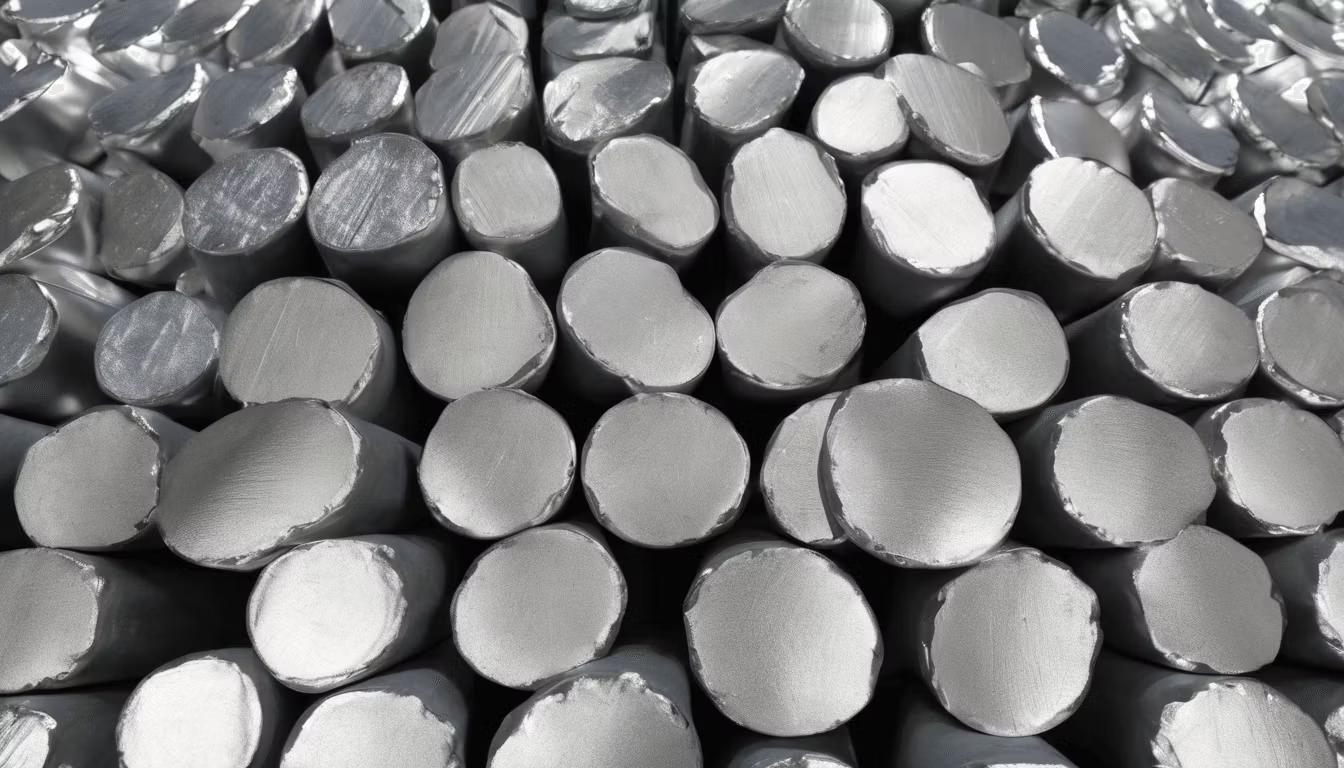
Primary vs Secondary Aluminium Ingot: Understanding the Key Differences
For manufacturers relying on aluminium ingot as a critical raw material, the decision between primary and secondary aluminium sourcing is fundamental to cost management, quality assurance, and supply chain sustainability. Whether you're a foundry operator, automotive parts manufacturer, or industrial component producer, understanding the distinctions between virgin and recycled aluminium is essential for making informed procurement decisions.
The choice between primary secondary aluminium directly impacts your production costs, material specifications, and environmental footprint. This comprehensive guide explores the quality and cost differences that matter most to B2B industrial buyers in Southeast Asia and beyond.
What Is Primary Aluminium?
Primary aluminium, also called virgin aluminium, is produced directly from bauxite ore through an energy-intensive electrolytic reduction process known as the Hall-Héroult process. The ore is first refined into alumina (aluminum oxide), then smelted using electrical current in industrial potlines to extract pure aluminium metal.
Primary aluminium production typically yields ingots with exceptional purity levels—ranging from 99.5% to 99.9% for standard grades—making it the preferred choice for applications demanding high material standards. The virgin aluminium ingot production process is capital-intensive, requiring specialized facilities and substantial electrical power, which directly influences its market pricing.
Major producers of primary aluminium ingots include operations in Indonesia, China, India, and the Middle East, where hydroelectric power availability makes production economically viable. International standards (ASTM B93, EN 12175) classify primary ingots by purity grade, with the most common commercial grades being A7 and ADC12.
What Is Secondary Aluminium?
Secondary aluminium is extracted from recycled aluminium scrap, industrial waste, and post-consumer products. This material undergoes remelting and refining processes that recover approximately 95% of the original aluminium content while consuming significantly less energy than primary smelting—typically 5-10% of the electricity required for virgin production.
Recycled aluminium quality depends heavily on the scrap source and refining methods employed. Secondary ingots generally achieve purity levels between 95% and 99%, which is acceptable for many industrial applications but may fall short of specifications requiring virgin material. The cost advantage of secondary aluminium typically ranges from 15-30% below primary ingot pricing, though fluctuations in global scrap availability and energy costs create market variability.
Secondary aluminium production has become increasingly significant in developed economies, where collection infrastructure and refining capacity are well-established. In emerging markets, secondary production is growing but remains constrained by limited scrap collection networks and processing facilities.
Quality Comparison: Primary vs Secondary Aluminium Ingots
Purity and Chemical Composition
The most critical quality distinction between primary secondary aluminium lies in chemical purity and trace element content. Primary virgin aluminium ingots maintain controlled levels of impurities, with specifications typically limiting iron, silicon, and copper content to less than 0.15-0.3% combined, depending on grade.
Secondary recycled aluminium quality varies considerably based on source material composition. Post-consumer beverage cans, for example, contain primarily aluminum with minimal alloying elements, yielding high-quality secondary ingots. Conversely, scrap from automotive casting operations or industrial machinery may contain higher iron, copper, and magnesium concentrations that complicate refining and affect final material properties.
Mechanical Properties
Primary aluminium ingots generally demonstrate superior and more consistent mechanical properties, including tensile strength, elongation, and fatigue resistance. This consistency matters significantly for precision manufacturing, aerospace components, and applications where material variability directly impacts product reliability.
While modern refining techniques have improved secondary aluminium quality substantially, recycled ingots may exhibit slightly lower ductility and reduced fatigue performance compared to virgin material, particularly in demanding structural applications. For non-critical castings, decorative components, and commodity hardware, however, secondary grades perform adequately.
Casting Characteristics
Primary ingots cast with superior surface quality and minimal gas porosity, offering cleaner microstructure beneficial for precision die casting and permanent mold casting. Secondary material, containing residual hydrogen and other gases from recycling processes, may require additional degassing treatments during melting, adding process complexity.
Traceability and Certification
Virgin aluminium ingot supply chains typically provide complete chemical analysis certification and material traceability from primary smelter through delivery. This documentation is essential for industries subject to strict material specifications, automotive supply chain requirements, or aerospace quality standards.
Secondary aluminium traceability is improving but remains more challenging, particularly when scrap sources are geographically dispersed or contaminated with dissimilar metals. Industries requiring certified material chains often specify primary sourcing to ensure compliance documentation.
Cost Comparison: Aluminium Ingot Pricing Dynamics
Raw Material Acquisition Costs
Primary aluminium production costs are driven by bauxite mining, alumina refining, and electrical power consumption. Global primary ingot pricing fluctuates with energy prices, currency exchange rates, and LME (London Metal Exchange) spot rates. Secondary aluminium costs depend primarily on scrap collection prices and refining efficiency, making secondary material generally 15-30% more economical than virgin grades.
Processing and Refining Expenses
Primary smelting requires continuous operation of specialized facilities with substantial fixed costs amortized across production volumes. Secondary refiners operate with more flexible capacity utilization but require investment in collection, sorting, and contamination removal infrastructure.
For recycled aluminium quality improvement—removing magnesium, zinc, copper, and iron impurities—refiners may employ grain refinement, hot top systems, or rotary degassing, adding 5-15% to secondary processing costs but enabling production of higher-purity grades.
Transportation and Logistics
Primary smelters are typically located near hydroelectric power or low-cost energy regions, potentially requiring longer freight distances. Secondary refiners are often distributed closer to scrap generation and end-user markets, potentially reducing logistics costs for regional consumers. In Southeast Asia, where CV Indoalam operates, locally sourced secondary material may offer freight advantages for domestic manufacturers.
Quality Premium Calculations
While secondary aluminium offers immediate cost advantages, the total cost of ownership analysis must factor in:
- Additional refining or degassing required in your manufacturing process
- Yield differences due to higher scrap rates with secondary material
- Potential product quality impacts or customer specification requirements
- Certification and testing costs if traceability documentation is required
For many applications, virgin aluminium ingot costs are justified by reduced processing steps and guaranteed material specifications, effectively narrowing the apparent cost gap between primary secondary aluminium when true manufacturing costs are calculated.
Industry Applications and Material Selection Criteria
Best Uses for Primary Aluminium Ingots
Applications that demand primary virgin aluminium ingot include:
- Aerospace and defense components requiring material certifications and traceable supply chains
- Automotive critical parts (engine blocks, suspension components) where material consistency is essential
- Electrical and electronic components requiring high electrical conductivity and purity
- Medical and pharmaceutical equipment demanding food-grade or pharmaceutical-grade material
- High-precision die casting requiring minimal porosity and superior surface finish
- Pressure vessels and safety-critical applications subject to regulatory inspection
Suitable Applications for Secondary Aluminium
Recycled aluminium quality is entirely acceptable—and economically optimal—for:
- Decorative castings and cosmetic components where appearance matters more than mechanical properties
- General-purpose foundry work including commodity hardware, brackets, and fittings
- Architectural and building components where recycled content adds sustainability value
- Commodity extrusions where raw material represents the bulk of product cost
- Packaging and container applications (beverage cans, food containers)
- Wear parts and replaceable components where performance is non-critical
Sustainability Considerations in Aluminium Sourcing
Recycled aluminium quality represents a compelling sustainability advantage, consuming 90-95% less energy than primary production. For manufacturers committed to corporate environmental responsibility or supplying customers with ESG requirements, secondary material offers genuine environmental benefits without significant performance compromise for suitable applications.
However, virgin aluminium production from responsible sources in countries with environmental oversight and renewable energy access represents a legitimate sustainability choice. The environmental calculus depends on specific electricity sources, transportation distances, and end-of-life recycling rates for finished products.
Sourcing Reliable Aluminium Ingot Supply in Southeast Asia
Indonesian manufacturers increasingly face sourcing decisions as global supply chains evolve. Whether requiring primary virgin aluminium ingot for precision manufacturing or secondary recycled material for cost optimization, partnering with established suppliers ensures material consistency, certification compliance, and supply reliability.
CV Indoalam Mineral Persada supplies both primary and secondary aluminium ingots to Indonesian foundries, metal casters, and export-oriented manufacturers. With direct sourcing relationships, SUCOFINDO laboratory testing, and full IUP OPK licensing, Indoalam ensures that your aluminium ingot procurement meets exact specifications while optimizing your total material costs.
Whether you're evaluating supplier relationships or comparing primary secondary aluminium options for a specific manufacturing challenge, working with a trusted regional partner eliminates sourcing uncertainty while maintaining the material quality and cost efficiency your operations demand.
Making the Right Aluminium Choice for Your Operations
The primary secondary aluminium decision ultimately depends on your specific manufacturing requirements, customer specifications, cost structures, and sustainability objectives. Primary virgin material justifies its cost premium for precision, aerospace, automotive, and safety-critical applications. Secondary recycled aluminium delivers compelling economics for commodity applications, decorative castings, and manufacturers prioritizing environmental responsibility.
The key to optimized aluminium procurement is establishing relationships with suppliers who understand both material grades and your specific manufacturing context. Direct sourcing from integrated producers—rather than spot market purchasing—ensures consistent quality, negotiated pricing, and supply reliability across economic cycles.
Contact CV Indoalam Mineral Persada today to discuss your aluminium ingot requirements. Whether you need primary grades ADC12 or A7, secondary recycled material, or guidance on material selection for your specific applications, Indoalam's technical team is ready to optimize your sourcing strategy. With Indonesia's largest mineral trading operations and direct relationships with smelters and refiners, Indoalam delivers the material quality, pricing, and supply certainty that keeps your operations running efficiently.