Nickel Market Trends 2026: Price Forecasts & Supply Dynamics
Nickel Market Trends 2026: Navigating Price Forecasts and Supply Dynamics
The global nickel market stands at a critical inflection point as we approach 2026. Driven by the accelerating energy transition, electric vehicle (EV) proliferation, and stainless steel demand, nickel has evolved from a commodity of secondary importance to a strategic metal powering the world's industrial future. Understanding nickel market trends 2026 has become essential for mining companies, smelters, manufacturers, and investors positioning themselves for the next phase of global growth.
This comprehensive analysis explores emerging price forecasts, supply-demand imbalances, production capacity expansions, and geopolitical factors that will shape the nickel price forecast landscape throughout 2026 and beyond.
The Global Nickel Market in 2025: Setting the Stage for 2026
Current Market Dynamics and Price Stability
As of 2025, the nickel market has experienced moderate price stabilization following the volatility of 2022-2023. The London Metal Exchange (LME) nickel benchmark has hovered in the $7,500-$8,500 per metric ton range, reflecting equilibrium between supply concerns and demand uncertainty. However, this relative calm masks underlying tensions that will intensify throughout 2026.
The primary driver of price stability has been Indonesia's strategic nickel production policies. As the world's largest nickel ore producer—accounting for approximately 35-40% of global output—Indonesia's export restrictions on unprocessed ore have fundamentally reshaped global supply chains. This has forced downstream processors and end-users to secure nickel ore through licensed domestic smelters or negotiate direct supply agreements with integrated producers.
For B2B buyers, this structural shift means that supply security increasingly depends on establishing direct relationships with licensed producers rather than relying on spot market purchases. Engaging with vertically-integrated suppliers capable of meeting both domestic and export-grade specifications becomes a competitive advantage.
Demand Pressures from the EV and Battery Revolution
Electric vehicle production continues its exponential trajectory, with global EV sales projected to reach 20 million units annually by 2026—up from approximately 14 million in 2024. Each EV battery requires 8-10 kilograms of nickel in high-energy-density lithium-ion chemistries, creating unprecedented demand growth.
Additionally, the shift toward higher-nickel-content batteries (NCA and NCMA chemistries) in premium EV segments amplifies per-unit nickel consumption. This means that even if EV unit sales growth moderates, the total nickel tonnage required per vehicle continues climbing.
Nickel Price Forecast 2026: Key Predictions and Scenarios
Base Case Scenario: $8,000-$9,500 per Metric Ton
Under baseline assumptions—moderate EV growth, stable stainless steel demand from construction and infrastructure, and balanced supply from Indonesia and other producers—most major financial institutions forecast the LME nickel price to trade within a $8,000-$9,500 range in 2026.
This represents modest upside from current levels but reflects persistent supply constraints. The critical factor supporting this scenario is continued Indonesian production of both saprolite and limonite ore grades. High-grade saprolite ore (Ni 1.5-2.0%) commands premium pricing and remains essential for integrated mills targeting NPI and ferronickel production. Lower-grade limonite ore (Ni 0.8-1.2%) supports HPAL (High Pressure Acid Leach) processing for battery-grade nickel sulfate.
For buyers sourcing raw materials, price stability in this range enables more predictable hedging strategies and long-term offtake agreements. Supply agreements with established producers offering consistent grade specifications and SUCOFINDO certification become particularly valuable.
Upside Scenario: $9,500-$11,000+ per Metric Ton
Upside pricing could materialize if EV adoption accelerates beyond consensus forecasts, particularly in China, Europe, and North America. Additionally, geopolitical disruptions affecting major suppliers (political instability in Indonesia or Papua New Guinea, labor disputes, regulatory changes) could constrain supply faster than new capacity comes online.
In this scenario, refiners and end-users face margin compression unless they have already secured long-term fixed-price contracts. The premium for supply reliability and certified quality becomes substantial, potentially adding $500-$1,000 per ton to transaction prices.
Downside Scenario: $6,500-$7,500 per Metric Ton
Downside risks emerge if macroeconomic slowdown dampens EV demand growth, particularly in China—the world's largest EV market. Additionally, ramp-up of new nickel laterite processing capacity in Indonesia, Philippines, and Papua New Guinea could temporarily oversupply the market.
In a downside scenario, producers face severe margin pressure, while buyers gain negotiating leverage. However, supply contract defaults and quality degradation often emerge as producers attempt to offset lower prices through reduced operational standards. This scenario underscores the value of working with licensed, quality-certified suppliers.
Nickel Supply and Demand Dynamics Reshaping 2026
Supply-Side Analysis: Production Capacity Expansion
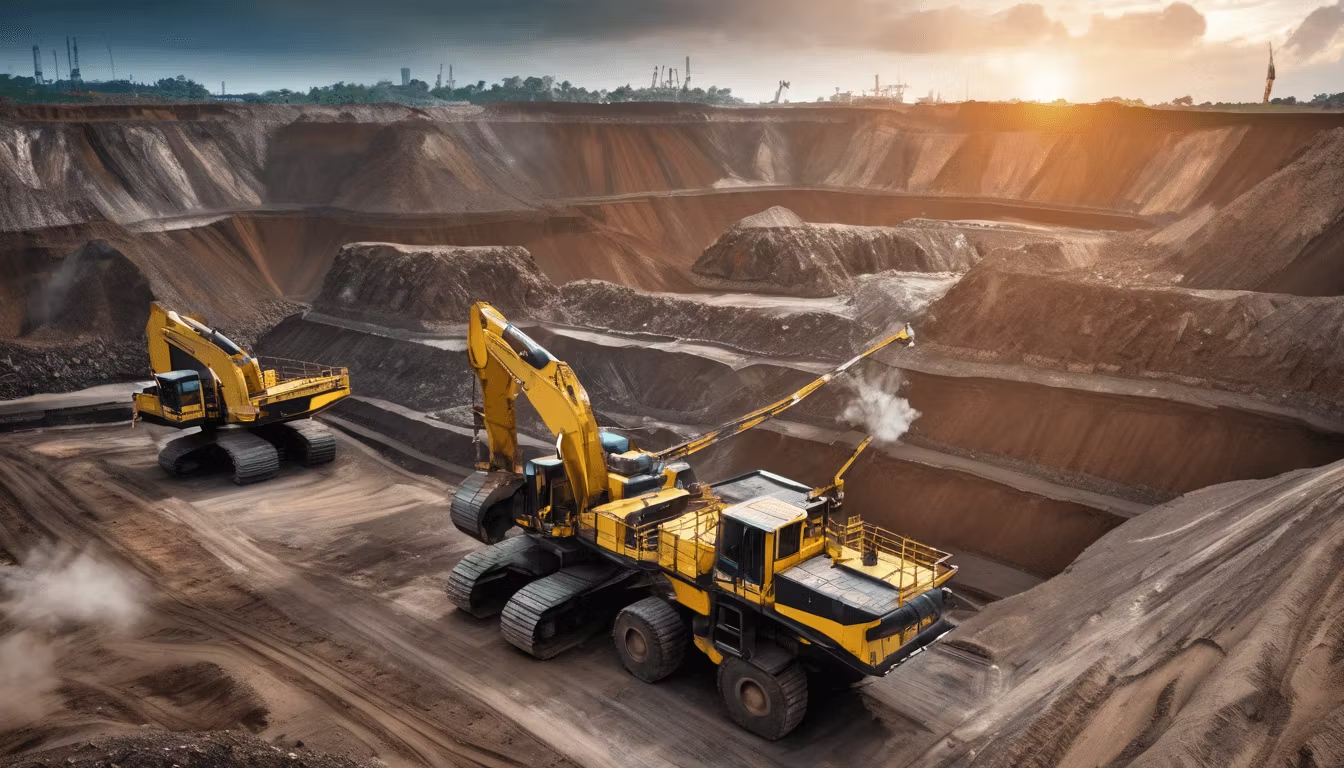
Global primary nickel production capacity continues expanding, driven predominantly by Indonesia and, to a lesser extent, the Philippines and Papua New Guinea. Indonesia is projected to increase production from approximately 1.2 million metric tons of nickel metal content (NMC) in 2024 to 1.4-1.5 million NMC by 2026.
This expansion comes from three main pathways:
- Laterite Ore Mining: Direct extraction of high-grade saprolite deposits, which feed integrated NPI smelters. These operations benefit from lower processing complexity and faster time-to-market.
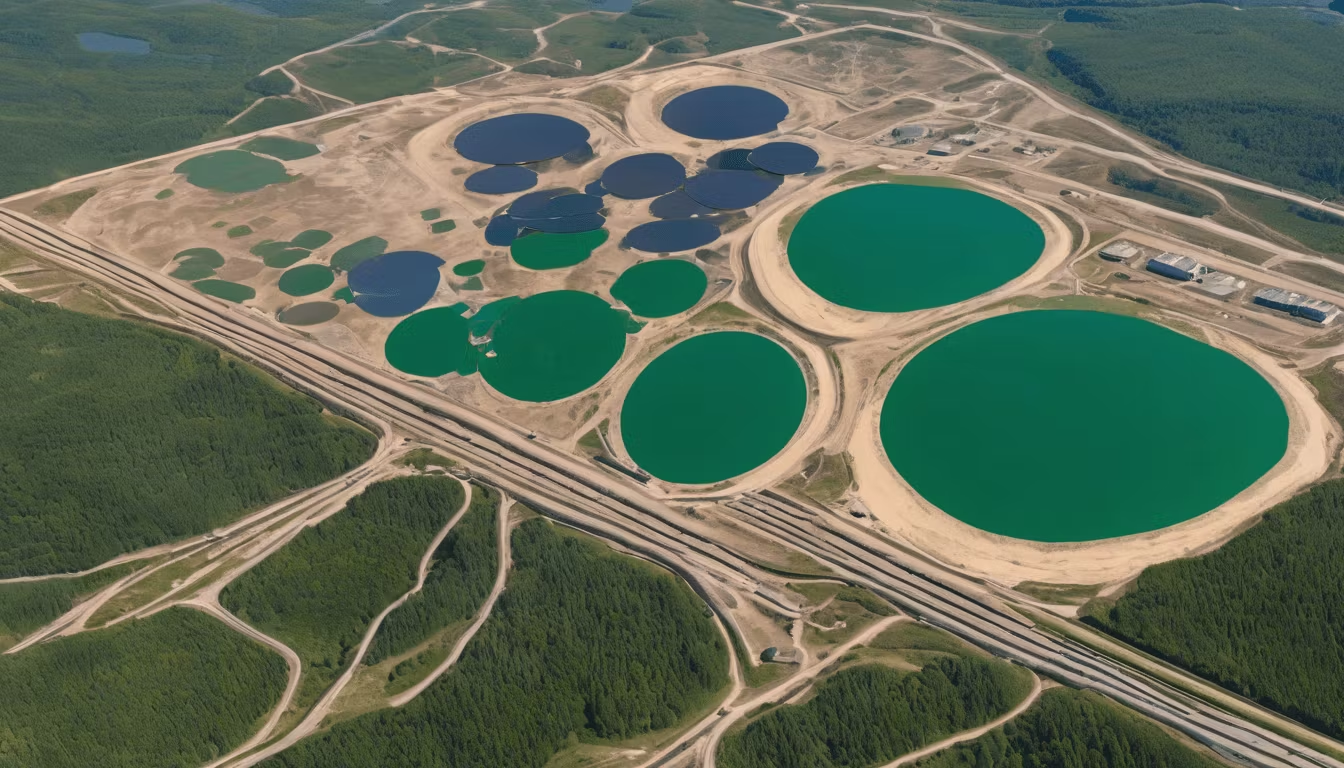
- HPAL Processing: Low-grade limonite ore processing using high-pressure acid leaching, producing nickel sulfate for battery manufacturers. While capital-intensive, HPAL facilities offer superior environmental management and product purity.
- Nickel Pig Iron (NPI) Production: Energy-intensive smelting of laterite ore, producing crude nickel for stainless steel and foundry applications. NPI remains cost-competitive despite environmental scrutiny.
However, capacity expansion faces constraints: electricity costs, environmental compliance, skilled labor availability, and infrastructure bottlenecks in remote mining regions. Indonesia's commitment to sustainable mining practices and carbon-neutral production targets may moderate growth rates below optimistic forecasts.
Demand-Side Analysis: Battery Sector Dominance
Battery manufacturing will account for approximately 40-45% of global nickel demand by 2026, up from roughly 30% in 2020. This structural shift concentrates market power among a small number of battery cathode manufacturers and EV producers, creating winner-take-most dynamics.
Traditional stainless steel production—historically the largest end-use sector—will represent approximately 65-70% of nickel demand but grow at a much slower 2-3% annually. Infrastructure investment in Southeast Asia and India provides some offset, but mature markets (Europe, North America, Japan) show stagnant construction activity.
Specialty applications including aerospace alloys, electronics, and catalysts collectively represent 10-15% of demand but command premium pricing and drive innovation in production techniques.
Regional Supply Concentration Risk
Approximately 60% of global laterite nickel ore production is concentrated in just three countries: Indonesia (35-40%), Philippines (15-20%), and Papua New Guinea (10-15%). This extreme geographic concentration creates geopolitical vulnerability.
Indonesia's recent export policies demonstrate how production-side constraints can ripple globally. The government's phase-out of unprocessed ore exports (completed in 2020) forced the entire downstream industry to relocate processing capacity to Indonesia or negotiate partnerships with domestic producers. This regulatory architecture remains in place for 2026 and beyond, fundamentally shaping buyer sourcing strategies.
Geopolitical and Regulatory Factors Influencing 2026 Forecasts
Indonesia's Nickel Export Policy and Domestic Smelter Capacity
Indonesia's ban on unprocessed nickel ore exports creates an artificial supply floor—refiners and manufacturers requiring Indonesian ore must purchase from domestic processors or negotiate off-take agreements with integrated mining-smelting operations. This policy is unlikely to change through 2026, ensuring continued premium valuations for Indonesian-sourced nickel products.
For international buyers, this means supply chains increasingly route through Indonesian processors rather than purchasing ore directly. Establishing direct relationships with licensed domestic smelters—those holding IUP OPK permits and RKAB approval—becomes strategically essential.
Environmental and ESG Considerations
Nickel mining's environmental footprint is substantial: laterite mining generates large overburden volumes, HPAL processing consumes significant electricity, and residue management presents long-term challenges. By 2026, major battery manufacturers and EV companies increasingly require ESG-compliant sourcing, including:
- Third-party quality audits (SUCOFINDO, SGS certification standards)
- Traceability from mine to end-product
- Adherence to environmental management standards
- Labor practice compliance
- Community engagement and indigenous rights respect
Suppliers unable to demonstrate ESG compliance face exclusion from premium contracts, creating a two-tier market where certified, sustainable sources command 5-15% pricing premiums.
Chinese Market Dominance and Competitive Pressure
China controls approximately 70% of global nickel refining capacity and supplies 80%+ of battery cathode material globally. Chinese processors and battery manufacturers have direct relationships with Indonesian mines and smelters, giving them cost and supply advantages.
By 2026, expect continued consolidation in nickel processing toward Chinese majors (TSINGSHAN, GEM, Hanwha, Huayou Cobalt), potentially limiting independent buyers' access to optimally-priced feedstock. Smaller refiners and manufacturers may face pricing discrimination unless they secure long-term contracts with reliable suppliers.
LME Nickel Outlook and Futures Market Implications
Volatility Expectations for 2026
The LME nickel futures market reflects significant uncertainty regarding 2026 supply-demand balance. Forward curve positioning—comparing nearby month prices to 12-month and 24-month contracts—currently shows a slight contango structure, suggesting market participants expect modest supply tightness but not acute scarcity.
However, this structure is vulnerable to shocks. Supply disruptions from Indonesian political instability, major smelter accidents, or accelerated EV adoption could rapidly shift the forward curve into steep backwardation, signaling immediate supply stress.
For B2B buyers, this outlook suggests hedging strategies based on physical offtake agreements rather than pure financial speculation. Combining fixed-price purchase contracts with LME futures positions allows simultaneous price protection and operational flexibility.
Technical Analysis and Support/Resistance Levels
From a technical perspective, the LME nickel price structure shows strong support at $7,000 per ton (psychological and historical level) and potential resistance at $9,500-$10,000 (cycle highs). The 200-day moving average currently hovering around $8,200 serves as a dynamic pivot point; sustained closes above this level suggest bullish sentiment, while breaks below signal potential momentum loss.
Long-term trend analysis indicates a secular uptrend intact through 2026, supported by structural EV demand growth and constrained supply. Mean reversion toward historical 15-20 year averages ($6,000-$7,000) appears unlikely without severe demand shock.
Strategic Implications for Mining Companies and Buyers
Sourcing Strategy Recommendations
For mining companies and industrial buyers, 2026 requires sophisticated sourcing strategies:
- Long-term Contracts: Secure multi-year supply agreements at fixed or collared prices with reliable producers, reducing exposure to spot market volatility.
- Supplier Diversification: Avoid over-reliance on single-source suppliers; establish relationships with producers across multiple regions (Indonesia, Philippines, Papua New Guinea).
- Quality Certification: Prioritize suppliers offering SUCOFINDO lab testing, IUP OPK licensing, and documented traceability—premium suppliers command reliability advantages worth the cost.
- Vertical Integration Consideration: For large consumers, acquiring stakes in smelting or refining capacity provides margin capture and supply security.
Hedging and Risk Management
Implement blended hedging strategies combining physical contracts (70-80% of requirements) with LME futures or options (20-30% tactical allocation). This approach provides certainty while maintaining flexibility to capitalize on pricing opportunities.
Consider collar strategies—purchasing call options and selling put options—to limit downside risk while capping upside costs. With nickel volatility at historical 20-25%, option premium costs remain reasonable relative to the protection value.
Conclusion: Preparing for the 2026 Nickel Market
The nickel market trends 2026 reflect a fundamental structural shift toward battery-driven demand and constrained geographic supply concentration. While base-case nickel price forecasts suggest modest upside from current levels, extreme scenarios—both bullish and bearish—remain plausible depending on EV adoption trajectories and geopolitical developments.
The nickel supply demand balance remains fundamentally tight, particularly for high-purity, certified feedstock meeting ESG standards. LME nickel outlook reflects this complexity: forward curves show cautious optimism but remain vulnerable to shocks.
For B2B buyers, the 2026 forecast underscores the strategic importance of establishing direct relationships with licensed, quality-assured Indonesian producers. The era of fungible commodity purchasing has ended; specialized, certified supply now commands premium valuations justified by reliability and traceability.
Indonesian suppliers holding IUP OPK permits, RKAB approval, and SUCOFINDO certification will increasingly dominate the high-margin segment of the market. For buyers seeking to secure stable, compliant nickel supplies through 2026 and beyond, direct partnerships with these certified producers represent the optimal risk-adjusted strategy.
Partner With a Trusted Nickel Supplier for 2026
Navigating the complexities of the 2026 nickel market requires experienced, reliable supply partners. CV Indoalam Mineral Persada stands as a fully licensed Indonesian producer and trader, holding comprehensive IUP OPK and RKAB approvals with SUCOFINDO laboratory certification.
Our direct sourcing from Sulawesi (Morowali, Konawe), Kalimantan, and Maluku mining regions enables consistent supply of both high-grade saprolite ore (Ni 1.5-2.0%) and refined limonite ore (Ni 0.8-1.2%) meeting international specifications. Whether you require trial quantities of 100 metric tons or large-scale annual contracts exceeding 500,000 tons, we deliver certified, traceable supply aligned with your ESG requirements and price objectives.
Our expertise extends beyond nickel ore—we also supply premium silica sand, aluminium ingot, and zircon sand for diversified sourcing strategies.
Don't face the 2026 nickel market alone. Contact us today to discuss your supply requirements, secure favorable contract terms, and access the market intelligence shaping your competitive strategy. At Indoalam, we transform supply chain complexity into your competitive advantage.