Nickel and the EV Battery Revolution: Indonesia's Strategic Role

Nickel and the EV Battery Revolution: Indonesia's Strategic Role
The global electric vehicle (EV) market is experiencing unprecedented growth, with sales projections reaching 35 million units annually by 2030. Behind every advanced lithium-ion battery powering these vehicles lies a critical mineral: nickel. As the world races to transition to clean energy, Indonesia has emerged as a cornerstone of the global battery supply chain, controlling approximately 40% of the world's nickel reserves and producing the majority of battery-grade nickel. Understanding Indonesia's role in the EV battery revolution is essential for mining companies, industrial buyers, and commodity traders seeking reliable supply partnerships.
The Critical Role of Nickel in EV Battery Technology
Nickel is no longer just another industrial metal—it has become the backbone of modern battery chemistry. In lithium-ion batteries used in electric vehicles, nickel serves as a key cathode material that directly influences battery performance, energy density, and cost-effectiveness. As EV manufacturers push for longer driving ranges and faster charging times, the demand for high-nickel chemistry batteries has skyrocketed.
Why Nickel Matters for Battery Performance
Modern EV batteries utilize nickel-rich cathode chemistries such as NCA (Nickel-Cobalt-Aluminum) and NMC (Nickel-Manganese-Cobalt). Higher nickel content in these formulations provides several critical advantages:
- Increased Energy Density: Higher nickel percentages allow batteries to store more energy in the same physical space, extending vehicle range.
- Reduced Cobalt Dependency: As nickel content increases, the need for expensive and ethically problematic cobalt decreases, improving supply chain sustainability and cost structures.
- Enhanced Thermal Stability: Nickel-rich cathodes demonstrate superior thermal performance, contributing to battery safety and longevity.
- Lower Manufacturing Costs: Substituting nickel for cobalt reduces per-kWh battery production costs, making EVs more affordable for mainstream consumers.
Battery manufacturers targeting 80+ kWh battery packs require consistent access to high-quality, battery-grade nickel. This is where Indonesia's competitive advantage becomes critical.
Indonesia's Nickel Production Landscape
Ore Types and Processing Pathways
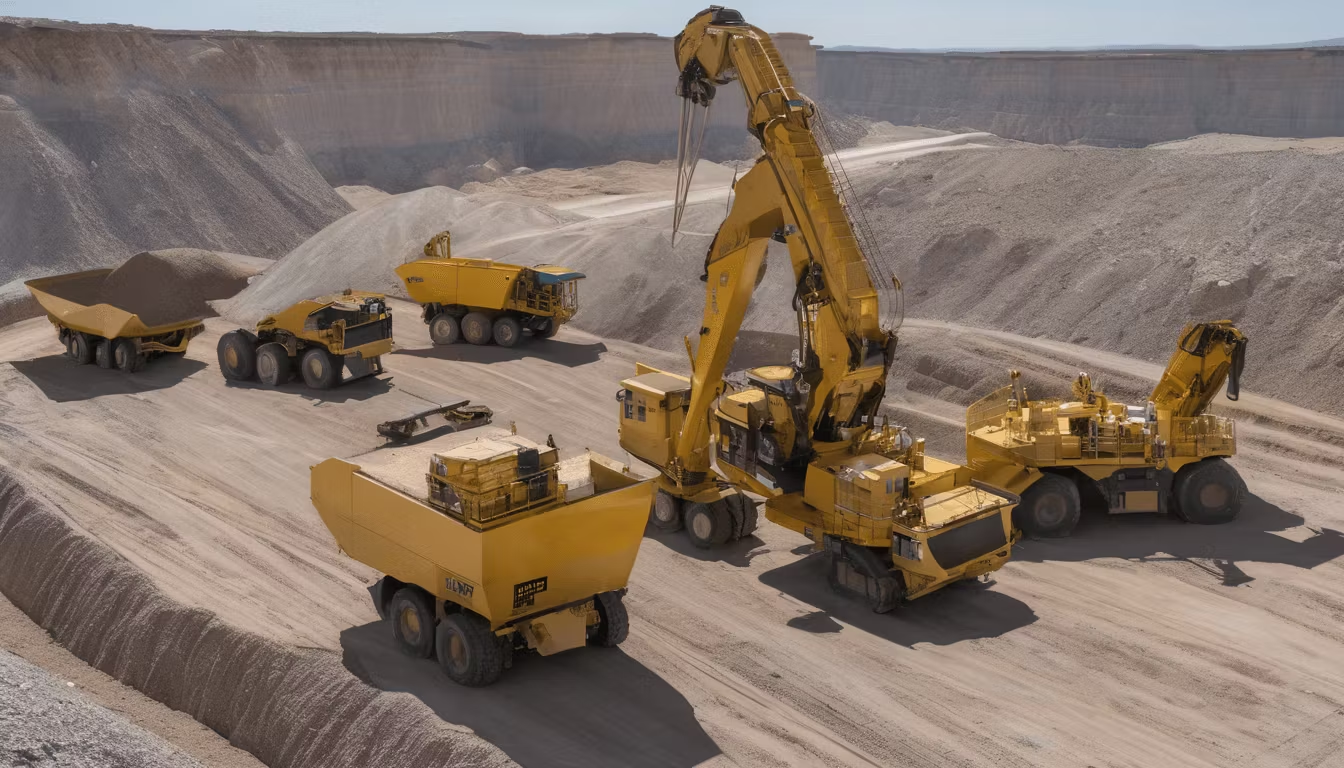
Indonesia produces two primary types of nickel ore: saprolite and laterite deposits. Each follows different processing routes to achieve battery-grade purity.
Saprolite Nickel (Ni 1.5-2.0%): Found primarily in Sulawesi's Morowali and Konawe regions, saprolite ore contains higher nickel concentrations and lower iron content. This ore type is ideal for direct nickel pig iron (NPI) production and high-pressure acid leaching (HPAL) processes, both critical pathways to battery-grade nickel.
Laterite Nickel (Ni 0.8-1.2%): These lower-grade deposits require more intensive processing but represent vast reserves across Indonesia. When processed through HPAL technology, laterite ore can achieve the purity standards demanded by battery manufacturers.
The HPAL Process: From Ore to Battery-Grade Nickel
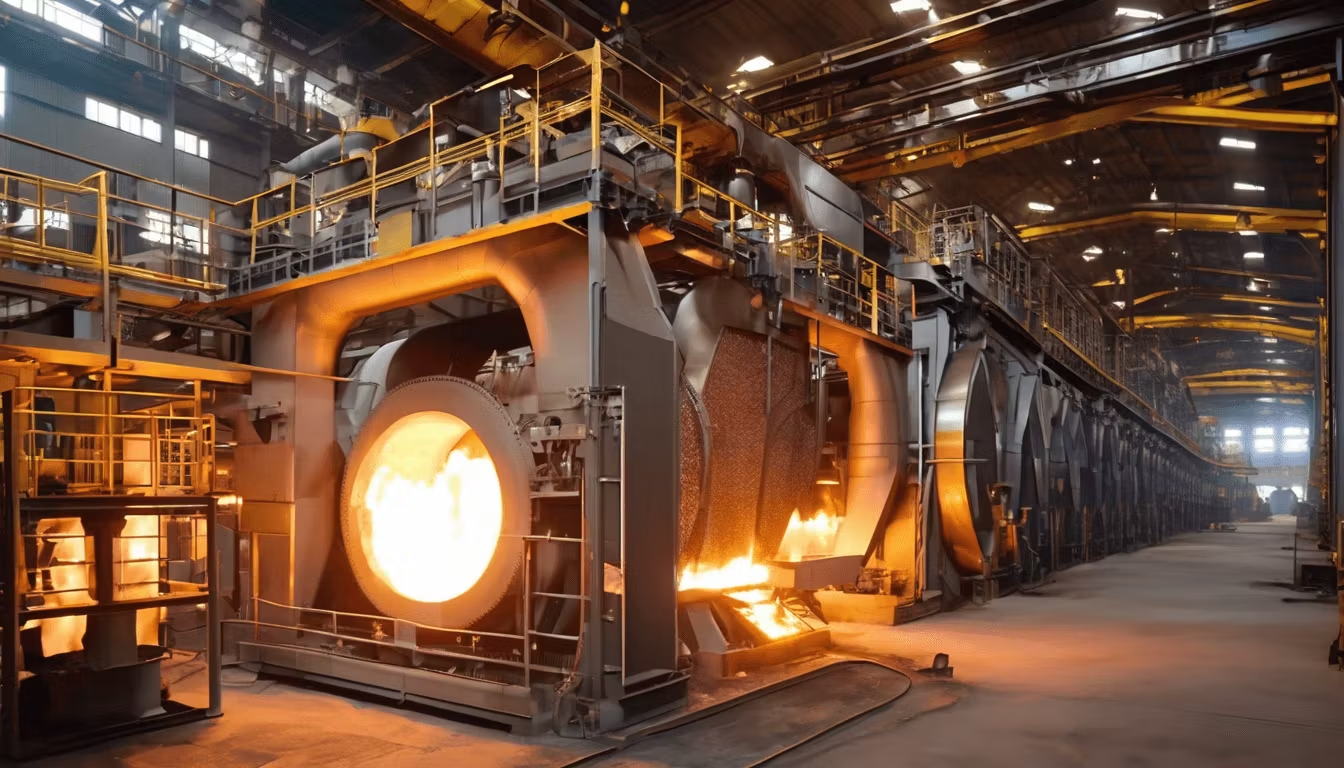
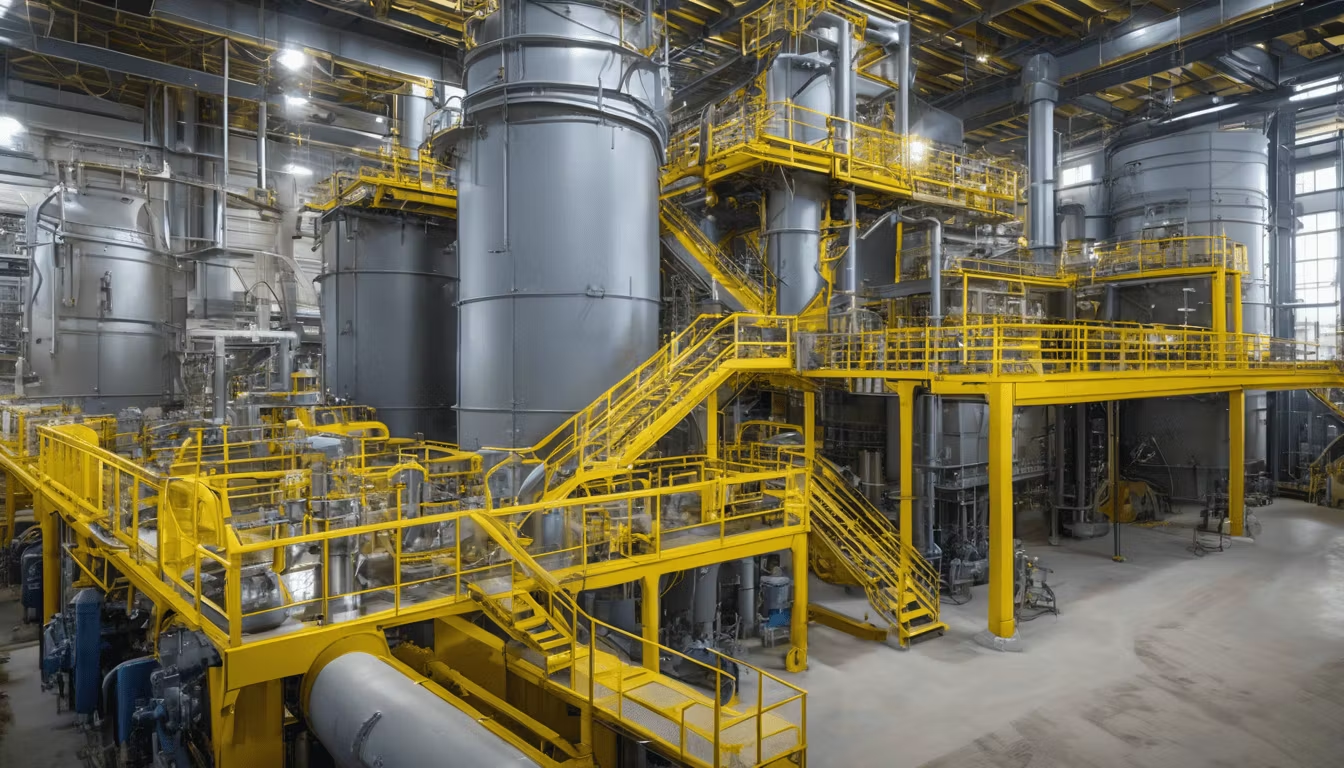
The HPAL (High-Pressure Acid Leaching) process represents the most advanced pathway for converting Indonesian laterite and saprolite ore into battery-grade nickel metal and intermediates. This process has transformed Indonesia's role in the EV supply chain:
- Ore Preparation: Mined ore is crushed and dried to optimal moisture content.
- Acid Leaching: Ore is mixed with sulfuric acid under high pressure and temperature (250-270°C), dissolving nickel and cobalt into solution.
- Solid-Liquid Separation: Iron impurities precipitate and are removed as jarosite.
- Purification: Nickel and cobalt are selectively precipitated using organic acids, removing remaining impurities.
- Final Refining: Purified solutions are converted to nickel sulfate (NiSO₄), nickel hydroxide (Ni(OH)₂), or metallic nickel depending on end-use requirements.
HPAL-processed nickel achieves the ultra-high purity standards (typically 99.8%+ for refined products) demanded by lithium-ion battery cathode manufacturers. Indonesian smelters operating modern HPAL facilities have become preferred suppliers for global battery manufacturers including CATL, LG Energy Solution, and Panasonic.
Indonesia's Market Dominance in Battery-Grade Nickel
Production Capacity and Global Market Share
As of 2024, Indonesia accounts for approximately 35-40% of global nickel production and over 60% of battery-grade nickel supply. The country's integrated nickel ecosystem—from mining through smelting—positions it as the world's most reliable source for EV battery materials.
Major Indonesian smelters including PT Vale Indonesia, PT Antam (Persero), and numerous private operators have collectively built over 1.5 million metric tons of annual HPAL capacity. This infrastructure advantage ensures stable supply for battery manufacturers scaling production to meet soaring EV demand.
Geographic Advantages and Supply Chain Integration
Indonesia's nickel mines are concentrated in strategically advantageous regions:
- Sulawesi (Morowali, Konawe): The richest nickel-bearing regions with direct access to deepwater ports for efficient export logistics.
- Kalimantan: Developing laterite deposits with emerging HPAL smelter infrastructure.
- Maluku (Halmahera): Newly developed reserves capable of supporting long-term supply contracts.
This geographic distribution allows Indonesian producers to maintain consistent, high-volume supply chains directly connected to smelting facilities and export terminals. B2B buyers benefit from integrated supply models that reduce supply chain fragmentation and ensure quality consistency.
Battery-Grade Nickel Standards and Quality Requirements
Specifications for EV Battery Applications
Battery manufacturers impose stringent specifications on nickel intermediates and refined metal. Understanding these requirements is essential for mining operations and trading companies sourcing materials.
For Nickel Hydroxide (Ni(OH)₂):
- Nickel Content: 46-48%
- Cobalt Content: 1.8-2.2% (for mixed hydroxide precipitate)
- Iron: <0.05%
- Manganese: <0.01%
- Moisture: <5%
- Particle Size: Controlled between 1-5 microns
For Nickel Sulfate (NiSO₄):
- Nickel: 21-22%
- Cobalt: <0.15%
- Iron: <10 ppm
- Purity: 99.8%+ (HPLC analysis)
Testing and Certification
Leading Indonesian suppliers maintain SUCOFINDO laboratory testing certification and comply with international standards including ISO 9001 quality management systems. B2B buyers should verify that suppliers maintain independent third-party testing protocols, ensuring material batches meet specification before shipment.
Supply Chain Risks and Strategic Considerations
Regulatory Environment and Export Controls
In 2020, the Indonesian government implemented an export ban on unprocessed nickel ore (raw ore), requiring all nickel exports to be processed into intermediate or refined forms (NPI, nickel hydroxide, or refined metal). This policy has accelerated development of downstream smelting capacity and ensures higher-value capture for Indonesia while securing supply of processed, battery-grade materials for international buyers.
For B2B purchasers, this regulatory framework guarantees that Indonesian nickel supply comes exclusively from licensed, regulated smelters with established quality controls—eliminating the uncertainty of unrefined ore sourcing.
Mining License and Operational Standards
Legitimate Indonesian nickel suppliers must hold:
- IUP (Izin Usaha Pertambangan): Mining operation permits issued by provincial governments
- RKAB Approval: Annual mining plans certified by Indonesia's Ministry of Energy and Mineral Resources
- Environmental Compliance: AMDAL (Environmental Impact Assessment) and regular compliance monitoring
These regulatory requirements ensure operational legitimacy and consistent supply availability for long-term contracts.
Strategic Opportunities for B2B Buyers
Direct Sourcing from Indonesian Suppliers
Companies seeking battery-grade nickel face a critical choice: source through commodity traders and middlemen, or establish direct relationships with Indonesian producers. Direct sourcing offers several advantages:
- Cost Competitiveness: Eliminating middlemen reduces per-unit costs by 5-15%.
- Quality Control: Direct oversight of smelting operations and testing procedures ensures consistent batch quality.
- Supply Security: Long-term contracts with producers guarantee priority allocation during tight market conditions.
- Flexibility: Direct suppliers can accommodate custom specifications and smaller trial quantities (100-500 MT) before committing to large contracts.
Diversifying Beyond Nickel
Battery production requires multiple mineral inputs beyond nickel. Leading Indonesian suppliers offer integrated portfolios. For example, silica sand (SiO₂ 99.74%) serves as essential material for glass separators in battery cells, while zircon sand is utilized in high-temperature refractory applications within smelting operations. Sourcing complementary materials from single suppliers streamlines procurement and ensures supply chain resilience.
The Future of Nickel in the EV Revolution
Demand Projections and Market Outlook
Battery-grade nickel demand is projected to grow from approximately 800,000 metric tons annually (2023) to over 2 million metric tons by 2035, driven by:
- EV adoption accelerating in developed and emerging markets
- Battery energy density improvements requiring higher nickel percentages
- Secondary battery recycling still in early stages (limiting supply from recycled sources)
- Energy storage and grid-scale battery deployment expanding beyond automotive applications
Indonesia's position to capture increasing market share remains secure, provided smelting capacity expands in line with global demand. For B2B buyers, this growth trajectory underscores the strategic importance of securing reliable, long-term Indonesian supply partnerships now.
Technology Evolution and Processing Innovation
Next-generation HPAL technologies are improving nickel recovery rates from laterite ore (historically lower grades), extending Indonesia's reserves lifespan and reducing per-unit production costs. These innovations will likely intensify Indonesia's competitive advantage over alternative nickel sources (Russia, Philippines, PNG) over the coming decade.
Partnering with CV Indoalam Mineral Persada for Battery-Grade Nickel Supply
For B2B mining companies, industrial manufacturers, and commodity traders seeking reliable battery-grade nickel supply, CV Indoalam Mineral Persada brings over two years of direct sourcing expertise combined with full regulatory compliance and quality assurance.
Our operational advantages include:
- Direct Mine Access: Established relationships with major nickel mines in Sulawesi (Morowali, Konawe), Kalimantan, and Halmahera eliminate middleman markups.
- SUCOFINDO Testing Certification: Every batch undergoes independent laboratory verification, ensuring specifications meet battery manufacturer requirements.
- Full IUP OPK and RKAB Licensing: All operations maintain Indonesian government permits and compliance certifications.
- Flexible Supply Models: From 100 MT trial shipments to annual contracts exceeding 2.5 million metric tons, we accommodate purchasing strategies from pilot programs to full-scale industrial integration.
- Strategic Sourcing Support: Beyond nickel, we supply complementary minerals including aluminium ingot and specialized sand products, enabling comprehensive mineral procurement through a single trusted partner.
The EV battery revolution has fundamentally transformed nickel from a commodity into a strategic industrial material. Indonesia's geological advantages, integrated smelting infrastructure, and regulatory framework position the nation as the world's most reliable battery-grade nickel source for decades to come. Companies developing EV battery supply chains must secure partnerships with established, compliant Indonesian suppliers to ensure consistent material flow and competitive cost structures.
Contact CV Indoalam Mineral Persada today to discuss your battery-grade nickel requirements, evaluate sample shipments, or establish a long-term supply partnership positioned to support your EV battery production growth.