IUP OPK Mining Permits in Indonesia: What Buyers Need to Know

Understanding IUP OPK: Indonesia's Mining License Framework
For B2B buyers sourcing minerals from Indonesia, navigating the regulatory landscape is crucial. The IUP OPK permit (Izin Usaha Pertambangan Operasi Produksi Khusus) represents one of the most important certifications indicating a legitimate, authorized mining operation. Understanding this licensing system protects your supply chain, ensures legal compliance, and guarantees quality standards across your procurement decisions.
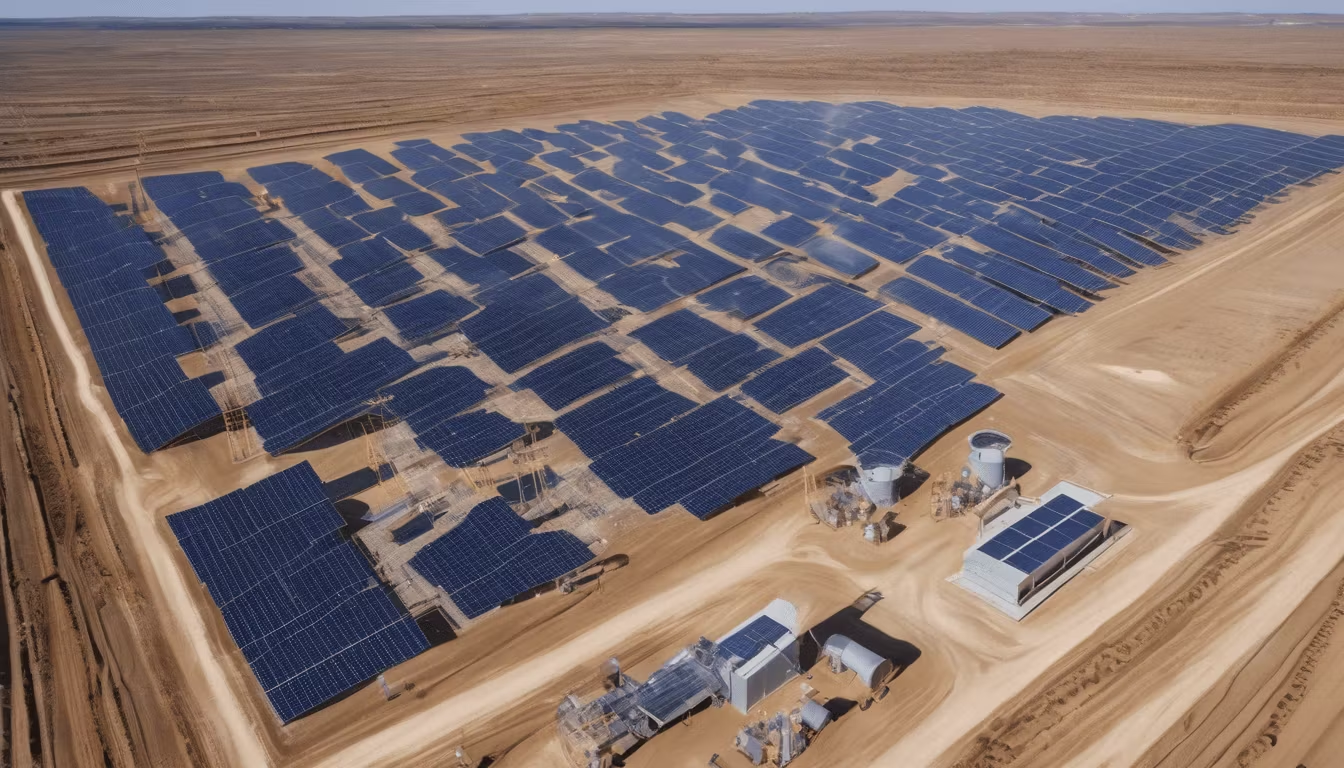
Indonesia's mining sector is one of the world's largest, producing everything from nickel to silica sand. However, the industry is heavily regulated to ensure environmental sustainability, worker safety, and resource conservation. The IUP OPK permit is the government's primary mechanism for authorizing commercial mineral extraction and trading operations.
What is IUP OPK?
IUP OPK stands for "Izin Usaha Pertambangan Operasi Produksi Khusus"��a special production operation mining license issued by Indonesia's Ministry of Energy and Mineral Resources (ESDM). This permit authorizes companies to conduct commercial-scale mining, processing, and trading of mineral commodities on designated concession areas.
Unlike exploration licenses (which allow prospecting) or operational production licenses (which cover standard mining), the OPK designation indicates an operation already producing minerals at commercial volumes. It's the most advanced stage of mining authorization in Indonesia.
Why IUP OPK Matters for International Buyers
When sourcing minerals like nickel ore or silica sand from Indonesia, verifying IUP OPK compliance serves multiple purposes:
- Legal Protection: Ensures your supplier operates within Indonesian law, reducing regulatory risk in your supply chain
- Quality Assurance: IUP OPK holders must maintain SUCOFINDO testing standards and RKAB (Rencana Kerja dan Anggaran Biaya) approval, guaranteeing consistent mineral specifications
- Supply Security: Licensed operations demonstrate financial stability and operational continuity
- ESG Compliance: Holders must meet environmental and social governance standards, supporting your company's sustainability commitments
- Trade Documentation: Permits facilitate legitimate export documentation and customs clearance
Mining License Categories in Indonesia
Indonesia's mining licensing structure includes several permit types, each with different scope and duration:
IUP (Izin Usaha Pertambangan) - General Mining License
The parent category for all mining permits. IUP comes in two main variants:
- IUP Eksplorasi (Exploration): Permits prospecting and resource assessment on designated areas for 3 years, renewable for 2 additional years
- IUP Operasi Produksi (Production Operation): Authorizes commercial extraction and processing for 20-30 years, depending on mineral type and project stage
IUP OPK (Special Production Operation)
A specialized subset of IUP Operasi Produksi, designated for high-capacity, strategically important mining operations. OPK holders typically operate at larger scales and must meet enhanced compliance requirements including:
- Annual SUCOFINDO third-party testing and certification
- RKAB (work and budget plan) approval from regional mining authorities
- Environmental impact assessments (AMDAL) and monitoring
- Social responsibility programs in mining communities
- Advanced safety and occupational health protocols
ET Batubara (Coal Operating Permit)
A separate authorization specifically for coal mining operations, with similar compliance requirements as IUP OPK but tailored to coal-specific extraction methods.
Verification: How to Confirm IUP OPK Status
Before committing to supply relationships, buyers should verify supplier credentials through these channels:
Official Government Verification
Contact the Ministry of Energy and Mineral Resources (ESDM) or regional mining offices (Dinas ESDM) to confirm:
- License holder name and company registration
- Permit issue and expiration dates
- Authorized concession area and coordinates
- Approved mineral commodities and production capacity
- Current compliance status and any violations
SUCOFINDO Certification Verification
SUCOFINDO (Surveyor Indonesia) is Indonesia's primary third-party testing and inspection body. Legitimate IUP OPK holders maintain current SUCOFINDO certification covering:
- Mineral grade and composition analysis
- Moisture content and impurity levels
- Physical properties and dimensional specifications
- Weight and volume verification
Request SUCOFINDO test certificates for any mineral shipment. These certificates provide independent verification of product quality and specifications.
RKAB and Environmental Compliance Records
Suppliers should provide documentation of:
- Current RKAB approval (typically annual)
- Environmental monitoring reports (water quality, air quality, land restoration)
- Community engagement program documentation
- Safety record and occupational health compliance
Mineral Commodities and Export Restrictions
Indonesia's mineral licensing framework includes important export restrictions affecting sourcing decisions:
Restricted Export: Nickel Ore
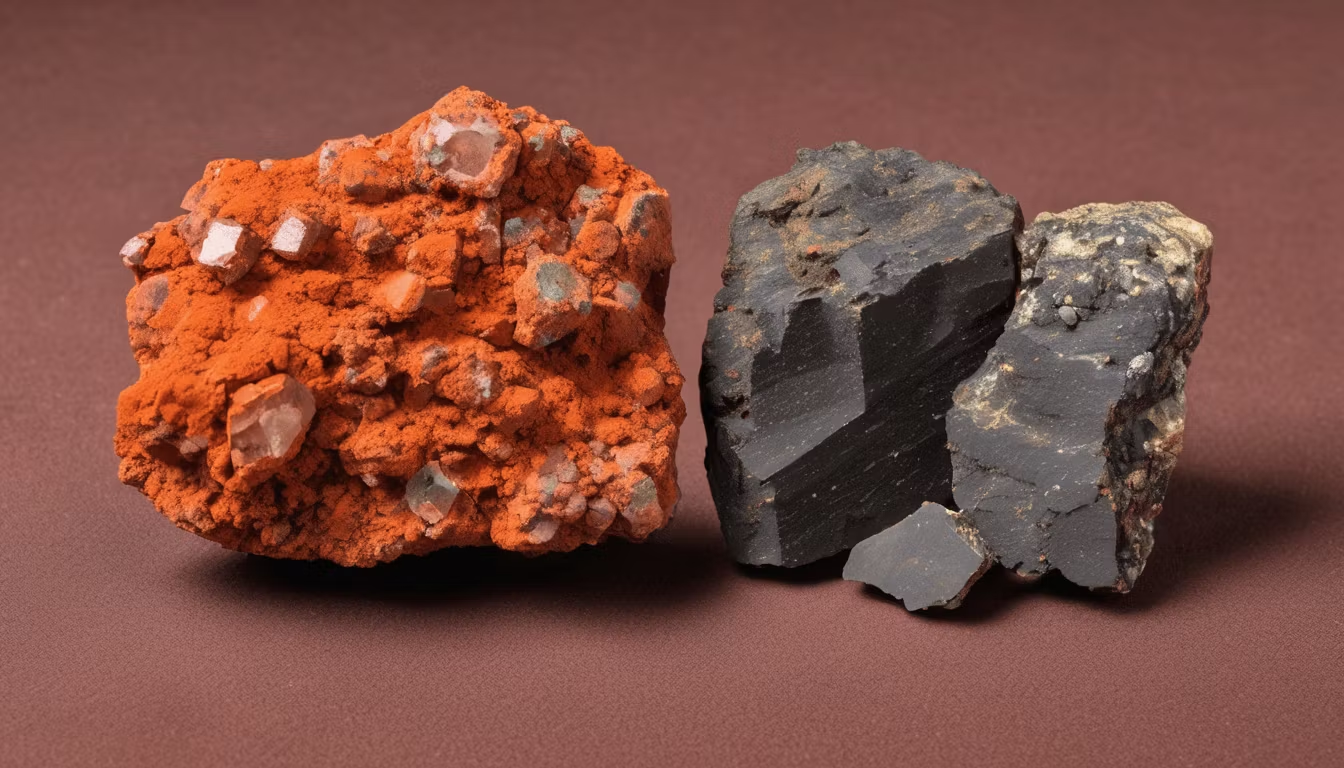
Nickel ore, including both Saprolite (Ni 1.5-2.0%) and Limonite (Ni 0.8-1.2%) grades, cannot be exported from Indonesia. This ban, implemented in 2020 to encourage domestic smelting capacity, means nickel must be sourced domestically and processed within Indonesia. IUP OPK holders can supply nickel ore only to domestic smelters (ferronickel, NPI, HPAL) and downstream industrial facilities.
Freely Exportable: Silica Sand and Aluminium Ingots
Silica sand and aluminium ingot (ADC12, A7 grade) can be freely traded domestically and exported internationally with proper IUP OPK authorization and export permits. However, suppliers must still maintain government compliance and SUCOFINDO certification.
Exportable with Monitoring: Zircon Sand
Zircon sand (ZrO2 65%+) is exportable but subject to government monitoring. Suppliers must maintain current IUP OPK status and export permits. International buyers should confirm suppliers have active export authorization before committing to supply agreements.
Regulatory Compliance for B2B Mineral Trading
When evaluating mineral suppliers, ensure they maintain comprehensive compliance across multiple regulatory frameworks:
License Categories Covering Multi-Commodity Operations
Legitimate suppliers typically hold IUP OPK covering multiple mineral categories (logam/metals, non-logam/non-metals, bahan bakar/fuel commodities). This demonstrates:
- Diversified sourcing capability and supply security
- Enhanced regulatory scrutiny and compliance infrastructure
- Ability to serve multiple customer segments and end-use applications
Third-Party Testing and Quality Assurance
SUCOFINDO certification is non-negotiable. Before accepting delivery, request:
- Pre-shipment inspection and testing reports
- Certificate of Analysis documenting mineral grade and specifications
- Weight verification by certified scales
- Batch traceability documentation linking material to mining concession
Supply Chain Documentation
Comprehensive IUP OPK suppliers maintain:
- Export permits and customs documentation
- Bill of lading and shipping documents
- Commercial invoices with mineral specifications
- Insurance documentation for mineral shipments
- Payment and contract documentation
Sourcing Regions and IUP OPK Operations
Indonesia's major mining regions each have specific regulatory frameworks and supplier ecosystems:
Sulawesi Operations
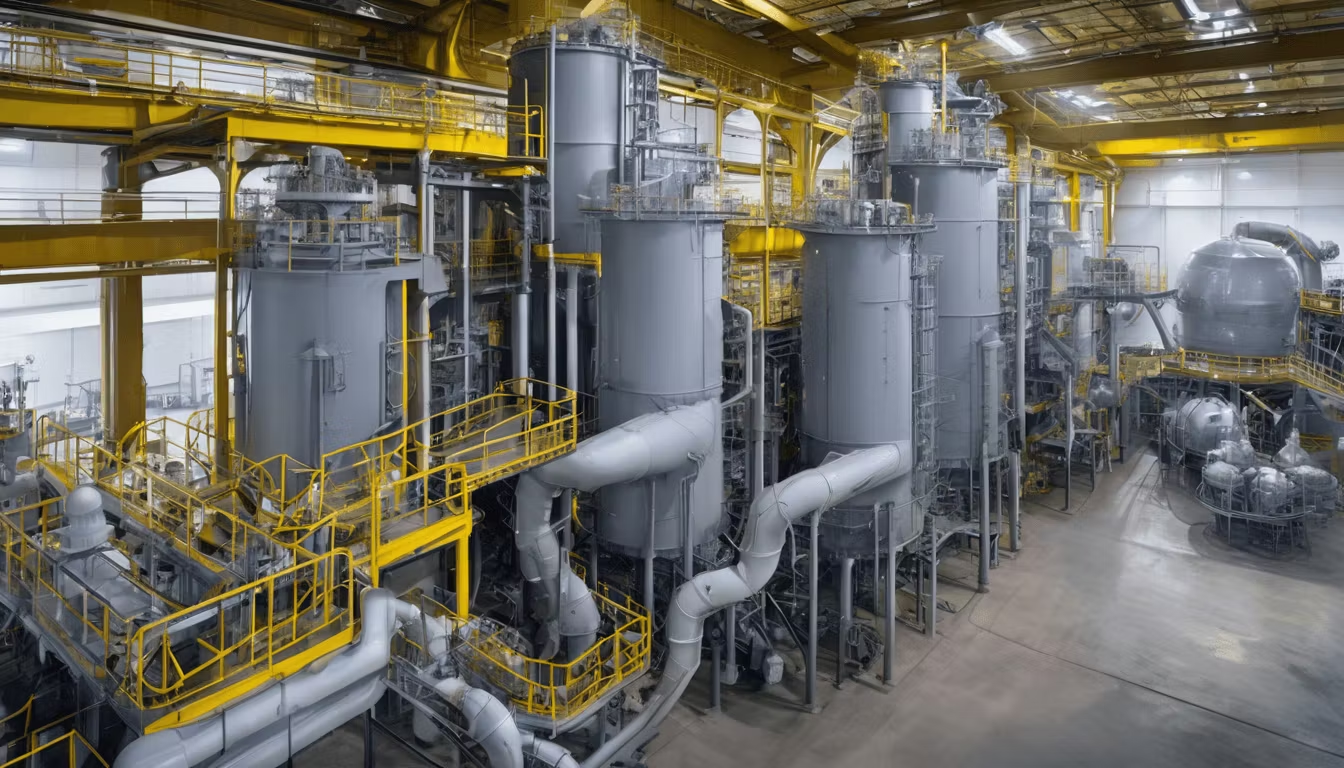
Morowali and Konawe concessions are among Indonesia's largest nickel-producing areas. IUP OPK holders in these regions typically supply ferronickel smelters and HPAL (High-Pressure Acid Leaching) operations.
Kalimantan Mineral Zones
Kalimantan hosts major silica sand and non-metallic mineral operations. Suppliers here often serve cement manufacturers, glass producers, and ceramics facilities across Indonesia and internationally.
Maluku and Halmahera
Halmahera is a significant zircon and specialty mineral production area. IUP OPK operations here serve glass, ceramics, and electronics industries both domestically and internationally.
Red Flags: Identifying Unregulated Suppliers
Protect your supply chain by avoiding suppliers without proper IUP OPK credentials. Warning signs include:
- No License Documentation: Inability to provide IUP OPK permit copies or government verification
- Missing SUCOFINDO Certificates: No third-party testing documentation for mineral specifications
- Unclear Sourcing: Inability to identify specific mining concessions or production origins
- Informal Payment Methods: Request for cash-only transactions or unofficial banking arrangements
- No Environmental Records: Absence of AMDAL, RKAB, or environmental monitoring documentation
- Inconsistent Specifications: Mineral grades or specifications that vary significantly between shipments
- Illegitimate Export Documentation: For supposedly exportable minerals like silica sand, inability to provide proper export permits
Benefits of Working with Licensed IUP OPK Suppliers
Established IUP OPK mineral suppliers offer competitive advantages for B2B buyers:
- Direct Sourcing: Eliminate middlemen by purchasing directly from licensed mining operations, reducing costs
- Supply Security: Licensed operations demonstrate financial stability and long-term operational continuity
- Quality Consistency: SUCOFINDO testing ensures mineral specifications remain constant across multiple shipments
- Flexible Volume: From trial quantities (100 MT) to full-capacity supply (2.5M MT+ annually), licensed suppliers offer scalable sourcing
- Regulatory Compliance: Eliminate supply chain risks related to mineral sourcing from unlicensed operations
- Documentation Support: Access comprehensive export permits, test certificates, and compliance documentation
Conclusion: Making Informed Sourcing Decisions
The IUP OPK mining license is Indonesia's highest standard for commercial mineral production. For B2B buyers sourcing nickel ore for smelters, silica sand for glass manufacturers, aluminium ingots for foundries, or zircon sand for ceramics producers, verifying IUP OPK compliance is essential to supply chain integrity, product quality, and regulatory risk management.
When evaluating Indonesian mineral suppliers, prioritize those with:
- Active, verifiable IUP OPK permits covering your required commodities
- Current SUCOFINDO certification and independent testing protocols
- RKAB approval and environmental compliance documentation
- Clear sourcing traceability and batch documentation
- Proven track record serving major industrial customers
At CV Indoalam Mineral Persada, we maintain full IUP OPK licensing across metals, non-metals, and fuel commodities, with SUCOFINDO-tested quality standards and RKAB-approved operations. Whether you require direct supply relationships or need to verify supplier credentials, we're committed to transparent, compliant mineral sourcing. Learn more about our operations and regulatory compliance, or contact us to discuss your mineral sourcing requirements.