Iron Content in Silica Sand: Why Fe2O3 Levels Matter for Glass

Understanding Iron Content in Silica Sand: A Critical Quality Parameter
Iron content in silica sand is one of the most significant quality factors determining whether raw material is suitable for premium glass manufacturing. For glass producers, the presence of iron oxide (Fe2O3) can transform a batch from crystal-clear finished product to visibly discolored glass—rendering entire production runs commercially worthless.
This challenge affects everyone in the supply chain: manufacturers, processors, and suppliers. Understanding iron content specifications isn't just technical minutiae; it's essential for maintaining product integrity, controlling costs, and ensuring customer satisfaction in competitive global markets.
At CV Indoalam Mineral Persada, we've sourced high-purity quartz sand from Indonesia's premier mining regions since 2022, with rigorous SUCOFINDO laboratory testing to guarantee iron oxide levels meet the strictest international standards. This article explores why Fe2O3 matters, how it impacts glass production, and how to source reliable low-iron silica sand.
What Is Fe2O3 and How Does It Enter Silica Sand?
The Chemistry Behind Iron Oxide Impurities
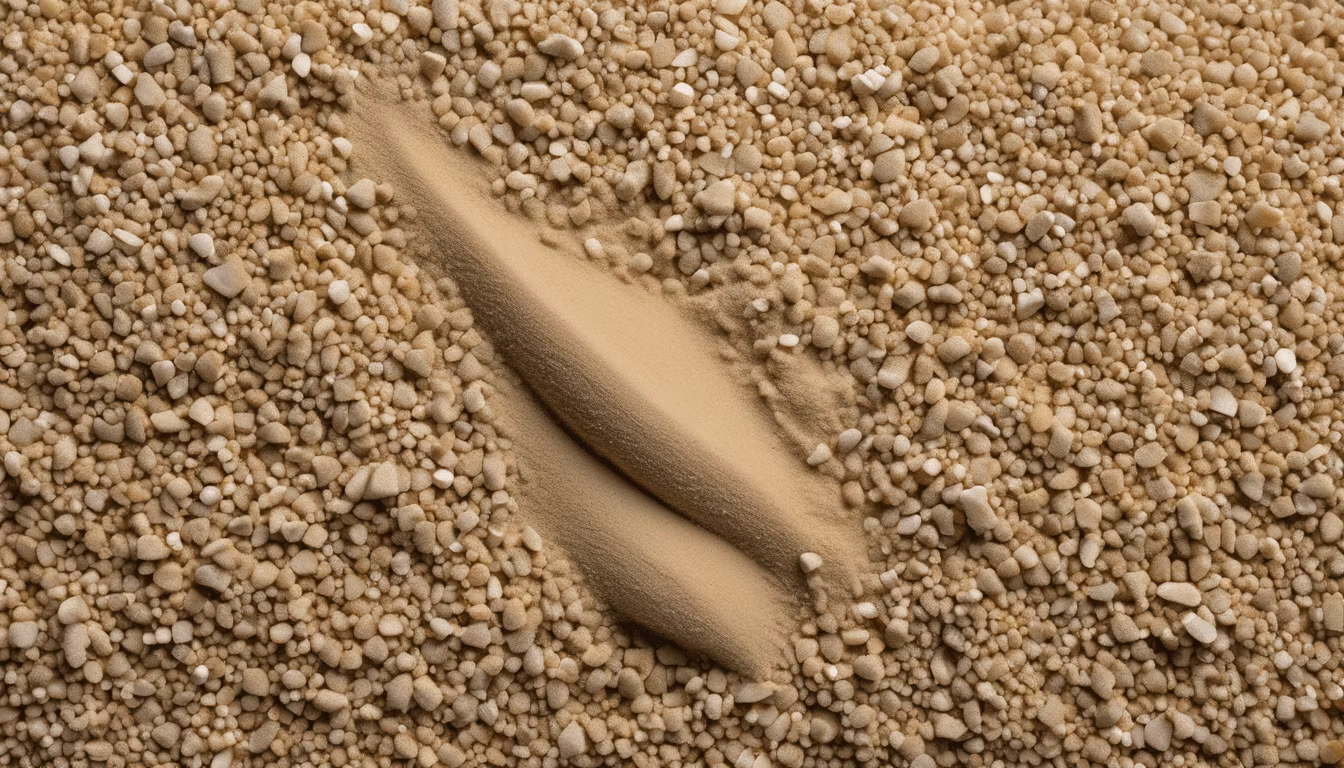
Iron oxide (Fe2O3), commonly known as ferric oxide or hematite, is a naturally occurring mineral frequently found in silica sand deposits. When iron-rich minerals become mechanically mixed with quartz sand during geological formation or mining extraction, Fe2O3 becomes an unwanted impurity in otherwise pure silicon dioxide (SiO2) material.
The iron content typically ranges from trace amounts (below 0.1%) in premium deposits to as high as 2-5% in lower-grade sand sources. The source of this iron comes from:
- Parent rock composition: Iron minerals within the geological formation surrounding quartz deposits
- Mining equipment contamination: Steel machinery and tools introducing metallic iron during extraction
- Incomplete beneficiation: Inadequate washing, screening, or magnetic separation processes
- Transportation and storage: Rust from steel containers and equipment contact
Why Fe2O3 Concentration Matters More Than You Might Think
Even minute quantities of iron oxide create visible color in glass. A silica sand sample containing just 0.05% Fe2O3 by weight will produce noticeably yellow-tinted or amber-colored glass when processed at high temperatures. For clear float glass, solar panels, and precision glassware, this is completely unacceptable. For colored glass intentionally targeting amber or brown hues, however, controlled iron content becomes a deliberate specification.
The relationship between Fe2O3 concentration and glass color is nearly linear: double the iron content, and you approximately double the color intensity in the finished glass product.
The Impact of Iron Content on Glass Manufacturing
Clear Glass Production and Color Requirements
The float glass industry—which produces approximately 90% of architectural and automotive glass globally—requires extremely strict iron oxide specifications. Standard clear float glass typically demands Fe2O3 levels below 0.03% (300 parts per million). Solar glass for photovoltaic modules often requires even lower thresholds: 0.015% or less, since even slight color absorption reduces light transmission efficiency and panel output.
When iron content exceeds these thresholds, several problems emerge:
- Light transmission loss: Iron oxide absorbs wavelengths across the visible spectrum, reducing the amount of light passing through the glass
- Aesthetic rejection: Buyers immediately notice color deviation, creating customer complaints and product returns
- Technical performance degradation: In optical applications and solar panels, reduced light transmission directly impacts functionality
- Market value collapse: Off-specification glass sells at 30-60% discounts or becomes unsaleable waste requiring expensive recycling
Impact on Glass Manufacturing Processes
Beyond the finished product, elevated iron content affects the manufacturing process itself. During the glass melting phase, iron oxide reacts with other components in the glass batch, potentially:
- Increasing melting temperatures required to reach desired viscosity
- Creating reduction-oxidation (redox) reactions that introduce unwanted color variations
- Causing refractory wear in furnace linings due to chemical interactions
- Producing crystallization issues that compromise glass homogeneity
Typical Iron Content Specifications by Glass Type
Clear Float Glass
Standard clear float glass for windows, mirrors, and general architectural use: Fe2O3 ≤ 0.03% (typical range 0.01-0.025%)
Extra-Clear or Low-Iron Glass
Premium clear glass used in museum displays, high-end automotive glass, and architectural applications: Fe2O3 ≤ 0.015% (ultra-premium: ≤ 0.008%)
Solar Glass for Photovoltaic Modules
Glass used in solar panel cover sheets, where light transmission is critical for energy conversion efficiency: Fe2O3 ≤ 0.015%
Container/Bottle Glass
Colored bottle glass and food containers where some color is acceptable or intentional: Fe2O3 0.05-0.15% (depends on target color)
Fiberglass and Wool Glass
Insulation and reinforcement materials where iron content is less critical: Fe2O3 ≤ 0.20%
How to Source Low-Iron Silica Sand: Best Practices
Geological Sourcing and Deposit Selection
The most cost-effective approach to managing iron content is selecting silica sand from naturally low-iron deposits. Not all quartz sand sources are created equal. Deposits located in geologically isolated formations—separated from iron-rich parent rocks—naturally contain lower Fe2O3 levels.
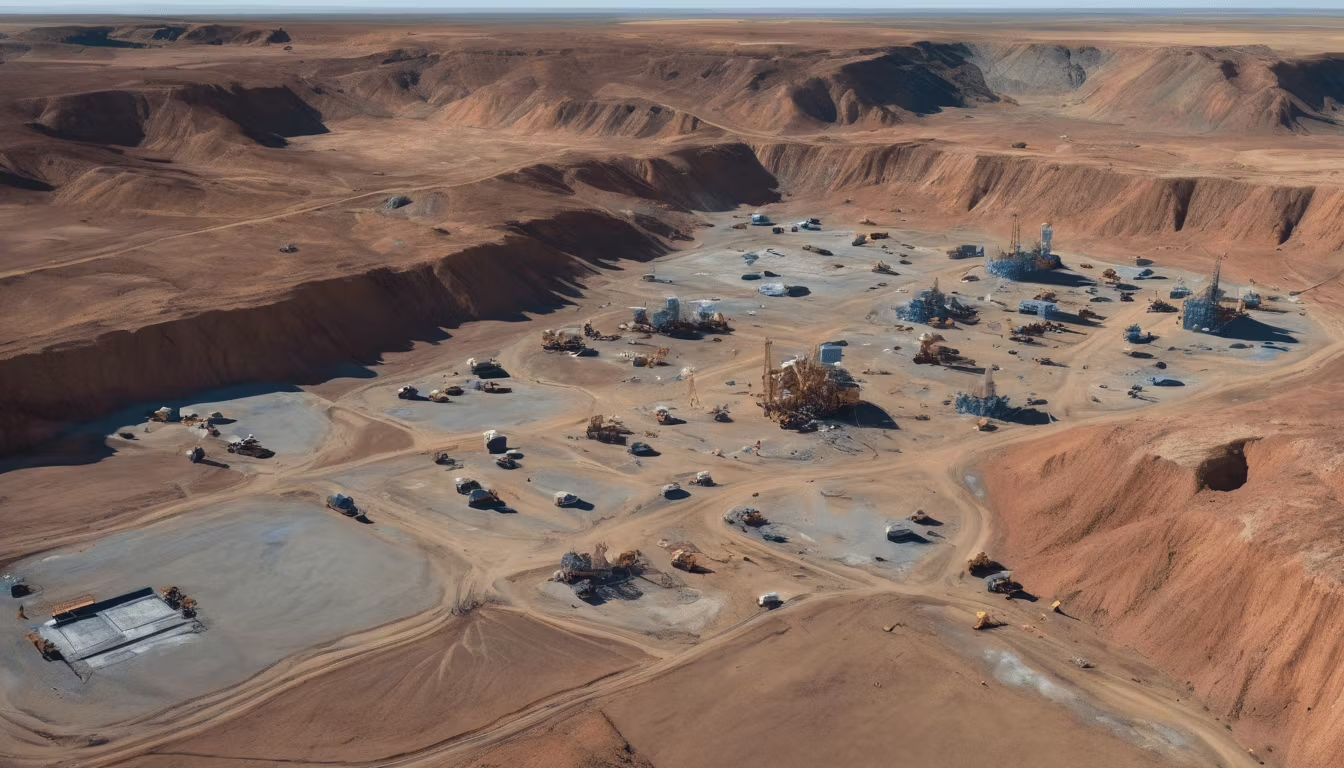
CV Indoalam Mineral Persada sources silica sand from premium deposits in Sulawesi (Morowali and Konawe regions), Kalimantan, and Maluku (Halmahera), all selected specifically for low natural iron content. Our sourcing strategy prioritizes geological quality over volume, ensuring baseline purity before any processing begins.
Advanced Beneficiation and Processing
Even naturally low-iron deposits require proper processing to remove residual Fe2O3. Modern beneficiation techniques include:
- Magnetic separation: Uses high-intensity magnets to remove ferromagnetic iron minerals (most effective for coarse grades)
- Heavy media separation: Exploits density differences to remove heavier iron-bearing minerals
- Wet scrubbing: Physical abrasion in water to remove surface iron coatings on sand grains
- Acid leaching: Chemical treatment to dissolve iron compounds (expensive but highly effective for premium grades)
- Flotation: Separates quartz from iron minerals based on surface properties
The most effective approach combines multiple techniques sequentially. For example: magnetic separation → heavy media treatment → scrubbing → acid leaching produces the lowest possible iron content.
Laboratory Testing and Certification
All silica sand should be tested by accredited laboratories before shipment. CV Indoalam utilizes SUCOFINDO (Indonesia's premier testing and certification body) for comprehensive Fe2O3 analysis, ensuring transparency and reliability. Test certificates should specify:
- Total iron content (Fe2O3 percentage by weight)
- Ferrous iron (Fe2+) vs. ferric iron (Fe3+) breakdown
- Other relevant specifications (SiO2 purity, particle size distribution, moisture content)
- Test date and laboratory accreditation details
Never source silica sand without requesting certified test reports. Visual inspection alone cannot determine iron content—discoloration may indicate iron, but absence of visible color doesn't guarantee low Fe2O3 levels.
Supply Chain Transparency and Direct Sourcing
Middleman distributors often provide limited transparency regarding material origin and processing history. Direct sourcing from established producers eliminates unknowns and enables closer relationships with quality control teams. This approach allows glass manufacturers to:
- Understand exact geological source of raw materials
- Monitor beneficiation process parameters
- Implement custom processing specifications for specific applications
- Negotiate volume-based pricing for consistent supply
Cost-Benefit Analysis: Premium Low-Iron Sand vs. Standard Material
Low-iron silica sand typically commands 15-40% price premiums over standard grades, depending on target Fe2O3 specification and processing intensity. However, this premium is almost always justified when manufacturing clear glass:
- Reduced batch waste: Fewer off-specification batches requiring recycling or downgrading
- Lower energy costs: Premium material melts more predictably, reducing furnace temperature fluctuations
- Improved furnace linings: Reduced chemical reactions minimize refractory wear
- Enhanced product value: Consistent color and quality support premium market positioning
- Fewer customer complaints: Reliable product quality reduces warranty claims and returns
For glass manufacturers producing high-value products (solar panels, optical glass, automotive glazing), the ROI on premium low-iron quartz sand is typically realized within the first production run.
Beyond Glass: Iron Content Significance in Other Industries
While glass manufacturing is the most iron-sensitive application, Fe2O3 levels matter across multiple industries:
Ceramics and Tile Production
Ceramic bodies and glazes require controlled iron content to achieve consistent color and prevent defects. Tile manufacturers often specify Fe2O3 ≤ 0.05%.
Foundries and Metal Casting
Silica sand used for mold production requires lower iron content to improve permeability and reduce casting defects.
Water Treatment
Filter sand applications benefit from low iron content to prevent water discoloration and maintain filtration efficiency.
Construction and Concrete
While less critical than glass applications, concrete manufacturers increasingly prefer low-iron sand to prevent aesthetic issues in exposed concrete finishes.
Sourcing Solutions: CV Indoalam Mineral Persada
CV Indoalam Mineral Persada specializes in supplying premium low-iron silica sand that meets glass industry standards. Our competitive advantages include:
- Direct-from-mine sourcing: We eliminate middlemen, reducing costs and improving transparency
- SUCOFINDO certification: All shipments include independent laboratory testing confirming Fe2O3 specifications
- Regulatory compliance: IUP OPK licensed operation with RKAB approval ensures legal, sustainable sourcing
- Flexible supply: From 100-metric-ton trial shipments to 2.5 million metric tons annually, we accommodate all requirements
- Regional expertise: Premium deposits in Sulawesi, Kalimantan, and Maluku with proven low iron characteristics
- Responsive technical support: Our team works directly with glass manufacturers to meet custom specifications
Whether you need silica sand for clear float glass, solar panel applications, or specialized industrial uses, our sourcing capabilities and quality assurance processes guarantee reliable low-iron material that meets the most stringent international standards.
Conclusion: Why Iron Content Matters for Your Glass Quality
Iron oxide (Fe2O3) content in silica sand represents far more than a minor chemical specification—it directly determines whether glass meets customer expectations and regulatory requirements. Even trace amounts of iron create visible color that compromises product value, particularly for clear glass, solar applications, and high-end architectural uses.
Successfully managing iron content requires a multi-faceted approach: selecting naturally low-iron geological deposits, implementing advanced beneficiation processes, demanding independent laboratory certification, and partnering with transparent, reliable suppliers committed to quality.
For glass manufacturers, ceramics producers, and foundries seeking consistent premium material, the investment in verified low-iron silica sand delivers measurable returns through reduced waste, improved efficiency, and enhanced product quality.
Contact CV Indoalam Mineral Persada today to discuss your silica sand requirements and discover how our direct-sourced, SUCOFINDO-certified material can elevate your manufacturing standards. With sourcing capabilities across Indonesia's premier quartz deposits and flexible supply volumes, we're positioned to support your business growth while maintaining the quality standards your customers demand.