Complete Guide to Indonesian Nickel Ore: Saprolite and Limonite

Introduction: Indonesia's Dominance in Global Nickel Supply
Indonesia stands as the world's largest nickel ore producer, controlling approximately 30% of global nickel reserves and producing over 800 million metric tons annually. This dominance stems from the country's vast laterite nickel deposits concentrated in Sulawesi, Kalimantan, and Maluku regions. For B2B buyers in the ferronickel, nickel pig iron (NPI), and high-pressure acid leach (HPAL) industries, understanding the nuances of nickel ore quality, grades, and sourcing logistics is critical for maintaining cost-effective production.
This comprehensive guide explores the two primary forms of Indonesian nickel ore—saprolite and limonite—their characteristics, applications, and how to identify reliable suppliers in a competitive market.
Understanding Nickel Ore Types: Saprolite vs. Limonite
Saprolite Nickel Ore: High-Grade, Iron-Rich Laterite
Saprolite is the deeper, weathered layer of laterite nickel deposits, characterized by higher nickel content and lower moisture levels compared to its limonite counterpart. Saprolite nickel ore typically grades between 1.5-2.0% Ni content, making it the preferred feed material for NPI smelters seeking higher throughput efficiency and lower processing costs per ton of finished product.
Key characteristics of saprolite include:
- Nickel Grade: 1.5-2.0% Ni (occasionally up to 2.2%)
- Iron Content: 35-45% Fe, making it ideal for NPI production
- Moisture: 8-15%, reducing drying costs
- Density: More compact, approximately 1.8-2.2 ton/m³ loose bulk
- Mining Depth: 15-40 meters below surface
Saprolite's superior metallurgical properties make it the premium choice for smelters operating energy-intensive processes. The higher iron-nickel ratio enables efficient reduction reactions in blast furnaces, yielding ferronickel grades of 20-28% Ni with minimal slag adjustment.
Limonite Nickel Ore: Lower Grade, Laterite Alternative
Limonite represents the oxidized, upper weathering horizon of laterite deposits, with lower nickel grades but substantially higher iron oxide content. Limonite nickel ore typically contains 0.8-1.2% Ni, making it suitable for HPAL operations and emerging direct reduction technologies where chemical leaching compensates for lower head grades.
Distinguishing features of limonite include:
- Nickel Grade: 0.8-1.2% Ni (occasionally lower in weathered zones)
- Iron Content: 45-55% Fe as iron oxides (hematite, goethite)
- Moisture: 20-35%, requiring substantial dewatering
- Specific Gravity: Lower than saprolite, approximately 1.4-1.8 ton/m³
- Mining Depth: 0-15 meters, surface to shallow excavation
- Cobalt Content: Often elevated (0.05-0.10%), valuable for battery applications
While limonite's lower nickel grade presents processing challenges, its higher cobalt content and suitability for HPAL circuit operations make it increasingly valuable as battery-grade nickel demand accelerates globally.
Geological Origins: Formation and Distribution in Indonesia
Laterite Nickel Deposit Formation
Indonesian nickel ore deposits originated from ultramafic parent rocks (peridotite, dunite, serpentinite) weathered over millions of years under tropical climatic conditions. This intense weathering creates laterite profiles stratified into distinct zones:
- Limonitic Zone: Upper 0-20 meters, iron oxide-rich, nickel depleted through leaching
- Saprolitic Zone: 20-40 meters, silicate minerals retain nickel, fresh parent rock below
- Transition Zone: 10-30 meters thickness, mixed saprolite-limonite characteristics
This stratified geology explains grade variations and why selective mining practices significantly impact concentrate quality and processing economics.
Major Mining Regions and Grade Patterns
Indonesia's three primary nickel-producing regions exhibit distinct ore characteristics:
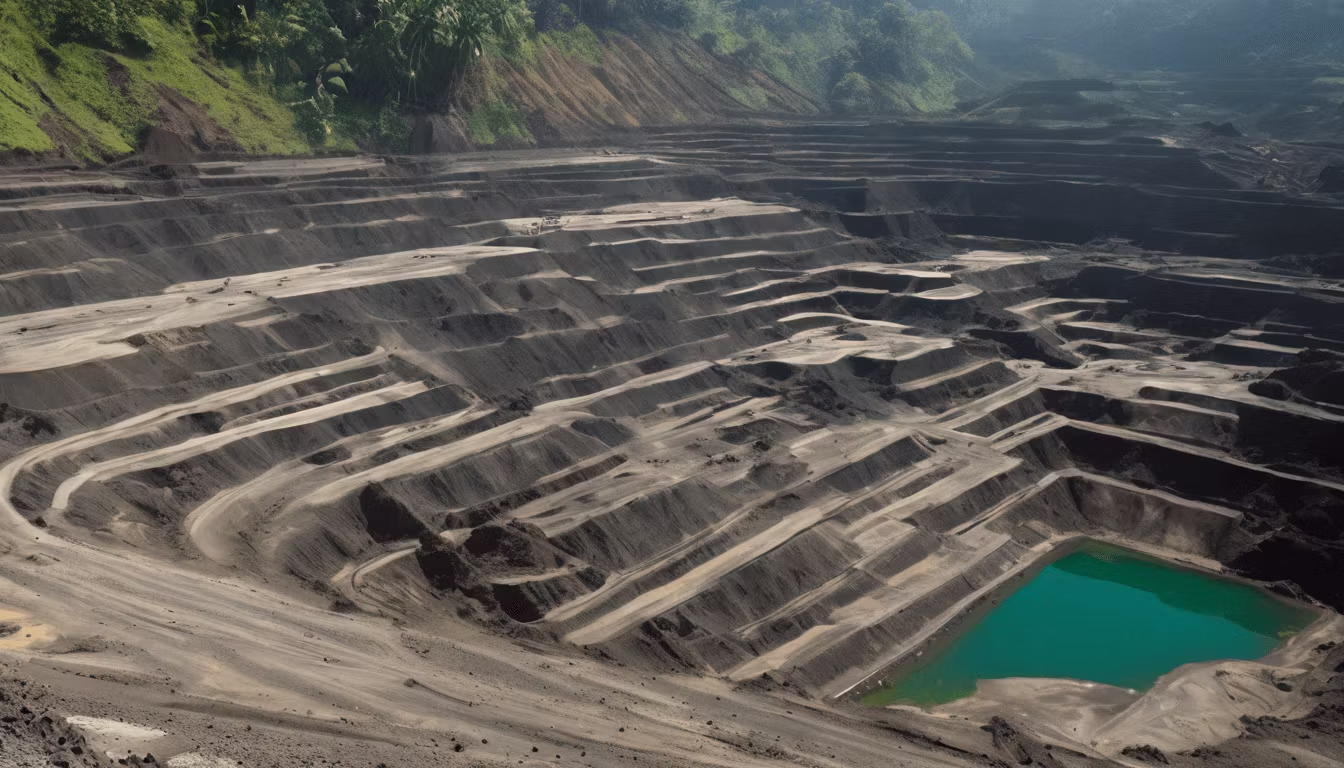
Sulawesi (Morowali & Konawe Districts): The largest producer, yielding consistent saprolite grades of 1.5-2.0% Ni with favorable Fe:Ni ratios for NPI production. Deposits are relatively shallow, enabling cost-effective open-pit mining.
Kalimantan (East & North Regions): Mixed saprolite-limonite zones with saprolite grades averaging 1.6-1.9% Ni. Deposits face increasing water table challenges, necessitating advanced pit dewatering infrastructure.
Maluku (Halmahera & Obi Islands): Emerging sources with variable grades (1.2-2.0% saprolite), often requiring blending to achieve target specifications. Lower production volume but improving accessibility as port infrastructure develops.
Quality Specifications and Testing Standards
Chemical Composition Requirements
B2B buyers must evaluate nickel ore against standardized chemical specifications. Industry-standard parameters include:
- Nickel (Ni): 1.5-2.0% saprolite; 0.8-1.2% limonite
- Iron (Fe): 35-45% (saprolite preferred), essential for smelter feed
- Silica (SiO₂): 8-15%, affects gangue formation and flux requirements
- Magnesium Oxide (MgO): 6-12%, influences matte composition
- Moisture: <15% for saprolite; <25% for limonite after drying
- Cobalt (Co): 0.02-0.10%, recovered as byproduct value
- Chromium (Cr): <0.5%, minor impurity
SUCOFINDO Testing and Certification
Reputable Indonesian nickel ore suppliers maintain SUCOFINDO (Superintending Company of Swiss origin) laboratory certification, the industry-standard third-party verification for mineral composition. SUCOFINDO testing includes:
- XRF (X-ray fluorescence) analysis for rapid multi-element assay
- Wet chemistry confirmation for Ni, Fe, and Co content
- Moisture determination via LOI (loss on ignition)
- Particle size distribution and bulk density
- Metallurgical testwork (roasting, reduction trials)
Suppliers with IUP OPK (Izin Usaha Pertambangan Operasi Produksi Khusus) licenses and RKAB (Rencana Kerja dan Anggaran Biaya) approval provide documented compliance with Indonesian mining regulations and environmental standards—critical differentiators when evaluating supplier reliability.
Applications and End-Use Industries
Nickel Pig Iron (NPI) Smelting
NPI production represents the largest end-use for Indonesian saprolite ore. Smelters operating electric arc furnaces (EAF) or blast furnace-EAF combinations process saprolite concentrates into NPI containing 10-25% Ni, serving stainless steel mills and foundries. Saprolite's ideal Fe:Ni ratio (approximately 20:1) minimizes slag adjustment and energy consumption, making it the preferred smelter feed.
Ferronickel Production
High-carbon ferronickel (20-28% Ni) produced via reduction smelting demands consistent saprolite grades and low contaminant levels. Ferronickel serves as an alloy addition in specialty stainless steels (316L, 317L) requiring corrosion resistance in marine and chemical processing applications.
HPAL and Hydrometallurgical Processing
High-pressure acid leach circuits increasingly process lower-grade limonite ore, dissolving nickel via sulfuric acid leaching under elevated temperature and pressure. Recovered nickel sulfate feeds downstream refining and battery cathode precursor production, aligning with global EV supply chain demands.
Industrial and Construction Applications
Beyond primary smelting, nickel ore slag and laterite residues find applications in road construction, cement clinker production, and ceramic tile manufacturing. This circular economy approach reduces waste while creating supplementary revenue streams for integrated mining operations.
Sourcing Logistics and Supply Chain Considerations
Direct-from-Mine Advantages
Sourcing nickel ore directly from licensed mining operations rather than trading intermediaries offers B2B buyers significant advantages: verified IUP OPK compliance, transparent quality documentation, stable pricing without middleman markups, and flexible contract terms from trial shipments (100 MT minimum) to long-term supply agreements (2.5M MT/year capacity).
Transportation and Port Infrastructure
Indonesian nickel ore primarily exports via key ports: Makassar (Sulawesi), Samarinda (Kalimantan), and Manado (North Sulawesi). Bulk carriers transport ore to major smelting hubs in China, Philippines, and emerging processing centers in Vietnam and India. Ocean freight costs typically range $15-25/MT depending on destination port and vessel availability.
Payment Terms and Contract Structure
Professional nickel ore suppliers offer flexible commercial arrangements: spot market purchases, monthly contracts with Platts LME pricing indices, quarterly agreements with fixed premiums, and long-term strategic partnerships with volume discounts. Letter of credit (LC) or bank guarantees typically secure transactions, with quality verification via third-party assaying at loading ports.
Market Dynamics and Price Drivers
Indonesian nickel ore pricing fluctuates based on multiple factors: LME nickel futures prices (primary driver), ore grade premiums, ocean freight rates, and global stainless steel demand. As of 2024, saprolite ore commands premiums of $2-5/percentage point Ni above base pricing, reflecting superior smelter economics. Limonite grades historically discount 10-15% relative to equivalent saprolite due to processing complexity and lower Fe content.
Emerging battery-grade nickel demand differentiates limonite ore with elevated cobalt content, creating niche premium markets for selective mining operations. Forward-thinking suppliers increasingly market separated limonite and saprolite streams to optimize customer mix and capture specialized application value.
Regulatory Framework and Sustainability Compliance
Indonesian mining operations must maintain compliance with:
- IUP OPK License: Operational mining permit issued by Ministry of Energy and Mineral Resources
- RKAB Approval: Annual work and budget plan demonstrating environmental management commitment
- ET (Environmental Feasibility) Certificate: Environmental impact assessment and mitigation documentation
- Export Regulations: Note that saprolite and limonite are subject to domestic processing requirements; raw ore export is restricted, driving investment in integrated smelting infrastructure
Reputable suppliers maintain transparent documentation and third-party certifications (SUCOFINDO) demonstrating compliance, reducing buyer risk and ensuring supply chain integrity.
Choosing a Reliable Nickel Ore Supplier
Evaluating potential nickel ore partners requires due diligence across multiple dimensions:
- Licensing Verification: Confirm current IUP OPK, RKAB, and ET documentation
- Quality Assurance: Independent SUCOFINDO lab testing and multi-batch consistency records
- Production Capacity: Align supplier volume capability with your demand; verify annual production throughput
- Logistics Capability: Assess port access, vessel scheduling, and freight network efficiency
- Financial Stability: Reference checks with existing customers and banking relationships
- Technical Support: Availability of metallurgical expertise and flexibility for custom blending or grade adjustment
Complementary Mineral Products
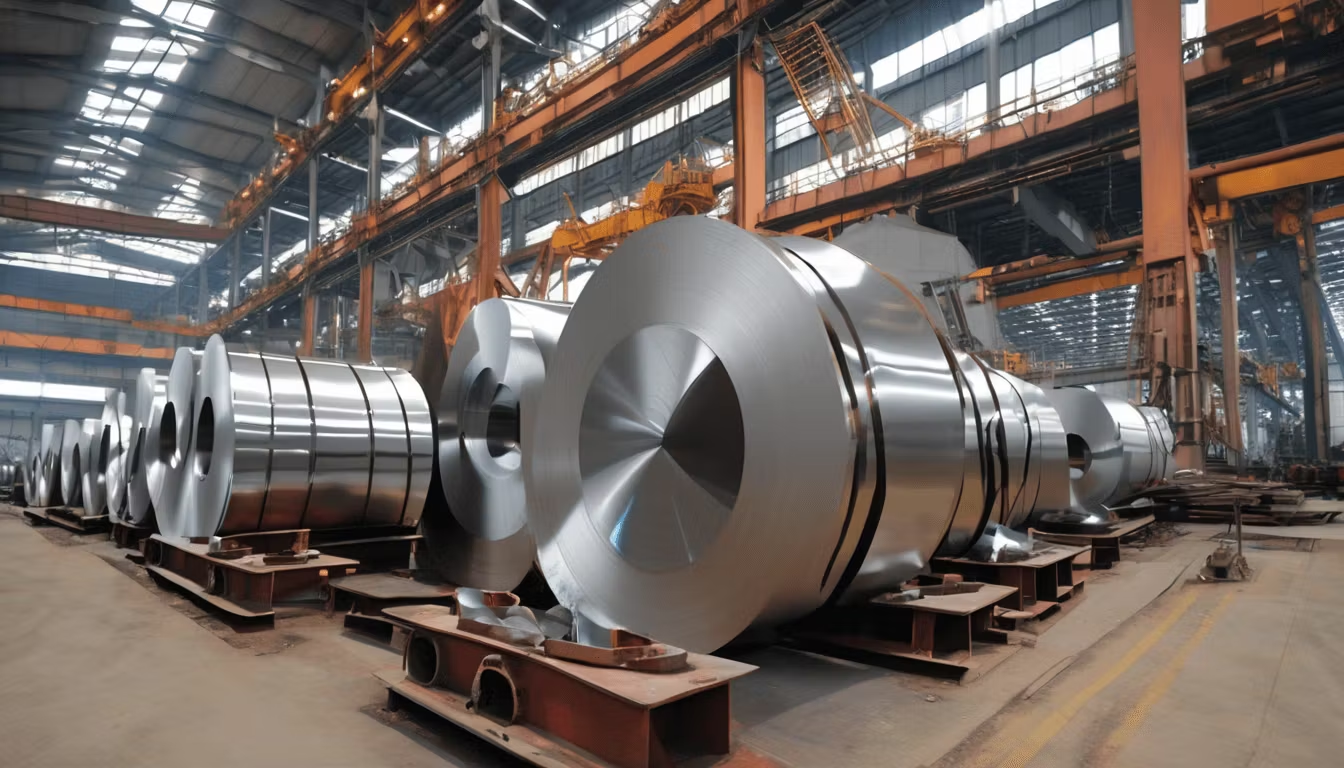
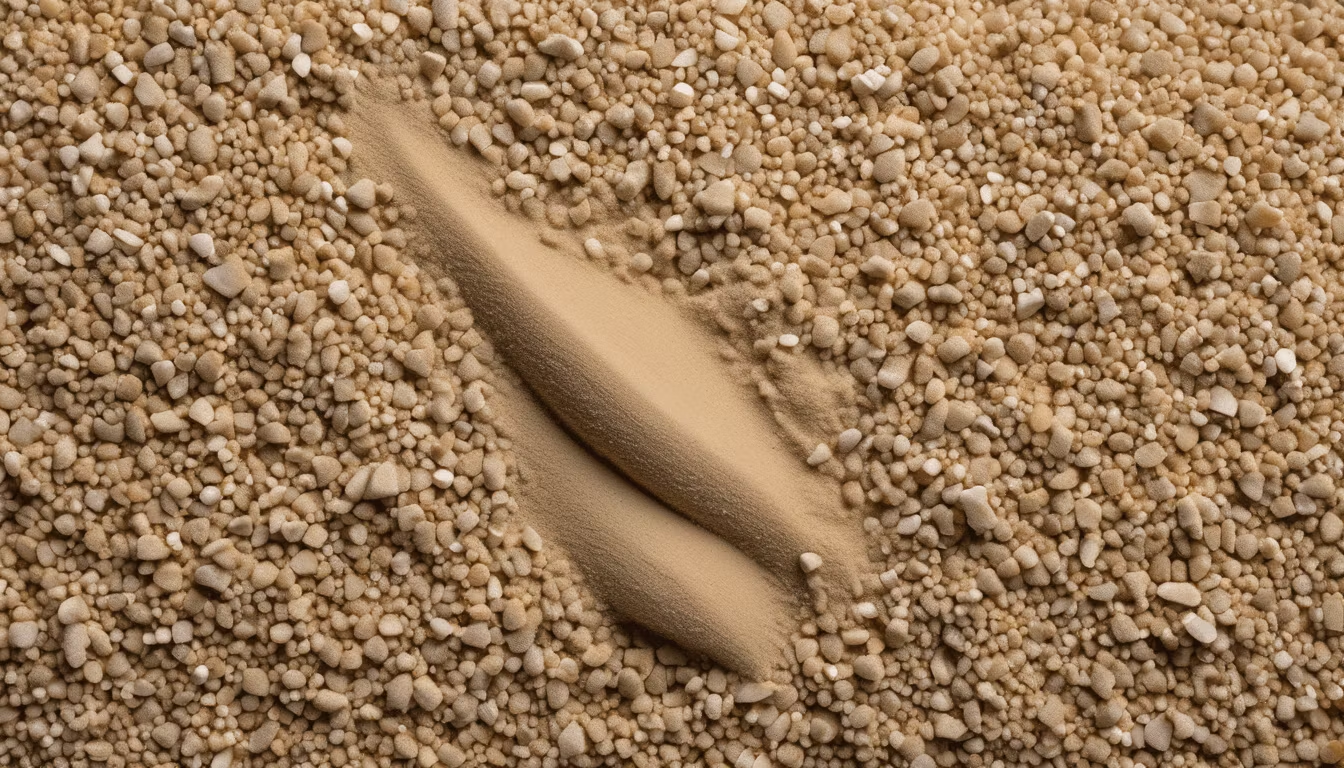
Beyond nickel ore, integrated mining operations often supply complementary minerals supporting downstream processing. Suppliers offering silica sand and zircon sand provide one-stop procurement solutions, reducing supply chain complexity. Aluminium ingots from the same regional sourcing network enable consolidated logistics and unified quality management for diversified industrial operations.
Conclusion: Strategic Sourcing for Nickel Industry Success
Indonesian nickel ore—whether premium-grade saprolite destined for NPI smelters or innovative limonite applications in hydrometallurgical circuits—represents essential feedstock for global nickel supply chains. Understanding ore type differentiation, geological factors, quality specifications, and regulatory frameworks empowers B2B buyers to negotiate favorable contracts, optimize smelter economics, and secure reliable supply in an increasingly competitive market.
Direct sourcing from licensed, SUCOFINDO-certified suppliers eliminates middleman inefficiencies, ensures documented compliance, and provides technical flexibility to address evolving production requirements. Whether your operation requires consistent saprolite shipments for established NPI production or experimental limonite charges for pilot HPAL circuits, partnering with experienced, transparent suppliers is essential for supply chain resilience.
Ready to secure reliable Indonesian nickel ore supply? Contact us to discuss your specific requirements, receive certified samples, and explore long-term partnership opportunities with a fully licensed, quality-assured supplier.