Indonesia's Silica Sand Export Market: Opportunities and Challenges

Indonesia's Silica Sand Export Market: Opportunities and Challenges
Indonesia stands as one of the world's most significant sources of high-quality mineral resources, and silica sand represents a cornerstone commodity in this portfolio. With vast deposits across multiple regions and established export infrastructure, the Indonesian silica sand sector continues to attract global buyers seeking reliable, cost-effective mineral supplies.
This comprehensive guide explores the current state of the Indonesia silica sand export market, identifies emerging opportunities, and addresses the operational challenges facing suppliers and traders in this dynamic industry.
Understanding Indonesia's Silica Sand Market Position
Global Market Demand and Indonesia's Role
Silica sand—also known as quartz sand—is an essential industrial mineral with applications spanning glass manufacturing, construction materials, water treatment, electronics, and metallurgy. Indonesia's strategic geographic location, abundant deposits, and established mining infrastructure position it as a critical supplier to Asian and global markets.
The global silica sand market valued at approximately $11 billion in 2023 continues expanding, driven by surging demand from:
- Float glass manufacturers for automotive and architectural applications
- Solar panel producers requiring ultra-pure silica
- Semiconductor and microelectronics industries
- Oil and gas sector for hydraulic fracturing operations
- Construction and concrete production
- Water filtration and purification systems
Indonesia captures significant market share through its competitive advantage in production capacity, cost efficiency, and proximity to major Asian consumption centers.
Key Geographic Advantages
Indonesia's silica sand deposits concentrate in several strategic regions, including Sulawesi, Kalimantan, and Maluku (Halmahera). This geographic distribution provides multiple sourcing options and supply chain flexibility, enabling traders to optimize logistics and meet diverse customer requirements efficiently.
Export Market Opportunities
Rising Demand from Developed Markets
International demand for Indonesian silica sand remains robust, particularly from:
Glass Manufacturing Sector: Float glass producers across Asia, Europe, and the Middle East require consistent supplies of high-purity silica sand. Indonesia's capacity to deliver SiO2 grades exceeding 99.74% purity aligns perfectly with stringent industry specifications. Advanced solar panel manufacturing also demands premium-grade quartz sand, creating premium pricing opportunities.
Industrial Processing: Ceramics and tile manufacturers throughout Southeast Asia depend on imported silica sand for glaze and body compositions. The region's rapid construction growth translates directly into sustained silica sand demand.
Metallurgical Applications: Foundries and metal casting operations require silica sand in various mesh grades for mold preparation. Indonesia's ability to supply multiple mesh sizes—from 8 mesh to 200 mesh—addresses diverse metallurgical requirements.
Emerging Growth Sectors
Several evolving industries present untapped export opportunities:
- Green Energy Transition: Renewable energy infrastructure, particularly solar photovoltaic production, requires exceptional silica purity levels. This specialized demand commands premium pricing for certified high-grade suppliers.
- Advanced Ceramics: Electronics manufacturers producing advanced ceramic components seek reliable silica sand suppliers meeting ISO certifications and consistent quality metrics.
- Water Treatment Infrastructure: Developing nations investing in municipal water treatment systems create sustained demand for filtration-grade silica sand with specific particle size distributions.
- Semiconductor Manufacturing: The global chip shortage and reshoring initiatives have increased semiconductor facility construction, driving silica sand consumption for specialized ultra-pure applications.
Quality Standards and Competitive Differentiation
The Importance of Testing and Certification
In B2B mineral trading, quality assurance determines market access and pricing power. Leading suppliers invest in comprehensive laboratory testing through accredited facilities like SUCOFINDO to verify:
- Silicon dioxide (SiO2) purity percentages
- Iron oxide (Fe2O3) contamination levels
- Particle size distribution across designated mesh grades
- Moisture content specifications
- Trace element analysis
Documentation of consistent quality performance builds buyer confidence, justifies premium pricing, and secures long-term supply contracts with major industrial customers.
Licensing and Regulatory Compliance
Indonesia's mining regulatory framework requires comprehensive licensing for legitimate mineral exports. The IUP OPK (Izin Usaha Pertambangan Operasi Produksi) license covering mineral logam, non-logam, and bahan bakar commodities remains essential for credible suppliers. Additionally, RKAB (Rencana Kerja dan Anggaran Biaya) approval demonstrates operational transparency and environmental compliance commitment.
International buyers increasingly conduct supplier due diligence, verifying proper licensing and regulatory compliance before engaging in supply relationships. This emphasis on governance creates competitive advantages for fully licensed operators.
Supply Chain Challenges and Solutions
Logistical Complexity
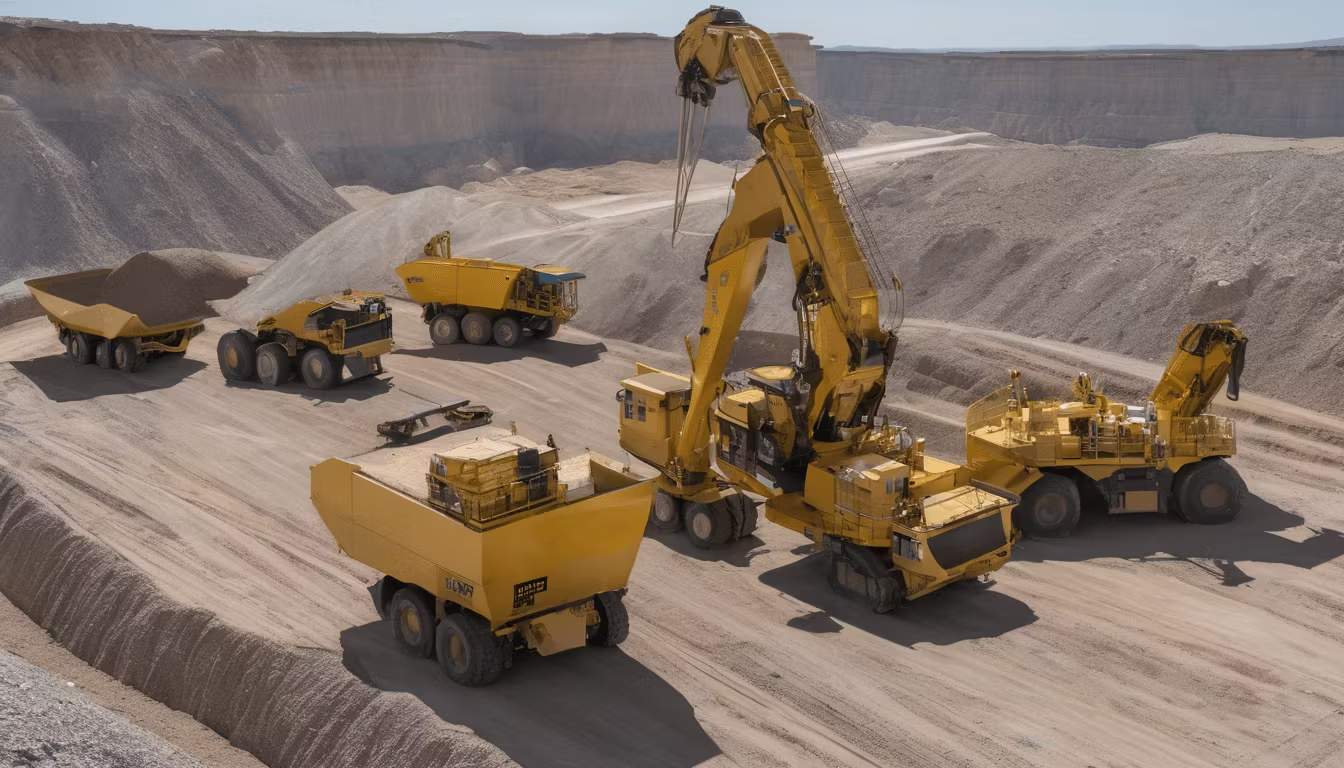
Indonesia's archipelago geography, while offering resource diversity, creates logistical challenges. Transporting silica sand from remote mining regions to export ports requires strategic planning:
- Port Infrastructure: Major export ports like Makassar, Balikpapan, and Port Halmahera handle silica sand shipments, but capacity constraints occasionally create bottlenecks during peak seasons.
- Inland Transportation: Road and rail networks from mining sites to ports require maintenance investments and efficient route planning to minimize transport costs and delivery delays.
- Stockpiling Requirements: Strategic inventory positioning near ports ensures consistent availability for export operations, requiring working capital investment.
Quality Control During Transportation
Maintaining mineral purity throughout supply chains presents technical challenges. Silica sand exposure to moisture, contamination, and handling damage can compromise product specifications. Effective solutions include:
- Sealed container shipping to prevent moisture absorption
- Dedicated storage facilities with environmental controls
- Pre-shipment quality verification testing
- ISO-compliant handling procedures
Market Competition and Pricing Pressures
Indonesia's silica sand market includes numerous suppliers ranging from small operations to integrated mining companies. This fragmented supply base creates competitive pricing pressure, particularly for commodity-grade material. However, premium segments reward suppliers offering:
- Certified quality consistency
- Reliable supply volumes
- Responsive customer service
- Technical support and customization
- Transparent pricing and contract terms
Regulatory and Environmental Considerations
Sustainability and Environmental Compliance
Modern silica sand operations must navigate increasingly stringent environmental regulations. Indonesia's commitment to sustainable mining practices requires operators to implement:
- Comprehensive environmental impact assessments
- Habitat restoration and reclamation programs
- Dust control and air quality management
- Water resource protection protocols
- Waste management systems
Buyers, particularly multinational corporations, prioritize suppliers demonstrating environmental stewardship and social responsibility commitment, often requiring ESG (Environmental, Social, and Governance) certifications.
Export Documentation and Compliance
Indonesian mineral exports require thorough documentation including:
- Export permits from relevant government authorities
- Customs declarations and invoicing
- Phytosanitary and quality certificates
- Insurance documentation
- Bills of lading and shipping manifests
Navigating this regulatory landscape demands expertise and operational discipline. Established traders with proven compliance records command buyer confidence and streamlined approval processes.
Strategic Approaches for Exporters
Direct Sourcing Model
The most profitable export strategies emphasize direct relationships with mining operations rather than multi-tier distribution networks. This approach reduces intermediary costs and enables suppliers to maintain quality control throughout the supply chain. Direct sourcing also facilitates rapid response to customer specifications and volume adjustments.
Product Specialization
Rather than competing on commodity pricing, successful silica sand exporters differentiate through specialized offerings:
- Mesh Grade Customization: Providing specific particle size distributions for niche applications commands premium pricing versus standard grades.
- Purity Certification: Marketing SiO2 content exceeding 99.74% with lab-verified documentation appeals to demanding industrial customers.
- Technical Support: Offering application engineering and troubleshooting assistance builds customer loyalty and reduces competitive substitution.
Volume and Flexibility Balance
Successful exporters accommodate diverse customer requirements, offering both bulk contract volumes and smaller trial quantities. This flexibility enables customer relationship development with initial small orders that expand to major accounts.
The Broader Mineral Export Ecosystem
While silica sand dominates many export portfolios, successful Indonesian mineral traders leverage complementary commodity expertise. For instance, understanding applications for zircon sand in ceramic glazing or aluminium ingot specifications for foundry applications provides cross-selling opportunities and enhances customer service capabilities.
Additionally, integration with domestic mineral resources—including nickel ore for smelter operations—enables traders to develop comprehensive mineral supply relationships with integrated industrial producers.
Future Market Outlook
Growth Projections
Industry analysts project continued expansion in silica sand demand through 2030, driven by:
- Continued urbanization and construction activity across developing Asia
- Renewable energy infrastructure expansion
- Advanced manufacturing growth in electronics and semiconductors
- Water treatment system upgrades in emerging economies
Technology and Innovation
Emerging processing technologies promise improved purification capabilities, enabling Indonesian suppliers to serve increasingly demanding applications. Investments in advanced flotation, magnetization, and acid-leaching technologies position innovative operators for premium market segments.
Conclusion: Navigating Indonesia's Silica Sand Export Market
Indonesia's silica sand export market presents substantial opportunities for qualified suppliers capable of meeting international quality standards, regulatory requirements, and customer service expectations. Success requires strategic positioning emphasizing quality assurance, regulatory compliance, logistical efficiency, and customer-focused service delivery.
As global demand for high-quality silica sand continues expanding, Indonesian exporters offering transparent operations, certified product consistency, and technical expertise will capture premium market positions and establish sustained competitive advantages.
For businesses seeking reliable silica sand supplies from licensed, SUCOFINDO-tested Indonesian sources, contact us to discuss your specific requirements and volume needs. Our integrated supply approach delivers consistent quality, flexible volumes, and responsive service backed by comprehensive regulatory compliance and technical expertise.