Indonesia Nickel Export Ban: Global Market Impact & Opportunities

Understanding Indonesia's Nickel Export Ban
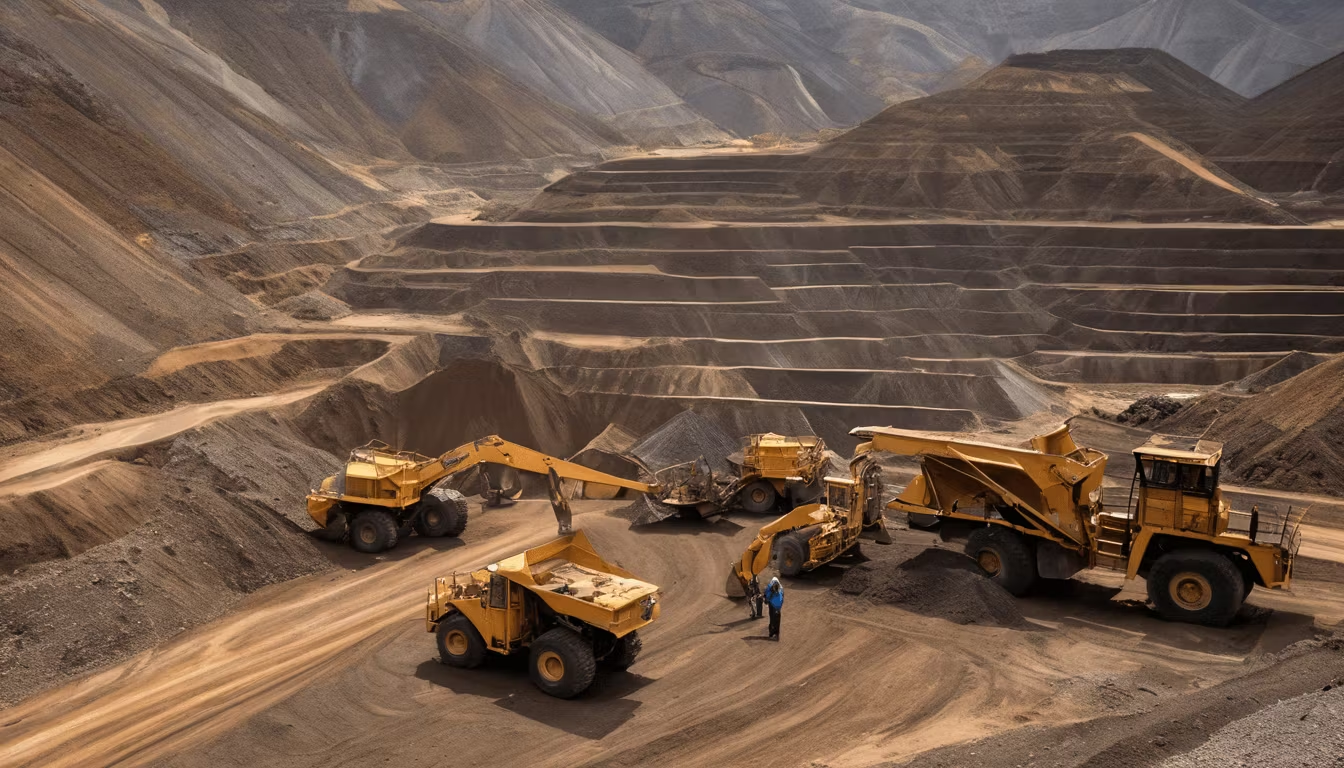
Indonesia's nickel export ban, first implemented in 2020 and progressively strengthened through 2022, represents one of the most significant policy shifts in the global mining industry. As the world's largest nickel ore producer—accounting for approximately 34% of global nickel ore production—Indonesia's decision to restrict raw ore exports has fundamentally altered supply chains, pricing mechanisms, and competitive landscapes across Asia and beyond.
The ban wasn't introduced arbitrarily. Indonesian policymakers implemented this downstream nickel policy to encourage domestic value addition, transform the country into a global nickel refining hub, and maximize returns from its finite mineral resources. Rather than exporting raw nickel ore, Indonesia mandated that producers develop downstream processing capabilities—establishing smelters, refineries, and integrated operations that create higher-value products like nickel pig iron (NPI) and ferronickel.
The Policy Evolution: From Soft Restrictions to Hard Bans
Phase 1: Initial Export Quotas (2014-2019)
Indonesia's mineral beneficiation law didn't emerge overnight. Beginning in 2014, the government introduced export quotas for unprocessed minerals, requiring producers to process a percentage of ore domestically before exporting. This early-stage downstream nickel policy signaled government intentions while allowing the industry time to adapt and invest in infrastructure.
Phase 2: The 2020 Ban Implementation
In January 2020, Indonesia implemented a complete ban on unprocessed nickel ore exports, with limited exceptions for saprolite ore until December 2021. This aggressive timeline forced global buyers—particularly Chinese smelters and Japanese stainless steel manufacturers—to scramble for alternative suppliers or establish partnerships with Indonesian smelting operations.
Phase 3: Reinforcement and Expansion (2022-Present)
By 2022, the government had solidified its position by banning all unprocessed nickel exports, including saprolite ore. The policy now requires all domestically-mined nickel ore to undergo some degree of processing before leaving Indonesian territory. This represents a watershed moment for the global nickel supply chain.
Global Market Disruptions from the Indonesia Nickel Export Ban
Supply Chain Realignment
The Indonesia nickel export ban forced global buyers to pivot dramatically. Chinese nickel smelters, which historically sourced 60-70% of their ore from Indonesia, suddenly faced acute supply constraints. This triggered a threefold response:
First, China accelerated foreign direct investment into Indonesian smelting operations, establishing integrated mining-to-refining facilities that could legally export processed nickel products. Second, global buyers diversified sourcing to alternative suppliers in the Philippines, Papua New Guinea, and New Caledonia—though these sources have limited capacity. Third, some industries began exploring nickel substitutes or efficiency improvements to reduce ore consumption.
Price Volatility and Market Premiums
The supply constraint created significant price premiums for processed nickel products. Nickel spot prices surged from approximately $7,000/ton in early 2020 to over $20,000/ton by early 2022—a 185% increase directly attributable to supply scarcity triggered by the Indonesia nickel export ban. While prices have moderated since, they remain 40-50% higher than pre-ban levels, reflecting the persistent supply tightness.
For downstream industries—stainless steel manufacturers, battery producers, and foundries—these elevated prices compressed margins and forced cost-efficiency initiatives. Some producers relocated operations closer to Indonesian processing hubs to minimize transportation costs and access cheaper processed materials.
Acceleration of EV Battery Supply Chain Development
Perhaps paradoxically, the Indonesia nickel export ban accelerated global efforts to develop lithium-ion battery supply chains. Battery manufacturers seeking to reduce nickel content dependencies or improve sourcing certainty invested heavily in cathode chemistry research, alternative battery chemistries, and direct partnerships with nickel producers. This trend continues reshaping the energy storage industry.
The Downstream Beneficiation Law: Indonesia's Long-Term Vision
Core Principles
Indonesia's downstream nickel policy extends beyond simple export restrictions. The mineral beneficiation law establishes a framework requiring progressive value addition:
- Stage 1 (Processing): Ore must be processed into concentrate or intermediate products (like nickel laterite concentrate)
- Stage 2 (Refining): Intermediate products are refined into higher-purity materials suitable for industrial use
- Stage 3 (Manufacturing): Refined materials are converted into finished products (stainless steel, superalloys, battery materials)
Investment in Smelting Infrastructure
The policy has driven unprecedented capital investment into Indonesian smelting capacity. Between 2020-2024, Indonesia added over 1.5 million tons of annual nickel processing capacity, with Chinese companies leading investment. Today, Indonesia operates approximately 50+ nickel smelters, transforming the nation into the world's largest nickel refining center—surpassing traditional leaders like Russia and Finland.
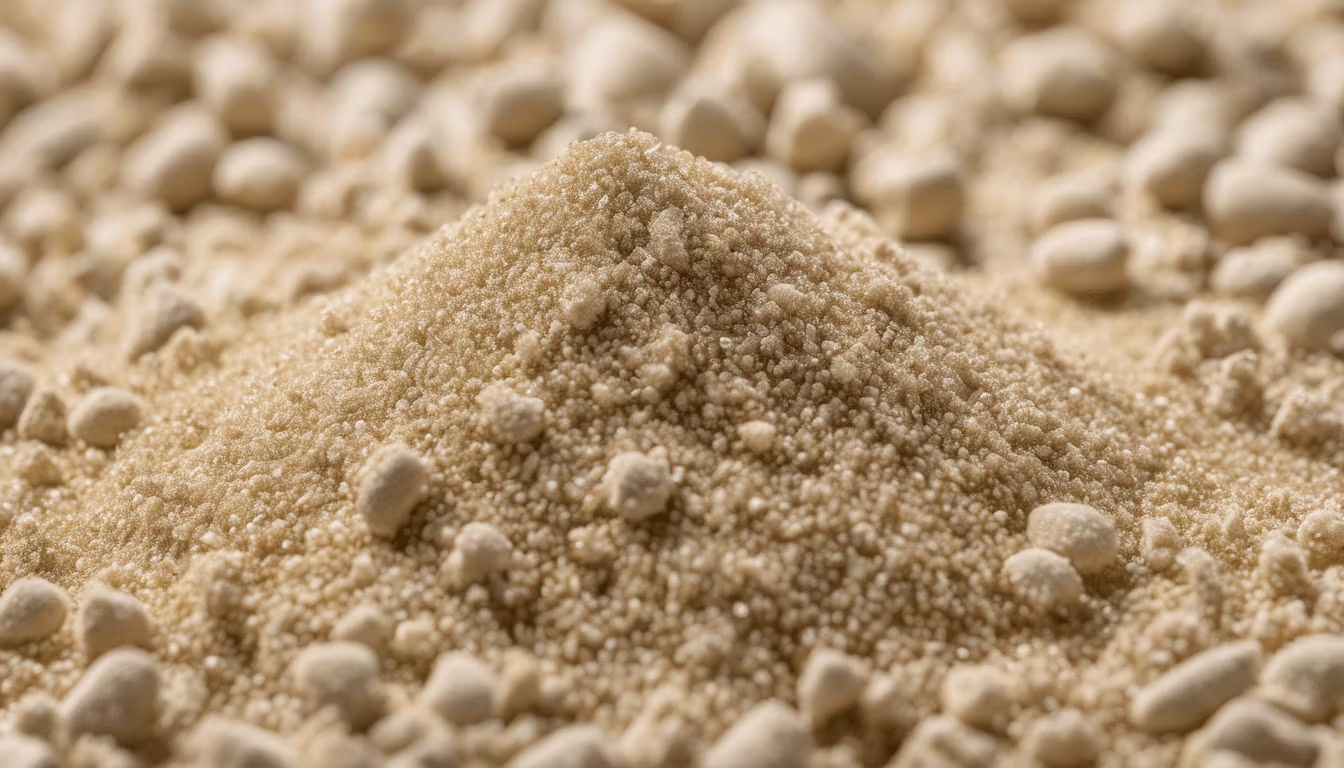
This infrastructure buildout has created substantial downstream opportunities. Producers now supply not only nickel ore to domestic smelters but also complementary materials like silica sand for refining furnaces, fluxes, and processing materials.
Impacts on Different Industry Segments
Stainless Steel Manufacturers
Stainless steel producers represent the largest downstream nickel consumer segment. The Indonesia nickel export ban forced these manufacturers to develop closer relationships with Indonesian nickel smelters, establish joint ventures, or relocate production facilities to Indonesia or nearby regions. Major producers like PT Tsingshan Holding Group have integrated backward into mining operations, creating vertically-aligned supply chains immune from export restrictions.
Battery and EV Manufacturers
Electric vehicle battery manufacturers face unique challenges. They require high-purity nickel sulfate and other specialized compounds. The ban incentivized investment in battery-grade nickel refining capacity, with several new specialized facilities commissioned since 2021. These facilities represent higher value-add opportunities but require significant technical expertise and capital investment.
Foundries and Industrial Consumers
Foundries, metal casters, and other industrial consumers using nickel-bearing alloys experienced the most acute near-term pain. With limited ability to integrate backward into smelting operations, many smaller producers absorbed elevated nickel costs or reduced production volumes during peak supply constraint periods (2021-2022).
Benefits and Opportunities Emerging from the Ban
Economic Value Capture
Indonesia now captures significantly more economic value from its nickel resources. Processing ore domestically generates employment, tax revenue, and technology development. Rather than exporting raw ore for $50-100/ton, smelting operations add $200-400/ton of value before export—a substantial multiplier effect throughout the Indonesian economy.
Industrial Ecosystem Development
The downstream nickel policy stimulated development of complementary industries. Chemical suppliers, specialized equipment manufacturers, logistics providers, and technical service firms have expanded operations. This ecosystem benefits all mineral traders, including suppliers of zircon sand and other materials used in refining processes.
Technology Transfer and Capability Building
Foreign investment in Indonesian smelting operations has transferred metallurgical technology and expertise. Indonesian engineers and technicians have developed substantial processing knowledge, positioning the nation as a technical leader in laterite nickel processing—a capability with global applications.
Challenges and Criticisms
Environmental and Social Concerns
While economically beneficial, accelerated smelting expansion has raised environmental concerns. High-capacity smelters consume substantial water and energy resources, and some operations have faced criticism regarding tailings management and air quality. These issues require ongoing monitoring and improvement, particularly as capacity continues expanding.
Global Supply Chain Fragility
Concentration of global nickel processing in Indonesia (and specifically in Chinese-controlled operations) has created supply chain concentration risk. Geopolitical tensions, natural disasters, or operational disruptions could severely impact global nickel availability. This fragility incentivizes continued diversification efforts and alternative sourcing development.
Impact on Smaller Producers
The ban has disadvantaged smaller Indonesian mining companies lacking capital for smelting investments. Consolidation has accelerated, with larger companies acquiring smaller operations to achieve scale economies. This trend reduces industry competition and concentrates market power among major players.
Market Outlook: What's Next for Indonesia's Nickel Policy
Expansion Into Downstream Manufacturing
Indonesia's government continues pursuing more aggressive downstream policies. Recent regulatory discussions suggest potential future restrictions on nickel smelter product exports, requiring conversion into stainless steel or specialty products domestically. If implemented, this would represent the next phase of the mineral beneficiation law.
Integration with EV Battery Strategy
Indonesia is developing comprehensive lithium-ion battery production capabilities. Government initiatives aim to establish battery cathode production, cell manufacturing, and pack assembly within Indonesia. This strategy creates substantial demand for nickel in battery-grade applications, securing long-term demand for Indonesian nickel production.
Supply Stabilization
As smelting capacity matures and global supply chains rebalance, nickel price volatility may gradually moderate. However, prices will likely remain elevated relative to pre-2020 levels, reflecting genuine scarcity in global nickel resources and the added value of downstream processing.
Opportunities for B2B Mineral Traders and Buyers
Direct Sourcing from Integrated Producers
B2B buyers should consider establishing direct relationships with integrated Indonesian mining-smelting producers. Cutting out middlemen reduces costs and improves supply reliability—particularly important given market tightness. Direct sourcing partnerships also provide visibility into quality standards and processing practices.
Complementary Material Supply
Expanding smelting operations require substantial volumes of complementary materials. Silica sand, aluminium ingot, and other refractory inputs represent growth markets. Suppliers positioned to serve smelter demand enjoy favorable growth dynamics and premium pricing power.
Process Optimization and Efficiency
Buyers facing elevated nickel costs should invest in process optimization and efficiency improvements. Advanced metallurgy, recycling initiatives, and design modifications can reduce per-unit nickel consumption by 10-20%, meaningfully improving competitiveness despite higher raw material costs.
Conclusion: Strategic Adaptation in a Transformed Market
Indonesia's nickel export ban and associated downstream beneficiation law represent a watershed moment for the global mining industry. While causing short-term disruption, the policy has created a more valuable, vertically-integrated nickel supply chain centered in Indonesia. Global buyers and producers must adapt by developing closer partnerships with Indonesian suppliers, investing in efficiency improvements, and diversifying sourcing strategies.
For organizations seeking reliable nickel supplies and complementary materials, establishing partnerships with licensed, quality-assured suppliers is essential. CV Indoalam Mineral Persada operates as a trusted partner in this transformed market, providing integrated sourcing solutions for nickel and complementary minerals to major industrial consumers across Indonesia and internationally.
The Indonesia nickel export ban will continue shaping global supply chains for decades. Companies that understand this policy landscape and proactively adapt their sourcing strategies will maintain competitive advantage in an increasingly complex, resource-constrained global economy. Whether you're a foundry, smelter, or downstream industrial consumer, the time to establish direct partnerships with reliable Indonesian suppliers is now.
Ready to transform your mineral supply chain? Contact us today to discuss your nickel and complementary material requirements. Our team brings deep market expertise and direct access to premium-quality Indonesian mineral sources.