Indonesia Nickel Export Ban: Global Market Impact & Supply Shifts

Introduction: Indonesia's Seismic Shift in Nickel Policy
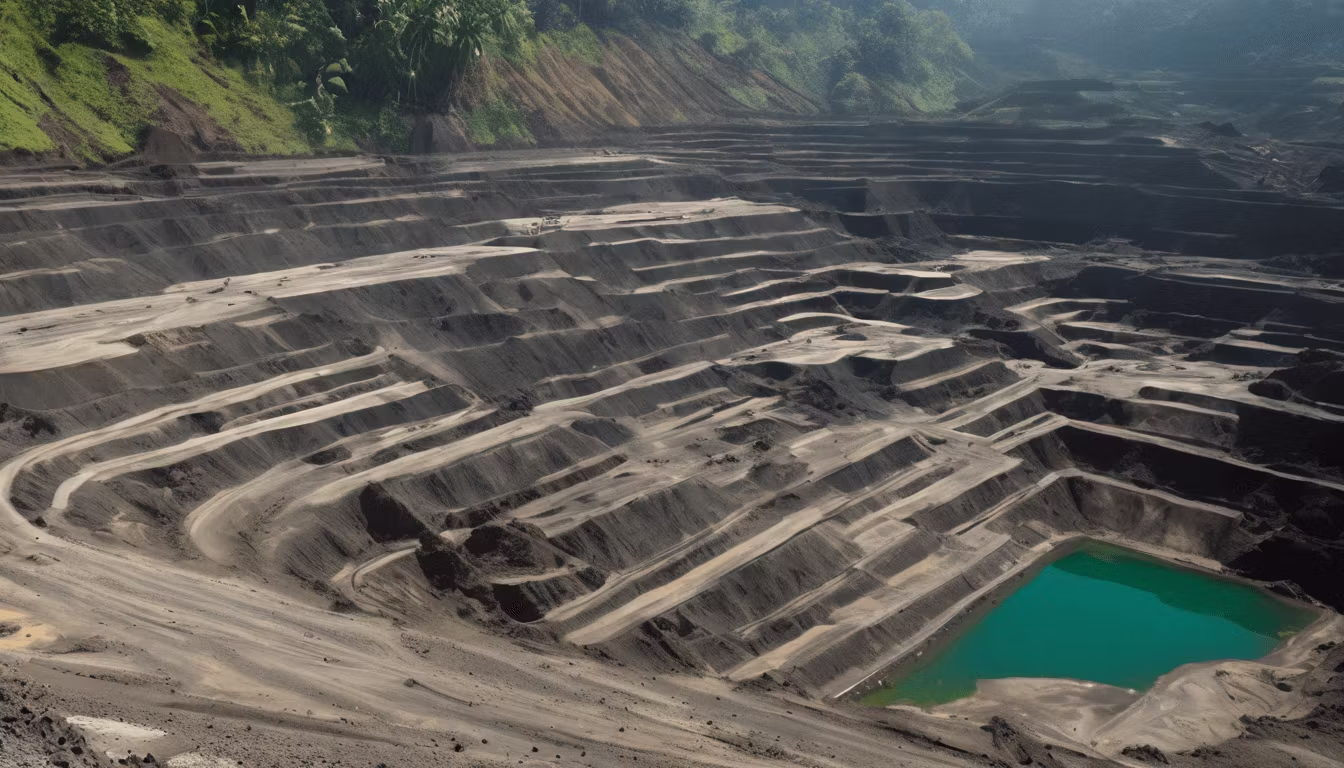
Indonesia's decision to ban raw nickel ore exports stands as one of the most transformative mineral policy changes of the past decade. Since 2020, when the government progressively tightened restrictions on unprocessed nickel ore exports, the global nickel market has experienced unprecedented upheaval. This policy, designed to develop Indonesia's downstream nickel processing capabilities, has forced global supply chains to recalibrate and created new opportunities for integrated mining and trading companies positioned along Indonesia's value chain.
For B2B buyers, understanding the implications of Indonesia's nickel export ban is no longer optional—it's essential for strategic sourcing decisions. As the world's largest nickel reserves holder and leading ore producer, Indonesia's domestic-only policy fundamentally altered how manufacturers source raw materials and plan long-term supply contracts.
The Indonesia Nickel Export Ban: Timeline and Policy Evolution
From Restriction to Complete Ban
Indonesia's journey toward a complete nickel export ban wasn't instantaneous. The policy evolved through several phases:
2014-2019: Initial restrictions began limiting raw ore exports while encouraging processing within Indonesia's borders.
2020: The government formally banned unrefined nickel ore exports, effective January 1st. This marked a watershed moment that reverberated across global supply chains.
2020-Present: The ban has remained firm, reinforced by Indonesia's broader mineral beneficiation law, which mandates that mining companies either process minerals domestically or face export restrictions.
The underlying rationale was clear: Indonesia wanted to capture greater value from its massive nickel reserves by developing domestic downstream industries—nickel smelters, ferronickel producers, and battery material manufacturers—rather than exporting low-value raw ore.
Legal Framework: The Mineral Beneficiation Law
The export ban exists within a broader regulatory context known as Indonesia's mineral beneficiation policy. This framework requires mining companies to process minerals to higher value-added stages before export. For nickel, this means that raw ore must be processed into intermediate products like ferronickel or nickel pig iron (NPI) before leaving Indonesian ports.
The beneficiation law applies across Indonesia's resource base, affecting not just nickel but also other critical minerals. The government enforces compliance through strict licensing requirements, including IUP OPK permits and regular SUCOFINDO laboratory testing—standards that legitimate traders and smelters adhere to as part of normal business operations.
Global Market Impact: Nickel Ban Reshapes Industry Dynamics
Supply Chain Shock and Price Volatility
The Indonesia nickel export ban created immediate supply-side constraints in the global market. Indonesia typically supplied 30-35% of the world's nickel ore. When that supply evaporated from international markets, competing nickel-producing nations—Philippines, Russia, Papua New Guinea, and others—suddenly became critical sourcing alternatives for manufacturers worldwide.
This supply shock triggered sustained price increases for nickel. Prices that averaged $6,000-7,000 per metric ton before the ban surged to $8,000-9,000 and beyond during subsequent years. For manufacturers dependent on stable nickel costs, the volatility created procurement headaches and compressed margins across multiple industries.
Geographic Rebalancing of Supply Sources
Manufacturers accustomed to sourcing Indonesian ore were forced to diversify supplier bases. The Philippines emerged as a primary alternative, though ore quality, production capacity, and consistency varied. Other suppliers ramped up production, but geographical distance and logistics costs made alternatives less economical for some buyers.
International commodity traders adapted their strategies, some building physical presence in Indonesia to source processed materials rather than raw ore. This shift created a new market dynamic where value was increasingly captured by Indonesian processors and traders rather than foreign importers.
Acceleration of EV Battery Supply Chain Development
Paradoxically, while the ban constrained raw material supply, it accelerated Indonesia's development as a battery materials hub. Major battery manufacturers and EV companies viewed Indonesia's nickel processing capacity as a strategic asset. Companies like CATL, LG Energy Solution, and others invested heavily in downstream operations in Indonesia, knowing that securing nickel supply required Indonesian partnerships.
This created a tier of "captive" nickel supply chains where miners, smelters, and battery manufacturers became vertically integrated—a structural shift that persists today and influences long-term sourcing strategies for automotive and energy storage sectors.
Downstream Nickel Policy: Indonesia's Strategy for Value Creation
Smelter Development and NPI Production
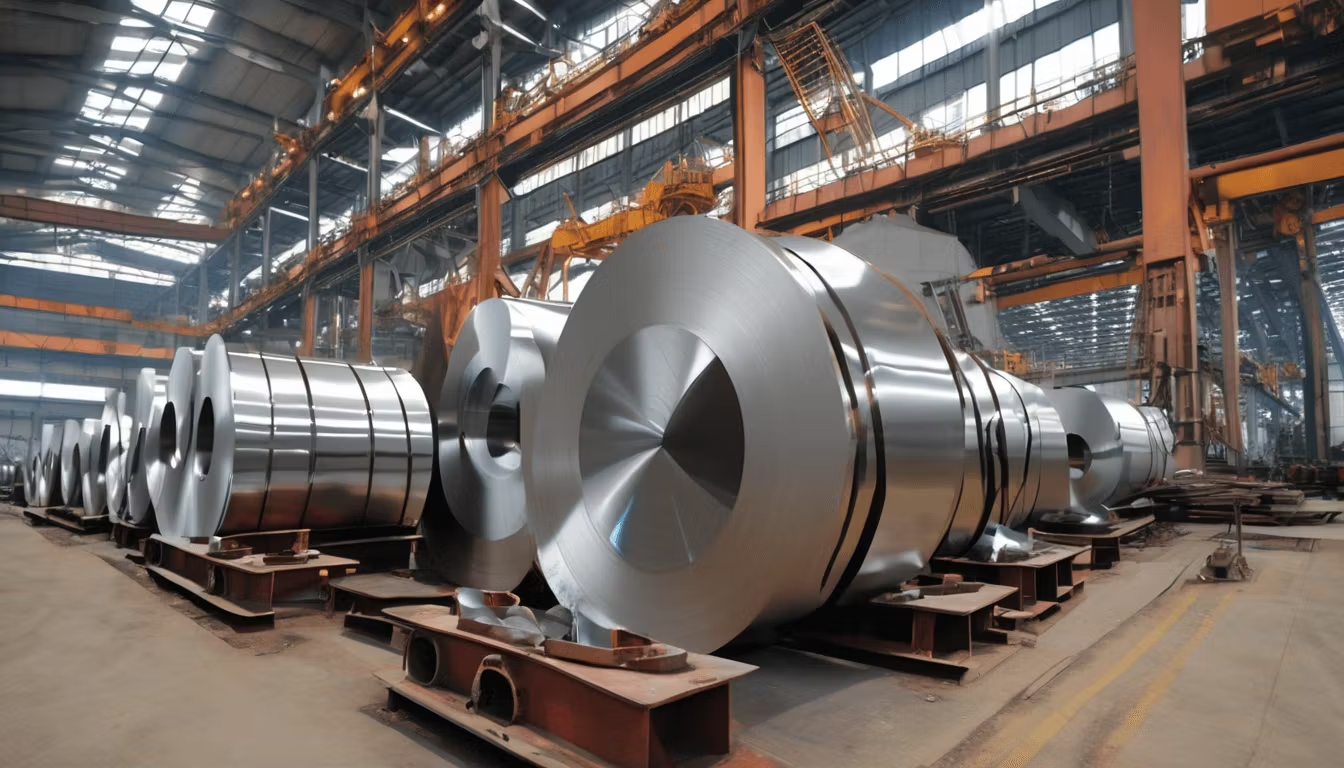
The downstream nickel policy explicitly targeted development of domestic smelting capacity. The government offered fiscal incentives, infrastructure support, and regulatory streamlining for companies building nickel processing plants. The result has been explosive growth in Indonesia's nickel pig iron (NPI) production capacity—from roughly 400,000 metric tons annually in 2020 to over 1.5 million metric tons by 2024.
For B2B buyers sourcing materials for foundries, metal casting operations, or further processing, this capacity boom created new sourcing opportunities. Rather than importing foreign-processed nickel, many manufacturers can now source NPI directly from Indonesian producers, potentially reducing costs and lead times for domestic Southeast Asian operations.
High-Pressure Acid Leach (HPAL) and Battery-Grade Nickel
Beyond simple ferronickel production, Indonesia invested in higher-technology HPAL plants that produce battery-grade nickel sulphate and other refined products. These ultra-processed materials are commanding premium pricing but also attracting major battery manufacturers to source directly from Indonesian suppliers.
The policy intentionally created a ladder of value-added processing, ensuring that the most valuable nickel products—battery materials especially—are manufactured domestically. This strategic positioning has made Indonesia indispensable for the global EV supply chain, even as it restricts raw ore exports.
Market Opportunities for B2B Buyers
Direct Sourcing from Indonesian Processors
The export ban paradoxically created clearer sourcing pathways for strategic buyers. Rather than navigating complex import regulations and multiple intermediaries, B2B purchasers can now directly contract with Indonesian smelters and processors. Companies with established relationships in Indonesia's industrial hubs—particularly in Sulawesi and Kalimantan—gain competitive advantages in securing reliable supply.
Trading companies like CV Indoalam Mineral Persada that maintain direct relationships with licensed mines and processors offer an intermediary advantage: quality assurance through SUCOFINDO testing, compliance with IUP OPK licensing requirements, and flexible supply arrangements ranging from trial quantities to multi-year contracts.
Vertical Integration Strategies
Forward-thinking manufacturers are establishing joint ventures or strategic partnerships with Indonesian mining and smelting companies. This vertical integration approach locks in supply, mitigates price volatility, and ensures access to battery-grade materials as supply chains evolve.
Diversified Raw Material Sourcing
While nickel ore sourcing has become complicated, Indonesian suppliers offer a broader spectrum of complementary materials. High-purity silica sand (SiO2 99.74%), aluminium ingots in ADC12 and A7 grades, and zircon sand (ZrO2 65%+) are all available for export. For manufacturers operating in glass, ceramics, foundry, or construction sectors, consolidating supplier relationships with Indonesian companies provides supply chain resilience.
Challenges and Strategic Responses
Price Premiums and Cost Pressures
The ban created a lasting price premium for nickel materials. Ferronickel and NPI command higher prices than raw ore on a nickel-content basis because downstream processing adds value—and cost. Manufacturers must absorb these premiums or find creative solutions like mixed-metal alloys or alternative materials.
Supply Reliability Concerns
Indonesia's domestic nickel processing capacity, while expanding rapidly, sometimes struggles to meet global demand. Political pressures, environmental regulations, and infrastructure constraints occasionally create supply disruptions. Strategic buyers negotiate long-term contracts with penalty clauses and diversify suppliers to mitigate this risk.
Quality Variability and Testing Requirements
Not all Indonesian processors maintain identical quality standards. SUCOFINDO certification and IUP OPK licensing provide baseline assurances, but buyers must verify specifications for their specific applications. Establishing direct testing relationships and requiring certificates of analysis is standard practice for risk-conscious procurement teams.
Future Outlook: Evolution of Indonesia's Nickel Policy
Potential Policy Adjustments
While the export ban appears permanent, there's potential for nuanced policy evolution. The government may introduce differential taxation or licensing requirements based on processing level—creating incentives for higher-value processing while potentially allowing limited raw ore exports in exceptional circumstances.
Regional trade agreements (RCEP, CPTPP) may introduce gradual liberalization pressures, though Indonesia has historically maintained protective mineral policies regardless of trade obligations.
Technology and Automation Investments
As Indonesia's smelting sector matures, expect investments in automation, environmental controls, and quality management systems. This will drive processing costs down and improve consistency—benefiting B2B buyers through more competitive pricing and reliable specifications.
Battery Material Leadership
Indonesia's long-term strategy positions it as a critical link in the global EV battery supply chain. Expect continued expansion of battery material production facilities and integration with upstream mining operations. For manufacturers in the EV, energy storage, and renewable energy sectors, this makes Indonesia an increasingly important sourcing region.
Practical Guidance for B2B Buyers
Sourcing Strategy Recommendations
Establish Direct Relationships: Work with licensed Indonesian traders and processors rather than relying on international commodity brokers. Direct relationships improve negotiating power and supply reliability.
Diversify Material Portfolio: Don't rely solely on nickel. Explore complementary materials like silica sand and aluminium ingots available from the same Indonesian suppliers.
Build Long-Term Contracts: Indonesia's policy environment rewards stability. Committing to multi-year supply contracts often secures better pricing than spot market purchases.
Verify Certifications: Always confirm that suppliers hold valid IUP OPK permits, SUCOFINDO test certificates, and RKAB approval. These aren't optional compliance items—they're essential guarantees of legitimacy and quality.
Plan for Price Volatility: Nickel-based materials remain subject to commodity price fluctuations. Build hedging strategies or price escalation clauses into supplier contracts.
Questions to Ask Indonesian Suppliers
- What specific licenses and certifications do you hold? (IUP OPK, ET Batubara, SUCOFINDO accreditation)
- What is your annual production capacity and current utilization rate?
- Can you provide SUCOFINDO-certified test reports for representative samples?
- What minimum order quantities do you accommodate, and what payment terms do you offer?
- What is your typical lead time from order confirmation to shipment?
- Do you offer supply contracts with price adjustment mechanisms?
Conclusion: Navigating the Post-Ban Nickel Market
Indonesia's nickel export ban represents a permanent restructuring of global nickel supply chains rather than a temporary policy anomaly. The downstream nickel policy and mineral beneficiation law are core components of Indonesia's resource nationalism strategy, designed to capture maximum value from the country's extraordinary mineral endowment.
For B2B manufacturers, this reality demands strategic adaptation. The days of simply importing raw Indonesian nickel ore are over. Instead, successful sourcing in the post-ban environment requires direct partnerships with Indonesian processors, understanding of local licensing frameworks, and willingness to source higher-value processed materials.
Companies positioned in Indonesia's mineral trading ecosystem—with IUP OPK licenses, SUCOFINDO testing capabilities, and direct relationships with upstream miners—have become essential intermediaries. They offer B2B buyers access to reliable, certified supplies while providing the local expertise and compliance assurance that modern mineral sourcing demands.
The global nickel market has adapted to Indonesia's export restrictions, but the structural constraints remain. For manufacturers dependent on nickel materials, that reality means building Indonesia expertise into procurement strategy rather than treating Indonesian sourcing as a commodity exercise.
Ready to secure reliable Indonesian mineral supplies? Contact CV Indoalam Mineral Persada to discuss sourcing strategies for nickel, silica sand, aluminium ingots, and zircon sand. With full IUP OPK licensing, SUCOFINDO certification, and direct mine relationships across Sulawesi, Kalimantan, and Maluku, we provide B2B buyers the sourcing stability and compliance assurance required in today's complex mineral market. Explore our company and discover how strategic partnerships can optimize your raw material procurement.