Indonesia Mining Regulations 2025-2026: Essential Updates for Mineral Traders

Indonesia Mining Regulations 2025-2026: Essential Updates for Mineral Traders
Indonesia's mining sector operates under one of the world's most stringent regulatory frameworks. For B2B mineral traders, processors, and industrial buyers, understanding the latest regulatory updates is critical to maintaining compliant supply chains and avoiding costly disruptions. This guide covers the key regulatory changes affecting mineral trading in 2025-2026, with particular focus on nickel ore restrictions, silica sand regulations, and licensing requirements.
The Indonesian Mining Regulatory Landscape: Current Framework
Indonesia's mining sector is governed by Law No. 4 of 2009 on Mineral and Coal Mining, which forms the foundation for all regulatory requirements. Under this framework, the government has implemented progressively stricter policies designed to maximize domestic processing, protect mineral resources, and ensure responsible extraction practices.
The Ministry of Energy and Mineral Resources (MEMR) oversees all mineral trading activities through a complex system of permits, licenses, and compliance certifications. To operate legitimately in Indonesia's mining market, all traders must obtain an IUP OPK (Izin Usaha Pertambangan Operasi Produksi Khusus) license and pass SUCOFINDO testing for quality assurance.
Nickel Ore: Export Restrictions and Domestic Focus
The most significant regulatory development for mineral traders is the Indonesian government's comprehensive ban on nickel ore exports. Implemented progressively since 2009 and fully enforced by 2014, this policy represents one of the most impactful mining regulations globally.
Key Nickel Regulations (2025-2026):
- Complete export prohibition on all nickel ore grades (Saprolite Ni 1.5-2.0%, Limonite Ni 0.8-1.2%)
- Domestic supply requirement for nickel smelters and ferronickel producers
- Mandatory processing within Indonesian borders before any nickel commodity export
- Increasing domestic demand from NPI (Nickel Pig Iron), HPAL (High-Pressure Acid Leaching), and ferronickel operations
For B2B buyers, this means all nickel ore sourcing must be arranged directly from domestic producers and suppliers operating within Indonesia. This regulatory environment has created a robust domestic trading ecosystem, with opportunities for long-term supply partnerships at competitive volumes and prices.
The nickel export ban has fundamentally reshaped Indonesia's mineral supply chains, making direct relationships with licensed traders—rather than international commodity brokers—essential for reliable sourcing. Companies investing in domestic nickel procurement gain access to high-grade ore from major production regions including Sulawesi's Morowali and Konawe districts.
Silica Sand and Quartz: International Trade Opportunities
Unlike nickel ore, Indonesia maintains an active export market for industrial minerals. Silica sand and quartz products remain unrestricted for international trade, creating opportunities for both domestic and export-oriented buyers.
Silica Sand Regulatory Status (2025-2026):
- No export restrictions on silica sand (SiO2 99.74%+)
- All grades permitted internationally (8 mesh through 200 mesh)
- Export classification under HS Code 2505 (natural silica sands)
- SUCOFINDO certification mandatory for export-grade material
- IUP OPK license required for all commercial production
Silica sand sourced from Indonesia's primary production regions—particularly Sulawesi, Kalimantan, and Maluku (Halmahera)—serves glass manufacturers, foundries, ceramics producers, and water treatment facilities across Southeast Asia and beyond. Regulatory compliance is straightforward for this commodity, making it an ideal entry point for buyers new to Indonesian mineral sourcing.
Aluminium Ingot and Specialty Minerals: Export Classification
Indonesia also permits the export of processed mineral products, including aluminium ingot (ADC12, A7 grades) and specialty minerals like zircon sand. These materials remain fully tradeable internationally under standard commodity export procedures.
Aluminium and Specialty Mineral Regulations:
- Aluminium ingot exports permitted under HS Code 7601
- No quota restrictions on aluminium products
- Quality certification through SUCOFINDO required for export contracts
- Standard Indonesian export documentation and compliance requirements apply
Unlike raw mineral ores, processed and refined minerals bypass many of Indonesia's resource protection policies. This makes sourcing processed materials from Indonesian suppliers a straightforward regulatory path for international buyers.
IUP OPK Licensing: Mandatory Compliance for Legitimate Traders
The IUP OPK license is the cornerstone of Indonesia's mining regulatory framework. Any company trading minerals—whether for domestic supply or export—must hold a valid IUP OPK license issued by provincial or central government authorities.
IUP OPK Requirements (2025-2026):
- Issued for specific mineral commodities and geographic concession areas
- Valid for 5-10 years with mandatory renewal processes
- Requires detailed operational plans (RKAB - Rencana Kerja dan Anggaran Biaya)
- Subject to annual compliance audits and fee payments
- Environmental impact assessments (AMDAL) required for all operations
- Third-party lab testing (SUCOFINDO) mandatory for quality verification
For B2B buyers, verifying supplier IUP OPK status is essential due diligence. Unlicensed trading—though it occurs in informal markets—carries severe legal and supply chain risks, including material confiscation, contract nullification, and buyer liability.
SUCOFINDO Testing and Quality Certification
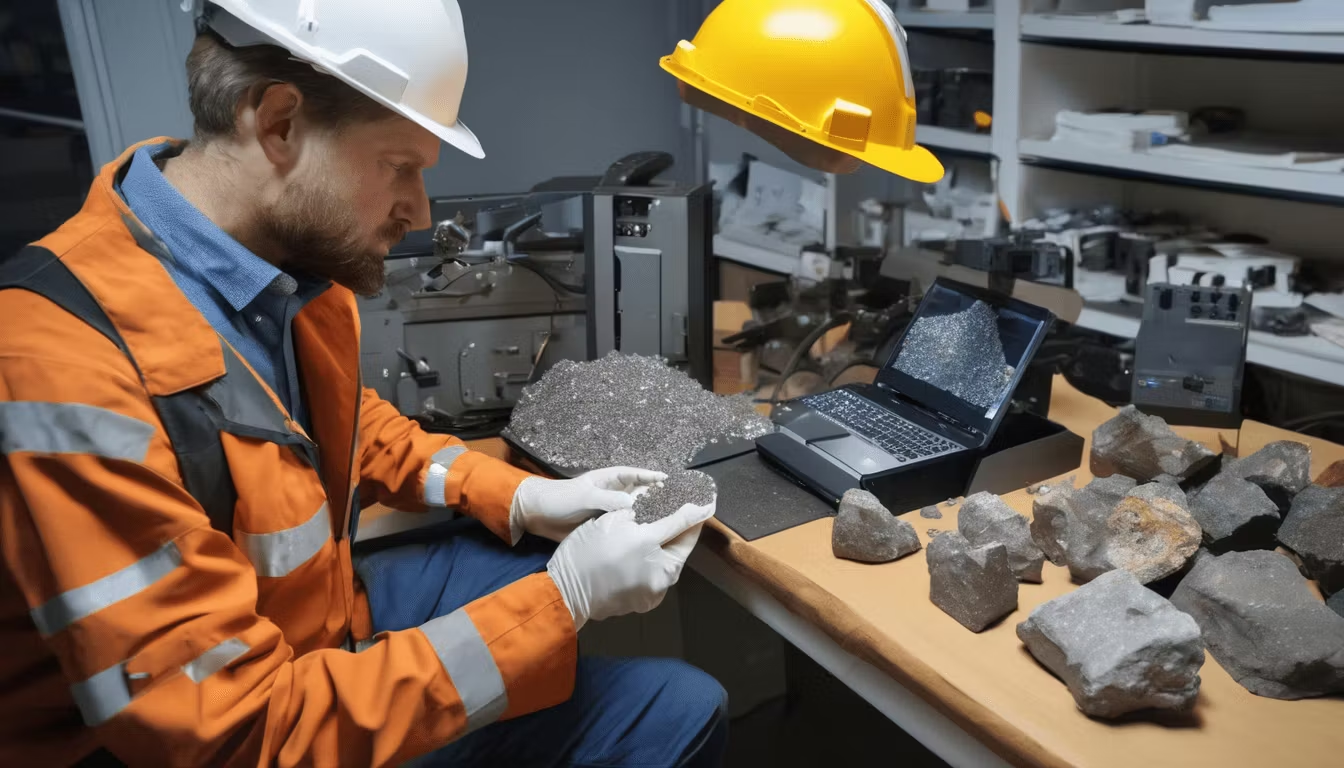
SUCOFINDO (Supervisory Body and Quality Assurance) testing is a regulatory requirement for all commercial mineral shipments in Indonesia. This independent lab certification system ensures material quality and protects buyers from substandard product.
SUCOFINDO Certification Process:
- Mandatory sampling and analysis before any commercial transaction
- Third-party laboratory confirms mineral grades (e.g., Ni %, SiO2 %)
- Certificate required for all domestic and export shipments
- Testing costs typically borne by supplier
- Results legally binding for contract disputes and regulatory compliance
This regulatory requirement protects buyer interests by providing independent verification of mineral grades and specifications. Any reputable Indonesian supplier should have current SUCOFINDO certificates for all product lines.
Regional Sourcing and Permit Coordination
Indonesia's primary mineral-producing regions—Sulawesi, Kalimantan, and Maluku—each maintain separate permit and licensing jurisdictions. Major production areas include:
- Sulawesi (Morowali, Konawe): Primary nickel ore source, silica sand, and industrial minerals
- Kalimantan: Diverse mineral operations including coal, industrial minerals, and bauxite processing
- Maluku (Halmahera): Significant silica sand and mineral deposits with active trading operations
Buyers sourcing from multiple regions must work with suppliers holding permits for each specific concession area. This decentralized permit system ensures local resource governance but requires supplier transparency regarding operational areas and license validity.
Export Documentation and Compliance Requirements
For minerals permitted for international trade, Indonesian export regulations require comprehensive documentation and compliance procedures:
Standard Export Requirements:
- IUP OPK license covering export operations
- SUCOFINDO lab certificate confirming mineral specifications
- Export license (SPB - Surat Persetujuan Pertambangan) from MEMR
- Compliance with environmental regulations (no operations in protected areas)
- Proper classification under Indonesian Harmonized Tariff Schedule
- Standard customs documentation and shipping procedures
International buyers importing Indonesian minerals should engage suppliers capable of managing complete export documentation. This ensures smooth customs clearance and minimizes delays at both origin and destination ports.
Recent Regulatory Trends and 2025-2026 Outlook
Several regulatory developments are shaping Indonesia's mining sector trajectory:
Processing Value Addition: The government continues prioritizing domestic processing of raw minerals. This trend strengthens regulations requiring higher-value mineral products rather than raw ores, particularly benefiting buyers of processed materials like aluminium ingot and refined specialty minerals.
Environmental Compliance Tightening: MEMR has increased scrutiny of environmental compliance, particularly regarding water management, waste handling, and biodiversity protection. Suppliers in Sulawesi, Kalimantan, and Malulu face more rigorous environmental audits, potentially affecting supply reliability during peak monsoon seasons.
Technology and Traceability: New blockchain-based traceability systems are being piloted to verify mineral origins and compliance. While voluntary in 2025, these systems may become mandatory for certain mineral categories, particularly those facing supply chain scrutiny internationally.
Selecting Compliant Suppliers: Key Due Diligence Steps
For B2B buyers navigating Indonesia's regulatory environment, proper supplier selection is critical:
Essential Verification Checklist:
- Request current IUP OPK license and verify with provincial mining authorities
- Obtain SUCOFINDO certificates for all product specifications
- Confirm RKAB (operational plan) approval for sourcing regions
- Review company registration and corporate compliance status
- Verify insurance and liability coverage for mineral trading operations
- Assess track record with other major industrial buyers and smelters
Legitimate suppliers should transparently provide documentation demonstrating regulatory compliance. Any reluctance to share licensing information or test certificates is a significant red flag indicating potential permit violations or quality issues.
Partnership Opportunities with Licensed Indonesian Traders
Indonesia's regulatory framework, while stringent, creates stable partnership opportunities with licensed traders holding all required permits and certifications. Buyers seeking reliable supply of nickel ore, silica sand, aluminium ingot, or zircon sand benefit from engaging suppliers with deep operational expertise and established compliance infrastructure.
Direct partnerships with source-level suppliers—rather than brokers or intermediaries—provide price transparency, supply reliability, and simplified logistics. Licensed traders can manage all regulatory coordination, documentation, and quality verification, allowing buyers to focus on production planning and inventory management.
Conclusion: Navigating Indonesia's Mining Regulations Successfully
Indonesia's mining regulations reflect a sophisticated policy framework designed to protect national resources while enabling legitimate commercial activity. For B2B buyers, understanding key regulatory requirements—particularly nickel export restrictions, IUP OPK licensing, SUCOFINDO testing, and regional permit coordination—is essential for building compliant, reliable supply chains.
The regulatory environment rewards buyers who invest in direct relationships with licensed suppliers capable of managing complete compliance and documentation requirements. This approach minimizes supply chain risks, ensures consistent quality, and often delivers competitive pricing through elimination of middleman markups.
As Indonesia's mining sector continues evolving toward greater value addition and environmental rigor, suppliers demonstrating regulatory compliance and operational transparency become increasingly valuable partners. For mineral buyers seeking stable, compliant sourcing from Indonesia, trusted suppliers with comprehensive licensing and quality certifications provide the foundation for sustainable commercial relationships.
Whether sourcing nickel ore for smelting operations, silica sand for industrial applications, or specialty minerals for international markets, working with fully compliant Indonesian suppliers ensures regulatory alignment, quality assurance, and operational reliability. Contact experienced mineral traders today to explore compliant sourcing opportunities and discuss your specific mineral requirements.