Gravity Die Casting vs HPDC: Which Casting Method Is Best?
Gravity Die Casting vs High Pressure Die Casting: A Comprehensive Comparison
The choice between gravity die casting and high pressure die casting (HPDC) is one of the most critical decisions foundries and metal manufacturers face. Both methods produce quality aluminium castings, but they differ significantly in speed, cost, surface finish, and suitability for different applications. For industrial buyers sourcing aluminium ingots and planning production strategies, understanding these casting process differences is essential to optimizing costs and meeting quality standards.
This comprehensive guide explores both technologies, compares their key characteristics, and provides practical guidance on selecting the right method for your manufacturing needs.
Understanding Gravity Die Casting
What Is Gravity Die Casting?
Gravity die casting, also known as permanent mold casting, is a process where molten metal flows into a reusable steel or iron mold under the force of gravity alone. The mold is typically heated to 150-250°C to improve metal flow and reduce thermal shock. Once the metal solidifies, the mold is opened and the casting is ejected.
This method has been used for decades in metal foundries across the world, from small shops to large-scale industrial operations. It's particularly popular in Europe, Asia, and among manufacturers who prioritize quality and cost-effectiveness for medium-volume production runs.
How Gravity Die Casting Works
The gravity die casting process follows these key steps:
1. Mold Preparation: The steel or ductile iron mold is preheated and coated with a refractory material to extend mold life and improve surface finish. 2. Pouring: Molten aluminium (typically at 650-750°C) is poured into the mold cavity. The operator controls pouring speed and can adjust temperature to optimize flow. 3. Solidification: The metal cools and solidifies inside the mold. Cooling time typically ranges from 20 seconds to several minutes depending on casting size and wall thickness. 4. Ejection: Once fully solidified, the mold opens and the casting is mechanically ejected using ejector pins. 5. Finishing: The casting is trimmed, cleaned, and finished as required for the final application.
Key Characteristics of Gravity Die Casting
- Production Speed: Slower than HPDC, typically 3-8 cycles per hour depending on size
- Surface Finish: Good surface quality, but not as fine as HPDC
- Dimensional Accuracy: ±0.15-0.25mm per 100mm, depending on design complexity
- Wall Thickness: Minimum 3-4mm for reliable filling; thicker walls than HPDC
- Tool Costs: Lower initial mold costs ($3,000-$15,000 per mold)
- Porosity: Lower porosity due to slower cooling, better suited for pressure-tight applications
- Flexibility: Excellent for design changes and prototype modifications
Understanding High Pressure Die Casting (HPDC)
What Is High Pressure Die Casting?
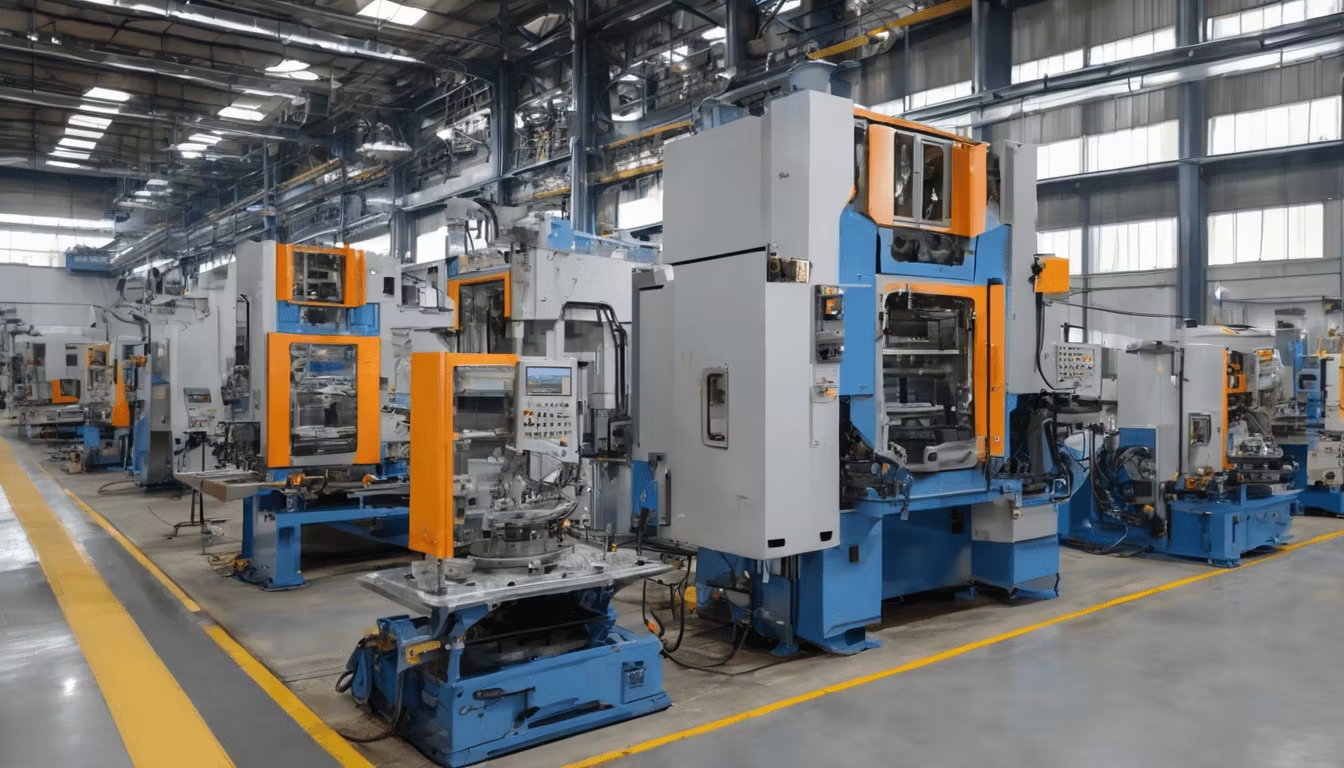
High pressure die casting is a manufacturing process where molten metal is forced into a steel mold cavity at very high pressure—typically 700-2,500 bar (10,000-36,000 psi). The metal fills the mold in milliseconds, and pressure is maintained during solidification to ensure dimensional accuracy and surface quality.
HPDC is the dominant casting method for automotive, consumer electronics, and mass-production applications where high volume, tight tolerances, and excellent surface finish are essential.
How High Pressure Die Casting Works
1. Mold Clamping: The two halves of the steel die are clamped together with massive force (500-2,000 tons for aluminium). 2. Shot Injection: Molten aluminium is forced into the die cavity using a hydraulic or mechanical plunger at extreme velocity. 3. High-Pressure Hold: Pressure is maintained for 0.5-2 seconds as the metal solidifies, compensating for shrinkage and ensuring full cavity filling. 4. Die Opening: Once solidified, the die opens and ejector pins push the casting out automatically. 5. Rapid Cycling: The die can close and repeat immediately, enabling cycle times as fast as 30-60 seconds per casting.
Key Characteristics of High Pressure Die Casting
- Production Speed: Extremely fast, typically 8-60+ castings per hour
- Surface Finish: Exceptional, Class A finish directly from the die
- Dimensional Accuracy: ±0.05-0.1mm per 100mm, extremely tight tolerances
- Wall Thickness: Minimum 1.5-2mm possible; exceptional thin-wall capability
- Tool Costs: Very high initial die costs ($15,000-$100,000+)
- Porosity: Higher gas porosity and shrinkage porosity due to rapid cooling
- Flexibility: Difficult and expensive to modify dies; best for fixed production runs
Gravity Die Casting vs HPDC: Side-by-Side Comparison
| Characteristic | Gravity Die Casting | High Pressure Die Casting |
|---|---|---|
| Production Speed | 3-8 castings/hour | 15-60+ castings/hour |
| Surface Finish | Ra 3.2-6.4 μm | Ra 0.8-1.6 μm (Class A) |
| Dimensional Tolerance | ±0.15-0.25mm | ±0.05-0.1mm |
| Minimum Wall Thickness | 3-4mm | 1.5-2mm |
| Die Cost | $3,000-$15,000 | $25,000-$100,000+ |
| Cost Per Casting (High Volume) | $15-$40 | $5-$20 |
| Porosity Level | Low (good for pressure-tight) | Higher (poor for sealing) |
| Design Flexibility | High (easy modifications) | Low (expensive to change) |
| Cooling Time | 30 seconds - 5 minutes | 5-30 seconds |
| Best For | Medium volume, quality focus | High volume, tight tolerances |
When to Choose Gravity Die Casting
Gravity die casting is the optimal choice for:
- Medium-Volume Production: 500-10,000 parts per year. The lower die costs justify the slower production rate.
- Complex Designs: Parts with varying wall thicknesses, inserts, or intricate geometry benefit from controlled pouring and gravity filling.
- Pressure-Tight Requirements: Engine blocks, cylinder heads, fuel tanks, and other applications requiring pressure-tight castings benefit from gravity casting's lower porosity.
- Prototype and Development: Rapid design iterations are more economical with lower tooling costs.
- Smaller Components: Parts weighing 2-50 kg are ideal for gravity die casting efficiency.
- Quality-Critical Applications: Aerospace, medical devices, and precision equipment where casting integrity is paramount.
When to Choose High Pressure Die Casting
HPDC is the best choice for:
- High-Volume Production: 50,000+ parts annually. The high die cost is amortized over large quantities.
- Tight Dimensional Tolerances: Consumer electronics, automotive components, and appliances requiring ±0.05-0.1mm accuracy.
- Thin-Wall Geometry: HPDC excels at 1.5-3mm wall thicknesses that would be difficult with gravity casting.
- Superior Surface Finish: Parts requiring minimal finishing and direct painting or anodizing.
- Cost-Sensitive Applications: High-volume commodity parts where per-unit cost is critical.
- Fixed Designs: Mature products unlikely to require significant design changes.
Material Selection: Quality Aluminium Ingots Matter
Both casting methods depend critically on the quality of the input material—the aluminium ingot. The purity, alloy composition, and metallurgical structure of your ingots directly impact casting quality, surface finish, mechanical properties, and dimensional accuracy.
For HPDC operations requiring tight tolerances and high-speed production, premium-grade ADC12 or A7 aluminium ingots ensure consistent casting quality and reduce scrap rates. For gravity die casting, where larger ingots can be melted in crucibles, selecting ingots with low gas content and clean metallurgy is equally important to minimize porosity and defects.
Working with trusted suppliers who provide SUCOFINDO-tested, fully certified material ensures your casting operations maintain consistent quality regardless of which method you choose.
Hybrid Approaches and Industry Trends
Modern foundries increasingly use hybrid strategies:
- Squeeze Casting: Combines gravity filling with high-pressure squeeze to reduce porosity in critical applications.
- Vacuum-Assisted Die Casting: Uses vacuum to remove gases and improve high-pressure castings for safety-critical parts.
- Semi-Solid Metal Processing: Fills the gap between gravity and HPDC for medium-volume, medium-complexity applications.
Making Your Decision: A Practical Framework
Annual Volume Expected: Under 5,000 parts → gravity casting. 5,000-50,000 → evaluate both. Over 50,000 → HPDC likely optimal. Tolerance Requirements: <±0.2mm → gravity acceptable. <±0.1mm → HPDC recommended. Pressure-Tight Need: Yes → gravity casting strongly preferred. No → either method works. Wall Thickness: >4mm → gravity preferred. <3mm → HPDC preferred. 3-4mm → either works. Design Stability: Frequent changes → gravity casting. Locked design → HPDC. Available Budget: Low tooling budget → gravity. Able to amortize tooling → HPDC for high volume.
Conclusion: Choose Based on Your Production Reality
Neither gravity die casting nor high-pressure die casting is universally superior—each excels in different manufacturing contexts. Gravity die casting offers flexibility, lower entry costs, and superior casting integrity for pressure-critical applications. HPDC delivers unmatched speed, dimensional accuracy, and surface finish for high-volume commodity production.
The right choice depends on your specific production requirements: volume, tolerances, design complexity, and quality demands. Many successful manufacturers use both methods, deploying each where it provides maximum value.
Whatever casting method you select, the foundation of quality castings begins with superior aluminium ingots. At CV Indoalam Mineral Persada, we supply premium-grade ADC12 and A7 aluminium ingots to foundries across Indonesia and internationally. Our material is SUCOFINDO-tested, fully certified, and optimized for consistent casting performance whether you're running gravity die casting, HPDC, or any advanced casting process.
Contact us today to discuss your aluminium sourcing needs and discover how our high-quality ingots can improve your casting operations.