Foundry Sand for Metal Casting: Complete Guide to Silica Sand Selection
Introduction: The Critical Role of Foundry Sand in Metal Casting
Metal casting is one of the most fundamental manufacturing processes in modern industry, producing components ranging from automotive engine blocks to industrial machinery parts. At the heart of this process lies a material that is often overlooked but absolutely critical to success: foundry sand, particularly high-quality silica sand.
Foundry sand serves as the primary material for creating molds and cores in casting operations. Its properties—grain size, purity, thermal stability, and binding characteristics—directly influence the quality, precision, and surface finish of cast metal products. For foundries operating in competitive markets, selecting the right foundry sand supplier can mean the difference between consistent, high-quality output and costly rejects.
This comprehensive guide explores everything metal casting professionals need to know about silica sand for foundry applications, including material specifications, quality standards, and how to source reliable supplies from the Asia-Pacific region.
What is Foundry Sand and Why It Matters
Defining Foundry Sand in Casting Operations
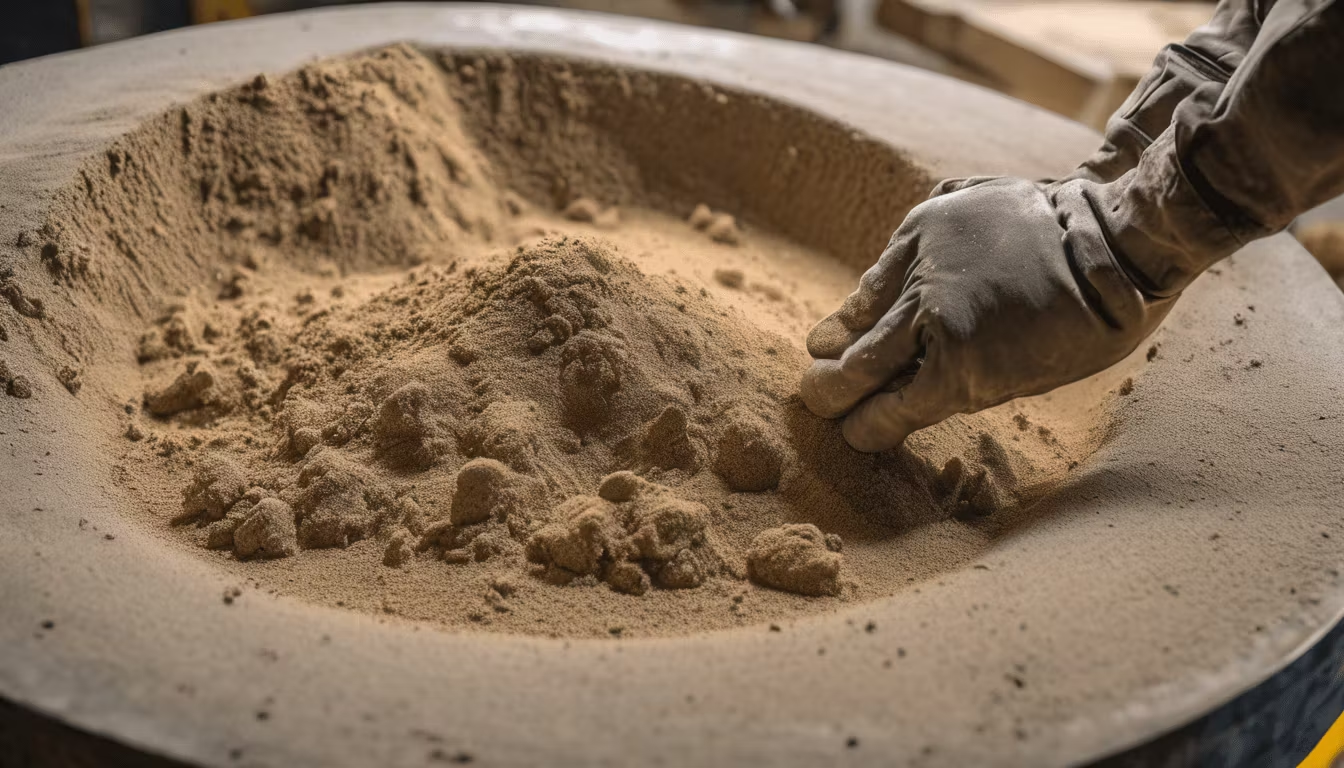
Foundry sand, also known as casting sand, is a granular material used to create molds into which molten metal is poured. Unlike ordinary sand, foundry-grade silica sand must meet strict specifications regarding particle size distribution, clay content, permeability, and silica dioxide (SiO2) concentration.
The sand forms the negative cavity of the mold, defining the external geometry of the final cast product. Core sand creates internal cavities and passages. Both applications demand sand with specific physical and chemical properties to withstand the extreme conditions of metal casting—temperatures exceeding 1000°C in some applications, thermal shock, and chemical reactivity with molten metal.
Key Properties of High-Quality Foundry Sand
Superior foundry sand exhibits several critical characteristics:
- High SiO2 Content (99%+): Ensures thermal stability and resistance to chemical attack from molten metal. Our silica sand products maintain SiO2 content of 99.74%, meeting international foundry standards.
- Precise Grain Size Distribution: Uniform particles ensure consistent packing density, permeability, and mold strength. Available grades range from coarse (8 mesh) to fine (200 mesh) to suit different casting applications.
- Low Clay and Iron Oxide Content: Minimizes binding impurities that can compromise mold quality and cause defects in finished castings.
- Good Refractoriness: Withstands repeated heating cycles without degradation, essential for core sand and refractory-lined molds.
- Adequate Permeability: Allows gases generated during metal pouring to escape through the mold, preventing blow holes and casting defects.
Foundry Sand Applications Across Industries
Ferrous Metal Casting (Iron and Steel)
The foundry industry's largest segment involves casting iron and steel components for automotive, machinery, and construction applications. Iron foundries typically use medium to coarse silica sand (typically 60-100 AFS mesh) for mold production.
When casting ductile iron or steel at temperatures above 1500°C, sand must possess exceptional refractoriness and chemical stability. Coarser sand grades provide better gas permeability, critical for preventing gas porosity defects in larger castings.
Non-Ferrous Metal Casting
Aluminum and copper alloy foundries often require finer sand grades (100-150 mesh) due to lower pouring temperatures (600-800°C) and the need for superior surface finish on smaller, more precision-critical components. These operations benefit from sand with excellent flowability and consistent particle shape.
Specialty alloys like aluminium ingot derivatives and bronze require sand with minimal reactive impurities, as these metals are highly sensitive to contamination.
Investment Casting (Precision Casting)
Precision casting operations producing medical devices, aerospace components, and high-tolerance industrial parts demand the finest foundry sand available. These applications typically use 150-200 AFS mesh sand with exceptional grain distribution uniformity and minimal defects.
Foundry Sand Specifications and Quality Standards
International Foundry Standards
The American Foundry Society (AFS) and equivalent international standards define foundry sand specifications across multiple parameters:
- AFS Grain Fineness Number: Numerical scale (8-200+) indicating average grain size. Lower numbers indicate coarser sand.
- Grain Shape: Classified as angular, sub-angular, or rounded. Shape affects packing density and mold strength.
- Clay Content: Typically limited to 2-5% for core sand and 1-3% for mold sand, depending on application.
- Silica Content: Must exceed 99% SiO2 for most foundry applications.
- Loss on Ignition (LOI): Indicates organic and carbonaceous material content.
- Refractoriness: Measured by pyrometric cone equivalent (PCE), indicating heat resistance.
Testing and Quality Assurance
Reputable foundry sand suppliers conduct comprehensive testing through independent laboratories. CV Indoalam Mineral Persada partners with SUCOFINDO, Indonesia's leading independent testing authority, to verify all silica sand specifications before shipment.
Testing parameters include:
- X-ray fluorescence (XRF) analysis for chemical composition
- Sieve analysis for particle size distribution
- Permeability testing
- Moisture content determination
- Clay content (hydrometer method)
- Thermal analysis for refractoriness assessment
Selecting the Right Foundry Sand for Your Application
Matching Sand Grade to Casting Type
Choosing appropriate foundry sand requires balancing multiple factors:
- Component Size: Large castings (>50 kg) typically use 40-60 AFS sand for gas permeability. Small precision castings use 100-200 AFS for surface finish.
- Metal Type and Temperature: Steel castings require coarser, more refractory sand. Aluminum allows finer grades.
- Mold vs. Core: Core sand is typically finer and may require additional binders to maintain integrity inside the casting cavity.
- Production Volume: High-volume production may benefit from coarser sand (less waste) while small batch operations favor finer grades (better finish).
Cost-Benefit Analysis
While premium foundry sand costs more upfront, the investment pays dividends through:
- Reduced scrap rates and casting defects
- Improved surface finish, reducing downstream machining costs
- Better mold strength, enabling longer mold life
- Consistent product quality, enhancing customer satisfaction
- Lower labor costs for rework and quality inspection
Sourcing High-Quality Foundry Sand from Indonesia
Indonesian Silica Sand: Geographic Advantages
Indonesia is one of the world's premier sources of high-purity silica sand, with significant deposits in Sulawesi (Morowali, Konawe), Kalimantan, and Maluku (Halmahera). These deposits feature naturally high SiO2 content (99.5-99.9%) and favorable grain size distributions for foundry applications.
The equatorial location ensures abundant water resources for processing, while established logistics networks facilitate efficient export to Asian and global markets.
Supplier Selection Criteria
When evaluating foundry sand suppliers, particularly from Indonesia, consider:
- Licensing and Compliance: Verify IUP OPK (mining permits), environmental approvals (RKAB), and export documentation. CV Indoalam holds full IUP OPK licensing for mineral extraction and SUCOFINDO testing certification.
- Quality Assurance Systems: Ensure suppliers maintain independent laboratory testing with certified results accompanying each shipment.
- Supply Reliability: Confirm capacity to meet your volume requirements, from trial quantities (100 MT) to full-year contracts (2.5M MT annually).
- Technical Support: Reputable suppliers provide technical consultation to optimize sand selection for specific applications.
- Logistics Capabilities: Verify efficient shipping from source to your facility, whether domestic or international.
Advantages of Direct-Source Purchasing
Buying directly from mining and processing operations eliminates middlemen, reducing costs while ensuring traceability and quality consistency. Established relationships with major nickel smelters, industrial parks, and cement manufacturers demonstrate CV Indoalam's credibility in meeting stringent B2B specifications.
Foundry Sand Market Trends and Best Practices
Sustainability in Foundry Operations
Modern foundries increasingly emphasize environmental responsibility and circular economy principles. High-quality foundry sand enables:
- Sand Reusability: Superior sand quality means more recycles before replacement, reducing landfill waste.
- Reduced Binder Usage: Optimal grain distribution reduces organic binder requirements, minimizing VOC emissions.
- Water Conservation: Efficient processing with minimal clay content reduces water consumption in mold preparation.
Industry 4.0 and Quality Control
Leading foundries now employ real-time particle size analysis, automated moisture monitoring, and predictive quality algorithms. Suppliers must provide consistent specifications supporting these advanced systems.
Regional Supply Chain Resilience
Post-pandemic foundry operations emphasize geographic diversification of supply sources. Asian suppliers, particularly from Indonesia and Malaysia, offer strategic alternatives to traditional European and North American sources, reducing supply chain concentration risk.
Technical Specifications: CV Indoalam's Foundry Sand Offering
CV Indoalam Mineral Persada provides premium silica sand specifically engineered for foundry applications:
- SiO2 Content: 99.74% (exceeds AFS and international standards)
- Available Mesh Grades: 8 to 200 AFS (coarse to ultra-fine for all casting types)
- Quality Assurance: SUCOFINDO independent laboratory testing on all shipments
- Supply Capacity: 2.5 million metric tons annually, supporting operations from 100 MT trials to multi-year contracts
- Sourcing Regions: Sulawesi (Morowali, Konawe), Kalimantan, and Maluku, ensuring supply continuity
- Regulatory Compliance: IUP OPK licensed, RKAB approved, ET Batubara certified
Implementing Foundry Sand into Your Operation
Initial Assessment and Trial Period
Switching to a new foundry sand supplier should begin with a structured trial. A typical approach includes:
- Request material safety data sheets (MSDS) and complete test reports
- Order 100 MT trial shipment for bench-scale and trial production testing
- Conduct your internal quality verification and casting trials
- Compare casting quality metrics, scrap rates, and surface finish
- Evaluate cost-per-casting and total cost of ownership
- Negotiate long-term supply agreement based on successful trial results
Quality Documentation and Traceability
Professional B2B relationships require comprehensive documentation. Each sand shipment should include:
- Certificate of analysis from independent testing laboratory
- Batch identification and traceability documentation
- Certificate of origin for export shipments
- Phytosanitary certificates where applicable
- Technical data sheets with grain size distribution graphs
Conclusion: Partnering with Reliable Foundry Sand Suppliers
Quality foundry sand is not a commodity—it is a critical raw material directly impacting your casting quality, production efficiency, and bottom-line profitability. The selection of suppliers deserves the same rigor applied to other critical procurement decisions.
Indonesian sources offer exceptional value, combining naturally high-purity silica deposits with competitive pricing and expanding logistics capabilities. However, not all suppliers meet professional B2B standards. Choosing partners with proper licensing, independent quality assurance, and proven track records serving major industrial customers ensures reliable supply and consistent performance.
CV Indoalam Mineral Persada represents the professional standard in foundry sand supply. With SUCOFINDO-verified quality, IUP OPK licensing, RKAB approval, and annual capacity exceeding 2.5 million metric tons, we provide the reliability and quality that modern foundries require.
Whether you operate an iron foundry producing automotive components, a precision casting facility serving aerospace customers, or a specialty metal foundry requiring ultra-pure silica sand, we can develop customized supply solutions matching your exact specifications and volume requirements.
Contact our team today to discuss your foundry sand requirements and arrange a trial shipment. Experience the difference that premium Indonesian silica sand can make in your casting operations.