Foundry Sand for Metal Casting: Industrial Applications & Quality Standards
Introduction: The Critical Role of Foundry Sand in Metal Casting
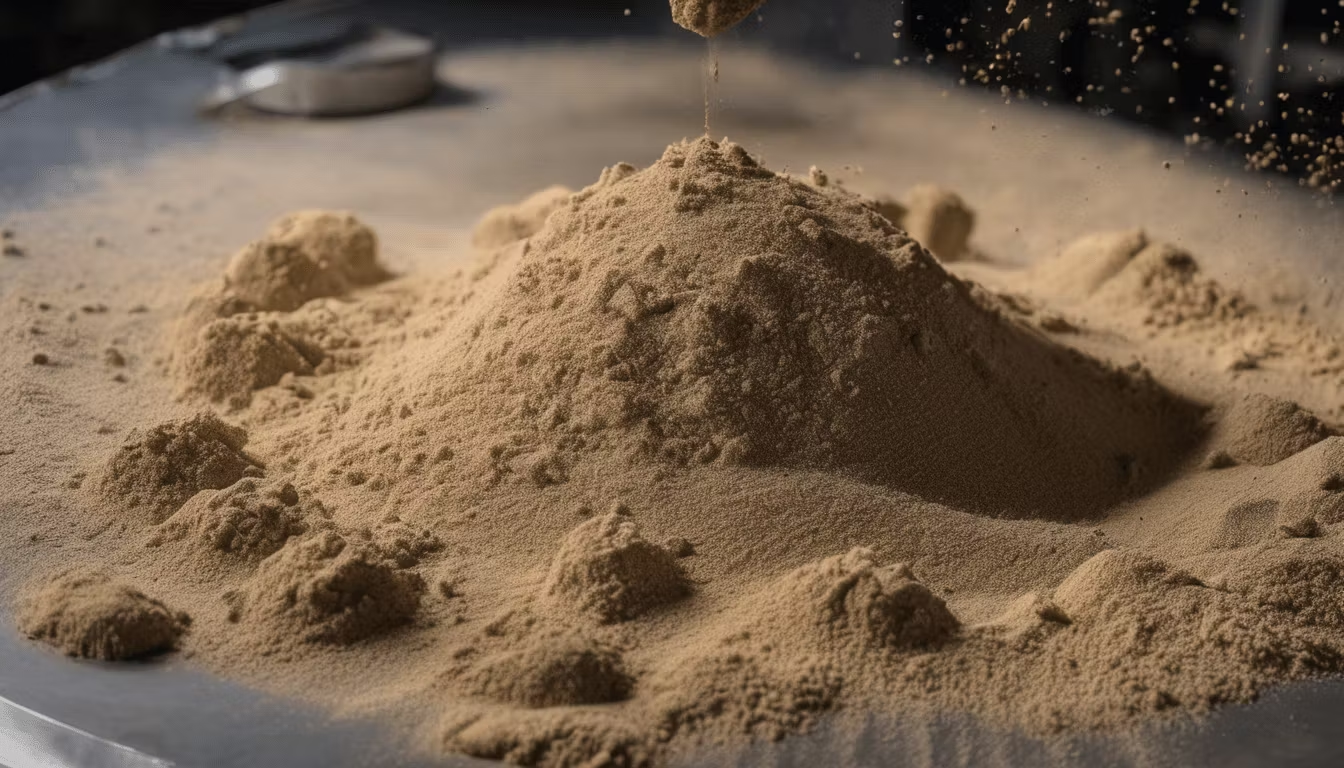
Metal casting is one of the oldest and most essential manufacturing processes, yet its success heavily depends on the quality of materials used. Among these materials, foundry sand—particularly high-purity silica sand—plays a fundamental role in determining the quality, precision, and cost-effectiveness of cast products. Whether you're producing automotive components, industrial machinery parts, or decorative castings, the foundry sand you select directly impacts your production efficiency and final product quality.
In Southeast Asia's booming manufacturing sector, reliable access to premium foundry sand has become increasingly critical. Indonesian suppliers like CV Indoalam Mineral Persada have emerged as key players in meeting the region's growing demand for consistent, laboratory-tested silica sand that meets international casting standards.
Understanding Foundry Sand: Composition and Properties
What is Foundry Sand?
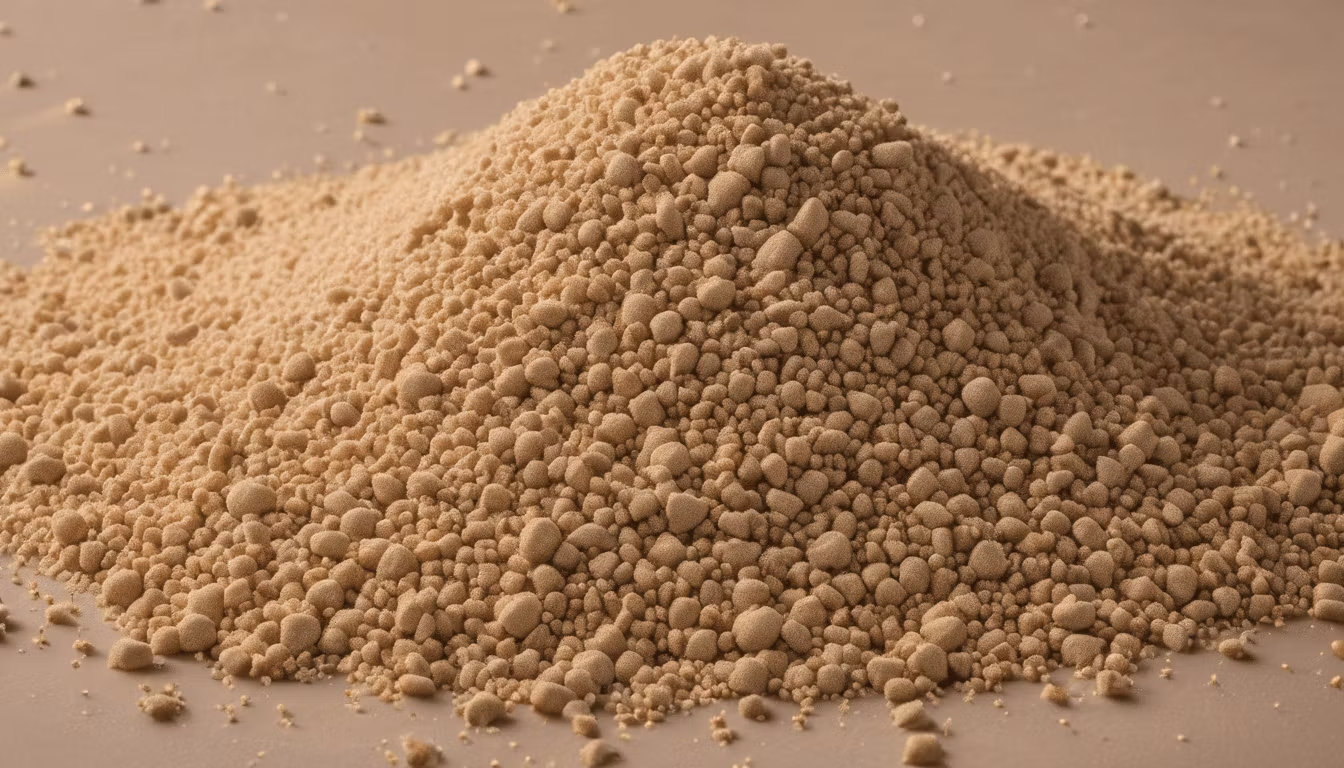
Foundry sand, also known as casting sand, is a specially prepared silica-based material used in metal casting processes to create molds and cores. The primary component is silicon dioxide (SiO2), typically ranging from 95-99.5% purity for industrial applications. High-quality foundry sand must possess specific physical and chemical properties that enable it to withstand extreme temperatures, maintain dimensional accuracy, and facilitate easy mold removal after casting.
The most critical properties of foundry sand include grain size distribution, clay content, moisture retention, thermal stability, and permeability. Each of these factors influences how the sand behaves during molding, pouring, and cooling phases of the casting process.
Key Specifications for Casting Sand
Premium foundry sand meets stringent specifications that vary depending on the casting application. Our silica sand products, with SiO2 content of 99.74%, exceed industry standards for most casting applications. The material comes in multiple mesh grades ranging from 8 to 200, allowing foundries to select the exact grain size distribution required for their specific casting needs.
Grain size matters considerably because finer grains (higher mesh numbers) produce smoother surface finishes on castings, while coarser grains improve mold permeability and reduce defects like gas porosity. Foundries typically use:
- Coarse grades (8-35 mesh): For large castings requiring high permeability
- Medium grades (65-100 mesh): For general-purpose casting applications
- Fine grades (150-200 mesh): For precision castings requiring excellent surface finish
Foundry Sand Applications Across Industries
Automotive and Heavy Equipment Casting
The automotive industry represents one of the largest consumers of foundry sand globally. Engine blocks, cylinder heads, transmission cases, and suspension components all require high-quality casting sand to achieve the dimensional precision and surface quality demanded by modern manufacturing. Using inferior foundry sand in these applications can result in porosity defects, dimensional inaccuracies, and costly scrap rates.
Heavy equipment manufacturers—producing components for excavators, bulldozers, and industrial machinery—similarly depend on reliable foundry sand supplies. The demanding specifications of these applications mean that purchasing from verified, SUCOFINDO-tested suppliers is not optional but essential for maintaining competitive advantage.
Industrial Machinery and Components
Precision casting for industrial machinery requires foundry sand that combines excellent dimensional stability with superior surface quality. Pump casings, valve bodies, compressor components, and coupling housings demand sand with consistent grain distribution and low clay content to prevent casting defects.
The Indonesian foundries that supply major industrial parks across Sulawesi, Kalimantan, and Java rely heavily on local sourcing of high-quality casting sand. This regional proximity reduces lead times and allows foundries to maintain leaner inventory while ensuring consistent material quality.
Construction and Infrastructure Components
Cast iron pipes, drainage systems, manhole covers, and construction hardware represent a massive market segment for foundry casting. These applications typically tolerate slightly larger grain sizes and allow use of recycled casting sand, creating opportunities for efficient, cost-effective production. However, even in these applications, the base sand must meet minimum purity and quality standards to ensure structural integrity and longevity.
The Complete Foundry Sand Manufacturing Process
Mining and Extraction
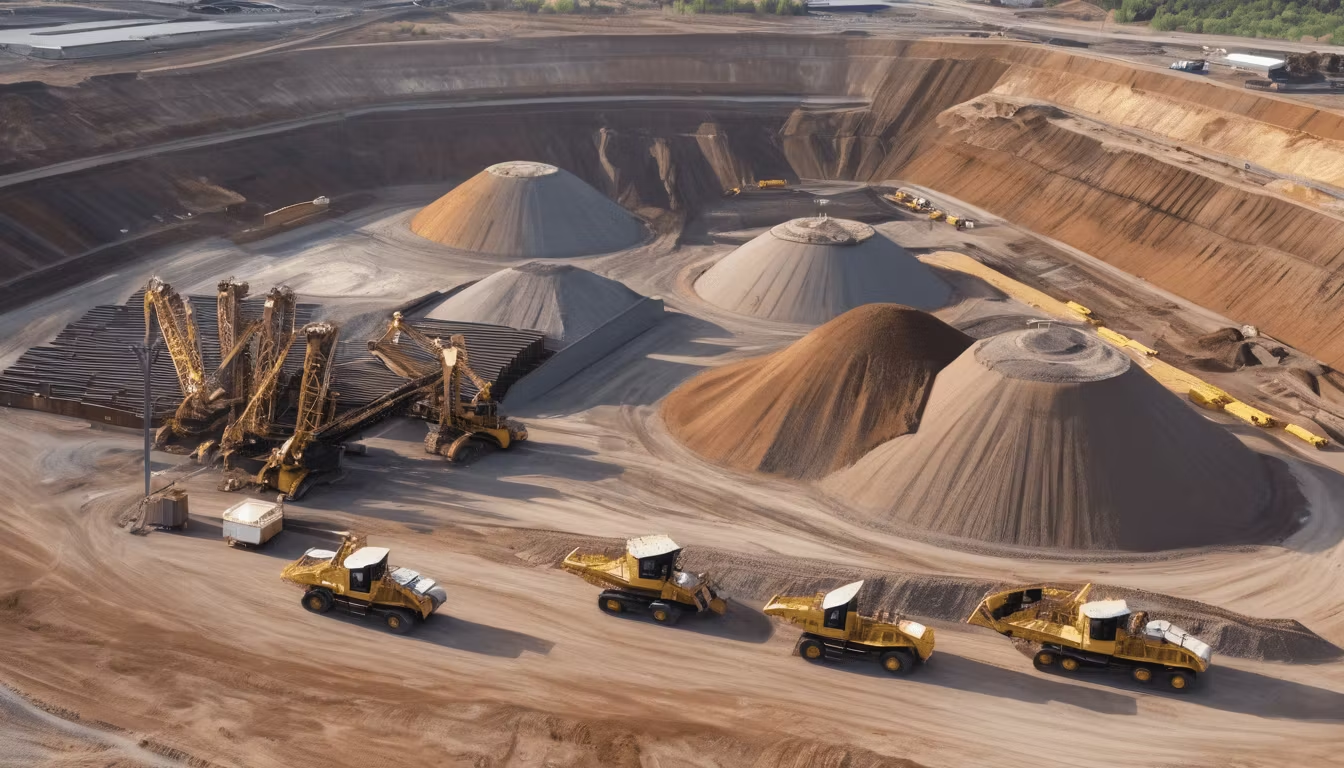
Quality foundry sand begins at the source. CV Indoalam Mineral Persada sources premium silica sand from carefully selected deposits in Sulawesi (Morowali and Konawe regions), Kalimantan, and Maluku. These geological formations contain naturally pure silica deposits with minimal iron oxide and other contaminants that would compromise casting quality.
The extraction process must preserve the sand's natural crystal structure and grain integrity. Unlike mining operations focused solely on volume, quality-focused suppliers employ selective extraction methods that prioritize material characteristics over sheer quantity.
Processing and Quality Control
Raw silica sand undergoes comprehensive processing to meet foundry specifications. This includes:
- Crushing and grinding: Adjusting grain size to desired mesh grades
- Screening: Removing oversized particles and ensuring consistent grain distribution
- Washing: Eliminating clay, silt, and other fine contaminants
- Drying: Reducing moisture to appropriate levels for casting applications
- Testing: Laboratory verification of SiO2 content, grain size distribution, and other critical parameters
CV Indoalam's partnership with SUCOFINDO ensures every batch undergoes rigorous third-party testing, providing customers with certified quality documentation that satisfies international procurement standards.
Silica Sand vs. Alternative Foundry Materials
Comparison with Zircon and Other Specialty Sands
While silica sand remains the industry standard for general-purpose foundry applications due to its cost-effectiveness and reliability, specialty sands serve specific high-performance applications. Zircon sand (with 65%+ ZrO2 content), for example, offers superior refractory properties and is preferred for casting stainless steel and superalloy components where extreme temperatures and reactive metal chemistry are concerns.
However, zircon sand's significantly higher cost makes it economically practical only for applications where silica sand's performance is insufficient. For the vast majority of industrial casting applications—ferrous metals, aluminum, and copper alloys—high-purity silica sand delivers the optimal balance of performance and cost.
Recycled vs. Virgin Foundry Sand
Many modern foundries employ reclamation systems that recover and reuse casting sand, reducing raw material consumption and environmental impact. However, recycled sand requires careful management and periodic replenishment with virgin material to maintain performance. Over time, the reclaimed sand's clay content increases, its grain shape deteriorates, and contaminants accumulate, necessitating periodic replacement with fresh, virgin foundry sand.
Quality suppliers ensure their virgin sand meets specifications that allow seamless integration into recycling systems, maintaining consistent overall batch quality even as recycled material is blended in.
Sourcing Foundry Sand: What B2B Buyers Should Know
Ensuring Consistent Supply and Quality
For foundries operating on lean inventory principles or managing large-scale production, supply chain reliability is paramount. Disruptions in foundry sand supply directly halt casting operations, creating cascading delays throughout manufacturing networks.
When evaluating suppliers, buyers should verify:
- Licensing and compliance: IUP OPK permits for mineral extraction and export licensing where applicable
- Testing and certification: Third-party laboratory testing from recognized bodies like SUCOFINDO
- Production capacity: Annual output capacity that matches or exceeds your consumption needs
- Geographic proximity: Sourcing regions that minimize transportation time and costs
- Flexibility: Ability to accommodate trial orders, custom mesh grades, and varying volume requirements
Price Considerations and Market Factors
Foundry sand pricing fluctuates based on commodity markets, transportation costs, and demand cycles. Direct sourcing from miners—rather than through multiple trading intermediaries—typically offers the most competitive pricing. CV Indoalam's position as both a producer and trader allows customers to benefit from direct-from-mine pricing while maintaining the supply reliability of established trading operations.
Volume commitments typically unlock better pricing. Many suppliers offer tiered pricing structures where annual contracts for 100+ metric tons receive preferential rates compared to spot purchases. For foundries with predictable consumption patterns, locking in annual supply agreements provides both cost savings and supply certainty.
Technical Specifications and Mesh Grades Explained
Mesh Grade Selection for Different Casting Types
Selecting the appropriate mesh grade represents one of the most important decisions in optimizing foundry operations. The choice impacts mold strength, surface finish, permeability, and overall casting quality.
- 8-20 mesh: High permeability, large castings, iron and steel casting
- 30-50 mesh: General-purpose industrial castings, aluminum casting
- 65-100 mesh: Medium precision castings, improved surface finish
- 150-200 mesh: High-precision castings, maximum surface detail, jewelry and art castings
Many sophisticated foundries maintain inventory of multiple mesh grades, blending them to achieve optimal properties for specific casting types. Suppliers offering the full range of grades from 8-200 mesh provide the flexibility that modern foundries require.
Environmental and Regulatory Considerations
Modern foundry operations face increasing environmental regulations regarding dust emissions, water usage in sand washing, and proper disposal of spent casting sand. High-quality foundry sand contributes to better environmental performance by reducing defect rates (and associated scrap), improving mold reclamation efficiency, and supporting dust control systems.
Suppliers holding full IUP OPK licensing and environmental compliance certifications ensure that the material supplied originated from legally and responsibly managed mining operations. This matters not only for regulatory compliance but increasingly for corporate sustainability commitments and supply chain transparency requirements from major customers.
Why Choose CV Indoalam Mineral Persada for Your Foundry Sand Supply
CV Indoalam Mineral Persada stands out in Indonesia's mineral trading landscape through a combination of direct sourcing capability, rigorous quality assurance, comprehensive licensing, and flexible supply options. Our 2.5 million metric ton annual silica sand capacity—sourced from premium deposits across Sulawesi, Kalimantan, and Maluku—ensures reliable supply for foundries ranging from specialty producers to major industrial operations.
Every batch is SUCOFINDO-tested and RKAB-approved, providing the third-party verification that discerning buyers require. Our IUP OPK licensing covers mineral logam, non-logam, and fuel commodities, ensuring full compliance with Indonesian mining regulations. For customers with evolving needs, we accommodate everything from 100 metric ton trial orders to multi-million ton annual contracts.
Whether you operate a precision casting facility requiring specific mesh grades for aerospace or automotive applications, or manage high-volume industrial casting for construction materials, CV Indoalam delivers the quality, consistency, and reliability that modern foundries demand.
Conclusion: Partner with a Trusted Foundry Sand Supplier
Foundry sand quality directly correlates with casting quality, production efficiency, and ultimate profitability. The decision to invest in premium, verified foundry sand from reputable suppliers yields returns through reduced scrap rates, improved surface finishes, more reliable production schedules, and better long-term supply chain stability.
CV Indoalam Mineral Persada combines deep knowledge of Indonesia's silica sand deposits with modern trading practices and rigorous quality standards. Our commitment to direct sourcing, transparent testing, and flexible supply arrangements makes us the partner of choice for foundries across Southeast Asia.
Contact us today to discuss your foundry sand requirements, request samples of specific mesh grades, or explore supply agreements tailored to your production volume and technical specifications. Let CV Indoalam become your trusted partner in achieving casting excellence.